- 288 pages
- English
- ePUB (mobile friendly)
- Available on iOS & Android
eBook - ePub
About this book
In this volume, leading historians reflect on writing about New Zealand's past. They also test how that past is investigated and framed. Their essays tell us much about New Zealand's many pasts and how historians have imagined them, and indicate particular concerns with what the country is now and the current role of history as a discipine within our nation. They ask questions and venture some answers. The introductory essay by the editors surveys the work of historians since the 1980s, while the final essay is based on an interview with Erik Olssen, whose work has been at the forefront of historical research and methodology in the period. In between, a variety of topics are visited and methodologies applied. Running through the volume are two threads: discussions of the limits of national history and the search for new archives and sites of historical enquiry.
Information
Retrievable Time: prehistoric colonisation of South Polynesia from the outside in and the inside out
Fifteen years ago Erik Olssen and I were among seven historians who gave lectures at Parliament House in Wellington reflecting on anniversaries connected with the 1990 celebrations. My topic was the initial Māori settlement of New Zealand. I ended by saying that while it was difficult to predict future conclusions, the long-term trend in research had favoured archaeological evidence of arrival from East Polynesia about 1000 years ago over other hypotheses, and that I expected this preference to continue. In the event, it did not. A review of radiocarbon methods and results in 1991 indicated no case for colonisation earlier than about 800 years ago and there were subsequent arguments for discovery as late as 600 years ago.1 Orthodox archaeological constructions of New Zealand prehistory also came to be questioned. Publication in 1994 of Barry Brailsford’s New Age manifesto, Song of Waitaha, with the official blessing of Dame Whina Cooper, brought to public attention an issue that had been debated for several years in the Māori community. This was a revival of the assertion that Māori had been preceded by other colonists, formerly Moriori, but now a multi-racial Waitaha. It was followed in April 1996 by notice of 2000-year-old radiocarbon dates on bones of the introduced Pacific rat (Rattus exulans).2 Apparent scientific evidence in support of the Waitaha proposition, together with discoveries of supposed ancient stone walls, as at Kaimanawa in May 1996 and in the depths of the Waipoua Forest, inspired a fin de millénium burst of imaginative prehistories which, though they varied in their methods and narratives, held in common the unequivocal rejection of orthodox archaeological opinion and the embracing of a pre-Māori past.3
The idea of a long, two-phase prehistory is a recurrent theme in New Zealand’s archaeology and to some extent also in East Polynesia. On each earlier occasion, going back to the 1874 dispute about Moabone Point Cave (the first stratigraphical excavation in Polynesia), the two-phase model has eventually been rejected, but that conclusion can never be taken for granted.4 Whatever scholars might think of the New Age prehistories, a recent poll shows that the majority of archaeologists in New Zealand today are convinced by claims of rat introduction two millennia ago, and an absence of debate among natural historians suggests that they hold much the same opinion.5 Certainly, the prospect of being able to separate the prehistoric impact of exotic fauna on the New Zealand biota into two stages instead of one – rats alone for a millennium and then rats with dogs and people appeals analytically to Holocene ecologists. In addition, there is a sense, shared by many archaeologists as well, that New Zealand was so conspicuous a target in the central Oceanic context that once capable seafarers penetrated the region they must soon have discovered it, if only by accident and not necessarily from Polynesia. All the archipelagos to the north of New Zealand as far east as Tonga had been inhabited for about 3000 years, and some data suggested that there were people in East Polynesia by 2000 years ago, so how could New Zealand have been missed for so long?6
Underlying this question amongst archaeologists, and assumed without question in the popular prehistories, is an interlinkage of propositions about chronological uncertainty and the sophistication of prehistoric seafaring which opens up the history of initial colonisation to a range of possibilities. If we really do not know when people or rats first arrived in our region, and if native Oceanic travellers, never mind Phoenicians or Celts, could sail where fancy took them, then there is hardly any reason at all to prefer archaeologically orthodox over revised versions of how human settlement began here. To what extent, however, is such uncertainty warranted?
I want to approach that issue here along a new route, one which has only become fully available in the last few years. This is the archaeology of the outlying archipelagos: Chathams, Kermadecs, Norfolk, Lord Howe and Subantarctic. They surround mainland New Zealand at 500 to 800 kilometres offshore and offer a series of independent perspectives upon the prehistory of the core islands. Together with mainland New Zealand, they constitute a distinctive archaeological region, South Polynesia, that was discovered when the eastward thrust of Oceanic migration peeled back to the west. Movement northwest through the tropics resulted in settlement of the Polynesian Outliers, while movement at about the same time, southwest through the subtropics, found the mid-latitude islands of South Polynesia.7
The outlying islands of the region are relatively easy to search for evidence of colonisation histories, certainly in comparison with mainland New Zealand, because they each have only one or two localities of high settlement potential for prehistoric migrants. Emily Bay, for instance, commanded the best access available on Norfolk Island to light soils, lagoon and reef, offshore islands, and a freshwater lake. It was no surprise to find the principal early site located there, nor indeed at Low Flat on Raoul Island or Sandy Bay on Enderby Island, for similar reasons. Likewise, part of the uncertainty about initial colonisation of the Chathams resides in an absence of archaeological research at the more likely localities, in some of which artefacts of Archaic East Polynesian form have been found.
The outer islands can be regarded in the present context as an encircling band of ‘sampling stations’, which was capable of recording the regional movements of incoming Pacific migrants, outgoing Māori migrants, neither or both. Most of the islands lie between mainland New Zealand and potential sources of Oceanic immigrants from the northwest through to the northeast; they could exhibit remains indicative of the origins of initial migrants and, at the same time, a comparative test of the mainland chronology of colonisation. As a dispersed set of colonisation histories they offer, as well, an opportunity to consider regional dynamics of the colonisation process. One aspect of particular interest, accessible through the chronology and inferred directions of colonising movements – as disclosed, for example, by the translocation between islands of obsidian from known sources – is the nature of constraints upon seafaring capability. Another is variation in colonising adaptability between mainland and outlying islands and also amongst islands that, between subtropical Raoul Island and subantarctic Auckland Island, stretch for twenty-two degrees of latitude, nearly twice that of mainland New Zealand. It is difficult to penetrate much further into colonisation processes before the topic degenerates into mere conjecture. That is especially so of social relationships. These are amenable archaeologically to identification by scale – larger versus smaller groups or settlements, and even by genetic similarity, but they are otherwise anonymous. Identification of an individual, family, clan or any other social group is nearly always beyond the range of archaeological visibility.8 The social and ideological constitution of colonising behaviour notwithstanding, colonisation histories in archaeology are necessarily about the mobility of populations in landscapes.9 The dimensions of early settlement history which are retrievable here are the origins, chronology and longevity of colonisation in South Polynesia.
Outside mainland New Zealand only the Chatham Islands were inhabited at European discovery, in 1791. The Moriori population was quite substantial, although perhaps not to the extent that is commonly believed. Moriori recorded their numbers in 1861 as 161 men, women and children, but in 1862 named more than ten times as many as having been alive in 1835. Of these, they said that about 300 had been killed by Māori and 1300 died of despair.10 Ethnohistorical population data of this kind are notoriously difficult to interpret, especially when, as in this case, they were given in support of a land claim (against Chatham Islands Māori). Further, it seems unlikely that Moriori population density was fifty times greater than that of southern Māori, obligate foragers like themselves, and equal to that of horticultural Māori in northern New Zealand. Nevertheless, whatever the truth of the matter, there is nothing to suggest that Moriori were in decline by the late eighteenth century and fated like so many other isolated populations to eventual extinction; their continuing existence begs the question, which I will come back to, of what advantage the Chathams might have had over all the other outlying groups.
At this point, though, an advantage of unusually lengthy tenure can be ruled out. A survey of radiocarbon dated sand-dune stratigraphy found no evidence of cultural remains dated to earlier than about AD 1500 and excavations of substantial settlements also produced dates to the sixteenth century. How much earlier habitation might have begun remains uncertain, but there are some styles of artefacts, recovered from localities as yet uninvestigated archaeologically, which are very similar to those from the mainland Archaic phase, where they date to the thirteenth or early fourteenth centuries. Most notable are the spectacular whale-tooth pendants and reels, which were found amongst remains of what appears to have been an early Moriori village at Owenga. The particular forms of these suggest, as do the discovery of Mayor Island (Bay of Plenty) obsidian in Chathams sites, and similarities of language and tradition, that Moriori came from New Zealand.11
Obsidian from Mayor Island, together with artefacts of early East Polynesian or Archaic Māori type, has also been recovered from a large settlement site at Low Flat on Raoul Island, in the Kermadecs. Nobody lived in the archipelago when Macauley Island was discovered in 1788, but nineteenth- and early twentieth-century inhabitants of Raoul Island picked up stone adzes, and in 1978 an early prehistoric settlement site was found at Low Flat. The first set of radiocarbon dates indicated occupation at AD 960 and AD 1360, which would have pleased Percy Smith immensely. Later archaeology and analysis of the chronology has simplified the sequence to a single and probably brief occupation beginning in the thirteenth century, by people whose material culture remained recognisably of recent East Polynesian origin, but who had come to the Kermadecs from mainland New Zealand. Whether they brought any cultivable plants is uncertain. Candlenut (Aleurites moluccana), hibiscus (Hibiscus tiliaceus), taro (Colocasia esculenta) and ti (Cordyline fruticosa) were growing on Raoul Island in the late nineteenth century, but the former two may be natural occurrences and the latter two introduced during settlement by various Polynesian and European groups in the nineteenth century. The archaeological data contain nothing in the way of features or artefacts connected with gardening, nor remains of domestic animals. They indicate, rather, an emphasis upon exploitation of ground-nesting petrels, amongst other foraging activities.12
Raoul Island is actively volcanic, with alkaline springs around a crater lake in the centre. The Low Flat site was covered by two metres of volcanic debris, including a thick layer of pumice which seals the lower occupation layer and may have terminated the habitation represented by it. Occupation returned to Low Flat immediately afterward, however, presumably from Coral Bay or another of the early sites on the island, and as eruptive activity declined thereafter until the nineteenth century it probably was not responsible for abandonment of Raoul Island, perhaps in the fourteenth century.
Nevertheless, some people in the early community certainly did not remain in the Kermadecs. At least one passage was made due west, reaching Norfolk Island 1300 km away. Recent fieldwork there has uncovered an early East Polynesian village site at Emily Bay. This is the first prehistoric site found on the island, but not, of course, the first evidence of Polynesian, and potentially Māori, settlement. Lt-Governor King reported the discovery of stone adzes in 1791 to Joseph Banks and two years later the two Northland chiefs taken to Norfolk Island, Tuki and Huru, declared these to be just like the adzes at home. There are additional archaeological data in support of a New Zealand connection, probably by way of Raoul Island. One piece of obsidian appears to be of Mayor Island type and many other pieces are certainly from Raoul sources. New Zealand flax (Phormium tenax), growing abundantly on Norfolk Island at European discovery in 1774, does not appear amongst the pollen spectra in sediment cores dated earlier than the last millennium, and presumably was introduced; so, too, rata or pohutukawa (Metrosideros spp.) timber used in building the first huts, which subsequently burnt down. Neither species grows on the island, but pohutukawa is the dominant forest tree on Raoul Island and very common in northern New Zealand. The mtDNA of Pacific rat bone from the site also shows some probable connections to New Zealand.13
The Emily Bay village was first occupied in the early thirteenth century and habitation recurred at the site until the fifteenth century, according to most of a substantial number of radiocarbon dates on various materials. The main exception is a series of dates on Pacific rat bone which indicates that the species had been introduced as early as the eighth century – a problem discussed below. The material culture of the Emily Bay village site is typical of early East Polynesia and the equivalent Archaic phase in New Zealand, but there is one particularly rare and striking feature. At Emily Bay, a small stone marae had been built (Figure 1). It is similar to those in Archaic East Polynesia, indicating a close connection, but it is one of the oldest known and the only clear example from South Polynesia. Raoul Island obsidian had been distributed over the stone platform around a single upright stone in the centre, and to one side was buried the skull of an elephant seal (Mirounga leonina), an analogue of the whale remains found in association with East Polynesian marae.14
From a discovery of bananas growing on Kingston Common in 1788, it was later assumed that this crop, at least, had been cultivated by the prehistoric settlers, but that is far from certain. The existence in 1788 of a cleared patch of forest in the island interior, and the recovery of various pieces of worked timbers, suggest that there might have been a brief visit or settlement between the time of Cook’s discovery and the establishment of the first penal colony fourteen years later. There was, otherwise, no indication of cultigens surviving in the native flora. The Pacific rat reached Norfolk Island, but dog bone is exceedingly scarce, and not certainly prehistoric, amongst faunal remains which are heavily dominated by bones of petrels, and to a lesser extent, fish.
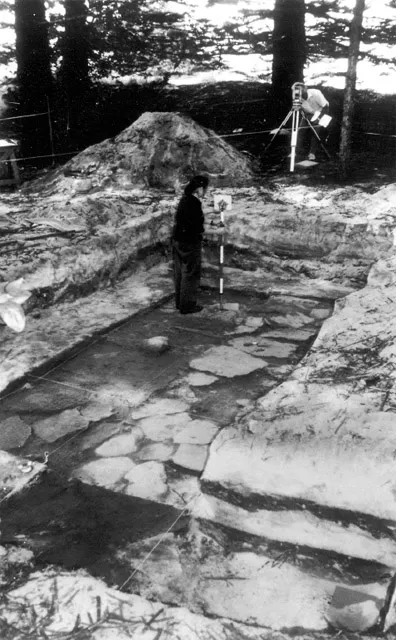
Figure 1: The Emily Bay marae during excavation
Where did the first Norfolk Islanders go, if they did not simply die out? They may have continued west, reaching Australia. Adzes of East Polynesian type have been recovered from the coast of New South Wales, in one case from a midden site near Port Stephens. While this matter remains unresolved, it seems clear enough that nobody had reached Lord Howe Island, 500 km off the coast of New South Wales, until it was discovered by the Norfolk Island provisioning vessel, Supply, in 1788. Recent drilling and coring of sediments on land and in the lagoon, coupled with pollen analysis and archaeological research, has failed to disclose any sign of pre-European settlement. That is consistent with the late advent of murids – mice arrived about 1868 and rats not until 1916 – and with the survival of highly vulnerable flightless birds until after permanent habitation began, in 1834.15
Continuing south, we come to the Subantarctic Islands below mainland New Zealand, perhaps the least likely of all to have seen prehistoric settlement. Yet, the precipitous Snares, just visible from the mountains of southern Rakiura on a clear day, were known to southern Māori and a stone adze of Archaic type was recovered from the only feasible settlement area on the main island in 1961 (Figure 2). Brief investigations there in 1998 failed to produce any additional archaeological remains.16
Further south again are the large Auckland Islands, known to nineteenth-century southern Māori as Maungahuka (translated in this instance as ‘Sugar Mountain’). Discovered by sealers in 1806, the Aucklands were first settled historically about 1842 by some forty Ngāti Mutunga from the Chathams and their thirty or so Moriori slaves. Settlement focused on Port Ross and Enderby Island, where cabbages and potatoes were grown, the latter maturing at barely the size of marbles. Feral cattle and pigs were hunted to supplement a diet of fish, seabirds and seals. Although riven by factional dissent, the community was healthy and seemed capable of long-term survival, but habitation terminated in 1856 following the failure of the Enderby settlement of European whalers and farmers in Port Ross, 1849–1852, after which there occurred a general exodus back to the mainland.17
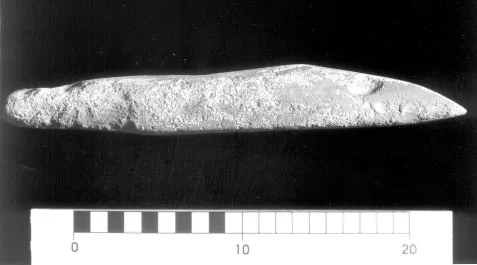
Figure 2: An Archaic adze recovered from the Sna...
Table of contents
- Front Cover
- Title Page
- Copyright
- Contents
- Introduction Angles of Vision
- Chapter 1 Retrievable Time: prehistoric colonisation of South Polynesia from the outside in and the inside out
- Chapter 2 Leadership in Ancient Polynesia
- Chapter 3 Asia in Murihiku: towards a transnational history of colonial culture
- Chapter 4 ‘In-Between’ Lives: studies from within a colonial society
- Chapter 5 Marriage and the Family on the Colonial Frontier
- Chapter 6 Is there a Good Case for New Zealand Exceptionalism?
- Chapter 7 Chance Residues: photographs and social history
- Chapter 8 A Germaine Moment: style, language and audience
- Chapter 9 The Shaping of a Field
- About the Contributors
- Notes
- Index
- Back Cover
Trusted by 375,005 students
Access to over 1.5 million titles for a fair monthly price.
Study more efficiently using our study tools.
Frequently asked questions
Yes, you can cancel anytime from the Subscription tab in your account settings on the Perlego website. Your subscription will stay active until the end of your current billing period. Learn how to cancel your subscription
No, books cannot be downloaded as external files, such as PDFs, for use outside of Perlego. However, you can download books within the Perlego app for offline reading on mobile or tablet. Learn how to download books offline
Perlego offers two plans: Essential and Complete
- Essential is ideal for learners and professionals who enjoy exploring a wide range of subjects. Access the Essential Library with 800,000+ trusted titles and best-sellers across business, personal growth, and the humanities. Includes unlimited reading time and Standard Read Aloud voice.
- Complete: Perfect for advanced learners and researchers needing full, unrestricted access. Unlock 1.5M+ books across hundreds of subjects, including academic and specialized titles. The Complete Plan also includes advanced features like Premium Read Aloud and Research Assistant.
We are an online textbook subscription service, where you can get access to an entire online library for less than the price of a single book per month. With over 1.5 million books across 990+ topics, we’ve got you covered! Learn about our mission
Look out for the read-aloud symbol on your next book to see if you can listen to it. The read-aloud tool reads text aloud for you, highlighting the text as it is being read. You can pause it, speed it up and slow it down. Learn more about Read Aloud
Yes! You can use the Perlego app on both iOS and Android devices to read anytime, anywhere — even offline. Perfect for commutes or when you’re on the go.
Please note we cannot support devices running on iOS 13 and Android 7 or earlier. Learn more about using the app
Please note we cannot support devices running on iOS 13 and Android 7 or earlier. Learn more about using the app
Yes, you can access Disputed Histories by Tony Ballantyne,Brian Moloughney in PDF and/or ePUB format, as well as other popular books in History & Australian & Oceanian History. We have over 1.5 million books available in our catalogue for you to explore.