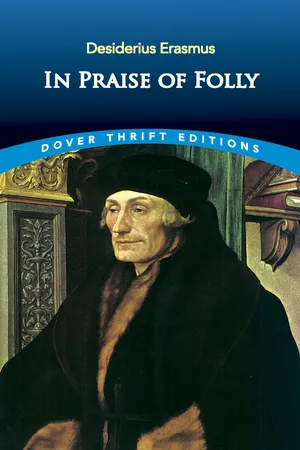
This witty, influential work by one of the greatest scholars of the Renaissance satirizes the shortcomings of the upper classes and religious institutions of the time. The most effective of all Erasmus's writings — ripe with allusions, vignettes, and caricatures — the literary gem was not only an extremely intelligent and articulate response to pretentiousness of all sorts, it also proved to be spiritual dynamite, leaving monastic brothers and clergymen the objects of universal laughter.
The book's purported narrator, the goddess Folly, proclaims herself to be the daughter of Youth and Wealth, nursed by Drunkenness and Ignorance. She is accompanied by such followers as Self-love, Pleasure, Flattery, and Sound Sleep.
A clever mix of drollery and fantasy, fast-paced and lighthearted in tone, the work has proved to be a lively and valuable commentary on modern times. It remains, according to the great Dutch historian John Huizinga, "a masterpiece of humour and wise irony … something that no one else could have given to the world."
- 80 pages
- English
- ePUB (mobile friendly)
- Available on iOS & Android
eBook - ePub
In Praise of Folly
About this book
Information
Topic
PhilosophySubtopic
Philosophical EssaysTable of contents
- Title Page
- Copyright Page
- Table of Contents
- Note
- ERASMUS OF ROTTERDAM to his friend THOMAS MORE, health:
- THE PRAISE OF FOLLY - An oration, of feigned matter, spoken by Folly in her own person
Trusted by 375,005 students
Access to over 1.5 million titles for a fair monthly price.
Study more efficiently using our study tools.
Frequently asked questions
Yes, you can cancel anytime from the Subscription tab in your account settings on the Perlego website. Your subscription will stay active until the end of your current billing period. Learn how to cancel your subscription
No, books cannot be downloaded as external files, such as PDFs, for use outside of Perlego. However, you can download books within the Perlego app for offline reading on mobile or tablet. Learn how to download books offline
Perlego offers two plans: Essential and Complete
- Essential is ideal for learners and professionals who enjoy exploring a wide range of subjects. Access the Essential Library with 800,000+ trusted titles and best-sellers across business, personal growth, and the humanities. Includes unlimited reading time and Standard Read Aloud voice.
- Complete: Perfect for advanced learners and researchers needing full, unrestricted access. Unlock 1.5M+ books across hundreds of subjects, including academic and specialized titles. The Complete Plan also includes advanced features like Premium Read Aloud and Research Assistant.
We are an online textbook subscription service, where you can get access to an entire online library for less than the price of a single book per month. With over 1.5 million books across 990+ topics, we’ve got you covered! Learn about our mission
Look out for the read-aloud symbol on your next book to see if you can listen to it. The read-aloud tool reads text aloud for you, highlighting the text as it is being read. You can pause it, speed it up and slow it down. Learn more about Read Aloud
Yes! You can use the Perlego app on both iOS and Android devices to read anytime, anywhere — even offline. Perfect for commutes or when you’re on the go.
Please note we cannot support devices running on iOS 13 and Android 7 or earlier. Learn more about using the app
Please note we cannot support devices running on iOS 13 and Android 7 or earlier. Learn more about using the app
Yes, you can access In Praise of Folly by Desiderius Erasmus in PDF and/or ePUB format, as well as other popular books in Philosophy & Philosophical Essays. We have over 1.5 million books available in our catalogue for you to explore.