A direct, stimulating approach to electromagnetic theory, this text employs matrices and matrix methods for the simple development of broad theorems. The author uses vector representation throughout the book, with numerous applications of Poisson’s equation and the Laplace equation (the latter occurring in both electronics and magnetic media). Contents include the electrostatics of point charges, distributions of charge, conductors and dielectrics, currents and circuits, and the Lorentz force and the magnetic field. Additional topics comprise the magnetic field of steady currents, induced electric fields, magnetic media, the Maxwell equations, radiation, and time-varying current circuits. Geared toward advanced undergraduate and first-year graduate students, this text features a large selection of problems. It also contains useful appendixes on vector analysis, matrices, elliptic functions, partial differential equations, Fourier series, and conformal transformations. 228 illustrations by the author. Appendixes. Problems. Index.
In many standard texts on advanced calculus or vector analysis one can find a thorough treatment of vector analysis. It serves our purpose here merely to mention some important aspects of this subject. To make our review the more useful we will survey this material in terms of generalized coordinates.
The geometric vector is a mathematical quantity having both direction and magnitude. Vectors of equal length having the same direction are said to be equal. If two vectors have equal length but have opposite sense (or direction) one is called the negative of the other. A scalar m times a vector produces a vector m times as long, in the same direction if m is positive or in the opposite direction if m is negative.
A vector is defined at a point in space. Therefore six numbers are actually required to specify it: three numbers to specify the point and three numbers to specify the components of the vector at the point.
Vectors can be combined by addition or by multiplication. To be combined, two vectors must be defined at the same point in space. It does not make sense to attempt the combination of two vectors defined at different points. We shall observe later that this constraint is quite important when handling vector combinations in curvilinear coordinates.
Addition obeys the Commutative Law,
A + B = B + A.
Addition obeys the Associative Law,
(A + B) + C = A + (B+C).
Addition obeys the Distributive Law,
m(A + B) = mA + mB.
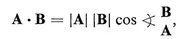
There are two products defined, the dot or scalar product and the cross or vector product. The dot product of two vectors A and B is defined as
where
is the cosine of the smallest angle between A and B. This product is a scalar quantity.
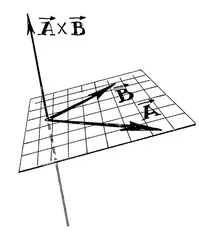
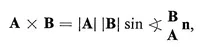
The vector product of two vectors A and B is a vector quantity, and it is written
where n is a unit vector directed perpendicul...
Table of contents
Title Page
Copyright Page
Dedication
Preface
Table of Contents
Notation
I. Preliminaries
II. The Electrostatics of Point Charges
III. Distributions of Charge
IV. Conductors and Dielectrics
V. Currents and Circuits
VI. The Lorentz Force and the Magnetic Field
VII. The Magnetic Field of Steady Currents
VIII. Induced Electric Fields
IX. Magnetic Media
X. The Maxwell Equations
XI. Radiation
XII. Time- Varying Current Circuits
Appendix
Problems
Index
Trusted by 375,005 students
Access to over 1.5 million titles for a fair monthly price.
Study more efficiently using our study tools.
Frequently asked questions
Yes, you can cancel anytime from the Subscription tab in your account settings on the Perlego website. Your subscription will stay active until the end of your current billing period. Learn how to cancel your subscription
No, books cannot be downloaded as external files, such as PDFs, for use outside of Perlego. However, you can download books within the Perlego app for offline reading on mobile or tablet. Learn how to download books offline
Perlego offers two plans: Essential and Complete
Essential is ideal for learners and professionals who enjoy exploring a wide range of subjects. Access the Essential Library with 800,000+ trusted titles and best-sellers across business, personal growth, and the humanities. Includes unlimited reading time and Standard Read Aloud voice.
Complete: Perfect for advanced learners and researchers needing full, unrestricted access. Unlock 1.5M+ books across hundreds of subjects, including academic and specialized titles. The Complete Plan also includes advanced features like Premium Read Aloud and Research Assistant.
Both plans are available with monthly, semester, or annual billing cycles.
We are an online textbook subscription service, where you can get access to an entire online library for less than the price of a single book per month. With over 1.5 million books across 990+ topics, we’ve got you covered! Learn about our mission
Look out for the read-aloud symbol on your next book to see if you can listen to it. The read-aloud tool reads text aloud for you, highlighting the text as it is being read. You can pause it, speed it up and slow it down. Learn more about Read Aloud
Yes! You can use the Perlego app on both iOS and Android devices to read anytime, anywhere — even offline. Perfect for commutes or when you’re on the go. Please note we cannot support devices running on iOS 13 and Android 7 or earlier. Learn more about using the app
Yes, you can access Introduction to Electromagnetic Theory by George E. Owen in PDF and/or ePUB format, as well as other popular books in Physical Sciences & Physics. We have over 1.5 million books available in our catalogue for you to explore.