- 304 pages
- English
- ePUB (mobile friendly)
- Available on iOS & Android
eBook - ePub
Mathematics for the Physical Sciences
About this book
This book offers advanced undergraduates and graduate students in physics, engineering, and other natural sciences a solid foundation in several fields of mathematics. Clear and well-written, it assumes a previous knowledge of the theory of functions of real and complex variables, and is ideal for classroom use, self-study, or as a supplementary text.
Starting with vector spaces and matrices, the text proceeds to orthogonal functions; the roots of polynomial equations; asymptotic expansions; ordinary differential equations; conformal mapping; and extremum problems. Each chapter goes straight to the heart of the matter, developing subjects just far enough so that students can easily make the appropriate applications. Exercises at the end of each chapter, along with solutions at the back of the book, afford further opportunities for reinforcement. Discussions of numerical methods are oriented toward computer use, and they bridge the gap between the "there exists" perspective of pure mathematicians and the "find it to three decimal places" mentality of engineers. Each chapter features a separate bibliography.

Frequently asked questions
Yes, you can cancel anytime from the Subscription tab in your account settings on the Perlego website. Your subscription will stay active until the end of your current billing period. Learn how to cancel your subscription.
No, books cannot be downloaded as external files, such as PDFs, for use outside of Perlego. However, you can download books within the Perlego app for offline reading on mobile or tablet. Learn more here.
Perlego offers two plans: Essential and Complete
- Essential is ideal for learners and professionals who enjoy exploring a wide range of subjects. Access the Essential Library with 800,000+ trusted titles and best-sellers across business, personal growth, and the humanities. Includes unlimited reading time and Standard Read Aloud voice.
- Complete: Perfect for advanced learners and researchers needing full, unrestricted access. Unlock 1.4M+ books across hundreds of subjects, including academic and specialized titles. The Complete Plan also includes advanced features like Premium Read Aloud and Research Assistant.
We are an online textbook subscription service, where you can get access to an entire online library for less than the price of a single book per month. With over 1 million books across 1000+ topics, we’ve got you covered! Learn more here.
Look out for the read-aloud symbol on your next book to see if you can listen to it. The read-aloud tool reads text aloud for you, highlighting the text as it is being read. You can pause it, speed it up and slow it down. Learn more here.
Yes! You can use the Perlego app on both iOS or Android devices to read anytime, anywhere — even offline. Perfect for commutes or when you’re on the go.
Please note we cannot support devices running on iOS 13 and Android 7 or earlier. Learn more about using the app.
Yes, you can access Mathematics for the Physical Sciences by Herbert S Wilf in PDF and/or ePUB format, as well as other popular books in Mathematics & Applied Mathematics. We have over one million books available in our catalogue for you to explore.
Information
chapter 1
Vector spaces and matrices
1.1 VECTOR SPACES
A vector space V is a collection of objects x, y, ... called vectors, satisfying the following postulates:
(I) If x and y are vectors, there is a unique vector x + y in V called the sum of x and y.
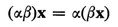
(II) If x is a vector and α a complex number, there is a uniquely defined vector αx in V satisfying
(1)

(2)

(3)

(4)

(5)

(6)

(III) There is a vector 0 in V satisfying
(7)

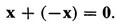
for every x in V, and, further, for every x in V there is a vector −x such that
(8)

We will use the notation x − y to mean x + (− y), as might be expected.
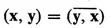
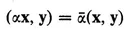
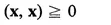
(IV) If x and y are vectors in V, there is a uniquely defined complex number (x, y) called the “inner product” of x and y which satisfies
(9)

(10)

(11)

(12)

(13)

(14)

We state at once that it is not our intention to develop here a purely axiomatic theory of vector spaces. However, in the remainder of this book we shall meet several vector spaces of different types, some of which will not “look like” vector spaces at all. It is most important to note that the only qualifications a system needs in order to be a vector space1 are those just set forth, for only in this way can the true unity of such apparently diverse topics as finite dimensional matrices, Fourier series, orthogonal polynomials, integral equations, differential eigenvalue problems, and so on, be perceived. An enlightening exercise for the reader, for example, will be found in analyzing various results as they are proved for special systems, and asking whether or not the properties of the special system were used, or whether, as will more often happen, we have proved a general property of vector spaces.
Exampl...
Table of contents
- Title Page
- Copyright Page
- Dedication
- Preface
- Table of Contents
- chapter 1 - Vector spaces and matrices
- chapter 2 - Orthogonal functions
- chapter 3 - The roots of polynomial equations
- chapter 4 - Asymptotic expansions
- chapter 5 - Ordinary differential equations
- chapter 6 - Conformal mapping
- chapter 7 - Extremum problems
- Solutions of the exercises
- Books referred to in the text
- Original works cited in the text
- Index