- 464 pages
- English
- ePUB (mobile friendly)
- Available on iOS & Android
eBook - ePub
The Thirteen Books of the Elements, Vol. 2
About this book
This is the definitive edition of one of the very greatest classics of all time — the full Euclid, not an abridgement. Using the text established by Heiberg, Sir Thomas Heath encompasses almost 2,500 years of mathematical and historical study upon Euclid.
This unabridged republication of the original enlarged edition contains the complete English text of all 13 books of the Elements, plus a critical apparatus that analyzes each definition, postulate, and proposition in great detail. It covers textual and linguistic matters; mathematical analyses of Euclid’s ideas; classical, medieval, Renaissance, modern commentators; refutations, supports, extrapolations, reinterpretations, and historical notes, all given with extensive quotes.
“The textbook that shall really replace Euclid has not yet been written and probably never will be.” — Encyclopaedia Britannica.
Volume 1. 151-page Introduction: life and other works of Euclid; Greek and Islamic commentators; surviving mss., scholia, translations; bases of Euclid’s thought. Books I and II of the Elements, straight lines, angles, intersection of lines, triangles, parallelograms, etc.
Volume 2. Books III-IX: Circles, tangents, segments, figures described around and within circles, rations, proportions, magnitudes, polygons, prime numbers, products, plane and solid numbers, series of rations, etc.
Volume 3. Books X to XIII: planes, solid angles, etc.; method of exhaustion in similar polygons within circles, pyramids, cones, cylinders, spheres, etc. Appendix: Books XIV, XV, sometimes ascribed to Euclid.
This unabridged republication of the original enlarged edition contains the complete English text of all 13 books of the Elements, plus a critical apparatus that analyzes each definition, postulate, and proposition in great detail. It covers textual and linguistic matters; mathematical analyses of Euclid’s ideas; classical, medieval, Renaissance, modern commentators; refutations, supports, extrapolations, reinterpretations, and historical notes, all given with extensive quotes.
“The textbook that shall really replace Euclid has not yet been written and probably never will be.” — Encyclopaedia Britannica.
Volume 1. 151-page Introduction: life and other works of Euclid; Greek and Islamic commentators; surviving mss., scholia, translations; bases of Euclid’s thought. Books I and II of the Elements, straight lines, angles, intersection of lines, triangles, parallelograms, etc.
Volume 2. Books III-IX: Circles, tangents, segments, figures described around and within circles, rations, proportions, magnitudes, polygons, prime numbers, products, plane and solid numbers, series of rations, etc.
Volume 3. Books X to XIII: planes, solid angles, etc.; method of exhaustion in similar polygons within circles, pyramids, cones, cylinders, spheres, etc. Appendix: Books XIV, XV, sometimes ascribed to Euclid.
Frequently asked questions
Yes, you can cancel anytime from the Subscription tab in your account settings on the Perlego website. Your subscription will stay active until the end of your current billing period. Learn how to cancel your subscription.
No, books cannot be downloaded as external files, such as PDFs, for use outside of Perlego. However, you can download books within the Perlego app for offline reading on mobile or tablet. Learn more here.
Perlego offers two plans: Essential and Complete
- Essential is ideal for learners and professionals who enjoy exploring a wide range of subjects. Access the Essential Library with 800,000+ trusted titles and best-sellers across business, personal growth, and the humanities. Includes unlimited reading time and Standard Read Aloud voice.
- Complete: Perfect for advanced learners and researchers needing full, unrestricted access. Unlock 1.4M+ books across hundreds of subjects, including academic and specialized titles. The Complete Plan also includes advanced features like Premium Read Aloud and Research Assistant.
We are an online textbook subscription service, where you can get access to an entire online library for less than the price of a single book per month. With over 1 million books across 1000+ topics, we’ve got you covered! Learn more here.
Look out for the read-aloud symbol on your next book to see if you can listen to it. The read-aloud tool reads text aloud for you, highlighting the text as it is being read. You can pause it, speed it up and slow it down. Learn more here.
Yes! You can use the Perlego app on both iOS or Android devices to read anytime, anywhere — even offline. Perfect for commutes or when you’re on the go.
Please note we cannot support devices running on iOS 13 and Android 7 or earlier. Learn more about using the app.
Yes, you can access The Thirteen Books of the Elements, Vol. 2 by Euclid in PDF and/or ePUB format, as well as other popular books in Mathematics & History & Philosophy of Mathematics. We have over one million books available in our catalogue for you to explore.
Information
BOOK V.
INTRODUCTORY NOTE.
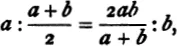
The anonymous author of a scholium to Books V. (Euclid, ed. Heiberg, Vol. V. p. 280), who is perhaps Proclus, tells us that “some say” this Book, containing the general theory of proportion which is equally applicable to geometry, arithmetic, music, and all mathematical science, “is the discovery of Eudoxus, the teacher of Plato.” Not that there had been no theory of proportion developed before his time; on the contrary, it is certain that the Pythagoreans had worked out such a theory with regard to numbers, by which must be understood commensurable and even whole numbers (a number being a “multitude made up of units,” as defined in Eucl. VII). Thus we are told that the Pythagoreans distinguished three sorts of means, the arithmetic, the geometric and the harmonic mean, the geometric mean being called proportion (ἀναλογία) par excellence; and further Iamblichus speaks of the “most perfect proportion consisting of four terms and specially called harmonic,” in other words, the proportion

which was said to be a discovery of the Babylonians and to have been first introduced into Greece by Pythagoras (Iamblichus, Comm. on Nicomachus, p. 118). Now the principle of similitude is one which is presupposed by all the arts of design from their very beginnings; it was certainly known to the Egyptians, and it must certainly have been thoroughly familiar to Pythagoras and his school. This consideration, together with the evidence of the employment by him of the geometric proportion, makes it indubitable that the Pythagoreans used the theory of proportion, in the form in which it was known to them, i.e. as applicable to commensurables only, in their geometry. But the discovery, also by the Pythagoreans, of the incommensurable would of course be seen to render the proofs which depended on the theory of proportion as then understood inconclusive; as Tannery observes (La Géométrie grecque, p. 98), “the discovery of incommensurability must have caused a veritable logical scandal in geometry and, in order to avoid it, they were obliged to restrict as far as possible the use of the principle of similitude, pending the discovery of a means of establishing it on the basis of a theory of proportion independent of commensurability.” The glory of the latter discovery belongs then most probably to Eudoxus. Certain it is that the complete theory was already familiar to Aristotle, as we shall see later.
It seems probable, as indicated by Tannery (loc. cit) that the theory of proportions and the principle of similitude took, in the earliest Greek geometry, an earlier place than they do in Euclid, but that, in consequence of the discovery of the incommensurabl...
Table of contents
- Cover
- Title Page
- Copyright page
- Contents of Volume II
- Book III. Definitions.
- Book IV. Definitions.
- Book V. Introductory note.
- Book VI. Introductory note.
- Book VII. Definitions.
- Book VIII.
- Book IX.
- Greek Index to Vol. II.
- English Index to Vol. II.