Visible light is an abundant source of energy. While the conversion of light energy into electrical energy (photovoltaics) is highly developed and commercialized, the use of visible light in chemical synthesis is far less explored. Chemical photocatalysts that mimic principles of biological photosynthesis utilize visible light to drive endothermic or kinetically hindered reactions.
- 531 pages
- English
- ePUB (mobile friendly)
- Available on iOS & Android
eBook - ePub
Chemical Photocatalysis
About this book
Information
Topic
NaturwissenschaftenSubtopic
Chemie1 Early pioneers of organic photochemistry
Peter Schroll
Abstract
A summary of the beginnings of organic photochemistry from a synthetic point of view is presented. Accidentally discovered reactions driven by light as well as systematic studies on the behavior of light toward matter leading to the development of a new branch of chemistry are discussed.
“When oil will have been all burned in our prodigal industries, it may become necessary, even on social grounds, to come to exploit solar energy.” [1] This foresightful statement fits perfectly into modern debates at the beginning of the twenty-first century about the necessity of using renewable energies, but is in fact more than one hundred years old, written by Giacomo Ciamician, an early pioneer of organic photochemistry. He was a visionary chemist who was invaluable in developing photochemistry, an upcoming science at the beginning of the twentieth century. Apart from his credits to discover several new photochemical reactions, he was interested in using these reactions on an industrial scale. Nevertheless, chemical transformations under the influence of light were known long before. In 1790, Joseph Priestley (1733–1800) exposed partially filled vials of “spirit of nitre” (nitric acid) to sunlight and observed a reddish color, which was attributed to the formation of nitrogen dioxide (Figure 1.1.1). This first photochemical reaction in the gas phase marks the beginning of photochemistry [2]. Moreover, Priestley is given credit for discovering basic principles of photosynthesis, the most important photochemical process for living organisms on earth. He “fully ascertained the influence of light in the production of dephlogisticated air (oxygen) in water by means of a green substance,” which was identified as tiny plants [2, 3]. After Nicholas Theodore de Saussure (1767–1845) had shown in 1804 that the influence of light causes plants to consume water and carbon dioxide and to generate oxygen, a fundamental understanding of the process of photosynthesis in green plants had been discovered [2, 4].
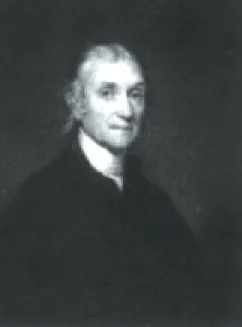
Figure 1.1.1: Joseph Priestley (1733–1800), English philosopher, chemist and physicist.
The English chemist Sir Humphry Davy (1778–1829) used sunlight to produce phosgene out of a mixture of chlorine and carbon dioxide in 1812 [5]. Moreover, during his studies of halogens and their salts he discovered the light sensitivity of silver iodine, which created the basis for the process of photography. For decades, photography was the most important application of photochemical processes.
As early as 1831, Johann Wolfgang Döbereiner (1780–1849) reported the light-induced reduction of metal ions by oxalic acid [2, 6]. In the case of an aqueous solution of oxalic acid and iron(III) oxide irradiated by sunlight, he obtained carbon dioxide and humboldtite, a basic iron(II) oxide. Similarly, he reduced salts of platinum, silver and iridium. In each case, the result was checked by control experiments in the dark. Unfortunately, he was not able to report the first photoreaction of a ruthenium compound, whose complexes today serve as powerful photocatalysts, since ruthenium was discovered 13 years later in 1844.
The following decades were characterized by accidental discoveries of photochemical reactions. Several researchers contributed to the new field of photochemistry by discovering single reactions. Among the first reactions were [2 + 2]-cycloadditions, geometric isomerizations, light-induced halogenations, photoreductions of carbonyl compounds and photodimerizations.
Carl Julius Fritzsche (1808–1871) observed the light sensitivity of anthracene in 1867: “When a cold, saturated solution [of anthracene] is exposed to sunlight, microscopic crystals begin to precipitate.” [7] However, it took another 25 years to recognize the photoproduct, being the dimer of anthracene, as a result of a [4 + 4]-cycloaddition [8]. In this case, the photoreaction was discovered due to the fact that the photoproduct was less soluble than the starting material.
In 1877, Carl Theodor Liebermann (1842–1914), a German chemist working in Berlin, observed the conversion of yellow crystals of thymoquinone (2-isopropyl-5-methylbenzoquinone) producing a white photoproduct under irradiation with sunlight (Figure 1.1.2). This was the first example of a [2 + 2]-cycloaddition [9]. It is worth mentioning that he was the first to test artificial light sources since early photochemists used sunlight as the only and most important source of radiation at that time [10]. Liebermann is today known as a pioneer of solid-state photochemistry due to his examinations concerning the dimerization of quinones and styrene derivatives [11]. As far as the latter are concerned, Bertram and Kürsten, two chemists working in industry, were a few months faster in publishing the light-mediated dimerization of cinnamic acid and are therefore given credit for the discovery of the dimerization of styrene derivatives [12]. However, Liebermann was the most important photochemist of the nineteenth century.
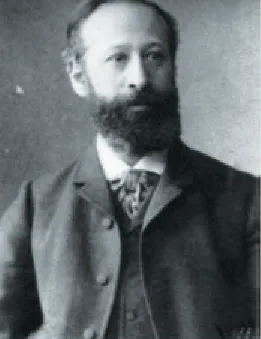
Figure 1.1.2: Carl Theodor Liebermann (1842–1914), a pioneer of solid-state photochemistry.
The first geometric isomerization of olefins was reported by William Henry Perkin (1838–1907) in 1881 (Figure 1.1.3). He irradiated 2-alkoxy-cinnamic acid and obtained the “β-isomer.” [13] Liebermann found out that iodine accelerates the cis-trans isomerization of aromatic unsaturated acids such as δ-phenylpentadienoic acid [10]. Johannes Wislicenus (1835–1902) was able to extend the method to nonaromatic systems. Among others, when he irradiated maleic acid in an aqueous solution of bromine, fumaric acid was obtained [2, 14].
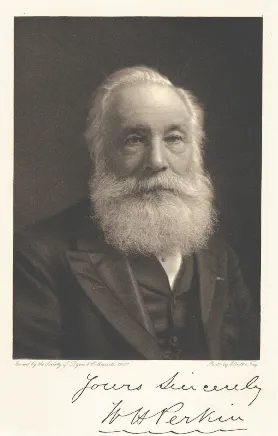
Figure 1.1.3: William Henry Perkin examined the first light-induced geometric isomerizations.
Halogens also played an important role in photochemical experiments of Julian Schramm (1852–1926) in Lemberg. Between 1884 and 1888 he studied the light-induced bromination of alkylbenzenes and found out “that light and darkness work in the same way as elevated and low temperatures, respectively.” [15] At that time it was known that the selectivity of a halogenation reaction is temperature-dependent: at low temperatures, the aromatic ring is halogenated while at elevated temperatures a substitution reaction occurs at the alkyl side chain. The new aspect of his work was the finding that the halogenation reaction can be carried out with light and that the selectivity can be controlled using sunlight irradiation or darkness. Moreover, Schramm was the first to realize the potential of this type of reaction for industrial application. Today, photochlorination is an important tool in industrial synthesis.
An impressive example of an accidental discovery of a new reaction is given by Heinrich Klinger (1853–1945). During his attempts to convert benzil to isobenzil in an aqueous solution of ether, he observed the unexpected formation of crystals. A close examination showed t...
Table of contents
- Title Page
- Copyright
- Contents
- Preface
- Preface to the second edition
- 1 Early pioneers of organic photochemistry
- 2 Photophysics of photocatalysts
- 3 Flavin photocatalysis
- 4 Templated enantioselective photocatalysis
- 5 Photocatalysis with nucleic acids and peptides
- 6 Photocatalytic decarboxylations
- 7 Photoredox catalyzed α-functionalization of amines – visible light mediated carbon-carbon and carbon-hetero bond forming reactions
- 8 Visible-light photoredox catalysis with [Ru(bpy)3]2+: General principles and the twentieth-century roots
- 9 Homogeneous visible light mediated transition metal catalysis other than Ruthenium and Iridium
- 10 Coupling photoredox and biomimetic catalysis for the visible-light-driven oxygenation of organic compounds
- 11 Synergistic visible light photoredox catalysis
- 12 Excited radical anions and excited anions in visible light photoredox catalysis
- 13 Metal complexes for photohydrogenation and hydrogen evolution
- 14 Heterogeneous semiconductor photocatalysis
- 15 Polyoxometalates in photocatalysis
- 16 Description of excited states in photochemistry with theoretical methods
- 17 Transient absorption with a streak camera
- 18 Time resolved spectroscopy in photocatalysis
- Index
Trusted by 375,005 students
Access to over 1.5 million titles for a fair monthly price.
Study more efficiently using our study tools.
Frequently asked questions
Yes, you can cancel anytime from the Subscription tab in your account settings on the Perlego website. Your subscription will stay active until the end of your current billing period. Learn how to cancel your subscription
No, books cannot be downloaded as external files, such as PDFs, for use outside of Perlego. However, you can download books within the Perlego app for offline reading on mobile or tablet. Learn how to download books offline
Perlego offers two plans: Essential and Complete
- Essential is ideal for learners and professionals who enjoy exploring a wide range of subjects. Access the Essential Library with 800,000+ trusted titles and best-sellers across business, personal growth, and the humanities. Includes unlimited reading time and Standard Read Aloud voice.
- Complete: Perfect for advanced learners and researchers needing full, unrestricted access. Unlock 1.5M+ books across hundreds of subjects, including academic and specialized titles. The Complete Plan also includes advanced features like Premium Read Aloud and Research Assistant.
We are an online textbook subscription service, where you can get access to an entire online library for less than the price of a single book per month. With over 1.5 million books across 990+ topics, we’ve got you covered! Learn about our mission
Look out for the read-aloud symbol on your next book to see if you can listen to it. The read-aloud tool reads text aloud for you, highlighting the text as it is being read. You can pause it, speed it up and slow it down. Learn more about Read Aloud
Yes! You can use the Perlego app on both iOS and Android devices to read anytime, anywhere — even offline. Perfect for commutes or when you’re on the go.
Please note we cannot support devices running on iOS 13 and Android 7 or earlier. Learn more about using the app
Please note we cannot support devices running on iOS 13 and Android 7 or earlier. Learn more about using the app
Yes, you can access Chemical Photocatalysis by Burkhard König in PDF and/or ePUB format, as well as other popular books in Naturwissenschaften & Chemie. We have over 1.5 million books available in our catalogue for you to explore.