![]() TOPICS GAINING TRACTION
TOPICS GAINING TRACTION ![]()
CHAPTER 7
TEACHER PREPARATION IS HOT AND SHOULD BE!
Diane Kern, Aimee Morewood, Allison Swan Dagen, Miriam Martinez, Samuel DeJulio, Janis Harmon and Misty Sailors
ABSTRACT
Purpose: To describe the importance of exemplary literacy teacher preparation today, the changing landscape of teacher preparation accreditation and the recently revised and launched International Literacy Association (ILA) National Recognition programs.
Design: In this chapter, the authors examine the current context of literacy teacher preparation in the United States, including the changing landscape of national accreditation, national recognition, and certification requirements. Next, the authors provide a brief overview of the ILA Standards for the Preparation of Literacy Professionals 2017 (Standards 2017) (International Literacy Association (ILA), 2018) and consider how Standards 2017 may inform literacy teacher preparation programs, state standards, and certification. Then, the authors discuss how the role of reading/literacy specialist in Standards 2017 is being applied in the ILA National Recognition program. To close the chapter, the authors share guiding questions and two case studies from exemplary literacy preparation programs – West Virginia University and the University of Texas at San Antonio – in an effort to provide practical examples of program innovation and improvement in these challenging times in literacy teacher preparation.
Findings: The authors discuss the current context of teacher preparation today, the ILA Standards 2017 with specific attention to the reading/literacy specialist role and standards.
Practical Implications: ILA National Recognition program involve reflection, self-study, on-site visits by peers to support and inspire ongoing literacy teacher preparation program quality and improvement.
Keywords: Literacy; teacher preparation; national recognition; International Literacy Association; accreditation; standards
According to the most recent What’s Hot in Literacy Survey (Cassidy, Ortlieb, & Grote-Garcia, 2019), teacher preparation and certification are hot and should be hot topics in the literacy profession. This is a recent finding but not a new one. Studies on literacy teacher preparation and certification in the United States began in the 1960s (Austin & Morrison, l962, l976) and have continued (e.g., Dole, Liang, Watkins, & Wiggins, 2006; Hoffman et al., 2005; International Literacy Association (ILA), 2015, 2018).
Interestingly, standards for literacy teacher preparation programs were also initiated in the 1960s (Kern, 2011), and since that time the ILA [formerly the International Reading Association (IRA)] has produced nine iterations of standards to guide the preparation of reading/literacy professionals in the United States (IRA, 1961, 1965, 1978, 1986, 1992, 1998, 2003, 2010; ILA, 2018). ILA standards over the years have influenced literacy teacher preparation and certification requirements for the many roles of literacy professionals in PK-12 settings. Standards also outline requisite knowledge, skills, and dispositions of graduates of literacy teacher preparation programs.
In this chapter, we examine the current context of literacy teacher preparation in the United States, including the changing landscape of national accreditation, national recognition, and certification requirements. Next, we provide a brief overview of the ILA Standards for the Preparation of Literacy Professionals 2017 (Standards 2017) (ILA, 2018) and consider how Standards 2017 may inform literacy teacher preparation programs, state standards, and certification. Then, we discuss how the role of reading/literacy specialist in Standards 2017 is being applied in the ILA National Recognition program. To close the chapter, we share guiding questions and two case studies from exemplary literacy preparation programs – West Virginia University (WVU) and the University of Texas at San Antonio (UTSA) – in an effort to provide practical examples of program innovation and improvement in these challenging times in literacy teacher preparation.
CURRENT CONTEXT OF LITERACY TEACHER PREPARATION AND CERTIFICATION
Literacy teacher preparation may be experiencing a heightened level of scrutiny, change, and perceived attacks now more than ever. Enrollment in teacher preparation programs is decreasing significantly according to the US Department of Education Office of Postsecondary Education (2015), yet a report commissioned by the Learning Policy Institute (Sutcher, Darling-Hammond, & Carver-Thomas, 2016) anticipates that in “2020, an estimated 300,000 new teachers will be needed per year, and by 2025, that number will increase to 316,000 annually” (p. 1).
National Assessment of Education Progress (NAEP) reading average scores nationwide have stagnated since 2009 (Wilburn, Cramer, & Walton, 2019). Education historian Diane Ravitch (2014) calls this period in US education a “reign of error.” According to Risko et al. (2008; ILA & National Council of Teachers of English (NCTE), 2017):
[t]op-down educational policies of the past two decades have challenged the effectiveness of and the need for teacher preparation programs, leading to a proliferation of recommendations, regulations, and alternative pathways to teaching (e.g., National Council on Teacher Quality, use of value-added methods to measure teacher effectiveness, Teach for America, and Relay Graduate School of Education). (p. 2)
Furthermore, this research advisory offers an extensive analysis in an effort to counter “the narrowness and repetition of political discourses about teacher education” (ILA & NCTE, 2017, p. 2).
Oversight and quality assurance of teacher preparation are also changing rapidly in what some have called a turbulent storm (Will, 2019). For many years, teacher preparation programs had a choice of accreditors – either National Council for the Accreditation of Teacher Education (NCATE) or Teacher Education Accreditation Council (TEAC) – and the requirements remained relatively stable. Then NCATE and TEAC merged in 2010 to become the Council for the Accreditation of Educator Preparation (CAEP). CAEP’s primary goal was to be the only educator preparation program accreditor with one set of standards in the United States, but their standards and guidelines changed continuously over the course of its first few years. The American Association of Colleges for Teacher Education delivered a “crisis of confidence” resolution to CAEP in 2015 (Sawchuk, 2015). “CAEP standards were centered on accountability … and over time ‘it began to look like they’re seeking compliance instead of embracing a collegial approach’” (Will, 2019, paragraph 16). A new, competing accreditor – Association Advancing Quality in Educator Preparation (AAQEP) – was formed on tenets that focused on student success and its relationship to quality educator preparation, improvement-focused and innovation-friendly protocols, and collaborative partnerships with teacher preparation faculty, administrators, and state officials (AAQEP, 2018).
Currently, literacy teacher certification and state standards are undergoing significant changes. The ILA Teacher Preparation Taskforce gathered nationwide information about requirements for pre-service literacy teacher preparation from state education department websites and officials (ILA, 2015). Key findings include: certification for literacy professionals was undergoing change; literacy-specific standards were not listed on websites for between 34 and 38 states; and, “the majority of states did not have a requirement related to a specific number in pre-service literacy or reading instruction coursework” (p. 4). This taskforce emphasized the need for further research on pre-service teacher preparation programs and candidates’ ability to develop student literacy across PK-12 grade span and also encouraged stakeholders to collaborate to establish research-based state literacy education (LE) standards.
The ILA Standards for the Preparation of Literacy Professionals 2017, also abbreviated as Standards 2017 (ILA, 2018), are a key resource that states can refer to when establishing research-based state LE standards. In addition, colleges and schools of education faculty who lead literacy teacher education programs can use Standards 2017 to inform program innovations and improvements. They were developed over the course of three years by 26 ILA members, who had knowledge and expertise in literacy professional preparation, research, and/or teaching experience. The 2017 Standards Revision Committee (SRC) initially worked on an up-to-date and thorough review of the literature, then conducted a strength and gap analysis of Standards 2010 (IRA, 2010). The SRC determined most standards topics could stay the same (e.g., Standard 1: Foundational Knowledge; Standard 2: Curriculum and Instruction), but the standards themselves would need to be revised to provide more specificity on the knowledge, skills, and dispositions required of literacy professionals because previous iterations of standards focused on preparing reading professionals. On the other hand, the roles of literacy professionals undertook a major revision based on current research (e.g., Bean et al., 2015; Galloway & Lesaux, 2014).
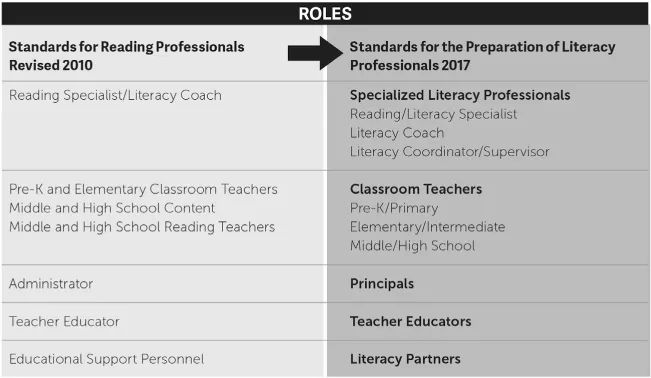
Fig. 1 depicts the key shifts in roles, and Fig. 2 depicts key shifts from Standards 2010 to Standards 2017.
Fig. 1. Key Shifts in Roles from Standards 2010 to Standards 2017.
There are several recent publications that share more information on Standards 2017 and how they may be utilized to develop state literacy standards, in-service and pre-service professional learning, and best practices for literacy leaders (Dagen & Bean, 2020; Kern & Bean, 2018; Kern et al., 2018). Another important us...