This military history of French Equatorial Africa examines the key players and operations from WWII to post-colonial conflicts.
France in Centrafrique explores the history of French Equatorial Africa with a particular emphasis on the role of the Central African Republic in the Second World War and the Free French Movement. One of the key figures to emerge from this period was Jean-Bédel Bokassa, a man who would shape the destiny of the Central African Republic.
Bokassa served alongside the Free French under General Charles de Gaulle and later in the metropolitan French military as an NCO in Indo-China. Historian Peter Baxter traces Bokassa's ascent from these humble beginnings to his position as one of the region's most notorious dictators. Bokassa's excessive violence and personal aggrandizement are covered, as well as the role France played in his rise and fall—especially through Jacques Foccart's wide-reaching intelligence network.
Baxter examines France's evolving relationship with her erstwhile African colonial possessions, illuminating the underlying cause and effect of the many French interventions. He underscores the roles played by various individual personalities, both French and African. The book traces the overt and covert French military actions in the region, including Operation Barracuda, Operations Almandin I, II and III, Operation Boali and the various regional, international and European regional interventions.
eBook - ePub
France in Centrafrique
From Bokassa and Operation Barracude to the Days of EUFOR
- 80 pages
- English
- ePUB (mobile friendly)
- Available on iOS & Android
eBook - ePub
About this book
Information
CHAPTER ONE
OUBANGUI-CHARI
“Once upon a time there was a landlocked French colony in the very heart of Africa called Oubangui-Shari, which was best known to the outside world for supplying platter-lipped women to circus sideshows”
—Washington Post, 1977
—Washington Post, 1977
Equatorial Africa is dominated by the wide and curving sweep of the Congo river. This iconic stream drains into the vast Congo Basin from the western slopes of the Great Rift Valley, from the central plateau of southern Africa and from a northward-probing finger known as the Ubangi river. This, the largest right-bank tributary of the Congo, draws from a watershed of some 600,000 square kilometres, encompassing a significant swathe of the northern frontier of the modern-day Democratic Republic of Congo, the southern Sudanese Bahr el-Ghazal and almost the entire area of the Central African Republic.
The Central African Republic, that problem child of Francophone Africa, was known to the French during the colonial period as the Oubangui-Chari. The Ubangui river marked the southern boundary and the Chari river the northern. In between lay a vast hinterland of absolute isolation; an unmapped landscape of riverine forest, wooded hill country and woodland savannah; a beautiful Eden, remote from the main fields of interest, sparsely populated, often unpopulated, a place of manifold wildlife—gorilla and rhinoceros, crocodile and lion—shielded from civilization by tsetse fly, and far beyond the crack of the slave trader’s whip or the report of a hunter’s rifle.
The territory was drawn into the French sphere of influence through the work of a certain Pierre Savorgnan de Brazza, the Italian-born doyen of French African exploration who, through his exploration of the river systems of Gabon, claimed some quarter of equatorial Africa for France. His great rival in this enterprise was the no less prominent Welsh/American explorer, Henry Morton Stanley, who, through a series of daring escapades, staked primum petere to the Congo river itself, and by extension what hinterland he could reasonably include on behalf of the rapacious Belgian King Leopold II.
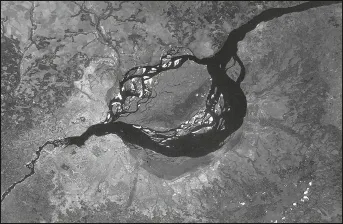
Satellite image of the Congo River Basin.
Source: Wikicommons
Source: Wikicommons
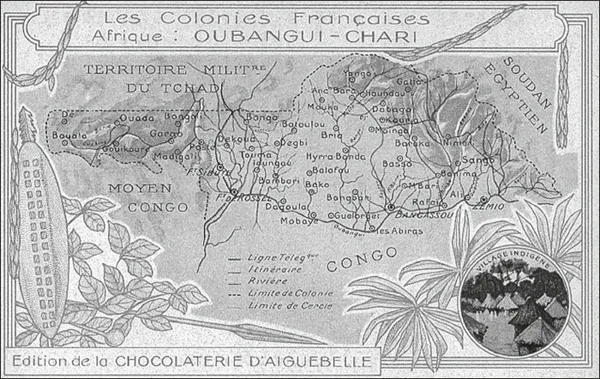
Map of Oubangui-Chari, from a chocolate card printed circa 1910.
Source: Wikicommons
Source: Wikicommons
Such were the machinations of the ‘scramble for Africa’, the global-strategic partitioning of the continent that took place toward the end of the 19th century, and which by the turn of the next had seen Africa largely assigned to one or other of the great European powers. France and Britain, of course, dominated the game, but Belgium, Germany, Portugal, Italy and Spain worked hard to establish their own variously less significant spheres of influence.
For the French, de Brazza succeeded in staking out the entire right bank of the Congo river above the Stanley Pool, securing what in due course would become known as French Equatorial Africa. This vast region was subdivided into the administrative colonies of the French Congo, Gabon, Equatorial Guinea and the enormous interior expanse of Chad. A secondary effect of this was to block further international claim to any of the territories that could be reached via the navigable Ubangui river, or Oubangui river as it was better known, and any of its tributaries. Moreover it opened the theoretical possibility that the French could use this obvious highway into the interior to probe eastward into the Sudan and the Nile valley, possibly even extending French influence as far as the Indian Ocean. In this way French imperial interest would achieve some sort of geographic rationale between French North, West and Equatorial Africa, effectively straddling the continent all the way from the Gulf of Guinea to the Horn of Africa.
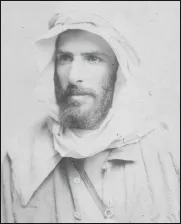
Pierre Savorgnan de Brazza.
Source: Paul Nadar
Source: Paul Nadar
Such a scheme was enormously ambitious, but it was reflective of European imperial ambition in general, with each, to some degree or another manoeuvred to frustrate the ambitions of the other. Such was the ‘Scramble for Africa’.
In the case of what was loosely defined as Haut-Oubangui, or Upper Oubangui, the river was explored by two brothers, Albert and Michel Dolisie, who in 1890 founded the settlement of Bangui below the rapids of the same name, marking the first substantive imperial imprint in the region. The territory that they encountered conformed more or less with the catchment of the upper reaches of Oubangui river and straddled three of the major ecological zones of Africa. Along the banks of the river itself a thick belt of tropical forest replicated the enervating conditions of the Congo, while farther north, on higher ground, the forests thinned out into expansive woodland savannah before conditions of severe aridity hinted at the proximity of the Sahara desert. It was a landscape of pristine beauty, largely untouched by the intrusion of outside religion or, indeed, the depredations of the slave trade, offering fertile soils, numerous rivers, a small population and almost limitless scope for industry and development.
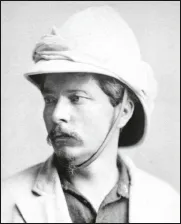
Henry Morton Stanley.
Source: Wikicommons
Source: Wikicommons
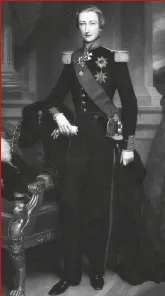
King Leopold II of Belgium.
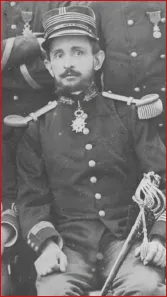
Captain Jean-Baptiste Marchand.
Source: Wikicommons
Source: Wikicommons
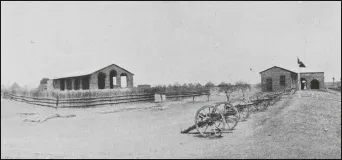
Fashoda: the governer’s house, 1906.
Source: Wikicommons
Source: Wikicommons
Bangui consisted of a collection of mud and grass huts in a clearing that clung tenuously to the elbow of a river bend, linked to the outside world by river traffic, and isolated in the most profound way possible in a world rapidly developing industrial communications. However, by 1906, when the territory was formalized by the arrival of a French governor, it had developed into a quiet but pleasant colonial backwater. Bangui was designed with the usual arrangement of avenues radiating from a central administrative complex, and with a sufficient number of Europeans to allow for social diversion during the languid periods between journeys downriver to the main administrative centre of Brazzaville. Here the governor-general of French Equatorial Africa managed the vast territories under his remit, including the Upper Bangui, which by 1910 was known as Oubangu-Chari.1
The indigenous population that found itself under French colonial domination numbered about a million and consisted of those groups representative of the climatic zones of the territory. The principal ethnic distinctions then, as today, are, east to west, the Banda and the Baya ethnic groups, both tending to be concentrated along the banks of the Ubangi river, and both to a greater or lesser extent owing their cultural origins to the Bantu speakers of the Niger–Congo region. The Baya, however, are the more numerous of the two, averaging some 35 per cent of the local population, and are speakers of one or other of the Ubangian languages that are more closely associated with direct regional dialects.
Among the Ubangian speakers were the M’Baka minority, a Bantu people located in the densely forested and heavily populated southwestern districts centred around the current city of Boda. The M’Baka were then, and remain today, a resolute, intelligent and resourceful sub-group within the general population and who remain, as they were then, disproportionately represented in government, business and the arts.
In the meanwhile, in 1896, a French military column left Gabon and set off inland with the objective of driving the equatorial African conquests of the Third Republic east. Specific instructions required the expedition to seize the Upper Nile in the name of France, and if possible link up with the Emperor Menelik in Abyssinia. The complement of force assigned to this expedition consisted of twelve European personnel, a detail of 150 native infantry and some 13,500 African porters. The expedition was commanded by the redoubtable Captain Jean-Baptiste Marchand, by then a veteran of several similar expeditions, including among them an earlier exploration of the sources of the Niger river.
After an extraordinary fourteen-month combined river and overland journey, Marchand’s expedition reached the abandoned fort of Fashoda on the Nile river, in July 1898. There, in what was widely regarded as the British sphere of influence, he hoped to rendezvous with a second French expedition that had earlier set out for the same point from Djibouti on the Red Sea. Unfortunately this expedition had already arrived in Fashoda and, finding no trace of Marchand, had made the assumption that he had either perished or returned, and thus it had itself turned around.
The British, of course, were aware of all of this, even contemplating at one time the dispatch of a military expedition from Uganda to intervene. However, it was fortunate at that moment that Lord Kitchener, in command of an Anglo–Egyptian army fresh from victory at Omdurman, was available locally to respond. On 11 September 1898, Kitchener arrived at Fashoda on board a flotilla of five steamers carrying two battalions of Sudanese, one hundred Cameron Highlanders, a battery of artillery and four Maxim guns.
This immediately precipitated an international crisis. France, it seemed, was prepared to back the legitimacy of the expedition to the point of war with Britain. Kitchener, however, and in a manner somewhat out of character, dealt with the matter sympathetically and cautiously, recognizing no doubt in Marchand a man of character and determination who was caught somewhat on the horns of a dilemma. It was soon agreed between the two that matters on the ground could best remain static with the issue left to the metropolitan powers to resolve. Kitchener, therefore, established a garrison alongside the French, hoisted the Egyptian flag (avoiding any inflammatory temptation to hoist the Union Jack) and shortly after left the scene.
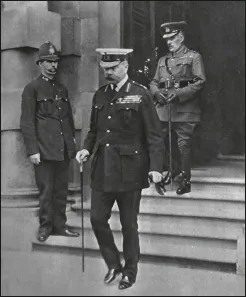
The last picture of Lord Kitchener, seen here leaving Westminster from a meeting with MPs.
Source: Illustrated London News
Source: Illustrated London News
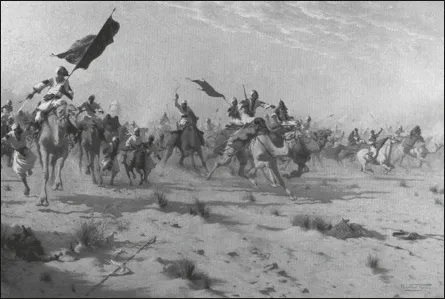
The Battle of Omdurman.
Source: Wikicommons
Source: Wikicommons
Meanwhile, in Europe a diplomatic war was being fought between London and Paris with the usual jingoistic verbiage of the times flowing back and forth across the English Channel. That British Prime Minister Lord Salisbury should have applied such thoroughly British understatement as to describe Marchand as “an explorer in difficulties on the Upper Nile” incensed the French, who replied that this was simply another instance of British greed and bul...
Table of contents
- Cover
- Title Page
- Copyright
- Contents
- Abbreviations
- Chapter One: Oubangui-Chari
- Chapter Two: The Birth of a Tyrant
- Chapter Three: Operation Barracuda
- Chapter Four: The French Military in Africa
- Chapter Five: The French Take Over the Republic
- Chapter Six: Democracy and Mutiny
- Chapter Seven: International Intervention
- Chapter Eight: The Bozizé Coup
- Chapter Nine: Operation Boali
- Chapter Ten: Eufor Chad / Car
- Chapter Eleven: Conclusion
- Appendix 1: Central African Republic: Minurca Mandate
- Appendix 2: Military Agreements Between France and African Countries
- Appendix 3: French Interventions in Africa
- Notes
- eBooks Published by Helion & Company
Trusted by 375,005 students
Access to over 1.5 million titles for a fair monthly price.
Study more efficiently using our study tools.
Frequently asked questions
Yes, you can cancel anytime from the Subscription tab in your account settings on the Perlego website. Your subscription will stay active until the end of your current billing period. Learn how to cancel your subscription
No, books cannot be downloaded as external files, such as PDFs, for use outside of Perlego. However, you can download books within the Perlego app for offline reading on mobile or tablet. Learn how to download books offline
Perlego offers two plans: Essential and Complete
- Essential is ideal for learners and professionals who enjoy exploring a wide range of subjects. Access the Essential Library with 800,000+ trusted titles and best-sellers across business, personal growth, and the humanities. Includes unlimited reading time and Standard Read Aloud voice.
- Complete: Perfect for advanced learners and researchers needing full, unrestricted access. Unlock 1.5M+ books across hundreds of subjects, including academic and specialized titles. The Complete Plan also includes advanced features like Premium Read Aloud and Research Assistant.
We are an online textbook subscription service, where you can get access to an entire online library for less than the price of a single book per month. With over 1.5 million books across 990+ topics, we’ve got you covered! Learn about our mission
Look out for the read-aloud symbol on your next book to see if you can listen to it. The read-aloud tool reads text aloud for you, highlighting the text as it is being read. You can pause it, speed it up and slow it down. Learn more about Read Aloud
Yes! You can use the Perlego app on both iOS and Android devices to read anytime, anywhere — even offline. Perfect for commutes or when you’re on the go.
Please note we cannot support devices running on iOS 13 and Android 7 or earlier. Learn more about using the app
Please note we cannot support devices running on iOS 13 and Android 7 or earlier. Learn more about using the app
Yes, you can access France in Centrafrique by Peter Baxter in PDF and/or ePUB format, as well as other popular books in History & African History. We have over 1.5 million books available in our catalogue for you to explore.