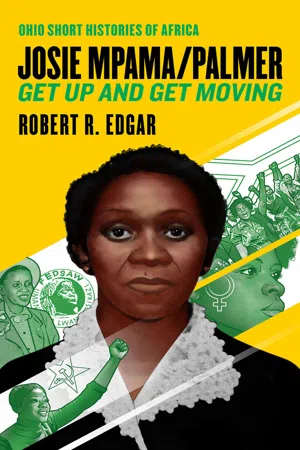
While African National Congress narratives dominate much of the scholarship on South Africa's freedom struggle, Josie Mpama/Palmer's political life offers a different perspective. Highly critical of the patriarchal attitudes that hindered black women from actively participating in politics, Mpama/Palmer was an outspoken advocate for women's social equality and encouraged black women to become more involved in national conversations. The first black woman to join the Communist Party of South Africa and an antiapartheid activist, Josie Mpama/Palmer remained involved in critical issues all her life, especially protests against Bantu Education and other forms of racial and sexist discrimination. She was an integral figure in establishing the Federation of South African Women, an organization open to women of all races. Mpama/Palmer's activism and political legacy would become an inspiring example for women in South Africa and around the world to get up and get moving.
- 224 pages
- English
- ePUB (mobile friendly)
- Available on iOS & Android
eBook - ePub
About this book
Information
Subtopic
Social Science BiographiesIndex
Social Sciences1
Family Matters
Josie Mpama/Palmer’s chaotic childhood shaped her early life. As a court interpreter in Potchefstroom, her father held a privileged position in black society. But after her parents divorced when she was seven, she lacked an anchor in her personal life and struggled to find a semblance of family stability. Instead of being able to take advantage of the educational and social opportunities her father’s status might have offered her, she was passed around from one family member to another and struggled to find a stable home. And, as a teenager, she had to provide for herself and her ailing mother by taking jobs as a domestic servant in white homes and as a seamstress. Her early life would make her even more concerned with creating and protecting stable family and community structures for black people when she entered political life in the late 1920s.
For a country whose past is so closely identified with rigid racial segregation, what is striking about many South African families is how racially mixed their lineages are. This was certainly the case with the family line of Josephine Winifred Mpama. Her father was Stephen Bonny Mpama, the son of Zulu parents, July and Anna Mpama, who came from the Inanda mission reserve not far from Durban, which American Board missionaries had founded in the nineteenth century. Josie referred to her father as a “denationalised Zulu,” by which she meant that his family were amakholwa, Christian converts who lived on mission stations and who attended mission schools and absorbed Western culture. Born in 1881 in Kroonstad, Orange Free State, Stephen moved with his family to Johannesburg after gold was discovered on the Witwatersrand in 1886. From about 1894, Stephen worked for a firm of chemists, Wilson and Coghill, in Langlaagte, to the west of Johannesburg.
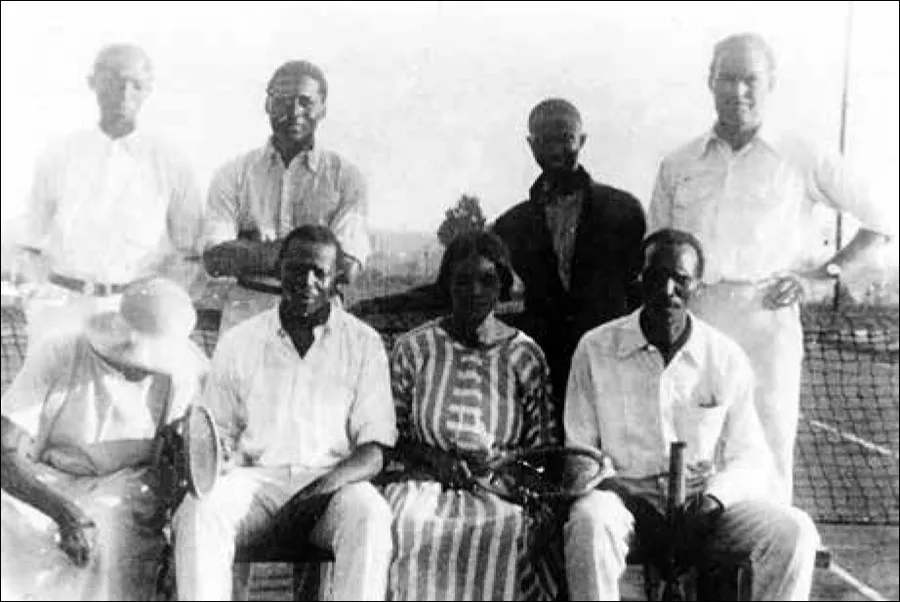
Figure 1.1. Stephen Mpama (top row, on the left), 1920s. (Vesta Smith)
Josie’s mother was Georgina Garson Gasibone. Born around 1883, Georgina was the daughter of Johanna Garson, whose parents were a Mfengu woman and an Afrikaner man. Johanna married a moSotho, with whom she had two daughters, one of them Georgina. After her husband died, Johanna remarried, this time to a Scotsman by the name of Garson with whom she had three sons. They were raised “white,” went to European schools, served in the South African Army during World War I, and eventually became strangers to their black half sisters.
Stephen and Georgina met in Johannesburg and were married in a civil ceremony on April 12, 1899, by the veldcornet (a field cornet was an official who performed military, administrative, and judicial duties) of Johannesburg and in a church by a Wesleyan Methodist minister on June 3, 1899. Her mother preferred that Georgina go live in the Cape Colony during the Anglo-Boer War while Stephen served as a guide in a British army infantry unit. After the war he returned to his old job at Wilson and Coghill for several years before taking up a position at Village Reef Gold Mining Company for fifteen months.
Following the war British colonial officials administered Potchefstroom, and Mpama was elevated to the apex of black colonial society when the Potchefstroom magistrate appointed him as a court interpreter at an annual salary of seventy-two pounds.1 It was a position that educated Africans held in high esteem. As a young man in the Transkei before embarking on a law career, Nelson Mandela set his sights on becoming an interpreter for a magistrate or the Native Affairs Department because the post “was a glittering prize for an African, the highest a black man could aspire to.”2 In the black reserves, Mandela added, “an interpreter in the magistrate’s office was considered second only in importance to the magistrate himself.”3 The English-speaking magistrate relied heavily on a multilingual black interpreter in the courtroom because the judge, plaintiff, defendant, counsel, and witnesses might all speak different languages. Drawing on his personal experience as a court interpreter in Kimberley, the veteran ANC leader Solomon Plaatje explained that an interpreter fluent in many languages and with an intimate knowledge of the law was essential so that a white judge “should clearly understand the evidence in any case upon which he sits in judgement, and the only means he has of attaining this in Southern Africa is by possession of a good interpreter.”4
Mpama fit the profile of many Africans educated at mission schools. Known as “school people,” they expected that their education and professional accomplishments would qualify them to be treated as the equals of whites. Mpama valued Africans advancing themselves through education. Because Africans who sought a college education could not have one in southern Africa, they went instead to the United Kingdom and the United States. To remedy this, in 1906, with 150 white and black delegates from all over South Africa, Mpama attended the Inter-State Native College Convention at Lovedale, the premier secondary school for Africans in the eastern Cape, which started the discussions for establishing an institution of higher education for black students, Fort Hare College (subsequently a university), a decade later.5
The school people also hoped that the British would not only preserve the qualified franchise for Africans and “Coloureds” (the apartheid-era term for people of mixed race) in the Cape Colony but also introduce it to their other South African colonies. School people were firm believers in bringing about change through constitutional means, but when a draft of the South Africa Act was released that proposed a constitution for a Union of South Africa that would keep political power in white hands, Africans from around the region met in Bloemfontein in 1909 to establish the South African Native Convention (SANC).6 After a SANC delegation sent to London to appeal to British officials achieved nothing, Africans began discussing the creation of an organization that would unify their organizations. Mpama attended meetings of the Orange Free State Native Congress and the SANC in August 1911 that laid the foundation for the establishment of the South African Native National Congress in 1912.7
While Mpama’s professional and political life was taking off, his personal life was in turmoil. Georgina and Stephen lost three children at birth before Georgina gave birth to Josephine—nicknamed “Josie” by her father—on March 21, 1903. According to Stephen, he and Georgina lived “happily” until 1908, when their relationship deteriorated and they divorced. Their divorce proceedings were messy, with both sides offering very different explanations for why the marriage collapsed. Stephen’s version was that his wife had cheated on him. After he and a policeman caught his wife in bed with another man, he initiated divorce proceedings. Georgina countered by accusing Stephen of raping a woman. As a result, she took Josie and went to stay with her mother in Sophiatown, a black township in Johannesburg. After returning to Potchefstroom in April 1909, she claimed that when they were staying with her uncle, Stephen assaulted her. Stephen admitted as much but testified that he was provoked by catching her in bed with another man. The circuit court judge sided with Stephen and ruled that Georgina had committed adultery. He awarded Stephen half of their communal property, damages of fifty pounds, and, most important, custody of Josie.8
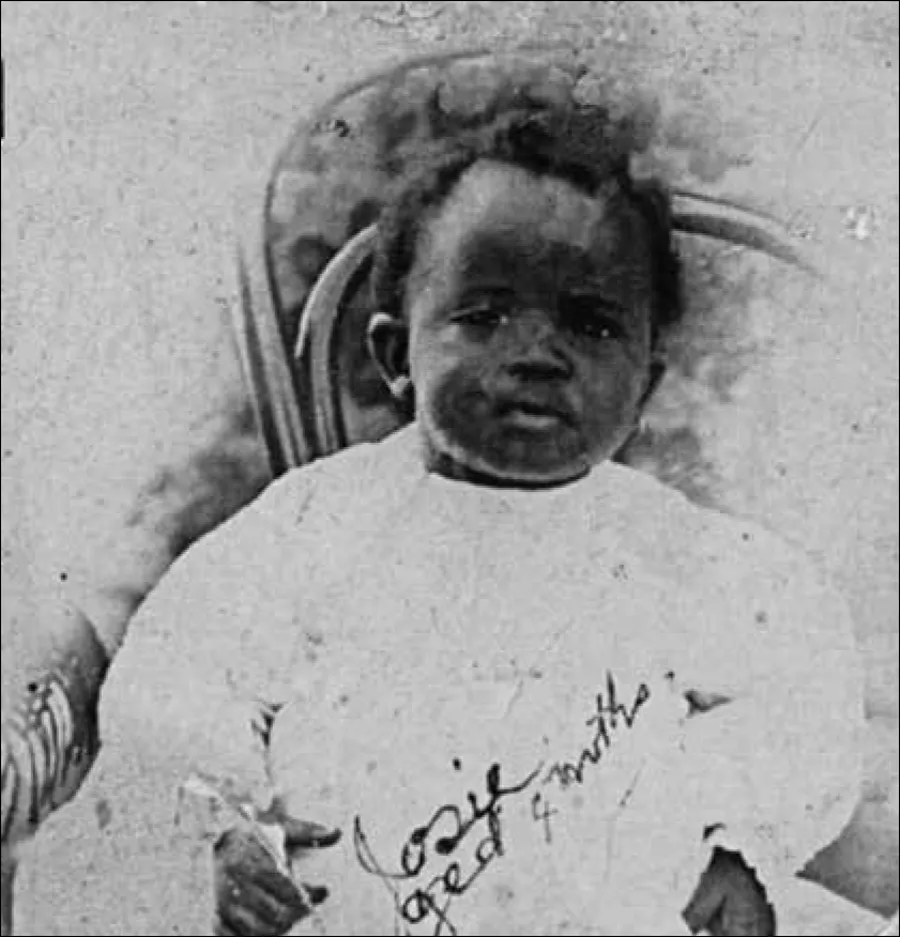
Figure 1.2. Baby photo of Josie Mpama/Palmer. (Palmer family album)
The fallout from her parents’ bitter split scarred Josie’s childhood and certainly shaped her yearning as an adult for a stable home and family life and her compassion for children neglected by or alienated from their families. Interestingly, her personal account of her youth is a sad story of rancor, turbulence, and abandonment.9 Her memory of the outcome of her parents’ divorce was at odds with the court record. She believed the court had stipulated she could stay with her mother until she decided with which parent she wanted to live. She remembered leaving Potchefstroom with her mother on a train, and as her father was in the process of saying good-bye, he suddenly reached in the window and pulled her out. While her mother continued to fight for custody, she remained with her father in his five-room home in the Potchefstroom location.10
Stephen brought in a young man to look after her while he was at work, but after her mother protested that arrangement, her father employed a young woman. He then sent Josie to stay with his eldest sister, who lived a few miles from Josie’s mother in Johannesburg. There she claimed she was treated poorly—clothes her mother sent her ended up being given to her aunt’s daughter, for example. After Georgina brought a formal complaint to a court, her father took Josie back to Potchefstroom and called on his younger sister to stay with her.
This arrangement did not work any better. Josie claimed that she was treated as if she were “in jail.” She was not allowed to play with her friends at school. On one occasion she ran away from home and met up with a group of her friends who were searching in a field for cow manure to use as cooking fuel. She had the shock of her life when what they thought was a pile of manure turned out to be a curled-up snake. She fled home, where she found that her father and other family members were frantically looking high and low for her because they thought her mother had kidnapped her. “Now instead of father scolding me for my wrong doings he took me on his lap and wept together with me as was his habit.”11
Once it became clear that Stephen’s sister could not look after her, Josie was shipped to the home of her uncle, Josiah Jolly Mpama, at Robinson Deep Mine in Johannesburg. “Life in that house,” as she described it, “was something unheard of.” In Potchefstroom she had attended an English-medium school, but at her new school, run by German-speaking Lutheran missionaries, English classes were held only a few times a week. Moreover, her aunt treated her abysmally, even withholding her food for lunch at school. Her uncle was aware of this, and he often slipped her food or money so she could buy lunch. His wife would also thrash Josie with a sjambok for the slightest offense, but after her uncle beat his wife so badly after one spanking that a doctor had to treat her, Josie was never again beaten when he was at home.12 His wife also forced Josie to help her sell wine illegally to mine workers. Josie’s responsibility was to keep an eye out for “the detectives who if I see them coming should give her a warning.”
Josie’s mother came to visit her occasionally on Sundays, but since her aunt was always present, Josie was afraid to speak up about her treatment. When her mother decided to remarry, she bought a nice outfit for Josie, but on the wedding day her aunt refused to let her bathe, dressed her in a plain frock, and made excuses for not attending the wedding reception.
One day Josie was surprised when Georgina unexpectedly showed up at the school gate. She asked Josie if she wanted to come and live with her—something she had always hoped for. Her mother wrote a note to Josiah and his wife: “Don’t look for [Josie]. I have taken her. She is at my place and I shall only hand her up when the highest court in the land compels me too [sic].”13 A few days later Stephen arrived at Josie’s granny’s house, where they were staying. He spoke to her in isiZulu and told her that she had to go with him, but this time she “blankly refused and made him understand that I am now with mother and intend to stay with [her].”14 When her father grabbed her by the arm, she clung fiercely to a door and screamed so loudly that others intervened to separate them. Later her grandmother showed her father the bundle of clothes she was wearing when her mother fetched her at school. It contained “boots that had no soles. Socks that had just the up’s and the feet rags, bloomers that had so many windows that one could see the whole earth without opening one.”15 Stephen was so ashamed to learn this that he gave up on trying to keep her, even though his relatives swore that they would not “leave their blood with bushmans.”16 They were true to their word, for several weeks later they attempted to drag her out of the house. This time her mother’s husband and her brothers jumped into the fray. A fistfight broke out, and her father’s relatives were ejected from the premises. The fight then went to the courtroom, where her mother was charged with stealing a child. The case exposed all the unpleasant things her uncle and aunt had done to her, and she was allowed to stay with her mother at her grandmother’s place.
In 1917, Josie’s mother’s legs began weakening, and her husband urged her and Josie to go back to Potchefstroom. He promised to support them with his job in Johannesburg. They bought a three-room house with a small garden. Josie attended school, while her mother earned money washing clothes for white families. But when her mother’s health worsened and she became an invalid, her husband reneged on his promise to look after them. Josie had to pitch in to wash and iron clothes on the side, and on Saturdays she cleaned the home of an elderly white woman.
Eventually her need to support her mother forced her to leave school and serve an apprenticeship with a tailor. In 1918, she and her mother moved to Doornfontein in Johannesburg, where they rented a room. Josie found work at an Indian tailor shop making buttonholes and hand sewing. She also learned how to make trousers. But, always on the lookout for better-paying positions, she became a domestic se...
Table of contents
- Cover
- Series Page
- Title Page
- Copyright
- Dedication
- Contents
- List of Illustrations
- Preface: Researching the Life of Josie Mpama/Palmer A Note on the Names Mpama and Palmer
- Acknowledgments
- Introduction: An Untidy Hero
- 1. Family Matters
- 2. A Fighting Location
- 3. Party Battles
- 4. Declarations of Independence
- 5. Apartheid
- 6. Comrades and Christians
- Conclusion: Get Up and Get Moving
- Appendix: Josie Mpama/Palmer on Gender and Politics
- Notes
- Interviews
- Bibliography
- Index
Trusted by 375,005 students
Access to over 1.5 million titles for a fair monthly price.
Study more efficiently using our study tools.
Frequently asked questions
Yes, you can cancel anytime from the Subscription tab in your account settings on the Perlego website. Your subscription will stay active until the end of your current billing period. Learn how to cancel your subscription
No, books cannot be downloaded as external files, such as PDFs, for use outside of Perlego. However, you can download books within the Perlego app for offline reading on mobile or tablet. Learn how to download books offline
Perlego offers two plans: Essential and Complete
- Essential is ideal for learners and professionals who enjoy exploring a wide range of subjects. Access the Essential Library with 800,000+ trusted titles and best-sellers across business, personal growth, and the humanities. Includes unlimited reading time and Standard Read Aloud voice.
- Complete: Perfect for advanced learners and researchers needing full, unrestricted access. Unlock 1.5M+ books across hundreds of subjects, including academic and specialized titles. The Complete Plan also includes advanced features like Premium Read Aloud and Research Assistant.
We are an online textbook subscription service, where you can get access to an entire online library for less than the price of a single book per month. With over 1.5 million books across 990+ topics, we’ve got you covered! Learn about our mission
Look out for the read-aloud symbol on your next book to see if you can listen to it. The read-aloud tool reads text aloud for you, highlighting the text as it is being read. You can pause it, speed it up and slow it down. Learn more about Read Aloud
Yes! You can use the Perlego app on both iOS and Android devices to read anytime, anywhere — even offline. Perfect for commutes or when you’re on the go.
Please note we cannot support devices running on iOS 13 and Android 7 or earlier. Learn more about using the app
Please note we cannot support devices running on iOS 13 and Android 7 or earlier. Learn more about using the app
Yes, you can access Josie Mpama/Palmer by Robert R. Edgar in PDF and/or ePUB format, as well as other popular books in Social Sciences & Social Science Biographies. We have over 1.5 million books available in our catalogue for you to explore.