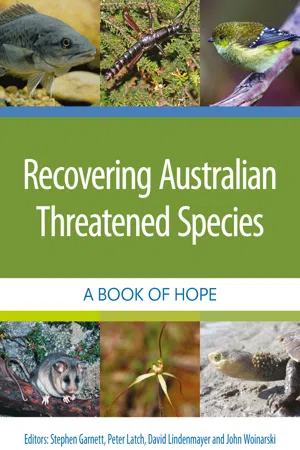
![]()
1
Turning threatened species around: celebrating what we have done well
Stephen T. Garnett, Peter Latch, David B. Lindenmayer and John C.Z. Woinarski
The rate of change in nature is escalating as human impacts become more pervasive and intensive. Many of those who care for nature and recognise the value of a healthy and diverse natural environment lament the losses and may be demoralised by the erosion of biodiversity. With conservation failures often highlighted, policy makers may see conservation of highly imperilled species as a lost cause – and be reluctant to invest resources if little return is likely – and so may look elsewhere for policy wins. But the story of conservation has another, less well-reported, side – one that gives hope. This book tells that other side for Australia’s threatened species. We choose to focus here on threatened species because to a large degree they are at the forefront of the conservation challenge and because our regard, or disregard, for them may have dramatic and irretrievable consequences. Although the focus here is typically on individual threatened species, in many cases these individual species also represent swathes of other biodiversity values and issues: actions taken, or not taken, for their care will help or hinder many other species.
For millennia, Australian biodiversity has been managed by Indigenous landowners. The effects of the many purposes and outcomes of such management cannot be disentangled but the empirical result is that, for many thousands of years, people and the species now considered threatened existed alongside each other across much of the Australian continent and many of its offshore islands. Most Australian plant and animal species persist still, despite more than 200 years of extensive modification to the environment by Europeans and other colonists. The first element of hope for the conservation future of Australia is that many Australian species are thriving.
However, many other species have suffered marked declines since European settlement. As at April 2017, 1717 Australian species are formally listed as threatened and another 91 are formally recognised as having become extinct since 1788. These are disconcertingly large tallies – for example, the number of Australian plant and mammal extinctions over the last 200 years surpasses that of any other country – and it is likely that both tallies are also severe under-estimates of the actual numbers of threatened and extinct Australian species.
Against a tide of environmental degradation, there is also a long history of attempts to protect species by many individual Australians, and some government authorities. The providence petrel (Pterodroma solandri) of Norfolk Island was first subject to a conservation order in 1802 when hunting was banned there (Bonyhardy 2000). That failed, but the species did persist on Lord Howe Island and, nearly two centuries after that order was imposed, the species returned to an island in the Norfolk group that had been set aside for conservation. That is the second reason to have hope: our conservation reserves are acting as havens within which species can adapt on their own.
However, such stories of self-recovery of threatened species or ecological communities are rare. Most require substantial input of sweat and funding, knowledge and dedication, and, above all, time. Too much time had passed for some threatened species by the time the Australian Government began to accept an obligation for the protection of threatened species, in the late 1980s. By then it became apparent that the previously limited and ad hoc approach to threatened species conservation needed more strategic planning and investment. Action plans were written and a major conference in 1996 was able to report substantial adoption of recovery planning as an organising principle for saving species (Stephens and Maxwell 1996).
Governance for threatened species and ecological communities has advanced. Australia ratified the Convention on Biological Diversity in 1992. By the end of the 20th century, legislation designed to help the country meet its international obligations – the Environment Protection and Biodiversity Conservation Act 1999 – had come into force. This was the first time threatened species were recognised as Matters of National Environmental Significance, meaning that applications for development had to prove that they would have no significant impact on listed species.
Legislative achievements would not have been possible had there not been a widespread public aversion to extinctions. But such support would not have happened had all the stories been of loss. Probably equally important were impressive and inspiring accounts of conservation successes. Campaigns to prevent the extinction of animals such as the giant panda or to discourage the hunting of big cats for fashion inspired a generation of conservation activists. Wildlife programs on television brought battles to save species and the environment into suburban living rooms. It was this period that spawned many of the threatened species recovery projects described in this book.
So what is ‘success’ in threatened species recovery? Ideally, success is when a species is fully restored to the habitats and numbers it had before it was affected by the threats that led to its imperilment (Redford et al. 2011). Alternatively, a more modest ‘success’ may simply be that almost certain extinction has been prevented, and there is the potential for a reduction in extinction risk in the future. In some cases, success may also be viewed as a social process whereby the human community is sufficiently organised and effective for a species’ persistence to be probable. All are valid, all can be seen as stages in threatened species recovery, and all are exemplified in this book. In selecting chapters, we allowed a definition of success to emerge in the stories so that we can draw the elements of success together at the end.
To find appropriate examples, we first asked a range of government agencies and non-government organisations to volunteer examples from their area of influence that they considered successful. The examples were far from exhaustive – we sought novelty and diversity. Some success stories have already been well told – such as the brilliant work undertaken to recover Gould’s Petrel in New South Wales (Priddel and Carlile 2009). We aimed to have a good mixture of plants, vertebrates and invertebrates, and government, non-government and private endeavours. Although ‘hope’ is a central theme of this book, and a unifying feature across the case studies, these examples demonstrate that many qualities and ingredients are needed by those people who recover threatened species. Some examples hinge on successful application of policy and legislation and some on advances in ex situ management. Most, however, relate to on-ground actions – of people on the ground caring for their country and its species, uncovering the factors most threatening to a species, determining what to do about those threats and then carefully and assiduously applying informed management. Some of these case studies have been going for 50 years, others for less than a decade. None of the people involved would consider the work complete, but all would assert that their work has substantially reduced the risk of extinction for their target species. What they demonstrate above all is that extinction can be prevented.
At the end of the book, we draw together the main messages to emerge from these stories, on the basis that such lessons can help with many more species. In doing so, we aim to throw light on the following seven questions:
1. What characteristics of individual threatened species help or hinder recovery efforts? Some species may be relatively easy to recover, but others not. Some species may attract attention and empathy, but others not (or not immediately). Our case studies include a wide range of life forms and life histories but are there elements that the selected species have in common?
2. Has the community contributed to the recovery? What sorts of people were involved? What were their motivations? How did they organise to achieve beneficial outcomes? Much is made of the role of citizen science in conservation, but to what extent and under what circumstances have members of the general public contributed to success in threatened species recovery and what roles have they played?
3. How important were committed individuals to the trajectories of species? Effective leadership of recovery programs is known to be an important element of successful conservation (Black et al. 2011), but are there other aspects of governance and decision making that characterise successful recovery programs?
4. What was the function of good policy and governance? Did recovery require a strong legal framework and a commitment in policy to be effective? Are there improvements to the laws and the policing of compliance that could make recovery faster and more secure?
5. How much does it cost to recover a species successfully? Although there are many variables that affect the cost of recovery, from the biology of the species to the nature of the threats they face and the location where the threats are occurring, we aim to provide some broad documentation of what has been spent – an empirical measure of the scale of investment needed to make a difference.
6. Have the actions taken to date in these case studies entrenched recovery? Or is the fight for these species against extinction a never-ending commitment?
7. Much effort is needed for the recovery of threatened species. To what extent can we learn lessons from these cases that will reduce the decline of many additional species before they too become threatened and hence need intensive management response?
This book is not just about science and management. It is also a celebration of extraordinary achievements, often by extraordinary people and organisations. Initially we asked the authors to write more about themselves, but most were too self-effacing to do justice to what they had accomplished not just for their target species but for the wider Australian society. Our authors are among the heroes of threatened species conservation in Australia and deserve far wider recognition: they are altruistic, committed, caring, resourceful, admirable and expert. The people in these case studies want to make a difference: to leave this world at least as healthy, diverse and beautiful as that they were born into. For very few is the work on threatened species just a job. Rather it is a vocation for which some have dedicated most of their lives.
In the century since Gandhi is attributed as saying that ‘a nation’s greatness is measured by how it treats its weakest members’, we have learnt that our concept of greatness must encompass not only a nation’s people but also its environment. And the weakest members of the environment are those species we have brought close to the abyss of extinction. Often we have failed such species, just as we have failed the poor. But we need do so no longer. Chapter after chapter in this book demonstrates what can be achieved with vision and dedication, persistence, money, insight and innovation. This is a ‘book of hope’, not just for our most vulnerable species but for the wider Australian environment. Ultimately it is also a book of hope for our society.
References
Black SA, Groombridge JJ, Jones CG (2011) Leadership and conservation effectiveness: finding a better way to lead. Conservation Letters 4, 329–339. doi:10.1111/j.1755-263X.2011.00184.x
Bonyhardy T (2000) The Colonial Earth. Melbourne University Press, Melbourne.
Priddel D, Carlile N (2009) Key elements in achieving a successful recovery programme: a discussion illustrated by the Gould’s Petrel case study. Ecological Management & Restoration 10, S97–S102. doi:10.1111/j.1442-8903.2009.00460.x
Redford KH, Amato G, Baillie J, Beldomenico P, Bennett EL, Clum N, et al. (2011) What does it mean to successfully conserve a (vertebrate) species? Bioscience 61, 39–48. doi:10.1525/bio.2011.61.1.9
Stephens S, Maxwell S (Eds) (1996) Back from the Brink: Refining the Threatened Species Recovery Process. Surrey Beatty & Sons, Chipping Norton, NSW.
![]()
2
Recovery of Australian subpopulations of humpback whale
Peter L. Harrison and John C.Z. Woinarski
Summary
The problem
1. Populations of most large cetacean species, including humpback whales (Megaptera novaeangliae), were severely depleted to critically low levels by extensive and unsustainable whaling programs.
2. Although humpback whales in Australia were subject to some coastal shore-based whaling mortality, the near catastrophic decline in their abundance was caused by massive illegal Soviet whaling in waters south of Australia and New Zealand during the 1959–1961 summer seasons. This resulted in the near extinction of East coast humpback whales and collapse of the Australian and New Zealand coastal whaling operations.
Actions taken to manage the problem
1. Compilation of records of reported commercial whaling catches and recognition of declines in whale abundance by the International Whaling Commission, indicating critical status, and its causality.
2. Protection of humpback whales by international agreement globally and in Australia with strong ongoing protection through explicit provisions in law and policy at national and state/territory level.
3. Ongoing and robust monitoring of population size.
Markers of success
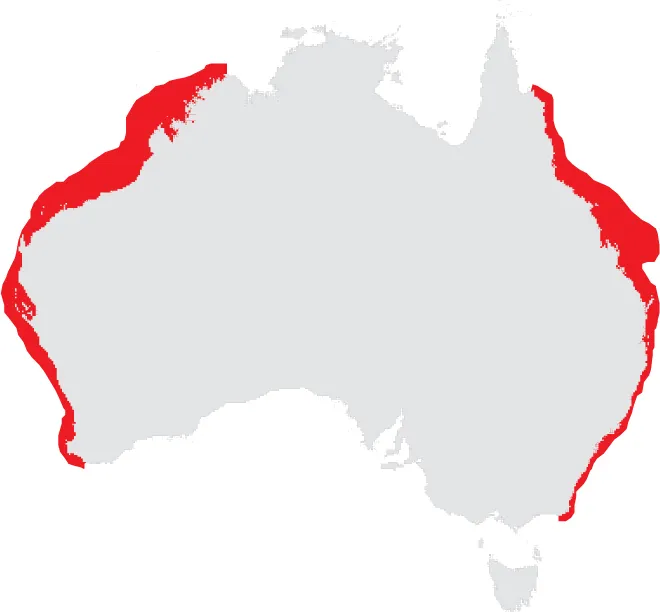
1. The previous population decline has been reversed with substantial population increases. The two Australian breeding populations of humpback whales are now recovering strongly, with abundance estimated to be approaching natural population sizes before whaling exploitation last century.
2. The primary cause of decline was identified and is being effectively manag...