Otoliths of Common Australian Temperate Fish
eBook - ePub

Otoliths of Common Australian Temperate Fish

A Photographic Guide

  1. 216 pages
  2. English
  3. ePUB (mobile friendly)
  4. Available on iOS & Android
eBook - ePub

Otoliths of Common Australian Temperate Fish

A Photographic Guide

About this book

The accurate identification of fish 'ear-bones', known as otoliths, is essential to determine the fish prey of marine and terrestrial predators. Fish otoliths are species-specific when combining size, shape and surface features, and can remain undigested for long periods. As a result, they can indicate which fish make up the diet of various predators, including cephalopod, seabird, marine mammal and fish species. Such studies are crucial for understanding marine ecosystems, and trophodynamics in particular. Increasingly, these methods are being used to understand the diet of some terrestrial predators, also extending to that of humans in archaelogical studies.

Otoliths of Common Australian Temperate Fish offers users a verified reference collection to assist in the accurate identification of species and size of fish using otoliths. It covers 141 fish species from a broad geographic range of the Australian temperate region and includes commercial and non-commercial fish species. A standardised written description of the otolith structure, size and surface features is provided for each species. Included are brief distribution and ecology notes, and regression for both otolith and fish lengths, together with high-quality SEM photographs of the otolith described.

This guide will be an essential reference for marine scientists and marine mammal researchers; ornithologists, fisheries researchers and fish biologists studying age and growth or comparative anatomy; and archaeologists.

Winner of the 2008 Whitley Award for Zoological Manual.

Frequently asked questions

Yes, you can cancel anytime from the Subscription tab in your account settings on the Perlego website. Your subscription will stay active until the end of your current billing period. Learn how to cancel your subscription.
At the moment all of our mobile-responsive ePub books are available to download via the app. Most of our PDFs are also available to download and we're working on making the final remaining ones downloadable now. Learn more here.
Perlego offers two plans: Essential and Complete
  • Essential is ideal for learners and professionals who enjoy exploring a wide range of subjects. Access the Essential Library with 800,000+ trusted titles and best-sellers across business, personal growth, and the humanities. Includes unlimited reading time and Standard Read Aloud voice.
  • Complete: Perfect for advanced learners and researchers needing full, unrestricted access. Unlock 1.4M+ books across hundreds of subjects, including academic and specialized titles. The Complete Plan also includes advanced features like Premium Read Aloud and Research Assistant.
Both plans are available with monthly, semester, or annual billing cycles.
We are an online textbook subscription service, where you can get access to an entire online library for less than the price of a single book per month. With over 1 million books across 1000+ topics, we’ve got you covered! Learn more here.
Look out for the read-aloud symbol on your next book to see if you can listen to it. The read-aloud tool reads text aloud for you, highlighting the text as it is being read. You can pause it, speed it up and slow it down. Learn more here.
Yes! You can use the Perlego app on both iOS or Android devices to read anytime, anywhere — even offline. Perfect for commutes or when you’re on the go.
Please note we cannot support devices running on iOS 13 and Android 7 or earlier. Learn more about using the app.
Yes, you can access Otoliths of Common Australian Temperate Fish by Dianne Furlani,Rosemary Gales,David Pemberton in PDF and/or ePUB format, as well as other popular books in Biological Sciences & Biology. We have over one million books available in our catalogue for you to explore.

Information

OTOLITH DESCRIPTIONS AND IMAGES

Image

Order: CLUPEIFORMES

Family: Clupeidae

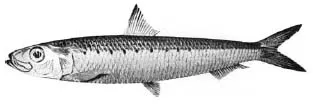
Species: Sardinops neopilchardus

Image
Common names: Australian pilchard (sardine)
Previous nomenclature: Clupea neopilchardus, Sardinops sagax ocellatus
Material
Description based on otoliths of four specimens of 65–152 mm SL. Otolith catalogue reference 13.3P4, P7, P10 and P12. Catch locality Victoria. ID by RG.
Otolith description
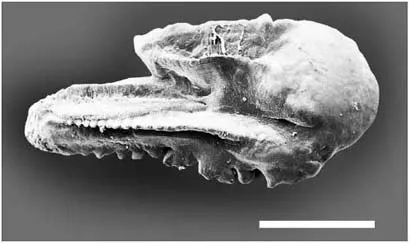
Otolith very small, ovate. Dorsal margin irregular; ventral margin dentate; posterior margin bluntly rounded and entire. Sulcus groove very deep, heterosulcoid; opening ostial. Collum ranging from severely constricted to ill defined. Ostium larger than cauda. Ostium extends onto the rostrum. Crista superior and crista inferior distinct and ridge-like; crista superior less well developed over the cauda than over the ostium; crista inferior well developed along the entire sulcus and crenate on its dorsal surface. Rostrum elongate, robust and rounded. Antirostrum considerably shorter than rostrum but distinct, sometimes with an upturned end. Excisura present; angle acute. Dorsal area depression broad and narrow above ostium and collum. Ventral area depression absent with the crista inferior dominating the area.
Morphometry
SL = 32.07 OL1.35 mm
n = 24; Std Err Est = 0.057; R = 0.96;
Otolith length range = 1.9–3.15 mm (TMAG)
Mass = 6.43 × 10⁻⁶SL3.11 g
n = 29; R = 0.96;
Fish length range = 68–154 mm SL (TMAG)
Distribution and ecology
Southern Queensland through to Western Australia, and Tasmania (most commonly in Bass Strait); also New Zealand (Last et al. 1983); form large schools in temperate (summer) and subtropical waters (winter); reaches 250 mm in length (Edgar 1997).
Predator–prey information
Known prey of little penguin (Eudyptula minor) (Montague and Cullen 1987, Klomp and Wooller 1988, Gales and Pemberton 1990, Chiaradia et al. 2003), southern bluefin tuna (Thunnus maccoyii) (Coleman and Mobley 1984), yellowfin tuna (Thunnus albacares) (Coleman and Mobley 1984, Young et al. 2001), Australian fur seal (Arctocpehalus pusillus doriferus) (Hume et al. 2004), little black cormorant (Phalacrocorax sulcirostris) (Marchant and Higgins 1990), pied cormorant (Phalacrocorax varius) (Marchant and Higgins 1990), short-tailed shearwaters (Puffinus tenuirostris) (Montague et al. 1984), crested tern (Sterna bergii) and little tern (Sterna albifrons) (Higgins and Davies 1996). Undistinguished species of this Family are known prey of shy albatross (Hedd et al. 2001), great cormorant (Phalacrocorax carbo) and Caspian tern (Sterna caspia) (Marchant and Higgins 1990, 1996), crested terns (Chiaradia et al. 2002), white-fronted tern (Sterna striata), little tern (Sterna albifrons) and fairy tern (Sterna nereis) (Higgins and Davies 1996).
Image
Otolith of Sardinops neopilchardus from a fish of 152 mm SL

Order: CLUPEIFORMES

Family: Clupeidae

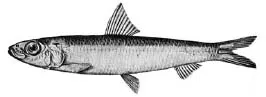
Species: Spratelloides robustus

Image
Common name: Blue sprat
Material
Description based on otoliths of one specimen of 72 mm TL. Otolith catalogue reference 13.1P23. Catch locality Victoria. ID by RG.
Otolith description
Otolith very small, ovate. Dorsal margin entire to gently lobed; ventral margin lobed to entire; posterior margin straight and entire. Sulcus groove heterosulcoid; opening ostial. Ostium extends along the rostrum and is larger than the cauda. Colliculum poorly defined and heteromorph. Collum indistinct. Crista distinct and ridge-like over ostium, but less well developed over cauda. Rostrum robust, elongate and rounded. Antirostrum short, broad and pointed. Excisura moderate; angle acute. Dorsal area depression narrow above collum. Ventral area depression absent.
Morphometry
TL = 54.33 OL1.02 mm
n = 23; Std Err Est = 0.0495; R = 0.94;
Otolith length range = 1.5–3.5 mm (TMAG)
Mass = 3.54 × 10⁻⁷TL3.67 g
n = 23; Std Err Est = 0.0867; R = 0.99;
Fish length range = 45–73 mm TL (TMAG)
Distribution and ecology
Southern Queensland through to Western Australia, and T...
Table of contents

  1. Cover
  2. Title
  3. Copyright
  4. Contents
  5. Acknowledgements
  6. Introduction
  7. Methods and Materials
  8. Definition of Terms
  9. Abbreviations
  10. Species List (Systematic Order)
  11. Otolith Descriptions and Images
  12. References
  13. Index