- English
- ePUB (mobile friendly)
- Available on iOS & Android
eBook - ePub
About this book
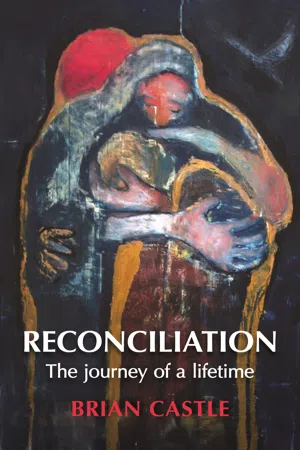
Starting from the area covered by his previously book - Memory, Victimhood, Forgiveness and Reaching out to the Other, the author moves deeper to speak of personal flourishing, social cohesion, political co-existence and the survival of the planet, as well as a deeper understanding of the work of God in the world.
Information
Topic
Teología y religiónSubtopic
Teología cristiana1
Reconciliation and the Christian tradition
Stories are important for reconciliation. They are a universal medium of communication, and in telling our story we are inviting listeners into our world to experience life from our perspective. In a similar way, in listening to the stories of others we are being invited into their world and given the privilege of experiencing and viewing life through their eyes. All parties can be shaped, changed, challenged and transformed by this experience if we allow it. There is an engagement with reconciliation when the story of an individual, group, people or of humanity’s care for the environment dialogues with God’s story.
This chapter demonstrates the centrality of reconciliation in the Bible, highlights the significance of St Paul and then shows reconciliation weaving through the lives of two figures in the Christian tradition – Antony of Egypt and Mary Slessor. Antony of Egypt, who lived in the late third and fourth centuries, is considered to be the father of Christian monasticism, and Mary Slessor, born in mid-nineteenth-century Scotland, was a missionary to West Africa. It shows people’s lives being profoundly affected when coming into contact with God and God’s story. Energy, life, contradictions and conflict are features in all these stories.
Reconciliation and the Bible
Genesis and Revelation, the first and last books of the Bible, frame the story of reconciliation between God and his creation. Genesis tells the story of a creation in harmony with its creator God that then goes all wrong; Revelation ends with harmony restored.
The first frame is the third chapter of Genesis, which relates how man and woman, succumbing to the wiles of a serpent, attempted to be God, as a result of which they fell out of relationship with God, their inner selves and each other. Furthermore their action forced God out of relationship with his creation:
The LORD said to the serpent, ‘Because you have done this, cursed are you among all animals and among wild creatures; upon your belly you shall go, and dust you shall eat all the days of your life. I will put enmity between you and the woman, and between your offspring and hers; he will strike your head, and you will strike his heel.’
To the woman he said, ‘I will greatly increase your pangs in childbearing; in pain you shall bring forth your children, yet your desire shall be for your husband, and he shall rule over you.’
And to the man he said, ‘Because you have listened to the voice of your wife, and have eaten of the tree about which I commanded you, “You shall not eat of it”, cursed is the ground because of you; in toil you shall eat of it all the days of your life.’
(Gen. 3.14–17)
The final frame can be found in the last chapters of Revelation, which draw a picture of God at home with humanity and creation:
‘See, the home of God is among mortals. He will dwell with them; they will be his peoples, and God himself will be with them; he will wipe every tear from their eyes. Death will be no more; mourning and crying and pain will be no more, for the first things have passed away.’
(Rev. 21.3–4)
Then the angel showed me the river of the water of life, bright as crystal, flowing from the throne of God and of the Lamb through the middle of the street of the city. On either side of the river is the tree of life with its twelve kinds of fruit, producing its fruit each month; and the leaves of the tree are for the healing of the nations.
(Rev. 22.1–2)
The 64 books in between Genesis and Revelation tell the stories of God reaching out to re-establish his relationship with his people and creation. Although the word ‘reconciliation’ is rarely mentioned, it flows through the Bible like an underground river, quietly giving sustenance to what is happening on the surface but occasionally forcing its way up there, where it can be identified. The word ‘enmity’ – which was put between the serpent and humanity (Gen. 3.15) – is the very opposite of reconciliation.
God begins his work of reconciliation through Abraham (Abram), whom he calls away from his familiar, ancestral home in Haran into an unknown future. Through Abraham he plants the seed of what will become the people of Israel, whom he wishes to use to reach out to others. God tells Abraham that in doing God’s work, Abraham will be a blessing to others. Then there is a string of other characters whom God calls to be part of his work of reconciliation – Jacob, Joseph, Moses, King David and Isaiah, to name but a few. Some had behaved badly in the past – Jacob was a cheat and a liar, Moses a murderer and David an adulterer. Yet God was able to use unlikely and often unsavoury people – many of whom today would be considered psychologically unsound and unappointable to church positions – in pursuit of reconciliation.
A crisis, life-changing experience or willingness to go out of their comfort zones is required of any who are willing to be part of God’s work of reconciliation. Abraham left his ancestral home (Gen. 12.1); Jacob faced one trauma after another, beginning with cheating his brother Esau out of his inheritance and culminating in a wrestling with God followed by Jacob’s personal reconciliation with Esau (Gen. 27—33); Joseph was beaten and left for dead by his brothers (Gen. 37); Moses had to flee for his life from Egypt after killing an Egyptian (Exod. 2.11); David, after committing adultery and having his mistress’s husband killed, was condemned by the prophet Nathan for his actions and lost his son (2 Sam. 11—12); Isaiah was forewarned that his message would be falling on deaf ears (Isa. 6.9–13). Yet God was able to use such a rag-bag of characters plagued by traumatic and uncomfortable circumstances to reach out to his people to re-establish a relationship with them.
Abraham established the line in the land that was to become Israel; Jacob ensured the line continued; Joseph took God’s people into safety in Egypt when their future was under threat; Moses took them back to their own land after helping them reform their identity as that people; David united a divided people around a kingship and a centre that was to become the heart of Israel; Isaiah warned them of impending disaster because they were turning away from God.
But God does not bring about the long-term reconciliation he desires so earnestly through these people. Finally he sends himself in the person of his son, Jesus Christ. In the eyes of the world this is a great failure because Jesus is killed on a cross surrounded by nobody except his grieving mother and a close friend (John 19.26–27). However, the crucifixion is a turning point not only in the story of the Christian faith but also in that of reconciliation, because the death of Jesus is an indication of God’s deep commitment to the people and the world that constantly turn their back on God’s advances. The crucifixion is the very point at which reconciliation between God and his people is achieved. Reconciliation involves contradiction.
God’s working towards reconciliation can be clearly traced as it flows through Scripture. The word itself may not be frequently used, but that is the direction in which God is working. It is the apostle Paul who identifies reconciliation as a theme and places it at the heart of his thinking and theology.1 To appreciate the distinctiveness of reconciliation from the perspective of Christian thinking, it is crucial to explore how this happened. So now we turn to a closer look at Paul’s life and writing, showing how his personal experiences, shaken and stirred by his relationship with God, shaped his understanding. There will be resonances with some of the stories noted briefly above.
Reconciliation and St Paul
Saul was a troubled and fanatical person, probably someone with whom it was stimulating to be – for short periods. But thank God for that as it served both Judaism and, later, Christianity. He had an impeccable Jewish background that was enhanced and confirmed by his eagerness to remove those who threatened Judaism in any way (Phil. 3.4b–6). It was his fanatical elimination of followers of the ‘way’ (Christians) that was the turning point in his life and ministry: this was the crisis through which Saul became Paul, finally coming to the realization that reconciliation was the lens through which God was working with the world and of which Jesus Christ was the embodiment. This was a crucial moment in Paul’s personal journey of inner reconciliation.
The crisis is depicted by Luke in the book of Acts (9.1–9). Saul – as he was then known – was on his way to Damascus to get permission for the arrest of any who deviated from the Jewish faith and were supporters and followers of Jesus Christ. It was on this journey that the crisis came to a head. St Luke paints this as a blinding vision in which Jesus speaks to Saul, asking why he was persecuting him. Saul came to discover that the very Jesus whom, through his followers, he was persecuting was indeed alive and the key to a living relationship with God. This experience initiated a major shift in his theological thinking. He came to realize that his relationship with God depended not on the Law but on a relationship with Jesus Christ.
A number of years passed before the Saul on his way to Damascus became the Paul who began a wide-ranging public ministry. He did not have everything sorted out in his mind by the time he reached Damascus. There were many years of soul-searching and inner conflict before he worked out the implications of his new discovery for his own belief and faith. After Paul had begun his public ministry he recognized that he was a work in progress, ‘forgetting what lies behind and straining forward to what lies ahead’ (Phil. 3.13). This was for him, and continues to be for those on a similar search, a lifetime’s quest. Even after Paul realized that he had been reconciled to God, he needed to discover what this meant for his life and ministry. He came to see that reconciliation with God was a source of life, energy and creativity, as the life and witness of Paul and the Christian communities he fostered and founded revealed. He found that seeking this reconciliation also brought conflict and uncertainty. Paul’s central concern was to inspire reconciling communities of Christ to illustrate and proclaim God’s reconciliation of the world.2
Reconciliation with God was at the heart of Paul’s rejoicing. He knew that the life, love and witness of Jesus Christ were living proofs of that reconciliation. From this flowed reconciliation with others, with oneself and with creation. Paul was a reconciled reconciler.3 In his second letter to the Corinthians he writes of the reconciliation that has already happened between God and his Church and the task of the Church to be the instrument of reconciliation in the world:
All this is from God, who reconciled us to himself through Christ, and has given us the ministry of reconciliation; that is, in Christ God was reconciling the world to himself, not counting their trespasses against them, and entrusting the message of reconciliation to us.
(2 Cor. 5.18–19)
For Paul, flowing from reconciliation with God are the personal, social, political and cosmological aspects of life. In chapters 5—8 of his letter to the Romans, Paul is like an impressionist painter rapidly, sometimes manically, threading together experiences and images that provide a background to reconciliation. Here Paul makes it apparent that his world had been turned upside down by the realization that access to God is not through the Law but through Jesus Christ, and he recognizes that anybody taking this reality seriously will face similar upheaval in their lives. Through his personal struggles and reflections he is brought to the radical conclusion that Christ’s sufferings, viewed as a mark of failure by the world, have become a source of strength and new possibility. All this is an indication of God’s love for humanity. Paul is deeply aware of the frailty of human nature and the inner turmoil that goes on within everybody, particularly within himself: reconciliation involves conflict (Rom. 7.14–25). But he is utterly convinced that despite human prevarication and failure, nothing in heaven or on earth can ultimately thwart human beings from receiving the love God is offering through Jesus Christ.
If Romans 5—8 recount the thinking behind reconciliation, in chapters 12—15 Paul tells his audience what this means for daily living:
Let love be genuine. (12.9)
Bless those who persecute you. (12.14)
Live in harmony with one another. (12.16)
Owe no one anything, except to love one another; for the one who loves another has fulfilled the law. (13.8)
Love does no wrong to a neighbour; therefore, love is the fulfilling of the law. (13.10)
We who are strong ought to put up with the failings of the weak, and not to please ourselves. Each of us must please our neighbour for the good purpose of building up the neighbour. (15.2)
These words are concrete advice to women and men in the particular context of the Church in Rome. God’s reconciling actions have definite outcomes in the way people relate to others. Chapters 12—15 are the response to the theology of chapters 5—8.
And there is more. The letter to Ephesians reminds hearers that even those who were ‘far off’ (2.13) – and here there is a reference to the Ephesians who were Gentiles by birth – have been brought near by what God has done in Jesus Christ.
Furthermore Creation herself is affected by this act of reconciliation. Paul hints at this in his letter to the Romans (8.19–23) and emphasizes it in that to the Colossians (1.15–23) where, in Christ, God reconciled all of creation (v. 20). In this passage Paul is quoting from a hymn sung by the people in Colossae that shows that reconciliation with God embraces the whole of creation:
For in him [Jesus Christ] all the fullness of God was pleased to dwell, and through him God was pleased to reconcile to himself all things, whether on earth or in heaven, by making peace through the blood of his cross.
(Col. 1.19–20)
Antony of Egypt
But God’s work of reconciliation did not cease with the writing of the New Testament. On a Sunday morning around the year 270, in a small Egyptian village, the following words from St Matthew’s Gospel were read: ‘If you wish to be perfect, go, sell your possessions and give the money to the poor, and you will have treasure in heaven; then come, follow me’ (Matt. 19.21). Sitting in the congregation was a young man called Antony who, on hearing these words, decided to pursue a life of poverty and solitude. Undoubtedly Antony would have been struggling with questions about the way he was being call...
Table of contents
- Cover page
- About the author
- Title page
- Imprint
- Dedication
- Table of contents
- Acknowledgements
- Introduction
- 1. Reconciliation and the Christian tradition
- 2. Drivers of reconciliation
- 3. Marks of reconciliation
- 4. A reconciling life
- 5. A reconciling church
- 6. A reconciling society
- Appendix: Reconciliation liturgies
- Copyright acknowledgements
- Notes
- Bibliography
Trusted by 375,005 students
Access to over 1.5 million titles for a fair monthly price.
Study more efficiently using our study tools.
Frequently asked questions
Yes, you can cancel anytime from the Subscription tab in your account settings on the Perlego website. Your subscription will stay active until the end of your current billing period. Learn how to cancel your subscription
No, books cannot be downloaded as external files, such as PDFs, for use outside of Perlego. However, you can download books within the Perlego app for offline reading on mobile or tablet. Learn how to download books offline
Perlego offers two plans: Essential and Complete
- Essential is ideal for learners and professionals who enjoy exploring a wide range of subjects. Access the Essential Library with 800,000+ trusted titles and best-sellers across business, personal growth, and the humanities. Includes unlimited reading time and Standard Read Aloud voice.
- Complete: Perfect for advanced learners and researchers needing full, unrestricted access. Unlock 1.5M+ books across hundreds of subjects, including academic and specialized titles. The Complete Plan also includes advanced features like Premium Read Aloud and Research Assistant.
We are an online textbook subscription service, where you can get access to an entire online library for less than the price of a single book per month. With over 1.5 million books across 990+ topics, we’ve got you covered! Learn about our mission
Look out for the read-aloud symbol on your next book to see if you can listen to it. The read-aloud tool reads text aloud for you, highlighting the text as it is being read. You can pause it, speed it up and slow it down. Learn more about Read Aloud
Yes! You can use the Perlego app on both iOS and Android devices to read anytime, anywhere — even offline. Perfect for commutes or when you’re on the go.
Please note we cannot support devices running on iOS 13 and Android 7 or earlier. Learn more about using the app
Please note we cannot support devices running on iOS 13 and Android 7 or earlier. Learn more about using the app
Yes, you can access Reconciliation by Brian Castle in PDF and/or ePUB format, as well as other popular books in Teología y religión & Teología cristiana. We have over 1.5 million books available in our catalogue for you to explore.