1 PETER
1 PETER 1.1–9
Genuine Faith and Sure Hope
1 Peter 1.1
I am sitting in a newly built room. It was, before, simply a garage, without even a door: almost an open shed. But we needed to transform it into a place where I could work. So, for the first time in my life, I had to deal with architects and builders, carpenters and electricians, and to understand something of the challenges they face every day.
Let’s stick with the architect who designed the room. To begin with, we needed a floor plan, and that meant deciding how wide the room was to be, how much of the existing frontage we would use. Then there was the question of the height: granted the existing roof, how high could the ceiling be once we had added insulation and lighting? Then, finally, we had to consider how far back we would extend, allowing for the width of bookcases in particular.
Once those decisions were made, we had the basic shape of the room. Now the real work could begin, designing and creating everything from windows to wall fittings, from colour to carpets. At last, the room has emerged, in the space we had mapped out all those months earlier. And here I am sitting in it.
And I have before me this wonderful letter, written by the apostle Peter himself to Christians scattered over the country we know today as Turkey. The opening three paragraphs, which we take here all together, set out the width, the height and the depth within which everything that follows will take its place. These first nine verses are quite a mouthful – and a mindful! – but it’s worth seeing them all together as the framework for the more specific things Peter has in mind to say as the letter develops.
To begin with, the width of the building (verses 1–2). This is what Christians are: chosen; set aside; sanctified for obedience; sprinkled with the Messiah’s blood! Already we have much to ponder. Peter doesn’t address these people in terms of their ancestry, their moral background, their social status, their wealth or poverty. All those things are part of the old building, and he is sketching out the new one. It is easy to forget our basic identity as Christians, and it is therefore important to be reminded of it on a regular basis. If we are wise, we regularly take a car to be serviced, so that anything which is starting to go wrong can be put right. In the same way, we need to remind ourselves frequently, seriously and thoroughly who we really are. Unless we do that, the insidious messages we get from the world around (that we are who we are because of who our parents were, where we live or how much we earn) will eat away at us like rust into a car.
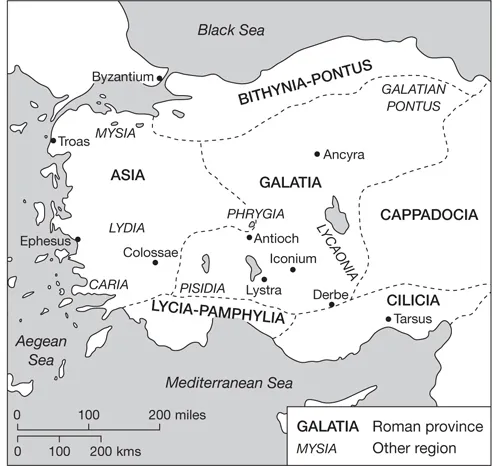
So who are we? What is the first basic dimension of the room into which Peter is inviting us? We are people who, by the mercy of God, have been chosen for a particular purpose. All Christians live a strange double life: Peter addresses his audience as ‘foreigners’, not because they have emigrated to where they now live but because they now have a dual citizenship. They are, simultaneously, inhabitants of this or that actual country or district (Pontus, Galatia, or wherever), and citizens of God’s new world which, as he will shortly say, is waiting to be unveiled.
This is God’s purpose: to set people aside from other uses so that they can be signposts to this new reality, this new world. The new world has in fact already come into being through the life, death and resurrection of Jesus the Messiah. Through that sacrificial death on the one hand and the indwelling of God’s spirit on the other hand, God has set people apart to be living signals of this new world. They are therefore to be ‘holy’, both in the technical sense that God has set them apart for this purpose and in the practical sense that their actual lives have been transformed. The way they behave now reflects God’s desire for his human creatures. That – however daunting and unlikely it seems – is who we are as Christians.
But what about the vertical dimension of this room into which we are invited (verses 3–5)? The best way of talking specifically about God and what he’s done is by praise, not simply description; and praise is what Peter now offers. May God be blessed, he says, because of his mercy. The height of this room is the mercy of God; that’s the highest ceiling you can get. We can see what that mercy means because, no matter who our actual parents were, God himself has become our father. We have become new people – a theme that Peter will shortly explore quite a bit further. A new life has come to birth within us, because a new life has come to birth in the world in the resurrection from the dead of Jesus the Messiah (verse 3). Becoming a Christian means that what God did for Jesus at Easter he does for you, in the very depth of your being. (That’s why, by the way, Christians often celebrate this new life by holding baptisms on Easter morning.)
What’s more, the new life which God created at Easter isn’t just about individuals being transformed. God has, through that great action, created a whole new world. At the moment it is being kept safe, out of sight, behind the thin invisible curtain which separates our world (earth) from God’s world (heaven). But one day the curtain will be drawn back; and then the ‘incorruptible inheritance’, at present being kept safe in heaven, will be merged with our earthly reality, transforming it and soaking it through with God’s presence, love and mercy (verse 4). And if that new world is kept safe for us, Peter assures us that we are being kept safe for it. Faith itself is the anchor which holds us firm in that hope (verse 5).
Finally, the depth of the room (verses 6–9), and what it is going to contain. Quite a bit of this letter is concerned with the suffering of the early Christians. Here Peter states the theme which he will develop: that this suffering is the means by which the quality of the Christians’ faith can shine out all the more, and when Jesus is finally revealed this will result in an explosion of praise. Meanwhile, they are to live their lives, to inhabit this great room of the gospel, with love for Jesus in their hearts and ‘a glorified joy’ (verse 8) welling up within them. This is the beginning of the ‘rescue’ which God has accomplished for them.
As we begin to walk into the room and look around us, there is much to see. But already we know its breadth, its height and its depth. There are difficult things here which must be faced. But with this new identity, and with the powerful mercy of God keeping us safe, we can go ahead and make the room – this remarkable letter, and its meaning for our lives today – a place where we feel thoroughly at home.
1 PETER 1.10–21
Ransomed by Grace
John went into a junk-shop the other day, in a little town not far from here. He was looking for something in particular, and after wandering around for a while he thought he saw just the thing. It was a bowl, about eight inches across. Someone had obviously used it for flowers at some stage, and it was still dirty with soil and the remains of a few leaves. It looked, too, as though it had a crack running through one side. The owner of the shop had probably not bothered about it, since it was almost entirely covered up with a pile of other old stuff, books, bottles, and goodness knows what else.
John carefully fished the bowl out and, disguising his pleasure, went and bought it at the till. Then, taking it home, he set about cleaning it. He took care. He had spotted (as the shop-owner obviously hadn’t) that it was in fact a fine piece of porcelain. He could repair the crack, but equally importantly he could gradually get the dirt and soil out of its pattern and bring it up as good as new. Then, when it was done, he put it in a place of honour, where it was to hold three gorgeous ornamental eggs and show them off to perfect effect. Just what he had wanted.
Now supposing the original owner of the bowl had turned up the next day at the junk shop and had asked for his bowl back, since he wanted to use it again to hold flowers. The shop-owner might direct him to John; but John, perfectly properly, would say that the bowl was no longer available. Not only had he bought it, but he had cleaned it inside and out and given it a whole new use, for which it was really suited. It would be an insult to it, as well as an injustice, to use it simply to hold a few flowers.
The good news is that we are like that bowl. The key word in this passage is ‘ransomed’ (verse 18). It means that we have been ‘bought back’, like a dirty object in a junk shop. We had, all of us, been used for all kinds of purposes other than those for which we were made. ‘Futile practices’, says Peter. God had come into the junk shop, and had paid the ultimate price for us: the precious blood of the Messiah, God’s own son. Peter is thinking here, as he makes clear, of the sacrificial lamb in the Bible, particularly perhaps of the lamb that was sacrificed at the Jewish festival of Passover, marking the moment when God ‘bought back’ his people Israel from their abusive slavery in Egypt. Now, declares Peter, the sacrificial death of Jesus has ‘ransomed’ us, too. That is why Jesus was sent in the first place. That was God’s intention from the very beginning.
That explains (working back to the middle paragraph, verses 13–17) why it is that Peter can call his readers, ourselves included, to a life that is so radically different from the way people normally behave. And the way it works is through straight thinking. You are the bowl, bought in the shop, and now cleaned up and put to quite a new use, with far greater honour than sitting in a corner filled with soil and a few dusty plants. Remind yourself of that, and don’t let any previous owners come up and try to force you back into the use you once had (verse 14). Think it through. Peter describes the previous state as ‘ignorance’; you didn’t know what you were made for! But now you do. Now you’ve been cleaned up for a much finer use. So be sure you live up to it.
That means ‘holiness’: being set apart for God in every part and at every level. This vocation will be reinforced as you look to the future, both to the glorious hope of what will happen when Jesus is personally revealed at last (verse 13) and to the coming judgment in which God will be the impartial judge of what everyone has done (verse 17).
All this is based, as much of the letter is going to be, on Peter’s awareness that the sudden dramatic events of th...