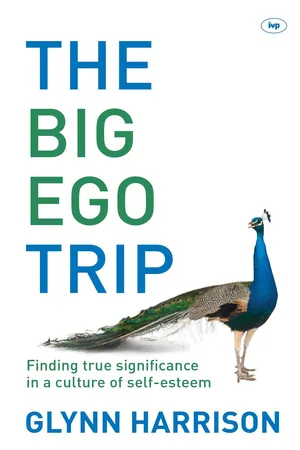
After decades of trying to feel good about ourselves, why do we still hunger for meaning and significance?Glynn Harrison argues that self-esteem ideology has led us down a psychological cul-de-sac that risks causing more harm than good, and today's culture of narcissism and entitlement is the pay-off.Healthy psychological development and fulfilment come from seeing the self as part of something bigger. To achieve the sense of significance that we long for, we need a worldview capable of generating meaning and purpose. The Christian gospel calls us beyond the goal of self-esteem, encouraging us to stop judging ourselves, embrace our identity in God's big story and look outwards to the pursuit of his glory. This is the only sure foundation for biblically based optimism, confidence and personal resilience.'An important and timely book.' Christopher Ash
- English
- ePUB (mobile friendly)
- Available on iOS & Android
eBook - ePub
About this book
Information
1. BIRTH OF AN IDEOLOGY
On Saturday 22 November 2003, just twenty-six seconds before the end of the game, England bagged the Rugby World Cup with a last-gasp drop goal by Jonny Wilkinson. The crowd erupted, sworn enemies hugged in jubilation and grown men wept. A hero was born. Since first walking on to a rugby pitch as a youngster, here was everything the young Jonny Wilkinson had been working towards. It should have been the greatest moment of his life. And yet within hours he was ‘tumbling out of control’.
What happened? In his book, Tackling Life,1 Wilkinson tells how for years he was haunted by anxiety. Stalked by insecurity and self-doubt, life was like a game that he couldn’t win. Instead he found himself chained to a treadmill of achievement in which you are only as good as your last kick. The better things were, the more he had to lose.
Many of us have experienced similar feelings. Like Jonny Wilkinson, we try to feel better by being better. And then, stuck on a treadmill of achievement and addicted to other people’s approval, we just keep on running. So could this be a problem with ‘self-esteem’? And could we learn to feel better about ourselves more generally by thinking differently about our goals, our achievements and our efforts?
The achievement game
The first person to coin the term ‘self-esteem’ was William James,2 an American widely credited as the ‘father of modern psychology’.3 And, like Jonny Wilkinson, James linked the way we feel about ourselves to the way we think about our goals and achievements in life.
Born in 1842 to a well-to-do New York family,4 young William was something of a polymath. His interests straddled the fields of philosophy, medicine and the emerging discipline of psychology. The family were all high achievers: William’s father, Henry, was an exponent of the Swedish Christian mystic Emanuel Swedenborg; Henry Jr, William’s brother, was a budding novelist. The family travelled widely and enjoyed a refined and cosmopolitan lifestyle.
But William battled with mental health problems and, despite graduating in medicine from Harvard, he never practised as a doctor. Instead he decided to take up psychology. A prolific writer and achiever, his works are a potent reminder that psychology was then only slowly emerging as a separate discipline from philosophy. In fact, James also founded the philosophical school of pragmatism and he is widely credited with inventing the term.
James was interested in the feelings generated when we evaluate or assess our achievements. In his view, the human mind prizes achievement above all else, and the more successful we are, the better we feel about ourselves generally. He taught that, if you take time to observe your thoughts and reflect on your attitudes, you soon realize that, like Wilkinson, you are an evaluator. We constantly score or ‘rate’ our achievements as a means of scoring and rating ourselves as whole people (‘I’m a hopeless communicator, so I feel like a hopeless person’; ‘I’m a great hockey player, one of the best, so that makes me a pretty awesome person’).
As the scoring game gradually settles down into an overall pattern, James taught that this produces a more general ‘self-feeling’ or ‘emotional tone of feeling’. In other words, although on any given day your feelings can go up and down, depending on how well the scores are going, over time they will merge to create an ‘average tone of self-feeling’ in an ‘I-just-feel-hopeless-about-myself ’ sort of way or an ‘I’m-a-living-legend’ sort of way.
This doesn’t apply to any old achievements, however. We have to be competent in areas that matter to us. If you’ve always wanted to be a football player, it’s no use discovering that you are a great ballet dancer. Hence, James said, self-esteem depends on the ratio of our actual achievements compared to our expectations: our hopes, dreams and ambitions. The more our achievements line up with our dreams, the better we feel about ourselves.
This doesn’t mean that self-esteem is set in concrete and can’t be changed. James believed that, if you really want to, you can change your feelings by changing the way you think about your achievements. It’s no use trying to feel good about yourself by looking in the mirror and telling yourself you are a wonderful, marvellous, loveable you. James didn’t believe in boosterism. To change your feelings about yourself, he said, you either have to bring your achievements into closer line with your dreams or modify those dreams: what you’re aiming for in life.
Take the example of our football-aspiring ballet dancer: you can either stick with your goal and work harder to achieve it (‘I’m going to work at kicking this ball until my feet drop off ’), or you can change your goal and the way you think about it (‘Hey, ballet dancing is pretty cool after all and I don’t care what other people think’).
Either way, James opened the door to the possibility that self-esteem is something that we can change by focusing on the way we think about our goals and aspirations. So he would probably have advised somebody like Jonny Wilkinson to stop aiming for a perfect score, modify his ambitions and go for something more realistic. He would never have suggested that he should try to boost self-esteem by rehearsing statements such as ‘You are special’. And he would have been shocked by the manner in which feeling good about yourself, regardless of your achievements, became the big ‘must-have’ of the later part of the twentieth century.
The ego game
With the dawn of the twentieth century, however, James’ popularity began to wane under the growing influence of the Austrian neurologist and psychoanalyst, Sigmund Freud. Although Freud didn’t actually use the term ‘self-esteem’, he had a great deal to say about how we come to adopt negative and positive attitudes and feelings towards ourselves. But instead of linking these self-feelings with our achievements in the ‘here and now’, Freud focused on their origins in early-infant development: the ‘there and then’. In other words, if you want to help people who struggle like Jonny Wilkinson, you have to get them on the couch and back to their childhood roots. Freud taught that positive and negative feelings about ourselves depend crucially on what happens to us in early childhood. In particular, they pivot on the outcome of momentous struggles between different ‘bits’ of the personality that take place at that time. What did he mean?
Freud’s model of the human mind is best pictured as three compartments: the id, the ego and the super-ego,5 connected by tubes, with psychic forces flowing between them. Freud knew that these structures don’t actually exist in the brain, but insisted that his model helps us to understand how the different operations of the mind relate to one another.
The id is the most primitive compartment and develops first. To understand the id, just take a look at how babies and infants operate: ‘I want, I need, I must have, not tomorrow, not even in five minutes’ time, but NOW.’ The id is all about me. It has one simple operating principle, or rule, summed up in Freud’s concept of the ‘pleasure principle’: to get its own satisfaction. Described as a ‘dark inaccessible part of the personality’,6 the id is driven by raw aggression and irresistible surges of desire for sexual gratification.
The id wants to rule the world, and, if it could get its way, we would feel very good indeed about ourselves. But of course a world populated by unfettered ids would be a nightmare wasteland of rape, pillage and destruction. So the instincts and demands of the id need to be toned down, which is where our parents come in. When little Harry screams, ‘I want, I need, I must have, not tomorrow, not even in five minutes’ time, but NOW’, his id hits the buffers of his parents’ discipline. He discovers that the promised ice cream stays in the fridge and he is invited to spend five minutes on the naughty step.
So here we have the beginnings of feeling bad about ourselves. It is this experience of parental discipline that develops and builds Freud’s second compartment of the mind, which he called the ‘over-ego’ or ‘super-ego’. This is the place where little Harry absorbs the standards, ideals, expectations and rules of his parents. Over time, as he absorbs his parents’ rules and strictures, he even comes to adopt them, as if they were his own idea in the first place. In other words, his super-ego takes over from where mum and dad left off and operates as its own ‘moral policeman’. And, as we shall see, the super-ego is very good at making us feel bad about ourselves.
But surely the id, possessing the sheer brute force of its aggression and the intoxicating seduction of sex, wins out every time? Not so, because the super-ego has a secret weapon up its sleeve: the powerful, crushing emotion that we call guilt. If we dare to yield to the id, the super-ego tips a bucketful of self-condemnation right over our heads. The super-ego can make you feel terrible about yourself. And here, according to Freud, is the root of ‘feeling bad about yourself ’. Too much guilt, too much super-ego, and we grow up nursing an aching sense of negative self-feeling. Or, as we would say today, we grow up with low self-esteem.
Most of what I have described so far takes place at an unconscious level. The third compartment of the mind, however – the ego – is the conscious part. The ego sits between the id and the super-ego and acts as a kind of referee. As the ego tries to relate to the outside world, its task is to balance the ‘inner beast’ of the id against the moral sensitivities of the super-ego and come up with a working compromise. That’s not easy of course, which is why, according to Freud, we often feel like a walking civil war.
The poor old ego. Why doesn’t it simply get crushed under the weight of the guilt that the super-ego doles out? Well, the ego has a secret weapon of its own: the infant’s natural tendency towards ‘grandiosity’ or, as Freud put it, his ‘narcissism’. Infants are naturally grandiose, Freud said, tending to view other people purely as supply-lines for the needs of their id. So when the super-ego doles out a bucketful of guilt, the infant’s natural grandiosity acts as a sort of buffer to lessen its impact and smooth things out. And then, with the passage of time, the ego moderates its narcissism into something more rounded, what Freud called ‘positive self-regard’.
Good self-regard is a kind of protective mechanism. As they steer a steady course between the outrageous demands of the id and the punishing expectations of the super-ego, people with a healthy dose of positive self-regard hold their heads up high. In fact, over time, they even take the demands and expectations of the super-ego and reshape them into their own ‘ego-ideals’ or moral standards. And that makes them feel even better about themselves. And here we have the basis for what some later called ‘good’ self-esteem.
Let me give an example. Dad may look very angry indeed and tell us that, if we ever tell a lie like that again, we will miss our pudding and be grounded from using our computer for a whole week! Ouch. The super-ego takes the point, doles out a helping of guilt and condemnations, and we slink away with our tail between our legs. The message is clear: Don’t tell lies because bad things happen when you do. Over time, however, the ego shapes the guilt-laden stricture: ‘Don’t tell lies or else...’, and turns it into something more positive, such as ‘Be a person of integrity and self-respect, and that’s how you will win friends and influence people.’ And that makes us feel much better about ourselves.
So Freud’s contribution to the idea of self-esteem was to suggest that, despite all the disgusting effluent spewing forth from the id, we develop a more positive moral view of ourselves by nurturing positive ‘self-regard’. Decades later, when psychologists became interested in the concept of self-esteem, many drew on Freud’s positive self-regard as their basic model. Here was the inspiration for the modern idea that ‘thinking positively’ or ‘feeling good’ about oneself is the key to defeating guilt and self-blame, overcoming low confidence, and finding significance and worth. Forgetting William James’ emphasis on the way we think about our achievements in the here and now, the focus shifted to Freud’s emphasis upon the past, and to the warfare that takes place within the personality. To this way of thinking, unless something is done, those exposed to overly harsh parental discipline, or who harbour unrealistic ‘ego-ideals’, seem doomed to low self-esteem forever.
The inferiority game
Freud had many disciples and his ground-breaking ideas spawned several different schools of psychoanalysis that took different directions. Alfred Adler (a fellow Austrian), for example, became increasingly interested in the way in which those power dynamics that Freud said operate within the personality (between the id and super-ego) also operate between people (not least between him and Freud!). In fact, Adler’s interest in politics, and especially the power struggles in contemporary movements such as socialism and feminism, provoked him to develop much further Freud’s interest in themes of power and control.7
It was Adler who coined the popular notion of the ‘inferiority complex’. In the infant, he said, the adult’s all-controlling power provokes a deep sense of inferiority. Simply put, adults are big and babies are small, and that makes us feel bad about ourselves. Those inferiority feelings have a positive function, however, because they goad the infant forwards towards mastery and success. It is a determination to ‘join the adult club’ and defeat inferiority that spurs the infant on in his thirst for knowledge, competence and wisdom. For Adler, the genius of early feelings of inferiority is that they motivate us to do and be our best.
But of course it doesn’t work that way for everybody. Some children, landed with parents who undermine rather than nurture their fledgling confidence, get saddled with an ‘inferiority complex’. And there’s another twist to this sorry tale too. Some children over-reach themselves in the fight back and put on a false ‘front’ of superiority. The result is Adler’s ‘superiority complex’, the bloated personality that shares many of the features of Freud’s narcissist.
So Adler was another key foundational thinker for the self-esteem movement. His narratives of early-infant power struggles, and the resulting inferiority complex, fed directly into our modern assumption that negative self-feelings are rooted in early-infant experiences of harsh and humiliating parents. And his superiority complex paved the way for the idea of ‘fragile self-esteem’: a prideful, over-assertive and overbearing façade (‘chip on the shoulder’) that is supposed to mask a turmoil of inferiority lurking underneath.
The shrinking game
Just as contemporary power plays and rivalries helped to mould Adler’s thought, personal struggles with power and domination sculpted the thinking of the psychoanalyst Karen Horney too. In her case, it was authoritarian men such as her father (and not least Freud himself) who provided the catalyst to her creative thought. And like William James, her frequent bouts of depression fuelled curiosity into the origins of her own feelings of inferiority.8
Horney was a Freudian at heart, so once again she takes us into the distant past of early childhood. Like Adler, she focused on the infant’s sense of isolation and helplessness in a potentially hostile world. Horney was particularly interested in the way in which some parents’ behaviour can lead a child to doubt her basic approval and acceptance. When this happens, Horney said, the child comes to perceive love and encouragement as ‘contingent’ or dependent. In other words, we only feel OK about ourselves when other people seem OK towards us. As a result, we grow up feeling insecure and react to the world with fearfulness or ‘basic anxiety’.9
But, like Adler, Horney believed that the self fights back. The most common fight-back mechanism is what Horney called the shrinking self.10 In this case, the infant surrenders before war can be declared, and waves the white flag of capitulation in the face of the slightest threat. Such children grow up to become adults with weak and insecure boundaries, living to satisfy other people’s expectations. This is the sort of person who invites you to a gourmet feast for Sunday lunch by offering an apology for her cooking. The shrinking self is deeply insecure and dominated by worthlessness: a classic case of what we now call ‘low self-esteem’.
The expansive self, on the other hand, says that you have to strike first. In other words, before war can be declared, the infant launches a pre-emptive strike. These children, said Horney, grow up to be dominating, know-it-all, ‘conquest’ personality types who need to control those around them. Here we have a picture of the tetchy and defensive shop-floor manager, bald and 5 ft 5 in tall, aggressively relishing the power he holds over other people’s lives, or the kind of person for whom the smallest criticism launches an armada of self-justification. These are classic cases of what would later be called ‘fragile self-esteem’ or, in popular language, having a ‘chip on your shoulder’.
Horney’s unique insight was to spot the importance of consistent and non-contingent parental love that offers ‘unconditional acceptance’. Where this is missing, we have another root of what would later be called low self-esteem.
The attachment game
Before we try to pull these different threads together, we need to look briefly at one more model of infant development. In the 1960s, shortly before the self-esteem movement really took off, ‘attachment theory’ burst onto the psychology scene. Attachment theory was the brainchild of the psychoanalyst and psychiatrist John Bowlby.11
For healthy psychological development and mature adult relationships, Bowlby also emphasized the need for a secure emotional bond with a primary caregiver, usually the mother, which allows the child to attach to her. This process, which occurs sometime between six and twenty-four months, plays a core role in the development of the infant’s ‘internal working model’ for how to initiate and maintain healthy relationships later in life.
There are a number of very plausible ideas in Bowlby’s work. It rings true that a secure relationship with the chief caregiver in early life sets the pace for how we approach relationships later in life. If a child experiences inconsistent affection and erratic care from his drug-addicted mother, we wouldn’t be surprised if, as an adult, he himself has difficulty with commitment and in trusting other human beings to behave faithfully. Bowlby’s ideas have been subjected to a fair degree of empirical testing too, with carers and children being observed under experimental conditions.12 So attachment theory has some important things to say about how we develop our concept of ourselves.
Bowlby was more or less ostracized from the psychoanalytic community for betraying some of its most fundamental tenets, but his attachment theory gained considerable status and academic recognition. Among professionals operating in child welfare services, it is probably ...
Table of contents
- The Big Ego Trip
- CONTENTS
- PREFACE
- INTRODUCTION
- 1. BIRTH OF AN IDEOLOGY
- 2. TIPPING POINT
- 3. CATCH THEM YOUNG AND SELL IT HARD
- 4. TO GOD YOU’RE BIG STUFF!
- 5. DOES BOOSTERISM WORK?
- 6. THE AGE OF THE NARCISSIST
- 7. KIDS PRAISE
- 8. ALL ROADS LEAD TO PHILOSOPHY
- 9. WE DID IT MY WAY
- 10. AMAZED BY GRACE
- 11. HOW TO STOP JUDGING YOURSELF
- 12. THE BIGGER-THAN-YOUR-EGO TRIP!
- POSTSCRIPT
- NOTES
Trusted by 375,005 students
Access to over 1.5 million titles for a fair monthly price.
Study more efficiently using our study tools.
Frequently asked questions
Yes, you can cancel anytime from the Subscription tab in your account settings on the Perlego website. Your subscription will stay active until the end of your current billing period. Learn how to cancel your subscription
No, books cannot be downloaded as external files, such as PDFs, for use outside of Perlego. However, you can download books within the Perlego app for offline reading on mobile or tablet. Learn how to download books offline
Perlego offers two plans: Essential and Complete
- Essential is ideal for learners and professionals who enjoy exploring a wide range of subjects. Access the Essential Library with 800,000+ trusted titles and best-sellers across business, personal growth, and the humanities. Includes unlimited reading time and Standard Read Aloud voice.
- Complete: Perfect for advanced learners and researchers needing full, unrestricted access. Unlock 1.5M+ books across hundreds of subjects, including academic and specialized titles. The Complete Plan also includes advanced features like Premium Read Aloud and Research Assistant.
We are an online textbook subscription service, where you can get access to an entire online library for less than the price of a single book per month. With over 1.5 million books across 990+ topics, we’ve got you covered! Learn about our mission
Look out for the read-aloud symbol on your next book to see if you can listen to it. The read-aloud tool reads text aloud for you, highlighting the text as it is being read. You can pause it, speed it up and slow it down. Learn more about Read Aloud
Yes! You can use the Perlego app on both iOS and Android devices to read anytime, anywhere — even offline. Perfect for commutes or when you’re on the go.
Please note we cannot support devices running on iOS 13 and Android 7 or earlier. Learn more about using the app
Please note we cannot support devices running on iOS 13 and Android 7 or earlier. Learn more about using the app
Yes, you can access The Big Ego Trip by Glynn Harrison in PDF and/or ePUB format, as well as other popular books in Psychology & Mental Health in Psychology. We have over 1.5 million books available in our catalogue for you to explore.