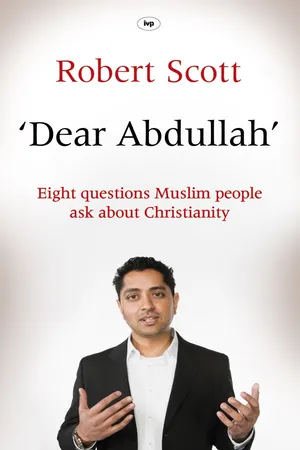
Many Muslims are willing to discuss matters of faith with Christians, if only we are willing to listen and talk, with gentleness and respect.
Over several years Rob Scott has done just that and shares from his rich pool of experience and wisdom. He equips us to converse with those â?~people of peaceâ?T whom Jesus the Messiahâ?Ts disciples are to look for; those who are genuinely interested in understanding â?~who is the Christ?â?T of the Christian message. These are people who share our communities, our lectures and halls of residences, our offices and blocks of flats.
In this book Rob begins to address the real questions, objections and confusion of Muslim people concerning the Christian message. It is written so that we can answer these questions in as gentle and honest a way as possible.
Commendations:
'Rob Scottâ?Ts book meets the accessibility test in three key ways. First, it focuses upon real questions posed by real Muslims to real Christians on a regular basis. Second, it provides answers that effectively equip Christians to engage with Muslims in diverse contexts. Third, it uses a style of language which is easily comprehensible for those with little background in the study of Islam. On this basis, this book deserves wide distribution among Christians as they interact with their Muslim friends.'
Peter Riddell, Formerly Professor of Islamic Studies at London School of Theology
'Scott writes with a clear head and winning affection for his Muslim friends. Instead of giving glib, pre-packaged responses, he shows how the very shape of the gospel answers Muslim objections to it â?" and thus he models how attractive the triune God of love is. Very helpful.'
Michael Reeves, Head of Theology, UCCF
- English
- ePUB (mobile friendly)
- Available on iOS & Android
eBook - ePub
About this book
Information
Topic
Theology & ReligionSubtopic
Christianity1. How can we know an incomprehensible God?
Allahu akbar! The God of the Bible is great!
God seems greatly incomprehensible
‘Robert, you have just said that “God is love”. You have said that this love is shared with people. I know how to love my wife, but I cannot know what the love of almighty Allah is like. His love is so far above ours.’
Prior to meeting Abdullah and Yusuf, we had held a similar meeting for better understanding in that same mosque. The topic this time was our respective conceptions of God. I mentioned the apostle John’s words that ‘God is love’ (1 John 4:8). In the Questions and Answers session afterwards, the sheikh sitting beside me responded to this with the words of the paragraph above. He carried on: ‘Love is a human concept and we cannot draw analogies from human love to God’s love. We cannot understand God as love in any way.’
I had heard similar views before. It seems a fairly orthodox Muslim position – we are creatures and cannot understand our Creator. It’s a statement of humility, but it’s also a statement of profound despair.
If human words and concepts have no link with God in any way, we can know nothing about God. All we have are human words, and these creaturely words cannot convey understanding about God. We are left in our creatureliness. We are in the dark about God. There is an unbridgeable chasm between us and any knowledge of God. We can neither know about his mercy nor personally experience it because it cannot be communicated to mere creatures like us.
This really does leave many of my Muslim friends with a God they cannot comprehend or even truly describe to others. This problem seems to be understood by some Muslim speakers. More than once, I have visited university Islamic societies to listen to talks on ‘The God of Islam’. But they turned out to be talks on ‘Islam as the religion of peace’ or ‘How to submit to God’ rather than attempts to describe or explain the Greater Reality which people are supposed to follow.
As followers of Jesus the Messiah, we need not be silent on who God is. We can give comforting content to the claim that ‘God is great’. This is because God humbled himself to communicate to us in human language, through using created concepts and ultimately by coming to live within his creation.
God is...
The holy Bible speaks of God in many different ways. For example, God is called a ‘Rock’ (Psalm 19:14). Does this mean that he is literally a rock? No, as this would mean a one-to-one correspondence between the word ‘Rock’ and what it is referring to. Could it mean that God is actually a sponge? No, as this would mean there is no link between the word ‘Rock’ and what it is trying to convey about God.
Instead, the description of God as a Rock is a metaphor or analogy. It emphasizes the security and safety which God provides for his people, just as a rock does if you build on it. God uses human words and things in creation to reveal himself to us. So God is also a shepherd guiding and guarding his people (Psalm 23), a bird caring for her young (Psalm 17:8), a mighty warrior (Exodus 15:1–21), a father (Isaiah 64:8), a husband (Hosea 2:16) and a lion (Jeremiah 49:19), to name but a few analogies.
The Bible also tells us about God’s attributes or characteristics. For example, God is eternal (Deuteronomy 33:27; Romans 1:20), unchangeable (Numbers 23:19; Malachi 3:6), omnipresent (Psalm 139:7–12), omnipotent (Jeremiah 32:17; Revelation 4:11) and so on.
Sometimes the Scriptures also tell us that God is something, in his essence or essential nature. For instance, after living with Jesus the Messiah and getting to know him personally, the apostle John was able to write, under God’s inspiration, that God is light and God is love (1 John 1:5; 4:8). These two concepts are profound in their implications. For example, ‘God is light’ means that he is pure, perfect and holy. Therefore, we as impure, darkened and sinful creatures can never be in his presence. Light banishes darkness. Does this mean that God will banish people too? Fortunately, the answer is found in ‘God is love’. God in himself, and from all eternity, has always been love. This love flows out to the world, enabling people to know him and come near to him.
However, rather than concentrate on these concepts or attributes or analogies, this chapter is going to focus elsewhere. Rather than think about what God or divinity is, we are going to look at who God is. Throughout God’s Word, we are given clear and consistent ways of characterizing God or explaining who he is. We see this as the Bible unfolds its narrative and God relates to his world.
God is Creator and Ruler
The first page of the Bible introduces us to God:
In the beginning God created the heavens and the earth. Now the earth was formless and empty, darkness was over the surface of the deep, and the Spirit of God was hovering over the face of the waters.And God said, ‘Let there be light,’ and there was light. God saw that the light was good.(Taurat, Genesis 1:1–4)1
Why begin here? First, it is the beginning of the Bible and how God introduces himself to us. Therefore it isn’t a bad place to start.
Second, it is a common concept that we share with our Muslim friends. They believe in a Creator too. (The fact that many Muslim apologists are debating with atheists on creation and design makes this point.) While the Creator has different connotations in the Qur’an, it is something of a shared basis from which we can start to talk about God. This seems to be the approach which the apostle Paul took in Athens as he revealed ‘the unknown God’ to his audience (Acts 17:16–34).
Third, and probably most importantly, this may be the best approach when reading the Bible with people who don’t know much about its content, whether atheist postmoderns or devout Muslims. Of course we want to proclaim Jesus as Lord and Saviour, but if people don’t know the context into which he proclaims himself as Lord and Saviour then he can sound irrelevant to our atheist friends or blasphemous to our Muslim friends. Therefore, it’s important not only to listen to what the holy Scriptures say about who God is, but to do so in such a way that we understand the Bible’s story from beginning to end and how God’s plans are revealed progressively.
Back to Genesis. As you may know, the rest of the first chapter of the Bible carries on the theme of creation. God simply speaks and things come into existence, from the sun and moon to centipedes and mooses, from mountains and waters to men and women. God’s word is powerful and effective.
The prophet Moses wrote Genesis 1 under God’s inspiration. (While there is some debate about the authorship of the first five books of the Bible, as there is with other ancient texts, I see no reason to disagree with Jesus or with the majority of Christians over time and space who have regarded these books as written by Moses.2) Moses wanted all people everywhere to realize that the God of the Bible is the Creator. He alone made everything.
These truths are echoed in the words of a contemporary song:
Creation sings the Father’s song;He calls the sun to wake the dawnAnd run the course of dayTill evening falls in crimson rays.His fingerprints in flakes of snow,His breath upon this spinning globe,He charts the eagle’s flight;Commands the newborn baby’s cry.(Extract taken from the song ‘Creation Sings the Father’s Song’ by Kristyn Getty, Keith Getty and Stuart Townend, copyright © 2008 Thankyou Music 3)
And in old songs, which the Bible itself records, like those of King David:
The earth is the LORD’s,4 and everything in it, the world, and all who live in it;for he founded it upon the seas and established it upon the waters.(Zabur, Psalm 24:1–2)
These words imply that God is the Creator. God made everything, which means he owns everything and rules over it. The earth is the Lord’s because he established it.
I enjoy DIY. Sad, but true. Maybe it’s the sense of achievement at making bookshelves that don’t collapse (a job I can tick off!). Maybe it’s a sense of fulfilling the creation mandate through making a shoe rack. That said, perhaps most significantly, the shelves and rack I have cobbled together are mine. Both are for their creator’s own use, not for anyone else’s. I might allow other people to put their books on my shelves or their shoes on my rack, but that’s for me to decide because I own the shelves and the rack. This is the same for God, albeit on a much larger scale!
If God owns everything because he made it, this also means that he is our world’s rightful ruler. This is a key lesson which God teaches throughout his holy Scriptures. He alone is Creator and Ruler, not the gods of Canaan or Pharaoh or the imperial powers of Assyria and Babylon.5 It is a theme which begins the Bible and grows through time as more and more of Israel’s prophets call people to acknowledge that the LORD is God and there is no other.
This is why the Bible is full of commands for us to love the LORD our God with all our heart, soul, strength and mind (for example, Deuteronomy 6:5). There is no other who should have our hearts and our devotion. God as Creator-Owner-Ruler tells us that we are not autonomous. I cannot do what I like with my life, my body, my time, MySpace or anything else which I think is mine. I am created and therefore owned and ruled by my Creator. This has much to say to our Western culture and its obsession with independence, not to mention how we treat other people whom God has made.
God is the personal Covenant-Maker...
...in an overarching narrative
God is initially described as the Creator and Ruler. This is a theme which is threaded throughout the Bible’s narrative. However, as with all good narratives the main character is given greater depth and colour as time goes on. The Bible’s narrative achieves this as it lays out God’s actions in his world and how he means to restore it.
For some people the idea that the Scriptures have an overarching storyline is new, but we can see this by very briefly comparing its first and last chapters. The first three chapters of the Bible in Genesis and the last two chapters of the Bible in Revelation pick up the same kind of themes and ideas:
| Genesis 2 Blessings | Genesis 3 Curses | Revelation 21 – 22 Amazing blessings |
|---|---|---|
| Intimate and good relationship with God (verses 7–18; see also 3:8) | Broken relationship with God (verses 10–13) | God will be with his people (21:3–4) |
| Harmonious relationship with each other (verses 22–24) | Broken relationship with each other (verses 6–7, 12, 16) | No crying or pain (21:4); healed nations (22:2); no curse (22:3) |
| In God’s land (verses 8–15) | Out of the land (verses 23–24) | In God’s city (21:1–3, 22–27) |
| Pleasant work under God (verse 15) | Pain and suffering (verses 16–19) | No pain or suffering, serving God perfectly (21:4; 22:3) |
| Eternal life (see also 3:22) | Death (verses 19, 22) | Receive life, no curse of death (21:6; 22:3) |
What was lost by Adam and Eve in Genesis 3 is restored in Revelation 21 – 22. Having been punished by God and thrown out of his paradise, God’s people are blessed and are back in his paradise by the end. The rest of the Bible between these brackets or bookends explains how we move from a fallen creation to the new creation.
Within this narrative we see God repeatedly relating to people in similar ways. This in itself shows that he is personal and not a mere individual. A person is someone in relationship with others. Personhood is about going out from yourself and being relational. An individual is simply a being without reference to anyone else. It is something that can be divided off. But how does God personally relate to people?
He does it through a ‘covenant’. This is an agreement between God and people in which God commits himself to people, promising blessings to them, and describes the conditions of their relationship with him.
It’s like a marriage. This is an agreement between one man and one woman to commit publicly to one another, through thick and thin, in sickness and in health, in an exclusive relationship. Others are witnesses to the agreement and there may be a certificate to verify it. Interestingly, God often describes the relationship with his people as a marriage.6 Holy Scripture acts as both the marriage certificate and the photo album. It witnesses to what God says and does and how his people respond.
...personally relating to people
In order to make a covenant, God needed to appoint a mediator. This was someone who could act on behalf of the people. So God appointed Adam (Hosea 6:7), Noah (Genesis 9:9), Abraham (Genesis 17:3–7), Moses (Exodus 24:7) and David (2 Samuel 23:5; see also 2 Samuel 7:1–17). These were people of great faith – the leaders of God’s people in their day. The Qur’an seems to recognize something of their unique status as covenant mediators in Surah 33:7.
God related to these people personally and intimately. He walked with Adam in the cool of the garden (Genesis 3:8). He appeared to Abraham and ate with him (Genesis 18:1–33). He declared his glory to Moses on Mount Sinai and allowed him access to his throne room (Exodus 24; 34:1–9). He spoke with David and fought for him (2 Samuel 5:23–25; see also 2 Kings 6:17).
From this we can see that it is not the New Testament or the apostle Paul or the early church or the emperor Constantine who fabricated the idea that the Creator and Ruler of the world came to be with his people. When talking about Jesus, my Muslim friends have often accused one of these suspects of bringing God to earth. They often argue that it’s an idea foreign to the God of the Old Testament. However, this is...
Table of contents
- Dear Abdullah
- Contents
- Acknowledgments
- Foreword
- Introduction: Questions, objections and confusion
- 1. How can we know an incomprehensible God?
- 2. Don’t Christians only do Sundays?
- 3. What sort of God can be murdered?
- 4. What sort of God can be born as a baby?
- 5. But don’t Christians worship three Gods?
- 6. Where does Christianity end and Western culture begin?
- 7. Hasn’t the Bible been corrupted?
- 8. How can we be sure about God?
- Notes
Trusted by 375,005 students
Access to over 1.5 million titles for a fair monthly price.
Study more efficiently using our study tools.
Frequently asked questions
Yes, you can cancel anytime from the Subscription tab in your account settings on the Perlego website. Your subscription will stay active until the end of your current billing period. Learn how to cancel your subscription
No, books cannot be downloaded as external files, such as PDFs, for use outside of Perlego. However, you can download books within the Perlego app for offline reading on mobile or tablet. Learn how to download books offline
Perlego offers two plans: Essential and Complete
- Essential is ideal for learners and professionals who enjoy exploring a wide range of subjects. Access the Essential Library with 800,000+ trusted titles and best-sellers across business, personal growth, and the humanities. Includes unlimited reading time and Standard Read Aloud voice.
- Complete: Perfect for advanced learners and researchers needing full, unrestricted access. Unlock 1.5M+ books across hundreds of subjects, including academic and specialized titles. The Complete Plan also includes advanced features like Premium Read Aloud and Research Assistant.
We are an online textbook subscription service, where you can get access to an entire online library for less than the price of a single book per month. With over 1.5 million books across 990+ topics, we’ve got you covered! Learn about our mission
Look out for the read-aloud symbol on your next book to see if you can listen to it. The read-aloud tool reads text aloud for you, highlighting the text as it is being read. You can pause it, speed it up and slow it down. Learn more about Read Aloud
Yes! You can use the Perlego app on both iOS and Android devices to read anytime, anywhere — even offline. Perfect for commutes or when you’re on the go.
Please note we cannot support devices running on iOS 13 and Android 7 or earlier. Learn more about using the app
Please note we cannot support devices running on iOS 13 and Android 7 or earlier. Learn more about using the app
Yes, you can access Dear Abdullah by Robert Scott in PDF and/or ePUB format, as well as other popular books in Theology & Religion & Christianity. We have over 1.5 million books available in our catalogue for you to explore.