When we hear the word 'idol' we tend to think of football players or pop stars. We may even remember that some people's religion meant worshipping idols: little or large statues that represented a god.
But what has this to do with us today?
Julian Hardyman is increasingly convinced that idolatry â?" putting anything else in the place that is rightfully God's â?" explains us and our problems:
Why we get so angry about traffic jams.
What drives us to work so hard our marriage hits the rocks.
What lies behind that compulsion to look at pornography.
He has also found that God is engaged in a war to win back our hearts.
- English
- ePUB (mobile friendly)
- Available on iOS & Android
eBook - ePub
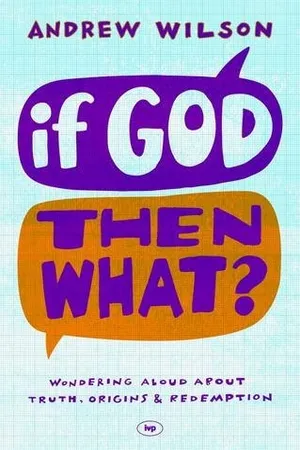
About this book
Information
Topic
Theology & ReligionSubtopic
Christian Theology1.
Me and the mutaween:
What kind of evidence is there for that?
I have only been called a fundamentalist once, and I was fourteen.
It was in the Memorial Block of my school, one of those castle-like buildings that people built after the war to make schools look imposing, with a tower and turrets and everything. When you walked in each morning, even in summer, you felt the building scowling at you, either because you had forgotten something, or just because you were there.
At the very top of the central staircase, right next to the door to the tower that was mysteriously always locked, was a grey, perpetually dark classroom that was imaginatively called Room 26, in which boys were taught divinity (which is a fancy word for religious studies). Teaching boys divinity was obviously needed in my school; that year, the Memorial Block was splashed across the centre pages of the Daily Mail because there had been a huge drugs bust in the school, and a whole bunch of pupils had been expelled. Having said that, perhaps the senior staff could have benefited from the lessons as well, since I later read in The Times that they had been rumbled by the Office of Fair Trading for being part of a price-fixing cartel with fifty other schools. Anyway, it was in Room 26, during a divinity lesson, that I was called a fundamentalist.
The man who said it was called RevKev. RevKev was the chaplain at my school, and he was one of the nicest people I have ever come across. Most people, if they were dressed in a long black chaplain’s gown and walked into a grey, dark classroom full of fourteen-year-olds, would find it hard not to resemble Professor Snape from Harry Potter, but somehow RevKev managed it while looking warm and friendly. I think it was something to do with his face, which was a perfect circle, with a generous smile and a rather red nose in the exact middle, as if someone had pressed a large ripe blackberry in between his cheeks. In fact, RevKev was so nice that he could cheerfully call you a fundamentalist in front of twenty classmates, and because of the way he said it, you would take it as a compliment.
Back then, not many fourteen-year-olds knew what a fundamentalist was. I don’t think I did either. It was in the early 1990s, about ten years before the strike on the Twin Towers, and none of us had ever seen the terrible results of fundamentalism: burning buildings, hook-handed hate preachers, suicide bombers, and the rest. It was a bit like being called a Nazi in the early 1930s, before anyone knew quite how bad it was. So when RevKev said it, I didn’t feel like he was having a go at me. A fundamentalist, I thought. That’s nice. Believing in the fundamentals of something is important. From the looks on the faces of my classmates, I don’t think any of them realized quite what the chaplain was saying either.
It came up because I was arguing that Christians were right and everybody else was wrong. This was a common habit for me at school, partly because I enjoyed arguing, and partly because I was convinced I was right. As far as I could see, the Bible was true, and the Bible said certain things about ethics and religion and morality, things that meant that everyone who didn’t believe them was wrong, and almost certainly going to hell. Something pretty much like this was believed by almost everyone I respected, and it had also been confirmed by my religious experience up to that point. So when faced with people who did not share this perspective in a divinity class, it was mainly my job to tell them that they were wrong and that I was right.
It had not yet occurred to me that you could use exactly the same argument with reference to the Qur’an, or the Talmud, or the Book of Mormon, or the Declaration of Independence for that matter. I hadn’t noticed that billions of people in the world had had religious experiences and assumed their sacred texts were true, and that because their sacred texts said certain things about ethics and religion and morality, everyone else was wrong. I hadn’t studied enough history to see the problems, even wars, that thinking like this could cause. Nor had I considered the implication that I might be wrong: but if I was, how would I know?
None of these things had become part of my thought life yet. It was just me in Room 26, representing Christianity, pitched into battle against one guy who thought Christians were odd because they didn’t have sex before marriage, and another who wasn’t sure there was any evidence for the Christian God, and another whose Sri Lankan parents were not Christians but wanted him to fit in when he went to school in England so they gave him the middle name ‘Jehovah’ – no, I’m not joking – and seventeen other people who seemed to agree with everything people said unless it was me saying it. And at the front of the class was RevKev, who thought all religions were equal, and all of us were reaching for the same god, and the only people who were wrong were the ones who thought theirs was the only way.
So he called me a fundamentalist. And he was right.
* * *
A few minutes ago, I was watching a YouTube clip in which Derren Brown was talking about why he wasn’t a believer in God. Derren Brown is a very clever television magician who presents his tricks as a mind-control act, and he was saying that he had stopped believing in God as a teenager because his pastors and others motivated people by fear, and were scared of investigating the evidence for their beliefs. The clip was only four minutes long, but it was plenty long enough to make me think that Derren Brown had probably met people like me when he was a teenager. Then I started thinking about all the people I knew at school, and I wondered how many of them could make a YouTube clip, explaining that they didn’t believe in God because they had met fundamentalists like me, individuals who were scared of finding out whether or not their beliefs were true. It made me think.
* * *
It was several years before I realized what RevKev meant. For most of my life at school, belief in God was something to be defended if the subject came up in conversation, but otherwise a bit of a side issue. The main things at school were being popular, being good at sport, being thought funny, getting drunk in such a way that you were noticed by all of your friends and none of your teachers, and doing well at exams without being picked on for it. Since believing in God didn’t help me with most of these, I didn’t really think about it much. When religion did come up in conversation, I usually saw it as a battle which could either be won or lost, and because I was quite an articulate and aggressive person, I usually won. The idea that I ought to be debating rather than battling – or better still, discovering for myself whether what I believed was true or not – didn’t really come up.
I think that’s quite common amongst fundamentalists: the language of winning and losing. When we make our belief system part of our identity, and we start valuing ourselves by the accuracy of our ideas, then it’s very easy for a statement like this is true to become we are right, and for that to turn into we are winning, and then we are better. Every debate won is another mini-victory in the global war taking place between our ideas and other people’s, and it makes us feel better about ourselves, because our sense of worth is tied to our sense of rightness. (Mine was, anyway. I was a scrawny teenager with acne and no girlfriend, so doubtless being right was my way of getting credibility with other people, of feeling more worthwhile.) When we’re young, we’re incredibly vulnerable to this, because we are searching so desperately for affirmation; I’ll bet this is part of the belief system of most young men who physically blow themselves up to help ‘win’ an ideological ‘war’. I wonder if most of them have ever even considered that their views might be wrong, or asked themselves how they might find out. In this sort of war, admitting that you are wrong is the worst possible outcome, so you don’t even think about it.
Last year I watched a Jamie Foxx film called The Kingdom, in which US agents were involved in a mission in Saudi Arabia, and the only thing I remember about it was the ending. There was an old woman, wrapped in a shawl and sitting on her steps, muttering with quiet menace about the Americans, in Arabic: We’re going to kill them all. Then it cut to Jamie Foxx in Langley, Virginia, as he explained what he had said to another character earlier in the movie, about the Saudis: I said, we’re going to kill them all. And I thought that was a very interesting comment about fundamentalism, because the filmmakers seemed to be saying that the American agents in the film were just as fundamentalist as the Saudi characters. Since the Iraq war, it has become fashionable to say things like this, but it’s still true. Fundamentalism can happen within Islam, Christianity, liberal democracy and even secularism, because it happens when people refuse to question what they believe, based on evidence, and decide to pursue victory instead of discovery. I lived like that for years.
Having said that, I never blew anybody up at school. I never killed anyone, or hit anyone, for disagreeing with me. So it might sound a bit melodramatic to compare myself with Mohammed Atta, as if we were both basically struggling with the same sort of problem. But I still think RevKev was right about me. I heard a lecture at UC Berkeley that described the four phases of fundamentalism, in which the lecturer said it goes: superiority → isolation → caricature → persecution. If you think that you’re right and others are wrong, then you’re likely to look down on them. If you look down on them, you will often end up separating yourself from them, and that’s where ghettos and gulags and gated communities come from. If you do that, you’ll forget what other people are really like, and you’ll caricature them. And if you caricature people for long enough, it won’t be long before persecution starts. This is what happened with the Nazis, and apartheid, and the Wars of Religion, and suicide bombers, and I was well on the way by the age of fourteen. If I hadn’t been in a school surrounded by people who disagreed with me, it could have been a lot worse.
Now I’m not a sociologist, and I don’t want to be trivial about something so serious, but that lecture at UC Berkeley all sounds about right. And if it is, then Mohammed Atta and the Spanish Inquisition and Heinrich Himmler and I all had pretty much the same problem, in different degrees. How troubling.
* * *
You never forget the first place you see fundamentalism for yourself, and for me it was Kano.
Africa is an extraordinary continent, and Nigeria is about as African and extraordinary as it gets. The capital city, Abuja, didn’t even exist a generation ago, and it sits, baffled, in the centre of a large, overpopulated and chaotic country, administering affairs with a mixture of desperation and eccentricity. To the south, the landscape is lush, green and tropical: colourfully dressed women line the main roads carrying baskets of fruit on their heads, the locals are almost entirely black African, and there are churches with convoluted names on every street corner, like ‘The Unified Cherubim and Seraphim Students’ Church’. As you drive north of Abuja, and particularly when you pass Kaduna, the country changes. Green gives way to brown, lush tropical vegetation becomes dusty scrubland, English turns into Arabic, black faces become brown, colourful outfits become white, and the churches are replaced by mosques. It’s as if somebody drew a line somewhere in the middle of Nigeria and announced that it was the dividing line between northern and southern Africa. Maybe they did.
At the north of the country is Kano, a suffocatingly hot, sprawling and dusty city with an official population of 3 million, although the real figure may be three times that. We reached it after a hair-raising journey over potholed roads in a clapped-out minibus, at eighty miles per hour, in a thunderstorm, in the dark, while the driver talked on his mobile phone, so our first impression of Kano was that of a sleep-filled haven, safe from lightning bolts and crazy drivers. The following morning, however, we stepped out into what was then, and is still, the most unpleasant place I have ever seen. It began with the smell, which had something to do with the exhaust from a million motorbikes, and an awful lot to do with the open drainage system, which was no more than a set of roadside gutters along which sewage was drifting slowly. Then there was the rubbish, which was everywhere: not just crisp packets and Coke cans, but generous mountains of trash lining the streets, several feet high, rotting in the June sun and adding to the stench. It didn’t make a great first impression.
Officially, the secular national government was in charge of the city, but Kano was a sharia state with a local emir, which meant in practice that the real power lay with the mutaween. These are the unofficial Islamic religious police, who enforce sharia law whenever they choose to. We spoke to several non-Muslims there who told us that healthcare and education were free only if they converted to Islam, which presented many families with a terrible choice. In some countries, the mutaween have gone further: in 2002, they banned young women from leaving a burning building in Mecca because they weren’t dressed properly or accompanied by a man. Fifteen girls died. It’s not as extreme as that in Kano yet, but when the mutaween decide that women cannot ride on motorbikes for religious reasons, whatever those are, the women have to stop instantly for fear of punishment. It’s that simple. A quick decision, and half the city’s population are suddenly deprived of the only affordable form of transport.
It was a tense place. When you drove around, you were occasionally stopped by men with guns: they were usually just the army, checking that you weren’t bandits, but you couldn’t be sure of that until they lifted the roadblock. We got an idea of how tense it was when we visited a church that had recently been burned to the ground by Islamists. We were there to document what had happened, and were quickly surrounded by a large crowd of angry young men, shouting at us in Hausa and insisting that we were not allowed in the area. I say crowd, but there’s not much of a difference between a crowd and a mob, particularly when you’re a white, English-speaking infidel, travelling with your petite, blonde, English-speaking infidel wife in a heavily Islamic area, and they’re standing in a circle around you. Apparently, the problem was that we had not requested permission to be there, and certainly not to ask questions about what had happened, and that meant trouble. Thanks to some apologetic grovelling from our Nigerian guides – which, you would think, ought not to be necessary for standing in a public street in a free country looking at a public building – we escaped without harm, but there were times when I thought we wouldn’t. Clearly, I thought, this was not a place where free enquiry was encouraged.
Now I think Kano fits very well with that lecture at UC Berkeley. In Nigeria, as in so many places, you can certainly see superiority leading to isolation, as Christians and Muslims separate themselves from people who don’t share their religion. You can also see this isolation developing into caricature; almost every Christian we spoke to believed that Muslims were responsible for all problems, and vice versa. And predictably, you can see this caricature resulting in persecution, which explains the burned churches and mob violence, in this case from the majority Muslims to the minority Christians. It’s tragic, when you think about it. All those people suffering, because people don’t ask questions about what they believe.
But my lasting memory of Kano was not the burned churches, the rubbish, the open sewers, the heat, the tension or the mutaween. It was summed up in a photo I took of two boys, waiting on the side of a street. The backdrop was both everyday and apocalyptic at the same time, rather like Kano itself – an arid, dusty day, with scraggly and tumbledown accommodation stretching for miles in every direction, and rubbish being blown along in the hot wind. It was like something from T. S. Eliot’s The Waste Land:
What are the roots that clutch, what branches growOut of this stony rubbish? Son of man,You cannot say, or guess, for you know onlyA heap of broken images, where the sun beats,And the dead tree gives no shelter, the cricket no relief,And the dry stone no sound of water...I will show you fear in a handful of dust.
Behind the two boys was a whitewashed wall, and on it a piece of graffiti – chilling, ironic and comic all at once, given the lack of education, the oppression and the pollution all around it. Someone had scrawled a sentence in blood-red letters, and it illustrated perfectly the blind sense of superiority I was just talking about. It said: ‘Sharia is the best way of life.’
I wasn’t convinced.
* * *
Coming back from Kano, I wondered: how do you stop the slide? How do you stop teenage boys like me being arrogant and bigoted, and people in Kano imposing sharia or burning down churches? What am I supposed to say about those Christians who hold up signs in America saying, ‘God hates fags’, or about the Taliban, or about Saudi Arabia’s treatment of women, or about Hindu extremists who burn Indian villages, or communist dictators who try to wipe out religious belief, or atheists on the internet who say that no amount of evidence could convince them that a supernatural event had happened? Is there anything I can do about that sort of unquestioning fundamentalism, or do I just have to lump it?
I’ve thought about that quite a lot since then.
* * *
My fundamentalism imploded at university. It’s pretty hard to believe you’re right and everyone else is wrong when you’re surrounded by people who are much cleverer than you, and who ask you questions for which you have no answers. My friends used to sit around listening to Shostakovich and talking about Hegel and Derrida, and I came to realize that I didn’t really know anything about anything. My friend Richard did a PhD in the concept of the self in Western Marxism, and went on to teach philosophy at the University of Chicago. My other friend James knew an astonishing amount about literature, art and music, and had written both a novel and a poetry anthology before he even started his degree. Then there was my flatmate Greg, who studied Anglo-American philosophy, had the fastest mind I’ve ever come across, and ended up winning a Fulbright Scholarship to Harvard. When these people debated things, I often just sat and listened, because it was so stimulating. I still remember one 3am debate about the flexibility of language, when James exclaimed, ‘Words are life and death to me!’ and, in a flash, Greg responded, ‘But life and death are words to me.’ They were quite awe-inspiring to be around, in that way.
But they made it almost impossible to be a fundamentalist. When I was talking to them, it became embarrassingly obvious that I didn’t have very good reasons for believing what I believed, because they asked such awkward questions. What evidence was there that the Bible was divinely inspired? An all-loving, all-powerful God would stop pointless suffering, wouldn’t he? Why should the opinions of a few religious oddballs from two thousand years ago have any influence at all in the modern world? Aren’t miracles by definition impossible, and therefore to be rejected? Put bluntly, is there any evidence whatsoever for the existence of the Christian God? And so on. While I reflected on questions like these, they moved on to discuss political theory, or whether art was dead, or whatever. And I sat there thinking, wondering whether there was any reason to believe in Christianity at all.
I don’t know if you’ve ever been in a conversation like that, where everything you believe is being challenged by people who are cleverer than you, and you aren’t sure whether you have a leg to stand on. If you have, you’ll know that you have two options. One, you can investigate what you believe, to find out whether or not there is any evidence for it. Or two, you can decide not to investigate, because your beliefs are really a question of faith – they are your opinions and none of anybody else’s business, and that’s that. If you choose option one, you run the risk of finding out that you have been wrong for years, which most people don’t like very much. But if you choose option two, you are doomed to be completely irrelevant, because what you believe has no evidence that other people can understand or critique.
Now, fundamentalists don’t generally get into conversations like this in the first place, because we surround ourselves with people who agree with us. If we do, we generally choose option two, because we don’t want to ...
Table of contents
- Praise for Andrew Wilson and If God, Then What?
- Contents
- Acknowledgments
- Prologue. Yale without the tuxedos: Where are we going?
- 1. Me and the mutaween: What kind of evidence is there for that?
- 2. A Hercule Poirot thing: How do we know?
- 3. Galactic roulette: How did we get here?
- 4. Mind over matter: Why do you think?
- 5. White rain: What is possible?
- Interval. The ripping of Mr Pritchard: Where are we so far?
- 6. A hornet in the icing: What’s wrong with the world?
- 7. The redemption of London: What’s the solution?
- 8. The Dublin display case: What happened on 9 April AD 30?
- 9. Repainting God: So what?
Trusted by 375,005 students
Access to over 1.5 million titles for a fair monthly price.
Study more efficiently using our study tools.
Frequently asked questions
Yes, you can cancel anytime from the Subscription tab in your account settings on the Perlego website. Your subscription will stay active until the end of your current billing period. Learn how to cancel your subscription
No, books cannot be downloaded as external files, such as PDFs, for use outside of Perlego. However, you can download books within the Perlego app for offline reading on mobile or tablet. Learn how to download books offline
Perlego offers two plans: Essential and Complete
- Essential is ideal for learners and professionals who enjoy exploring a wide range of subjects. Access the Essential Library with 800,000+ trusted titles and best-sellers across business, personal growth, and the humanities. Includes unlimited reading time and Standard Read Aloud voice.
- Complete: Perfect for advanced learners and researchers needing full, unrestricted access. Unlock 1.5M+ books across hundreds of subjects, including academic and specialized titles. The Complete Plan also includes advanced features like Premium Read Aloud and Research Assistant.
We are an online textbook subscription service, where you can get access to an entire online library for less than the price of a single book per month. With over 1.5 million books across 990+ topics, we’ve got you covered! Learn about our mission
Look out for the read-aloud symbol on your next book to see if you can listen to it. The read-aloud tool reads text aloud for you, highlighting the text as it is being read. You can pause it, speed it up and slow it down. Learn more about Read Aloud
Yes! You can use the Perlego app on both iOS and Android devices to read anytime, anywhere — even offline. Perfect for commutes or when you’re on the go.
Please note we cannot support devices running on iOS 13 and Android 7 or earlier. Learn more about using the app
Please note we cannot support devices running on iOS 13 and Android 7 or earlier. Learn more about using the app
Yes, you can access If God, Then What? by Andrew Wilson in PDF and/or ePUB format, as well as other popular books in Theology & Religion & Christian Theology. We have over 1.5 million books available in our catalogue for you to explore.