This book provides an up-to-date survey of durability issues, with a particular focus on specification and design, and how to achieve durability in actual concrete construction. It is aimed at the practising engineer, but is also a valuable resource for graduate-level programs in universities. Along with background to current philosophies it gathers together in one useful reference a summary of current knowledge on concrete durability, includes information on modern concrete materials, and shows how these materials can be combined to produce durable concrete. The approach is consistent with the increasing focus on sustainability that is being addressed by the concrete industry, with the current emphasis on 'design for durability'.
eBook - ePub
Durability of Concrete
Design and Construction
- 323 pages
- English
- ePUB (mobile friendly)
- Available on iOS & Android
eBook - ePub
About this book
Information
Chapter 1
Introduction
Concrete is by far the most common and widely used construction material. It is versatile, adaptable, economical, and, if properly made, durable. Its constituents (primarily Portland cement, aggregates, and water) are widely available. Indeed, next to water, it is the most widely used material in the world (Table 1.1), with perhaps 10 billion cubic meters produced annually (Felice, 2013), and this is unlikely to change much in the foreseeable future. Indeed, reinforced concrete accounts for more than half of all of the manufactured materials and products produced worldwide (Scrivener, 2014). However, a great deal of energy is required for the pyroprocessing of Portland cement. Of greater concern, a large amount of CO2 is liberated in the production of Portland cement; depending on the plant efficiency, the quality of the raw materials, and the proximity of the cement plant to the raw materials, approximately 0.8 tons of CO2 are released into the atmosphere per ton of Portland cement produced. Because of the huge volumes of concrete produced, this amounts to about 5%–8% of the world’s total CO2 emissions.
Table 1.1 Annual worldwide production of materials, 2014 (tonnes)
Portland cement | 4.3 billion |
Concrete (estimated) | ∼23 billion |
Coal | ∼7.8 billion |
Steel | 1.66 billion |
Wood | ∼2.2 billion |
Crude oil | ∼4.2 billion |
Wheat | 709 million |
Salt | 270 million |
Sugar | 173 million |
Gold | 2860 |
(The total amount of gold produced throughout all of world history would occupy about a 21-m cube!) | |
Though these numbers may seem alarming, it must be emphasized that, in terms of its carbon footprint, concrete is in fact a low-impact material. Concrete is a remarkably good and efficient construction material; if it was to be replaced by any other material, this would have a bigger carbon footprint. Concrete itself has a large carbon footprint simply because of the huge quantities of the material that are produced. Relative figures for the embodied energy and CO2 emissions for some common building materials are shown in Table 1.2 (taken from Scrivener [2014], using data from Hammond and Jones [2008]). (Note: These figures are per kilogram; they do not take into account differences in specific strength of the various materials.)
Table 1.2 Embodied energy and associated CO2 emissions for some common construction materials
Material | Embodied energy (MJ/kg) | CO2 (kg CO2/kg) |
Normal concrete | 0.95 | 0.13 |
Fired clay bricks | 3.00 | 0.22 |
Glass | 15.00 | 0.85 |
Wood (plain timber) | 8.5 | 0.46 |
Wood (multilayer board) | 15 | 0.81 |
Steel (from ore) | 35 | 2.8 |
Source:Adapted from Scrivener, K. L., 2014, Options for the future of cement, The Indian Concrete Journal, 88(7), 11–21; From data of Hammond, G. P. and Jones, C. I., 2008, Embodied energy and carbon in construction materials, Proceedings of the Institution of Civil Engineers—Energy, 161(2), 87–98. | ||
It must also be noted that concrete is an inherently durable material. Of course, we no longer subscribe to the view that “a reinforced concrete structure will be safe for all time, since its strength increases with age, the concrete growing harder and the bond with the steel becoming stronger” or that “its life is measured by ages rather than years” (Thompson, 1909, p. 12). However, if concrete is correctly designed to operate in the environment to which it will be exposed, and if it is properly batched, placed, and cured, it can perform its design function for a very long time. The Pantheon (Figure 1.1) and the Pont du Gard (Figure 1.2) are testaments to the potential longevity of concrete structures. In more recent times, the Ingalls Building, Cincinnati (Figure 1.3) was the world’s first reinforced concrete skyscraper, standing 16 stories (64 m) high. The 6-story Hotel Europe, Vancouver (Figure 1.4), the first reinforced concrete structure in Canada, was built in 1908–1909. The Hoover Dam on the Colorado River (Figure 1.5), constructed in 1931–1936, was the largest concrete structure built to that time, using some 2,480,000 m3 of concrete. These structures, and many others also still in use, are further examples of the potential extended service life of concrete.
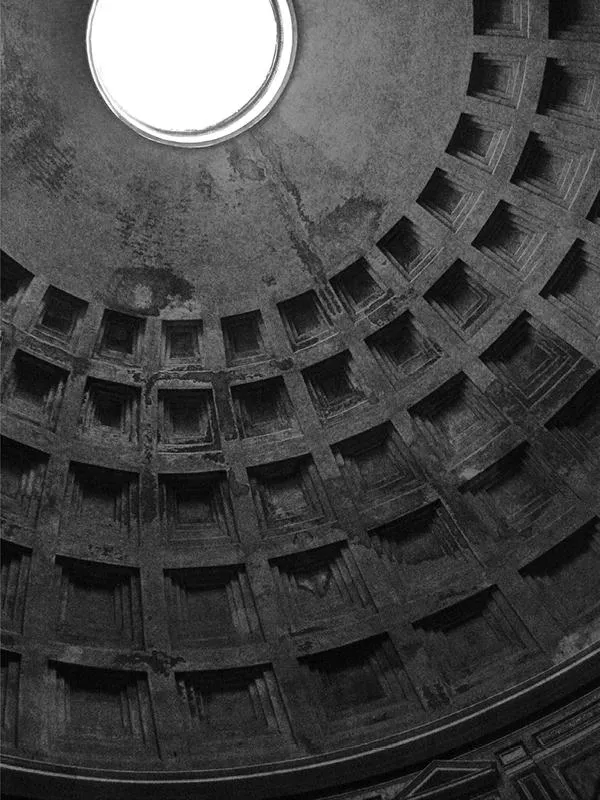
Figure 1.1The Pantheon, Rome, ∼126 AD. (Courtesy of Katherine Mindess.)
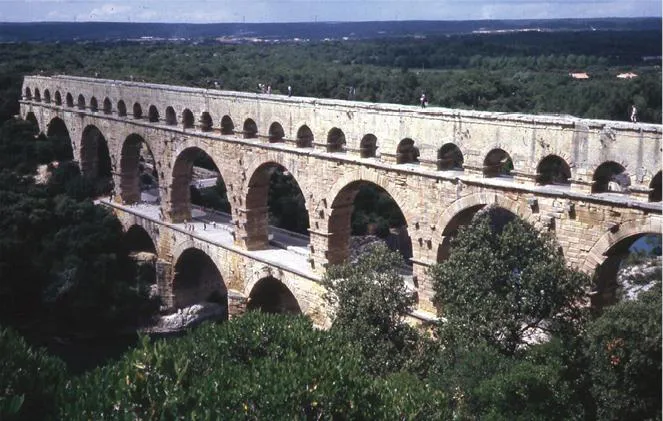
Figure 1.2The Pont du Gard at Nîmes, France, built ∼40–60 AD.
...
Table of contents
- Cover
- Half Title
- Title Page
- Copyright Page
- Dedication
- Contents
- Preface
- Acknowledgment
- Authors
- 1. Introduction
- 2. Concrete as a modern construction material
- 3. Materials for concretes in relation to durability
- 4. Concrete deterioration
- 5. Durability specifications, limit states, and modeling
- 6. Durability indicators (indexes) and their use in engineering practice
- 7. Durability testing: Transport properties
- 8. Durability testing: Degradation mechanisms
- 9. Design of concrete mixtures for durability
- 10. Durability and construction
- Index
Trusted by 375,005 students
Access to over 1.5 million titles for a fair monthly price.
Study more efficiently using our study tools.
Frequently asked questions
Yes, you can cancel anytime from the Subscription tab in your account settings on the Perlego website. Your subscription will stay active until the end of your current billing period. Learn how to cancel your subscription
No, books cannot be downloaded as external files, such as PDFs, for use outside of Perlego. However, you can download books within the Perlego app for offline reading on mobile or tablet. Learn how to download books offline
Perlego offers two plans: Essential and Complete
- Essential is ideal for learners and professionals who enjoy exploring a wide range of subjects. Access the Essential Library with 800,000+ trusted titles and best-sellers across business, personal growth, and the humanities. Includes unlimited reading time and Standard Read Aloud voice.
- Complete: Perfect for advanced learners and researchers needing full, unrestricted access. Unlock 1.5M+ books across hundreds of subjects, including academic and specialized titles. The Complete Plan also includes advanced features like Premium Read Aloud and Research Assistant.
We are an online textbook subscription service, where you can get access to an entire online library for less than the price of a single book per month. With over 1.5 million books across 990+ topics, we’ve got you covered! Learn about our mission
Look out for the read-aloud symbol on your next book to see if you can listen to it. The read-aloud tool reads text aloud for you, highlighting the text as it is being read. You can pause it, speed it up and slow it down. Learn more about Read Aloud
Yes! You can use the Perlego app on both iOS and Android devices to read anytime, anywhere — even offline. Perfect for commutes or when you’re on the go.
Please note we cannot support devices running on iOS 13 and Android 7 or earlier. Learn more about using the app
Please note we cannot support devices running on iOS 13 and Android 7 or earlier. Learn more about using the app
Yes, you can access Durability of Concrete by Mark Alexander,Arnon Bentur,Sidney Mindess in PDF and/or ePUB format, as well as other popular books in Tecnologia e ingegneria & Ingegneria civile. We have over 1.5 million books available in our catalogue for you to explore.