eBook - ePub
RISK21 - Coping with Risks due to Natural Hazards in the 21st Century
Proceedings of the RISK21 Workshop, Monte Verità, Ascona, Switzerland, 28 November - 3 December 2004
- 266 pages
- English
- ePUB (mobile friendly)
- Available on iOS & Android
eBook - ePub
RISK21 - Coping with Risks due to Natural Hazards in the 21st Century
Proceedings of the RISK21 Workshop, Monte Verità, Ascona, Switzerland, 28 November - 3 December 2004
About this book
Over the last two decades, there has been an increase in the number of natural hazards which have culminated in catastrophic consequences, severely impacting on people and livelihoods. In response to this escalation, the Swiss Natural Hazards Competence Centre (CENAT) organized a workshop entitled "RISK21" at the Centro Stefano Franscini, Mon
Information
Risk analysis, risk management and sustainability
RISK21 – Coping with Risks due to Natural Hazards in the 21st Century –
Ammann, Dannenmann & Vulliet (eds)
© 2006 Taylor & Francis Group, London, ISBN 0 415 40172 0
Ammann, Dannenmann & Vulliet (eds)
© 2006 Taylor & Francis Group, London, ISBN 0 415 40172 0
Post-harvest management strategies, drought vulnerability and food security
C. Ifejika Speranza & U. Wiesmann
Centre for Development and Environment (CDE), Institute of Geography, University of Berne,
Switzerland. Study funded by IP1 of the Swiss National Centre of Competence in
Research (NCCR) North-South Programme
ABSTRACT: This study analyses the role of post-harvest practices in alleviating or exacerbating the vulnerability of agro-pastoral households to drought. It is based on a survey of 127 households in 8 villages located in the semi-arid zone of Makueni district, Kenya.
Results show that in average seasons there is a significant positive correlation between farm size and maize yields while this relation is not significant in seasons affected by drought. This implies that under different conditions increasing farm size may not lead to increased crop yields. The farm produce in average seasons cannot sustain many households until food is available from the next harvest, either because the proportion stored for consumption was small compared to the amount sold, or the harvest was little. In the context of actor strategies, there is a difference between a female-headed household where there is a complete absence of a man and a female managed household (FMH) where the male household head is a migrant worker living off-plot. In the latter case, decision-making and control of assets, including produce marketing, remain largely with the husbands. The analytical implication is that the common definition of a household as a group of people eating from the same pot is not valid for such cases. Another implication is that while the workload for women in the two aforementioned household types might be the same, women in FMHs have limited access to and control over use of household income and resources. Thus, men control the sale of produce and they sell mostly to middlemen, who dominate farm produce marketing. The compulsion to sell produce immediately after harvest in order to have cash for immediate expenses exposes the households to the risk of food insecurity and to low incomes from produce sales, compared to the income they would earn if they waited and sold at intervals, or compared to the value of inputs (time, labour and money) they invested to achieve the yields. However, the farmers do not organize themselves in groups to improve their position in produce sales. In produce preservation and storage, the control of pests is a major challenge to many households. Farmers select their seeds from previous harvests, whereby they prefer local maize varieties to improved varieties due to the low cost in accessing them, their perceived drought resistant characteristic and higher productivity.
Based on the foregoing, incentives for mechanisation and the use of appropriate inputs should be promoted in order to increase and preserve yields. Access to sources of cash such as community banks, which at the moment only exists in one village, can be a viable alternative to the compulsion of selling produce at unfavourable prices even at the risk of experiencing food shortages.
1 INTRODUCTION
Drought is a recurrent hazard that continues to pose a major challenge to rural livelihoods in Kenya. The major impacts for agro-pastoral households are reduced crop yield, food shortage, loss of income and consequently, the inability to meet daily food needs. However, proper post-harvest management practices in preceding non-drought seasons can contribute to alleviating the effects of drought by ensuring future food availability and accessibility.
The herein presented results are part of an on-going research on ‘Modelling drought vulnerability and risk in agro-pastoral areas’, based on the 1999/2000 drought with case studies of 8 villages in the semi-arid zones of Makueni district, Kenya (Figure 1).
The specific aim of this sub-study is to access the role of post-harvest practices in alleviating or exacerbating the vulnerability of agro-pastoral households to drought.
2 THE STUDY AREA
Makueni district (Figure 1) lies between Nairobi to the northwest and Mombasa to the southeast and is prone to droughts and famines. Apart from livestock keeping, rainfed agriculture is the major source of livelihood. The annual mean temperature ranges from 20°C to 24°C. Altitudes range from 420 metres above sea level in the south to slightly over 1900 metres in the north. The rainfall pattern is bimodal, the first rains (long rains; LR) occurring between March and May and the second rains (short rains; SR) between October and December. The onset of rainfall, seasonal amounts (e.g.
Makindu station 19 mm –829 mm) and duration vary considerably with dry spells often occurring.
Makindu station 19 mm –829 mm) and duration vary considerably with dry spells often occurring.
The semi-arid area of Makueni district is a marginal environment of low agricultural potential.
Favourable conditions for plant growth range from 20 –75 days. The area has agro-ecological conditions suitable for growing millet, rearing livestock and ranching. However, agro-pastoral households grow crops in the drier arid area towards the southwestern tip of the district, which has no potential for rainfed agriculture (Jaetzold & Schmidt 1983).
Favourable conditions for plant growth range from 20 –75 days. The area has agro-ecological conditions suitable for growing millet, rearing livestock and ranching. However, agro-pastoral households grow crops in the drier arid area towards the southwestern tip of the district, which has no potential for rainfed agriculture (Jaetzold & Schmidt 1983).
Apart from rainfall, there is no other source of water for agriculture. Although the major perennial rivers have potentials for irrigation, these have not been widely used by the farmers. The sandy soils (mainly Luvisols, Ferralsols and Cambisols) in the central parts of the district are mainly of low to moderate fertility. The black cotton soils (Vertisols; cracking clay) found in the southern parts are of moderate to high fertility but are very difficult to plough when wet; hence the smallholders plough their lands before the rains.
Despite these unfavourable natural conditions, this region continues to experience the influx of migrants from the highly potential areas of the district where land per capita is decreasing due to high population density. There are limited employment opportunities in the off-farm sectors hence many, especially men, migrate to urban centres to look for employment.
Based on the backdrop of very erratic and unreliable rains, the associated short growing periods, poor soils, and increasing population density, the strategies of agro-pastoralists especially in seasons of average good rains, are crucial for sustaining agriculturally based livelihoods.
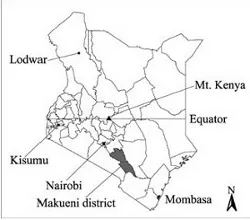
Figure 1. The Makueni district study area in Kenya.
3 THE THEORETICAL CONCEPTS
The main theoretical thrusts from which this study is carried out are the action theory and the vulnerability concept.
According to Wiesmann (1998: 37 – 44) the action theory provides ‘an actor-oriented perspective for interpreting the actions and strategies of individual actors and their underlying meanings ’ . The action theory is based on the premise that the actions and strategies of individual actors are exposed to and shaped by environmental conditions and that actors are embedded in value systems, social norms, networks and hierarchies.
We interpret and define vulnerability based on the underlying theories and approaches developed in the line of thought of development studies (Sen 1981, 1985, Chambers 1989, Bohle & Watts 1993), of natural hazards research (Downing 1991, Blaikie et al. 1994, Downing & Bakker 2000) and of global environmental and climate change research (Downing 1992, Kasperson et al. 1995, Bohle et al. 1994, IPCC 2001, Bohle 2001).
In development studies research, vulnerability is defined as exposure to livelihood risks and the incapacity of the people to cope. Thus vulnerability has an internal side comprising peoples ’ capacities and an external side dealing with exposure to livelihood risks (ibid). Bohle et al. (1994) define vulnerability as ‘ an aggregate measure of human welfare that integrates environmental, social, economic and political exposure to a range of harmful perturbations.’
IPCC (2001) defines vulnerability as ‘ a function of the character, magnitude and frequency of climate variation to which a system is exposed, its sensitivity and adaptive capacity.’ Since drought is a slow-onset natural hazard, we describe vulnerability as a function of exposure to drought hazard, the sensitivity of the coupled human-environment system and the coping and adaptive capacities of the actors within that system.
According to Knutson et al. (1998) vulnerability can be measured by ‘ the ability of the actors to anticipate, cope with, resist, and recover from drought.’ Finally, FAO (1996) defines food security as existing, ‘ when all people, at all times have physical and economic access to sufficient, safe and nutritious food to meet their dietary needs and food preferences for an active and healthy life. ’ Food security is seen here as one of the core aspects of livelihood security.
4 THE CONCEPTUAL FRAMEWORK AND APPROACH
A simplified diagram of the framework used is displayed in figure 2 and is based on the following reflections:
In a coupled human-environment system drought is not only lack of rain. It is a complex issue originating from a natural process that transforms into the issue of supply and demand of waterp resources and which has great ramifications especially on systems where rainfed agriculture is the pillar of livelihoods. Conceptually, we simplify this complexity by identifying 2 dimensions:
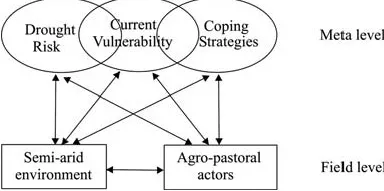
Figure 2. The conceptual vulnerability framework used for this study.
Firstly, the field-level is seen as a coupled human-environment system comprising the agro-pastoral actor and the semi-arid environment (both in natural and social terms) and their interactions.
Secondly, there is the meta-level (Figure 2), comprising drought risk, which we define as the probability of drought occurrence and its adverse consequences. Another component is the current vulnerability, which in a livelihood context portrays the adverse social, economic and natural processes and conditions within which drought occurs and evolves. Finally, there are the coping strategies, which are the actions and strategies of agro-pastoral actors in drought and non-drought times to meet their livelihood goals.
Secondly, there is the meta-level (Figure 2), comprising drought risk, which we define as the probability of drought occurrence and its adverse consequences. Another component is the current vulnerability, which in a livelihood context portrays the adverse social, economic and natural processes and conditions within which drought occurs and evolves. Finally, there are the coping strategies, which are the actions and strategies of agro-pastoral actors in drought and non-drought times to meet their livelihood goals.
As figure 2 shows, there are interactions between these two levels as their components influence one another. On the one hand, the interactions of the agro-pastoral actor with the semi-arid environment can lead to adverse processes and conditions (current vulnerability). On the other hand, the current vulnerability exposes the semi-arid environment and the actors to further adverse consequences. In addition, the semi-arid environment undergoes changes in condition and together with the actors ’ actions produces a new vulnerability status. The coping strategies influence and are influenced by the semi-arid environment and also have effects on t...
Table of contents
- COVER PAGE
- TITLE PAGE
- COPYRIGHT PAGE
- PREFACE
- INTRODUCTION
- DISASTER RISK MANAGEMENT AND RISK IMPACT
- RISK PERCEPTION, AVERSION, RISK LEVELS
- RISK ANALYSIS, RISK MANAGEMENT AND SUSTAINABILITY
- OUTLOOK
- LIST OF AUTHORS
- LIST OF SPEAKERS AND POSTER PRESENTERS
Trusted by 375,005 students
Access to over 1.5 million titles for a fair monthly price.
Study more efficiently using our study tools.
Frequently asked questions
Yes, you can cancel anytime from the Subscription tab in your account settings on the Perlego website. Your subscription will stay active until the end of your current billing period. Learn how to cancel your subscription
No, books cannot be downloaded as external files, such as PDFs, for use outside of Perlego. However, you can download books within the Perlego app for offline reading on mobile or tablet. Learn how to download books offline
Perlego offers two plans: Essential and Complete
- Essential is ideal for learners and professionals who enjoy exploring a wide range of subjects. Access the Essential Library with 800,000+ trusted titles and best-sellers across business, personal growth, and the humanities. Includes unlimited reading time and Standard Read Aloud voice.
- Complete: Perfect for advanced learners and researchers needing full, unrestricted access. Unlock 1.5M+ books across hundreds of subjects, including academic and specialized titles. The Complete Plan also includes advanced features like Premium Read Aloud and Research Assistant.
We are an online textbook subscription service, where you can get access to an entire online library for less than the price of a single book per month. With over 1.5 million books across 990+ topics, we’ve got you covered! Learn about our mission
Look out for the read-aloud symbol on your next book to see if you can listen to it. The read-aloud tool reads text aloud for you, highlighting the text as it is being read. You can pause it, speed it up and slow it down. Learn more about Read Aloud
Yes! You can use the Perlego app on both iOS and Android devices to read anytime, anywhere — even offline. Perfect for commutes or when you’re on the go.
Please note we cannot support devices running on iOS 13 and Android 7 or earlier. Learn more about using the app
Please note we cannot support devices running on iOS 13 and Android 7 or earlier. Learn more about using the app
Yes, you can access RISK21 - Coping with Risks due to Natural Hazards in the 21st Century by Walter J. Ammann,Stefanie Dannenmann,Laurent Vulliet in PDF and/or ePUB format, as well as other popular books in Technology & Engineering & Civil Engineering. We have over 1.5 million books available in our catalogue for you to explore.