Originally published in 1982, Time Resources, Society and Ecology examines and seeks to examine the time dimension in terms of the ecology, technology, social organization and spatial structure of the human habitat. Approaches to time resources – sociological time-budget studies, anthropological activity analysis, and economic analysis of money allocation – have been limited by their sectoral scope or their failure to relate effectively to the processes of social interaction, technological change and environmental structure. In this book, the book's articulation of time resources is developed in a general theoretical framework of action and interaction in time and space. The book examines constraints and possibilities facing preindustrial societies and throws light on the impact of technology on modern societies. Basic models of time allocation are presented, and, finally, a cross-cultural comparison is made of the mobilization of time resources in preindustrial societies. Geographers, social anthropologists and human ecologists should find this work directly relevant to their interest in understanding the interactions between man and environment.
eBook - ePub
Time Resources, Society and Ecology
On the Capacity for Human Interaction in Space and Time
- 456 pages
- English
- ePUB (mobile friendly)
- Available on iOS & Android
eBook - ePub
Time Resources, Society and Ecology
On the Capacity for Human Interaction in Space and Time
About this book
Information
1
Ecotechnology, Carrying Capacity, and Time-Space Resources
Introduction
In this chapter we will present the ‘problematique’ of this study and define its general objectives. Since we will look into issues that concern several disciplines, in particular human geography and social anthropology but also ecology, economics and sociology, the total composition of the material is likely to make the reader feel that important insights from his particular discipline have been left out or given very cursory treatment. And so they have, but this is the price to be paid for not operating within established fields. We can rest assured, however, that the reader will be sympathetic to the particular aims we have chosen, and that critical and constructive responses will be forthcoming.
Biological Ecology and Human Socio Cultural Ecology
In plant and animal ecology, analysis is conventionally set within terms of the food-chain and food-web relations between various species as well as with respect to other input-output or interaction relations. Recently ecology has striven towards generalization of trophic relations in the form of energy flows, where a system overview is a achieved at a general quantitative level before the qualitative differences of energy are taken into account, as for example, in the differences between carbohydrates and proteins (H.T. Odum 1971). The importance of energy as a paramount resource is thereby stressed, and many crucial dependencies are highlighted, ranging from the autotrophic as in plants absorbing energy directly from the sun, via higher trophic levels of animals, to humans, who are high level consumers in the ecosystems found on earth.
Many of the basic concepts, models and theories of plant and animal ecology (biological ecology or bio-ecology for short) are also applicable to human socio-cultural ecology. The field of human population dynamics and the carrying capacity of human habitats is a case in point. Particularly for pre-industrial societies where the dominant modes of production are based on a biotic technology (i.e. hunting-fishing-gathering, pastoralism, or agriculture), ecological concepts are of major relevance. Even within the wider resource spectrum of industrial society, many general concepts and models may be useful, such as that of ecological balance (Wilkinson 1973).
The anthropologist Geertz (1963) adopted an ecological stance in his study of regional and economic development in Indonesia, but he nevertheless expressed scepticism about the broader application of conventional ecology to human society:
The adaptation of the principles of ecological analysis and the concepts in terms of which they are expressed (niche, succession, climax, food chain, commensality, trophic level, productivity and so on) to the study of man can be constructed in a variety of manners, not all of which are equally useful… some… amount to hardly more than sloganeering. (Geertz 1963:5)
He was also critical of narrowing down the scope of ecological analysis to explanations of the territorial arrangements that social activities assume, i.e.. to man’s adaptation to space. In his eyes such ‘locational theory’ may be useful but hardly exhausts the subject.
By contrast, another anthropologist, Redfield, had virtually taken the opposite stand in line with the spatial location and organization paradigm and with the ecological approach of Park (1934) and Hawley (1950). Redfield states that,
for the study of urban communities, the ecological system is quite inadequate, so that the conception becomes here a very different one in human ecology of American sociology: it becomes a study of spatial and temporal orders of settlement and of institutions without reference to animals, plants or the weather. (Redfield 1960:29)
Conventional ecology thus has to be considerably extended and revised in order to come to terms with industrial modes of production, complex technology and urban communities. (And, in fact, the energy theoretic models of H.T. Odum (1971) and many other ecologists is an important step in this direction.)
The solution, as Geertz sees it, is that of Steward’s cultural ecology, rather than locational analysis. Ecological principles and concepts should be confined to ‘explicitly delimited aspects of human social and cultural life for which they are particularly appropriate rather than extending them, broadly and grandly, to the whole of it’ (Geertz 1963:6). The cultural ecological format implied the existence of a core of culture which was adapted to the natural habitat and its organismic relations, but that the rest of culture could not be understood simply by referring to space and ecology.
During the 1960’s, the cultural ecological paradigm was further extended by American anthropologists by an ecological systems theoretic framework being applied to show how cultural institutions were useful in adaptation to the natural habitat (cf Vayda 1969 and Rappaport 1968 for a number of succinct statements of this case). Other anthropologists felt that this was a transgression, since it largely replaced environmental determinism by a bio-ecological variant. For all its numerous other merits, this form of ‘vulgar materialism’ (Friedman 1974) undoubtedly suffers from a reductionist bias which Steward (1955) with his culture core concept was able to avoid. But similar interesting experiments in extending and broadening the frontiers of human ecology are still essential contributions.
An increasing number of ecologists have recognized that when dealing with human populations which have culture and society, it is grossly inadequate to look into population dynamics alone, as a function of birth, migration, death and who eats who. Although a strategic form of interaction in nature is eating or being eaten, human society contains numerous other forms of interaction, for instance within the human population, which ultimately reflect on the way humans occupy their natural habitat and interact with plant and animal populations there. Rappaport (1969:184) is well aware of this.
The concept of ecosystem, though it provides a convenient frame for the analysis of interspecific trophic exchanges /i.e. how different species consume one another/, does not comfortably accomodate intraspecific exchanges taking place over wider geographic areas… Some sort of geographic population model would be more useful for the analysis of the relationship of the local ecological population to the larger regional population of which it is a part, but we lack even a set of appropriate terms for such a model.
If this form of geographic model is to be useful, it must no doubt also include time if it is to live up to expectations, since the choice is not between spatial or ecological analysis but rather how they can become compatible and how they can be expanded, reformed and/or revolutionized to cope with new and urgent problems.
The geographer Clarkson (1968) saw the relationship between spatial and ecological analysis as one in which the former starts where the latter leaves off:
Spatial analysis is concerned with factors affecting the location of specific activities… In agricultural location some of these factors will be features of the natural environment: soil, temperature, slope, hydrology, etc… For shifting cultivators, for example, the distance from dwelling, even a temporary dwelling, is much more heavily weighed that the distance from market (which has almost no weight at all) and the distance from water may be of more importance that all the rest combined.
Ecologic analysis is concerned with the interaction of the factors which define the activity itself, rather than with how the factors affect the location of activity. Ecologic analysis concerns itself with the emergent system formed by the factors interacting and with analyzing how the system functions. Locational analysis, in a sense, begins where ecologic analysis leaves off – it takes the system investigated in ecological analysis as given and goes on to relate it to location, albeit without specifically stating this aim.
A major reason for the incompatibility of locational analysis with human ecology arises when space is primarily regarded as a locational matrix and not also as a resource, both in the concrete sense of land and in the abstract sense of space or room to accomodate populations and resources. Many of the classic theories in human geography such as von Thünens theory of agricultural location (cf Chisholm 1962) or Christaller’s central place theory (1933), have largely neglected space as land and room (cf Hägerstrand 1973b). On the other hand, if the process of interaction between species and within the human population are to be analysed in any detail, the locational dimension of interaction is essential, as will be indicated later in this book. The perspective must then be enlarged to include time-space location. The dimension of time, both as a locational dimension and as a resource dimension, has received scant attention in geographic enquiry and social scientific enquiry in general (cf Carlstein, Parkes and Thrift, 1978, vols. 1–3 for a statement of the case.)
In fact, even the more detailed study of food-chains and trophic relationships requires an explicit time-space approach. As Parrack (1969) notes on the flow of energy through ecosystems:
Much of the early work was confined to describing what eats what in food chains… Such work… is useful in that it indicates energy relationships, but it rarely includes quantification of these relationships in much detail. It is rather easy to make diagrams showing that mice eat grass seeds and that owls eat mice. It is something else to determine how much energy is available to a mouse in a gram of seeds and how the mouse uses that energy, or how much energy an owl derives from a mouse and how much it spends in hunting mice.
What is interesting to observe from this statement is that in order to get at detailed energy relations, the activities of a species must be studied, because different activities demand varying amounts of energy as well as give (by eating) certain amounts of energy. To get at these facts one must study the time use of individuals in space, and time-energy budgets for different types of individuals are becoming increasingly important in bio-ecology. This situation also applies in modern energy-oriented studies in ecological anthropology, such as those by Kemp (1971) on the Eskimos, Lee (1968, 1969) on the Bushmen, Rappaport (1968) on the Tsembaga swidden cultivators, and a number of other studies in similar vein.
At this stage we can therefore summarize the discussion by observing that once we get down to the nuts and bolts of human ecology, a combined resource and locational framework is in all likelihood the most powerful approach, and that of the resources worthy of consideration, terrestrial and territorial space and population time are of as much importance as the traditional focus of attention, energy.
A definition of human ecology and ecotechnology
Although human ecology can be roughly defined as the relation between, a human population and its habitat-environment, this definition is dangerously crude, and a number of additional aspects must be explicitly incorporated, as in Figure 1:1. Biologists working their way towards application of ecology to human populations and society, tend to see the latter as a black box and speak of ‘man’ and nature. This is detrimental to any deeper analysis of human ecology, since most of the ways in which human individuals and populations intervene with ‘nature’ are mediated by all sorts of socio-cultural mechanisms. Even nature itself is partly shaped by human socio-cultural activity so that, for example, to explain the cultural landscape grafted onto a ‘natural region’ requires understanding of technology. Or when we want to define the carrying capacity of a region for a human population, we again must specify the technology or technological culture of this population and the social interests which lead to the exploitation of some resources and organisms in the environment rather than others.
Human beings therefore have a culture and a culture based society. The sector of culture called technology defines the materials in nature that people are able to use for sociocultural ends and projects.
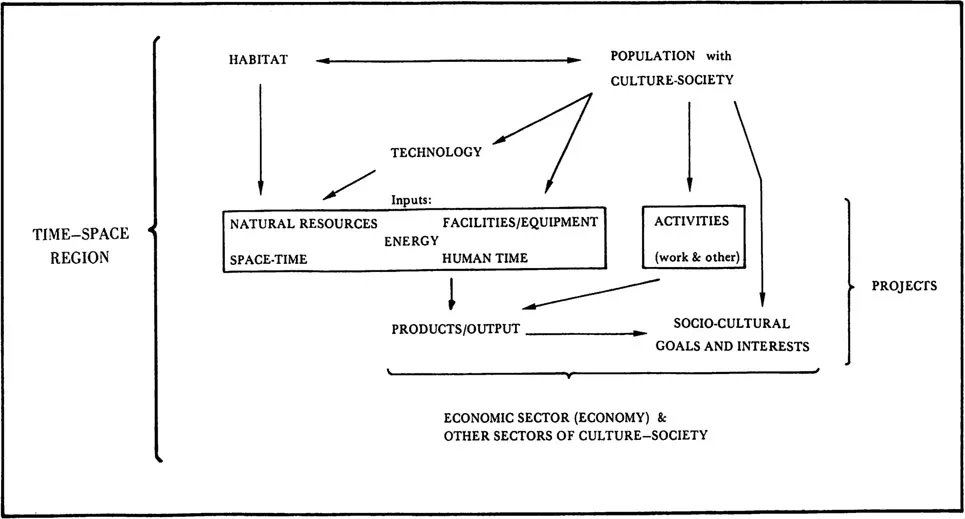
Figure 1:1 A definition of human ecology as relations within society-habitat.
It is culture which defines what is a natural resource. Iron or uranium, which are resources to an industrial society, may merely be an obstacle in the landscape to a group of stone age hunters. Culture-society also defines many of the activities for which resources are used. As pointed out earlier, human ecology cannot confine itself to a theory of interaction by eating or trophic exchange between species. It must rest on a much more general theory of interaction. A new time-space or time-geographic interaction theory to serve this purpose is outlined below.
All activity and interaction is a resource demanding process. It cannot thrive on thin air. Energy is obviously one major resource in all forms of ecology, while living space is another. Both are interrelated in many ways: for instance plants require terrestrial space to collect solar radiation and convert this into other forms of energy. The field of energy analysis is a good example of how conventional bio-ecological theory can be generalized and extended into human ecology, by considering how energy is also used in society and in various abiotic technical processes. The total energy conversion system thus goes beyond its biological base but still remains in contact with it (cf Odum 1971). The recent literature in this field has grown at an almost explosive rate.
Embedded in culture and society, human individual and collective activities are directed towards many forms of pursuits and production other than the getting of a full belly. Major inputs into these production processes are natural resources, land as space for given periods of time (space-time), facilities and equipment, and human time. The activities which we normally associate with work and associated inputs and outputs fall within the economic sector of society-culture, while non-work activities cover other sectors. However, all the sectors contain projects using various inputs to reach individually and collectively defined products, and not just the economy.
When societies-cultures are classified into such categories as food-collecting (hunting-gathering-fishing), agricultural, and/or industrial, this is a classification according to technology. It is not a matter of economy, since this has to do with the social form of organization of production, distribution and consumption. Economic forms relate to reciprocity, redistribution, or market exchange, to follow Polanyi’s scheme (1968), or to mercantilism, capitalism or socialism, to mention a few other forms of economic system.
All these elements, subsystems and systems are located in terrestrial space and have temporal extent, which is why the broad subject of human socio-cultural ecology must pay attention to the underlying existential dimensions of space and time.
A definition of ecotechnology
The term ecotechnology employed in the present study pays tribute to the fact that technology is an intermediary factor between ecology, on the one hand, and economy, on the other. The kind of technology of a given society has implications both for its ecological situation and its economic system, without it being necessary at this stage to decide what determines what.
But the term ecotechnology also points to another set of systemic properties, to which Hägerstrand (1974a, 1974b) called attention by trying to place ‘ecology under one perspective’. One of the core issues in the time-geographic approach to human ecology is that people also interact with ‘populations’ of non-living things:
In all kinds of ecology the concept of ‘population’ is central… each separate organism in a population has a limited life-time between a moment of birth and a moment of death… Man clearly forms a biological population among others… But these facts are only a part of the total picture where man is concerned. Between man and other populations and between man and man lies a world...
Table of contents
- Cover
- Half Title
- Title
- Copyright
- Original Title
- Original Copyright
- Dedication
- PREFACE
- ACKNOWLEDGEMENTS
- CONTENTS
- 1. ECOTECHNOLOGY, CARRYING CAPACITY, AND TIME-SPACE RESOURCES
- 2. LIFE PATHS AND LIVING POSSIBILITY BOUNDARIES: ELEMENTS OF THE HÄGERSTRAND TIME-GEOGRAPHIC MODEL
- 3. HUNTING-GATHERING
- 4. NOMADIC PASTORALISM
- 5. SHIFTING CULTIVATION
- 6. SHORT FALLOW CULTIVATION: REINTERPRETING THE STRUCTURE OF LOCAL AND REGIONAL INTENSIFICATION
- 7. IRRIGATION AGRICULTURE
- 8. TIME ALLOCATION AND THE CARRYING CAPACITY OF A POPULATION TIME-BUDGET
- 9. TIME RESOURCES IN PREINDUSTRIAL SOCIETIES
- AFTERWORD
- BIBLIOGRAPHY
- INDEX
Trusted by 375,005 students
Access to over 1.5 million titles for a fair monthly price.
Study more efficiently using our study tools.
Frequently asked questions
Yes, you can cancel anytime from the Subscription tab in your account settings on the Perlego website. Your subscription will stay active until the end of your current billing period. Learn how to cancel your subscription
No, books cannot be downloaded as external files, such as PDFs, for use outside of Perlego. However, you can download books within the Perlego app for offline reading on mobile or tablet. Learn how to download books offline
Perlego offers two plans: Essential and Complete
- Essential is ideal for learners and professionals who enjoy exploring a wide range of subjects. Access the Essential Library with 800,000+ trusted titles and best-sellers across business, personal growth, and the humanities. Includes unlimited reading time and Standard Read Aloud voice.
- Complete: Perfect for advanced learners and researchers needing full, unrestricted access. Unlock 1.5M+ books across hundreds of subjects, including academic and specialized titles. The Complete Plan also includes advanced features like Premium Read Aloud and Research Assistant.
We are an online textbook subscription service, where you can get access to an entire online library for less than the price of a single book per month. With over 1.5 million books across 990+ topics, we’ve got you covered! Learn about our mission
Look out for the read-aloud symbol on your next book to see if you can listen to it. The read-aloud tool reads text aloud for you, highlighting the text as it is being read. You can pause it, speed it up and slow it down. Learn more about Read Aloud
Yes! You can use the Perlego app on both iOS and Android devices to read anytime, anywhere — even offline. Perfect for commutes or when you’re on the go.
Please note we cannot support devices running on iOS 13 and Android 7 or earlier. Learn more about using the app
Please note we cannot support devices running on iOS 13 and Android 7 or earlier. Learn more about using the app
Yes, you can access Time Resources, Society and Ecology by Tommy Carlstein in PDF and/or ePUB format, as well as other popular books in Biological Sciences & Ecology. We have over 1.5 million books available in our catalogue for you to explore.