![]()
1 Introduction to #assessmentliteracy
Key Takeaways
Assessment literacy is not an initiative. It’s a foundational essential competency for all teachers, school leaders, and students.
Learning and teaching are the context for effective understanding of assessment for learning.
Curriculum and leadership are the sources for big picture and effective change in creating assessment-literate educators and learners.
As assessment-literate educators, we must understand the use and abuse of formative assessment, especially concerns about commercialization of formative assessment products.
Assessment for learning focuses on the key roles of the teachers and students.
Assessment Literacy
Assessment literacy is not an initiative, not just another fad or bandwagon to jump on or off. It’s a foundational and essential competency for all school leaders, teachers, and students. For us, assessment literacy is foremost about learning and secondarily about teaching. As assessment-literate educators, we are able to make instructional decisions about the strategies, tools, techniques, and resources we use to improve the learning for all. Assessment-literate learners, which includes educators, know (1) where they are headed, (2) where they are now, and (3) what their next steps are in order to help them achieve their learning goals (Chappuis, 2012). In their progress toward these goals, educators can help students become self-regulated lifelong learners by empowering them to develop assessment literacy for themselves. Hattie (2012) referred to this idea as assessment-capable learners. Educators need to see assessment as feedback of their teaching (and leading) and use this evidence to create and modify learning environments that positively influences achievement and growth (Hattie, 2012).
In our work in classroom assessment, we begin with these essential questions as points of reference to both differentiate and sustain our discussions:
- What is good learning?
- What is good teaching?
- What is good assessment?
Pause and Reflect
- Take a few moments to reflect on and respond to each of these questions that were just given.
Share your answers with a colleague, create a visual representation, or go to our forum #assessmentliteracy on Twitter to post comments and questions.
The exclusive focus on assessment has the potential consequence of isolating this powerful concept from teaching and learning. The tight connection to teaching and learning is best kept at the center of all discussions about assessment in order to keep teachers and students as the key partners in the assessment process (Stiggins, 1994).
At the risk of overcomplicating the discussion, we have added two more essential questions to get a bigger picture of the context of assessment.
- What is good curriculum?
- What is good leadership?
We will discuss the essential connections with curriculum and leadership throughout the book, but curriculum is a theme in Chapters 2 and 4. Professional learning and instructional leadership, including that of teachers, building leaders, and district level positions, is the focus of Chapters 10 through 12. By incorporating these latter two essential questions, teachers and leaders greater understand the value of their professional expertise and can see the connections of learning and teaching with curriculum, leadership, and assessment. We see teachers as the leverage point if professional learning is to have an impact on learning in our classrooms and schools. We provide numerous examples of teacher-led professional learning in Chapters 10 and 11.
We will use the term assessment for learning to mean the following:
A set of high-impact strategies that collect evidence to show learners where they are, where they are going, and what’s the next step. These strategies focus on moving the learner forward during the learning process instead of the summative postlearning grading process.
Classroom teachers have a remarkable understanding of instruction and develop wisdom of practice throughout the tenure of their careers. We acknowledge and applaud the passion, skills, and commitment of the great teachers with which we know and work. While our profession has come a long way in its development, when it comes to assessment literacy, we still have a way’s to go on the journey.
Classroom Assessment: A Brief History of the Impact of the Field
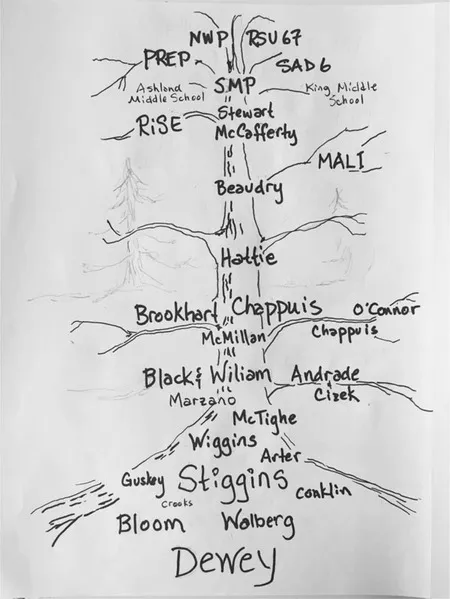
In the relatively brief history of classroom assessment, Bloom’s mastery learning model put assessment in understandable terms and provided us with the notion of immediate feedback to improve performance. The term classroom evaluation (Crooks, 1988) was replaced by classroom assessment in the 1990s. This underscored the shift to the balance between classroom strategies for learning and grading. In 1992, Stiggins and Conklin completed a study of the amount of time teachers spent on classroom assessment tasks, demands and functions, and teacher preparation for these competencies. They found that teacher preparation programs summarily lacked sufficient courses to produce assessment-literate teachers. Stiggins (1994) followed up with a notion that radically departed from teacher-centered strategies by articulating direct student involvement as one of five standards of quality for classroom assessment. His book helped establish the need for more attention on clear purposes and focused on the potential connection of assessment and learning by (1) intentionally bringing students inside the assessment process, (2) requiring students be able to self-assess and communicate their learning to a variety of audiences, and (3) the need to counteract the dominance of high-stakes testing by balanced use of teachers’ classroom assessment practices. In rapid succession, textbooks on classroom assessment by McMillan (2004), Oosterhof (1999), and many others appeared. Teacher and leader preparation programs have benefited from these resources and have, in turn, created areas of excellence within the field of classroom assessment that have benefited the profession as a whole. Yet, there are far too many teachers and leaders who graduate from our colleges and universities without foundational competencies in assessment literacy demanded by today’s classrooms, schools, and districts. There are far too many students who leave our schools believing that assessment simply means grading and therefore miss the powerful connections to her or his own learning and growth.
Figure 1.1 • The Classroom Assessment Tree
Scriven’s term formative assessment, which focuses on process and improvement, helped to set it apart from summative assessment, which primarily focused on evaluative judgment, scores, and grades. One of the issues we often encounter is that the term formative assessment is often seen as a product, like a common assessment or something a teacher gives as practice for the summative assessment. As a product, formative assessments often get a grade or score and therefore masquerade as a way to use a score to focus feedback. In doing so, the attempt is made to demonstrate the principle that timely, focused feedback has an impact on learning. As a practice, it is understandable to convey the message to students that “everything counts.” However, there are limitations in the rigor of what can be measured, and there are often unintended consequences for learners and parents who only equate learning with a score. The study by Butler (1988) is a prime example of feedback; it compares the impact of comments, grades plus comments, or comments only. Chapter 6 examines effective feedback strategies that move beyond the use of points, grades, or scores.
The careful use of empirical evidence from research marked the next phase in classroom assessment: the shift to the impact of classroom assessment practices. Black and Wiliam (1998) used research evidence from meta-analysis to support their argument that feedback and quality questioning, if done well, could have a high impact on student achievement. Brookhart (2008) continued to clarify the connection between instruction and assessment, and Cizek and Andrade (2010) provided more discussion in the Handbook of Research on Formative Assessment. The presence of research signified that classroom assessment was becoming a field of study, drawing the attention of practitioners who want to see improvements in their classrooms that promote and deepen learning.
Books, articles, tweets, and blogs now are helping to shift the focus to learning and assessment and fill in new portions of the landscape of accountability and data literacy.
Pause and Reflect
- Why are you interested in classroom assessment?
- Upon what aspects of your practice as a teacher and a leader do you hope to improve?
Share your answers with a colleague, create a visual representation, or go to our forum #assessmentliteracy on Twitter to post comments and questions.
Classroom Assessment: Today’s Dialogue About High-Impact Practices and Strategies
For us, the recognition of an empirical research base for high-impact strategies is exciting, because it builds a bridge between theory and practice and shows us what is possible for learners and learning. At the policy level, assessment-literate teachers and leaders are vital to navigate and build our education systems and shape educational policy. Practitioners understand that at the heart of classroom assessment are concerns about student engagement, feedback, collection of appropriate evidence of student learning, and appropriate communication about students’ proficiency with standards. In Chapter 2, the role of assessment-literate leaders is discussed and carried through the book as a theme.
The Era of Rapid Response: Our Concerns About the Commercialization of Formative Assessment
Our goal is to inform and empower educators to deepen their classroom assessment practices, to become designers of high-quality assessment for learning, and to be very critical consumers of commercial products that may contain the term formative assessment. Empowering educators to be their own best resources is a tremendous challenge that requires an investment of time and human resources in building assessment literacy competency of all educators.
Pause and Reflect
- What is your definition of assessment for learning? What is your definition of formative assessment?
- Think about this statement: Formative assessment is not the same as assessing formatively.
Share your answers with a colleague, create a visual representation, or go to our forum #assessmentliteracy on Twitter to post comments and questions.