Chapter 1 Definitions and Contexts
I didn’t have this level of knowledge [about language]—definitely not. I’ve always been told that language development is important—I remember learning that throughout my teacher education program that I went through, but it was not explicitly taught like this. I gained a much deeper understanding of that progression and all the different elements to look at.
—Kindergarten teacher
To learn is to progress. Whatever students are learning—soccer, chess, physics, piano, Jenga, history—with instruction, practice, and experience, they can progress from an emerging understanding or skill through increasing levels of expertise over time. This book is about how language progresses. Specifically, it focuses on explanation, a language function used to “convey understanding; a mutual declaration of the meaning of words spoken, actions, motives, etc., with a view to adjusting a misunderstanding or reconciling differences” (Random House, 2016). In other words, as a form of expository language, explanations convey information about how and why things happen. An explanation can be of actions, events, processes, motives, theories, or claims. Other uses of language may be embedded within explanations, or explanations may be embedded within them. These other uses of language fulfill the purpose of argument, justification, and description, among others.
The purpose of the book is captured in the quote from the kindergarten teacher on the facing page: to increase teachers’ knowledge of language development—specifically, explanation skills—so they can better support language learning in their classrooms en route to college and career readiness.
Why a Focus on Explanation?
There are three main reasons for our focus. First, explanation is an important crosscutting language practice of the academic disciplines, used by students to clarify their thinking and consolidate their understanding. For example, explanation is important in students’ acquisition of new content knowledge in (a) English language arts (Goldman & Wylie, 2011), specifically to promote conceptual knowledge and their English language proficiency skills; (b) in mathematics (Hill et al., 2008), to support the learning of mathematical concepts, procedures, and reasoning; (c) in science (Sandoval & Çam, 2011), to conduct scientific inquiry and procedures and to support the understanding of phenomena; and (d) in history/social studies (Leinhardt, 1997), to describe the causes of events and to support the analysis and interpretation of sources.
Second, assessments of college- and career-ready standards (CCRS), such as the Common Core State Standards for reading and mathematics (National Governors Association Center for Best Practices, Council of Chief State School Officers [CCSSO], 2010) and the Next Generation Science Standards (NGSS Lead States, 2013), require students to provide explanations of their knowledge (see examples in box below). Third, student explanations can provide teachers with insights about their students’ content-area understanding as it develops during a lesson, as well as about their language use.
Examples of What the Standards Say
CCSS.ELA-Literacy.SL.5.3
Summarize the points a speaker makes and explain how each claim is supported by reasons and evidence.
CCSS.ELA-LITERACY.SL.2.1.C
Ask for clarification and further explanation as needed about the topics and texts under discussion.
CCSS.ELA-LITERACY.RI.4.2
Determine the main idea of a text and explain how it is supported by key details
CCSS Standards for Mathematical Practice
Mathematically proficient students are also able to compare the effectiveness of two plausible arguments, distinguish correct logic or reasoning from that which is flawed, and—if there is a flaw in an argument—explain what it is.
Next Generation Science Standards. Constructing Explanations and Designing Solutions
Asking students to demonstrate their own understanding of the implications of a scientific idea by developing their own explanations of phenomena . . . engages them in an essential part of the process by which conceptual change can occur.
Sources: National Governors Association Center for Best Practices, Council of Chief State School Officers (2010); NGSS Lead States (2013).
Given the heavy reliance of the CCRS on students’ explanations of their content learning, there is some concern about the pedagogical value of explanations if the content and conceptual understanding of what students are explaining are inaccurate or incomplete (Rittle-Johnson & Loehr, 2017). We believe that explanations are of value when they are given under the guidance of a teacher. For example, they can provide feedback to both the teacher and the student and an opportunity for making adjustments or modifications on the part of the student, often with teacher support.
This book is for teachers—all K–6 teachers. No matter the subject, the grade level, or the students teachers teach, explanation will be part of their students’ learning and part of their teaching. The book is primarily about oral language, although we do include references to written language along the way to illustrate how students were able to transfer their oral language skills into their writing and how teachers intentionally capitalized on this to reinforce language learning in both oral and written areas. In this chapter, we address how students can develop explanation skills, the importance of integrating language and content learning, and implications for students who are acquiring English as an additional language. We will elaborate on these ideas in subsequent chapters.
Explanation Skills Can Be Learned
Most students do not arrive in school with fully formed explanation skills. But they certainly should not leave school without them! We know from studies of child development that explanations are important for revealing “underlying causal relations and properties” to young children (Legare, 2012, p. 183). Explanatory talk between parents and their children has been linked to the development of cognition, literacy, and later discourse skills (e.g., Snow, 1991).
Students need to develop the vocabulary, sentence structures, and organization of language that can “convey understanding” and must work with other students to create a “mutual declaration,” for example, of the new knowledge they may be building together.
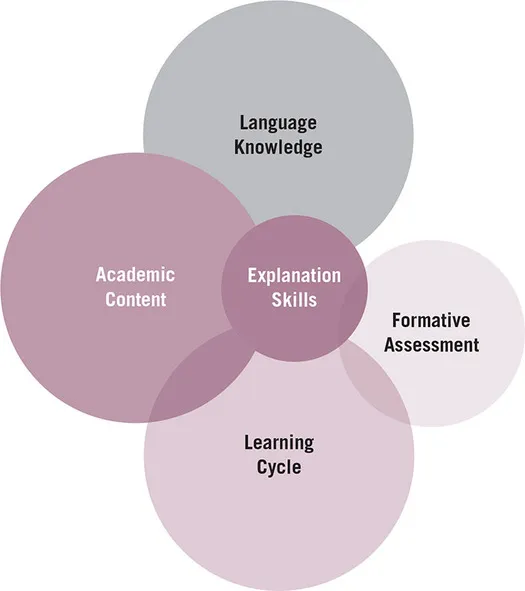
Figure 1.1 The DLLP Approach to Language and Content Learning
In Figure 1.1, we show the components that contribute to the development of students’ explanation skills. Explanation skills are at the intersection of language knowledge (with its three interrelated levels of word, sentence, and discourse; see Chapters 4, 5, and 6 for details about these language dimensions), the academic content that is the target of the explanation (e.g., mathematics, science), and the learning cycle. Explanation skills are the result of learning that has occurred from the interaction among experience, instruction, and practice in the learning cycle.
Key Terminology
Sociocultural Theory
Sociocultural theory is a view of learning stemming from Vygotsky’s (1934/1962) integration of cognitive (i.e., mental processes), behavioral, and environmental perspectives.
Learning is socially mediated by the context in which it occurs, including by the actions of others toward the learner that may facilitate or hinder a learner’s progress (i.e., internalization of new knowledge and skills).
One way that education researchers have operationalized Vygotsky’s ideas about mediation has been to describe the graduated assistance (i.e., scaffolding) and routines that are set up for novice learners by more accomplished experts (i.e., teacher, peer, sibling, parent) (Wood, Bruner, Ross, 1976).
Vygotsky’s theory proposes that learning takes place within the zone of proximal developme...