- 336 pages
- English
- ePUB (mobile friendly)
- Available on iOS & Android
eBook - ePub
Image Sensors and Signal Processing for Digital Still Cameras
About this book
Shrinking pixel sizes along with improvements in image sensors, optics, and electronics have elevated DSCs to levels of performance that match, and have the potential to surpass, that of silver-halide film cameras. Image Sensors and Signal Processing for Digital Still Cameras captures the current state of DSC image acquisition and signal processing technology and takes an all-inclusive look at the field, from the history of DSCs to future possibilities.
The first chapter outlines the evolution of DSCs, their basic structure, and their major application classes. The next few chapters discuss high-quality optics that meet the requirements of better image sensors, the basic functions and performance parameters of image sensors, and detailed discussions of both CCD and CMOS image sensors. The book then discusses how color theory affects the uses of DSCs, presents basic image processing and camera control algorithms and examples of advanced image processing algorithms, explores the architecture and required performance of signal processing engines, and explains how to evaluate image quality for each component described. The book closes with a look at future technologies and the challenges that must be overcome to realize them.
With contributions from many active DSC experts, Image Sensors and Image Processing for Digital Still Cameras offers unparalleled real-world coverage and opens wide the door for future innovation.
Information
1 Digital Still Cameras at a Glance
CONTENTS
- 1.1 What Is a Digital Still Camera?
- 1.2 History of Digital Still Cameras
- 1.2.1 Early Concepts
- 1.2.2 Sony Mavica
- 1.2.3 Still Video Cameras
- 1.2.4 Why Did the Still Video System Fail?
- 1.2.5 Dawn of Digital Still Cameras
- 1.2.6 Casio QV-10
- 1.2.7 The Pixel Number War
- 1.3 Variations of Digital Still Cameras
- 1.3.1 Point-and-Shoot Camera Type
- 1.3.2 SLR Type
- 1.3.3 Camera Back Type
- 1.3.4 Toy Cameras
- 1.3.5 Cellular Phones with Cameras
- 1.4 Basic Structure of Digital Still Cameras
- 1.4.1 Typical Block Diagram of a Digital Still Camera
- 1.4.2 Optics
- 1.4.3 Imaging Devices
- 1.4.4 Analog Circuit
- 1.4.5 Digital Circuit
- 1.4.6 System Control
- 1.5 Applications of Digital Still Cameras
- 1.5.1 Newspaper Photographs
- 1.5.2 Printing Press
- 1.5.3 Network Use
- 1.5.4 Other Applications
In this chapter, the author describes briefly the basic concepts of digital still cameras and the history of digital and analog electronic cameras. This is followed by a discussion of the various types of digital still cameras and their basic construction. Descriptions of several key components of typical digital still cameras are given.
1.1 WHAT IS A DIGITAL STILL CAMERA?
An image can be described by “variation of light intensity or rate of reflection as a function of position on a plane.” On the other hand, a camera is a piece of equipment that captures an image and records it, where “to capture” means to convert the information contained in an image to corresponding signals that can be stored in a reproducible way.
In a conventional silver halide photography system, image information is converted to chemical signals in photographic film and stored chemically at the same point where the conversion takes place. Thus, photographic film has the image storage function as well as the image capture function. Another method of image capture is to convert the image information to electronic signals. In this case, an image sensor serves as the conversion device. However, the image sensor used in the electronic photography system does not serve a storage function as does photographic film in the silver halide system. This is the most significant point in which the electronic system differs from the chemical silver halide system (Figure 1.1).
Naturally, the electronic photography system needs another device to store the image signals. Two primary methods have been adopted to perform this storage function: analog and digital. Analog electronic still cameras, which were once on the market, use a kind of floppy disk that electromagnetically records the image signals in the form of video signals. In digital still cameras, the image signals from the image sensor are converted to digital signals and stored in digital storage devices such as hard disks, optical disks, or semiconductor memories.
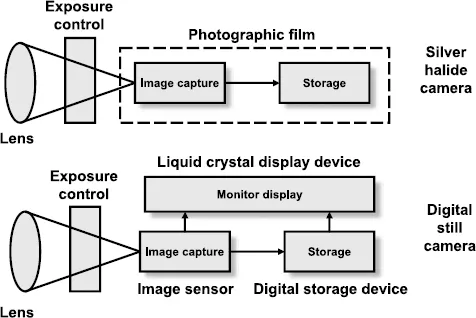
FIGURE 1.1 Difference between a silver halide photographic camera and an electronic still camera.
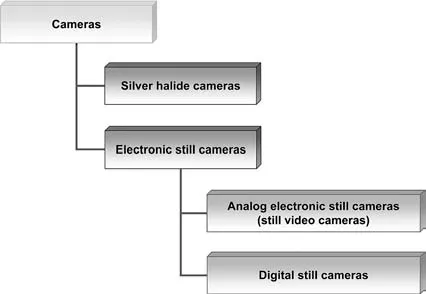
FIGURE 1.2 Classification of cameras.
Thus, still cameras are divided into two groups from the viewpoint of the image capture method: conventional silver halide cameras and electronic still cameras. Electronic still cameras are again divided into two groups: analog and digital (Figure 1.2). Thus, a digital still camera is defined as “a camera that has an image sensor for image capture and a digital storage device for storing the captured image signals.”
1.2 HISTORY OF DIGITAL STILL CAMERAS
1.2.1 EARLY CONCEPTS
The idea of taking pictures electronically has existed for a long time. One of the earliest concepts was shown in a patent application filed by a famous semiconductor manufacturer, Texas Instruments Incorporated, in 1973 (Figure 1.3). In this embodiment drawing, the semiconductor image sensor (100) is located behind the retractable mirror (106). The captured image signals are transferred to the electromagnetic recording head (110) and recorded onto a removable ring-shaped magnetic drum. This concept did not materialize as a real product. In 1973, when this patent was filed, image sensor technology was still in its infancy, as was magnetic recording technology.
In another patent application filed in 1978, Polaroid Corp. suggested a more advanced concept (Figure 1.4). In this camera, the image signals are recorded on a magnetic cassette tape. Considering the amount of information an image contains, it must have taken a long time to record a single image. One of the advanced features of this camera was that it had a flat display panel (24) on the back to show the recorded image (Figure 1.5). Note that LCD panels at that time could only display simple numerals in a single color.
Another interesting item of note on Polaroid’s concept is that this camera had a built-in color printer. Polaroid is famous for its instant camera products, so they must have thought that the output print was best done in the camera. The printing method was neither inkjet nor thermal transfer. Inkjet printers were not as popular then as they are now and the thermal dye transfer method did not even exist in 1978. Actually, it was a wire dot impact printer. A paper cassette could be inserted into the camera body to supply ink ribbon and sheets of paper to the built-in printer.
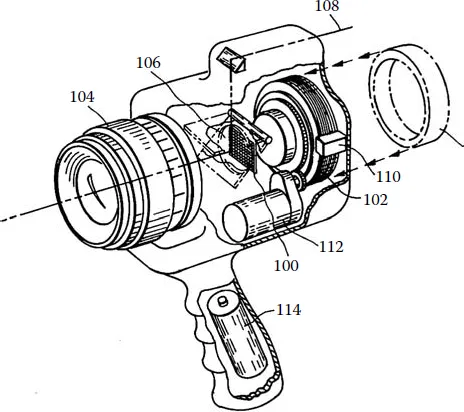
FIGURE 1.3 Early concept of electronic still cameras (USP 4,057,830).
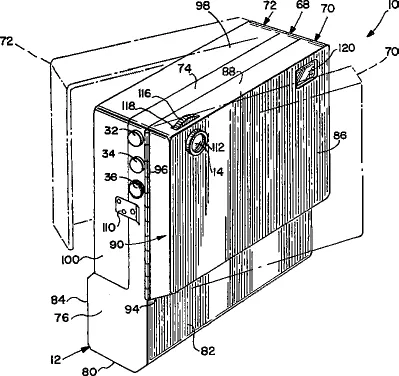
FIGURE 1.4 Another early concept of an electronic still camera (USP 4,262,301).
Thus, several early digital still camera concepts were announced in the form of patent applications prior to 1981.
1.2.2 SONY MAVICA
The year 1981 was a big one for camera manufacturers. Sony, the big name in the audio–visual equipment business, announced a prototype of an electronic still camera called “Mavica” (Figure 1.6). This name stands for “magnetic video camera.” As its name suggests, this prototype camera recorded the image signals captured by the semiconductor image sensor on a magnetic floppy disk. This prototype camera had a single lens reflex finder, a CCD image sensor, a signal-processing circuit, and a floppy disk drive. Several interchangeable lenses, a clip-on type of electronic flash, and a floppy disk player to view the recorded images on an ordinary TV set were also prepared. The image signals recorded to the floppy disk were a form of modified video signals. Naturally, they were analog signals. Therefore, this was not a “digital” still camera. Nevertheless, it was the first feasible electronic still camera ever announced.
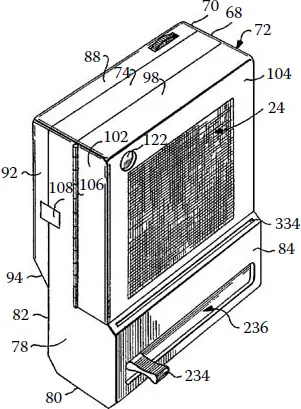
FIGURE 1.5 Rear view of the concept described in Figure 1.4.
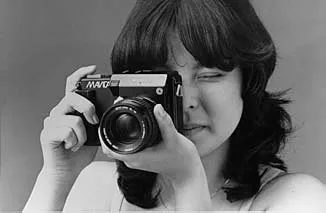
FIGURE 1.6 Sony Mavica (prototype).
1.2.3 ...
Table of contents
- Cover Page
- Title Page
- Copyright Page
- Table of Contents
- Preface
- Editor
- Contributor
- 1 Digital Still Cameras at a Glance
- 2 Optics in Digital Still Cameras
- 3 Basics of Image Sensors
- 4 CCD Image Sensors
- 5 CMOS Image Sensors
- 6 Evaluation of Image Sensors
- 7 Color Theory and Its Application to Digital Still Cameras
- 8 Image-Processing Algorithms
- 9 Image-Processing Engines
- 10 Evaluation of Image Quality
- 11 Some Thoughts on Future Digital Still Cameras
- A Number of Incident Photons per Lux with a Standard Light Source
- B Sensitivity and ISO Indication of an Imaging System
- Index
Trusted by 375,005 students
Access to over 1.5 million titles for a fair monthly price.
Study more efficiently using our study tools.
Frequently asked questions
Yes, you can cancel anytime from the Subscription tab in your account settings on the Perlego website. Your subscription will stay active until the end of your current billing period. Learn how to cancel your subscription
No, books cannot be downloaded as external files, such as PDFs, for use outside of Perlego. However, you can download books within the Perlego app for offline reading on mobile or tablet. Learn how to download books offline
Perlego offers two plans: Essential and Complete
- Essential is ideal for learners and professionals who enjoy exploring a wide range of subjects. Access the Essential Library with 800,000+ trusted titles and best-sellers across business, personal growth, and the humanities. Includes unlimited reading time and Standard Read Aloud voice.
- Complete: Perfect for advanced learners and researchers needing full, unrestricted access. Unlock 1.5M+ books across hundreds of subjects, including academic and specialized titles. The Complete Plan also includes advanced features like Premium Read Aloud and Research Assistant.
We are an online textbook subscription service, where you can get access to an entire online library for less than the price of a single book per month. With over 1.5 million books across 990+ topics, we’ve got you covered! Learn about our mission
Look out for the read-aloud symbol on your next book to see if you can listen to it. The read-aloud tool reads text aloud for you, highlighting the text as it is being read. You can pause it, speed it up and slow it down. Learn more about Read Aloud
Yes! You can use the Perlego app on both iOS and Android devices to read anytime, anywhere — even offline. Perfect for commutes or when you’re on the go.
Please note we cannot support devices running on iOS 13 and Android 7 or earlier. Learn more about using the app
Please note we cannot support devices running on iOS 13 and Android 7 or earlier. Learn more about using the app
Yes, you can access Image Sensors and Signal Processing for Digital Still Cameras by Junichi Nakamura in PDF and/or ePUB format, as well as other popular books in Technology & Engineering & Electrical Engineering & Telecommunications. We have over 1.5 million books available in our catalogue for you to explore.