eBook - ePub
Pollen and Spores
Applications with Special Emphasis on Aerobiology and Allergy
- 412 pages
- English
- ePUB (mobile friendly)
- Available on iOS & Android
eBook - ePub
Pollen and Spores
Applications with Special Emphasis on Aerobiology and Allergy
About this book
Palynology finds applications in various fields. Some of them are taxonomy, plant evolution, plant breeding programmes, biotechnology, microbiology of water, soil and air, the pharmaceutical industry, cosmetic industry, energy food industry, forensic science, aerobiology, allergy, epidemiology, meteorology, fossil fuel exploration and biodiversity.
Information
CHAPTER |
1 |
Introduction
Palynology involves the study of pollen and encompasses the structural and applied aspects of pollen. Pollen grains are the male reproductive structures produced by the flowering plants (angiosperms) and gymnosperms (naked seeded plants). Palynology is a distinct branch of biology and is unique in many ways. According to the modern and wider definition of palynology, it also includes the study of spores produced by lower plants such as Algae, Fungi, Bryophytes and Pteridophytes.
According to geologists, the microfossils comprising pollen, spores, dermal appendages, cuticles, vascular elements, diatoms, desmids of plant origin and foraminifera, ostracods, microforaminifera are also studied within palynology. Scolecodonts of animal origin and certain microorganisms such as hystricospherids, dinoflagellates and acritarchs of doubtful origin are also included in palynological studies. Another unique feature of palynology is the fact that pollen and spores of both living plants and fossil plants are studied in detail.
Palynology, the science of pollen, gained a real impetus after the discovery of the microscope. This is logical as pollen grains are extremely tiny particles comparable to dust particles, which cannot be seen by the naked eye. The discovery of the microscope by Robert Hooke in 1665 was a landmark in the development of science, particularly palynology. Subsequent improvement in microscopy accelerated the study of pollen grains, especially the finer structure of the pollen wall and its myriad ornamentation patterns.
Pollen is ubiquitous in nature unlike other plant parts. It occurs buried deep in rocks, ground and surface water, and in air, both indoor and outdoors including the upper atmosphere. Besides, pollen finds its way through nasal and oral cavities to the digestive tract of humans and animals causing different degrees of discomfort. Pollen has an extremely long geological history, as it is well preserved in rocks as old as 400 m.y.
Pollen biology encompasses pollen production, its transfer to the stigma or pollination, and details of pollen-pistil interaction leading to fertilization and seed set. Any break in these sequential events affects seed and fruit set. Pollen biology studies are a prerequisite for any programme aimed at optimization and improvement of the yield of crop plants. Pollination ecology is also a part of pollen biology, which involves the study of various aspects dealing with efficient pollination. Pollen biotechnology is one of the techniques employed to study pollen biology for crop production and improvement. Pollen biotechnology is one of the most challenging areas of plant reproductive biology and plays an important role in crop improvement programmes.
The chapters included in the book are primarily devoted to two important aspects of palynology. It is well known that in order to exploit the applications of palynology in various fields, it is a prerequisite to have a thorough knowledge of different aspects of basic palynology. It is for this reason, that the first ten chapters comprise information on basic aspects of palynology such as pollen formation and pollen morphology of modern as well as fossil pollen and spores, current techninques and a general account of pollen physiology. These chapters are preceded by a chapter on a historical account of pollen studies, which to our mind is very appropriate and essential. Students of palynology should be aware of the origin and development of palynology up to the present. Many earlier scientists contributed significantly to palynology under adverse conditions, for example, limitations and availability of relatively simple microscopes. However, this historical account serves as a source of inspiration to learn more about pollen and exploit their potential applications.
The second and major part of this book comprises chapters on application of pollen studies in various fields such as agriculture, horticulture, plant breeding, enhancing honey production (melissopalynology), as an important tool in forensic science, reconstruction of past vegetation and environmental pollution and its effect on health particularly with reference to pollen allergy. Applications of airborne pollen and mould spores have been thoroughly explained in seven different chapters covering various aspects of aerobiology and allergy. This has been done on account of the significant role of aerobiological studies in allergy and immunology. Minor applications of pollen studies also include a brief account of copropalynology, which concerns pollen analysis of coprolites and other faeces of animals that throw light on past vegetation, feeding habits of animals of the present and past. A detailed account of most common aeroallergens and their source plants such as Ambrosia (Ragweed), grasses, and Parthenium has been given. A major chapter on ‘Pollen Calendars: Global Scenario’ includes information useful to aerobiologists and allergists from different parts of the world. This is followed by a comprehensive chapter on exploration of fossil fuels such as oil and coal.
Palynological information incorporated in the book is up-to-date to the extent possible and all the available sources, such as books; monographs, research articles have been referred for the compilation of information. An attempt has been made to include appropriate illustrations along with examples of common pollen sources.
CHAPTER | 2 |
History of the Development of Palynology
Hyde and Williams coined the word ‘palynology’ in 1945 as a substitute for the science of pollen grains and spores. The term ‘pollen’ in Greek means ‘flour’. Palynology is therefore derived from the Greek verb ‘palynein’ meaning – to strew; to spread; to disseminate; to distribute in recognition of the fact that many pollen grains and spores are easily carried by the wind. However the systematic study of pollen and spores was initiated much earlier.
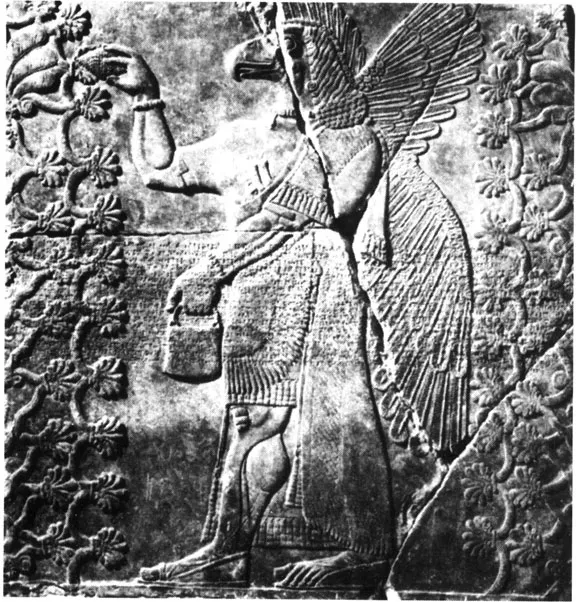
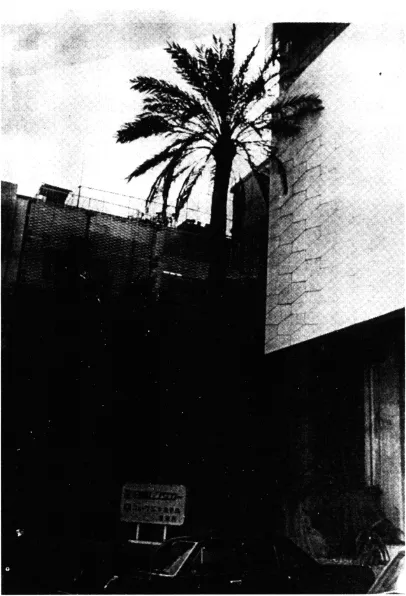
The function of pollen grains and their role in pollination and fertilization was known to ancient Assysrians. There is a large number of evidence in the form of illustrations and lithographs available to show that artificial pollination of Date Palms (Phoenix dactylifera) was a regular practice known to Assyrians and Babylonians in 700 B.C. Figure 2.1 shows an eagle-headed human holding in one hand a bucket full of pollen and the other hand with male inflorescence dusting pollen on female flowers of date palm. This is also known from iconography dating as far back as 4000 – 3000 B.C. At the present time also artificial pollination of Date Palms (Fig. 2.2) is done as depicted in Fig. 2.3 in which a Japanese botanist is seen in action.
The study of pollen grains began after the discovery of the microscope by Robert Hooke in 1665. He described this microscope in ‘MICROGRAPHIA’ published in London in 1665 some 350 years ago. Each notable improvement in the construction of the microscope has always been reflected with a corresponding relevance to the study of pollen morphology. Almost simultaneously Malpighi and Grew observed, and described pollen grains by using Robert Hooke’s microscope.
Thus, Malpighi and Grew may be recognized as the co-founders of pollen morphology. Wodehouse (1935) in his book on ‘POLLEN GRAINS, their structure, identifications and significance in science and medicine’ has included an excellent chapter on ‘Historical Account of Palynology’ which includes an exhaustive account of development of palynology from its inception up to 1935. He discussed major developments in palynological knowledge in different centuries from the 13th to the 20th. Hence, we do not intend to repeat the same here. However, the main purpose of this account was to derive inspiration from the early founders and developers of the science of palynology and to understand and appreciate the efforts made by them in contributing to this science, many times under adverse working conditions. However, a brief life sketch and important palynological contributions of a few outstanding palynologists along with their significant achievements will be incorporated. Palynology is the scientific study of pollen and spores. It includes not only present day but also fossil examples. The study of fossilized plant material is part of the botanical discipline known as palaeobotany.
Palynology is not only a scientific discipline in its own right, but also a subdiscipline within pollen analysis and aerobiology. Pollen and spores are frequently dispersed from their points of origin and carried on wind currents thus forming a component, the biospora of particulate matter in the air. Pollen and spores may be considered as ‘organic pollutants’ in air.
Pollen grains are microspores, which carry the male genetic component gametes of the plants, which produce them. Pollen grains are essentially part of the sexual reproductive process, spores, by contrast, may be the product of a sexual process, or may be vegetatively produced, the latter having the function of spreading the species which produce them–an aspect known as vegetative or asexual reproduction. Palynology as a modern scientific discipline is not old although the interest in and study of small biological particles such as spores and their possible role in the life of plants, extends back to at least classical times.

The scientific study of pollen, both structure and function, has its origin in the early part of the 20th century. The establishment of a methodology to record both quantatively and qualitatively, the occurrence of pollen was first published in 1916 by Lennart von Post, a Swedish botanist (von Post, 1916). This method of illustrating the spore content of peat cores, later ice and submarine seabed cores, has become a standard method involving not only pollen and spores but also micro faunal and mineral deposits.
Contemporary pollen, which descends under gravity or is washed down by rainfall is called ‘pollen rain’. All surfaces receive the descending pollen, which become buried in soil or sink to the bottom of lakes, rivers, seas and soil. Pollen in the air is also recovered from the groomed surfaces of fauna and can be extracted from the faeces enabling the scientist to determine diet and or habitat (Caulton 1988; Caulton et al., 2005). Fossilized dung of bats inhabiting in caves has revealed similar indicator pollen of diet from the Pleistocene period.
PROFESSOR GUNNAR ERDTMAN
He was one of the foremost palynologists of the world in the 20th century and rendered valuable service to the science of palynology, particularly in pollen morphology. He started his work in pollen analysis in the footsteps of Professor Lennart von Post, the inventor of the method of pollen analysis of peat bog for reconstruction of past vegetation. Erdtman worked in the summers of 1918-1920 and 1922 as a member of the peat bog investigation team of the Geological Survey of Sweden. He contributed significantly to trends of post-glacial forest history of Western Europe. In 1930-1931 he earned the Rockfeller Scholarship to work on pollen analytical work in Western Canada and visited several parts of the U.S.A., including California and Arizona.
Later, Erdtman concentrated on experimental work on pollen, which resulted in 1934 (Erdtman 1934) in the invention of the Acetolysis technique for the preparation of pollen for microscopic studies.
In 1950 at the International Botanical Congress in Stokholm, Sweden, he organized the first International Palynological Meeting. At the 1954 International Botanical Congress in Paris, for the first time, a special section was devoted to palynology with Professor Gunnar Erdtman as its President.
Swedish Natural Science Research Council in 1948 established the famous Palynological Laboratory at Stokholm, Bromma and later at Solna. Prof. Erdtman was appointed as its Director. In addition, he also served as Professor of Geological Palynology at the University of Stokholm. He published more than 250 original research papers an...
Table of contents
- Cover
- Half Title
- Title Page
- Copyright Page
- Foreword
- Preface
- Table of Contents
- 1. Introduction
- 2. History of the Development of Palynology
- 3. Pollen Formation, Development of the Pollen Wall and Tapetum
- 4. Pollen Morphology
- 5. Pollen Morphological Description of Some Plants
- 6. Pollen Morphology of Gymnosperms
- 7. Spore Morphology
- 8. Morphology of Microfossils
- 9. Current Techniques in Palynology
- 10. Pollen Physiology (Palynophysiology)
- 11. Minor Applications of Pollen Studies
- 12. Melissopalynology
- 13. Aerobiology: Aeropalynology - Part I
- 14. Aerobiology: Aeropalynology - Part II
- 15. Aerobiology – Applications of Airborne Pollen Studies in Allergy
- 16. Significance of Fungi as Aeroallergens
- 17. Comprehensive Account of Most Common Aeroallergens and their Source Plants
- 18. Pollen Calendars–Global Scenario
- 19. Applications of Aerobiology: Pollen Analysis and Meteorology
- 20. Forensic Palynology
- 21. Applications of Fossil Pollen Studies
- References
- Index
- About the Authors
Trusted by 375,005 students
Access to over 1.5 million titles for a fair monthly price.
Study more efficiently using our study tools.
Frequently asked questions
Yes, you can cancel anytime from the Subscription tab in your account settings on the Perlego website. Your subscription will stay active until the end of your current billing period. Learn how to cancel your subscription
No, books cannot be downloaded as external files, such as PDFs, for use outside of Perlego. However, you can download books within the Perlego app for offline reading on mobile or tablet. Learn how to download books offline
Perlego offers two plans: Essential and Complete
- Essential is ideal for learners and professionals who enjoy exploring a wide range of subjects. Access the Essential Library with 800,000+ trusted titles and best-sellers across business, personal growth, and the humanities. Includes unlimited reading time and Standard Read Aloud voice.
- Complete: Perfect for advanced learners and researchers needing full, unrestricted access. Unlock 1.5M+ books across hundreds of subjects, including academic and specialized titles. The Complete Plan also includes advanced features like Premium Read Aloud and Research Assistant.
We are an online textbook subscription service, where you can get access to an entire online library for less than the price of a single book per month. With over 1.5 million books across 990+ topics, we’ve got you covered! Learn about our mission
Look out for the read-aloud symbol on your next book to see if you can listen to it. The read-aloud tool reads text aloud for you, highlighting the text as it is being read. You can pause it, speed it up and slow it down. Learn more about Read Aloud
Yes! You can use the Perlego app on both iOS and Android devices to read anytime, anywhere — even offline. Perfect for commutes or when you’re on the go.
Please note we cannot support devices running on iOS 13 and Android 7 or earlier. Learn more about using the app
Please note we cannot support devices running on iOS 13 and Android 7 or earlier. Learn more about using the app
Yes, you can access Pollen and Spores by S N Agashe,Eric Caulton in PDF and/or ePUB format, as well as other popular books in Biological Sciences & Epidemiology. We have over 1.5 million books available in our catalogue for you to explore.