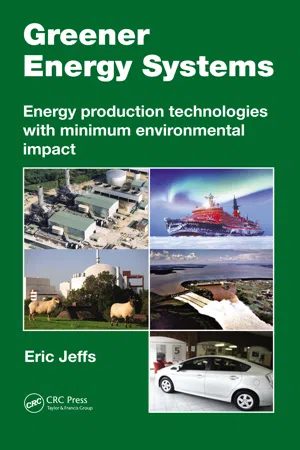
Recent years have seen acceleration in the development of cleaner energy systems. In Europe and North America, many old coal-fired power plants will be shut down in the next few years and will likely be replaced by combined cycle plants with higher-efficiency gas turbines that can start up and load quickly. With the revival of nuclear energy, designers are creating smaller nuclear reactors of a simpler integrated design that could expand the application of clean, emission-free energy to industry. And a number of manufacturers now offer hybrid cars with an electric motor and a gasoline engine to charge the batteries on the move. This would seem to be the way forward in reducing transport emissions, until countries develop stronger electricity supply systems to cope with millions of electric cars being charged daily.
Greener Energy Systems: Energy Production Technologies with Minimum Environmental Impact tackles the question of how to generate enough electricity, efficiently and with minimum environmental impact, to meet future energy needs across the world. Supplemented with extensive figures and color photographs, this book:
- Traces the development of electricity supply
- Explains energy production risks and how major accidents have influenced development
- Discusses the combined cycle, the preferred system for power capacity expansion in much of the world
- Looks at combined heat and power
- Addresses whether coal can continue to be a fuel for power generation
- Examines nuclear power generation
- Asks why shipping has not followed some of the world's navies into nuclear propulsion
- Considers how to electrify more transport systems
- Reviews the current state of renewable systems, particularly hydro and solar
-
The book defines the key elements of greener energy systems, noting that they must be highly efficient, with rapid start up and loading; produce minimum emissions; and use simpler technology. The author has more than forty years of experience as an international journalist reporting on power-generation technologies and energy policies around the world. He concludes that there is no place for coal and that combined cycle, hydro, solar, and biomass must complement nuclear energy, which must serve more applications than just generating electricity.