This title was first published in 2002. This volume aims to provide fresh insight into the complex struggles of the European Union (EU) institutions and the member states over who should negotiate trade issues on Europe's behalf. The book makes effective use of new empirical data on the daily operations of European trade policy based on interviews with high-ranking trade officials. Furthermore, this text is the first institutionalist analysis of the Amsterdam and Nice Intergovernmental Conferences (IGCs) in regards to the Common Commercial Policy (CCP). In sum, it provides the reader with an introduction into the field of international trade regulation from an EU perspective. Presented within the context of the long-standing institutional debate and using case studies on the operation of the CCP in the 1990s, this book facilitates a deeper understanding of the challenges facing Europe in the 21st century.
- 210 pages
- English
- ePUB (mobile friendly)
- Available on iOS & Android
eBook - ePub
About this book
Trusted by 375,005 students
Access to over 1.5 million titles for a fair monthly price.
Study more efficiently using our study tools.
Information
Subtopic
SociologyIndex
Social SciencesChapter 1
Introduction
That is to say, that her sacred royal majesty of Great Britain shall, in her own name, and that of her successors, be obliged, for ever hereafter, to admit the wines of the growth of Portugal into Britain; so that at no time, whether there shall be peace or war between the kingdoms of Britain and France, anything more shall be demanded for these wines by the name of custom or duty, or by whatsoever other title (Art. II of the Treaty of Commerce between England and Portugal concluded in 1703).
Adam Smith (1776)1
The 2000 intergovernmental conference (IGC) provided the EU with an opportunity to find an institutional solution to the approaching challenges of the new millennium. The negotiations, which cumulated in the Treaty of Nice (ToN), focused largely on the weighting of national votes and the size and composition of the Commission. Against the background of these highly publicized matters, the decision to move to qualified majority voting (QMV) in numerous fields remained largely unnoticed. Further, the Common Commercial Policy (CCP) underwent substantial modifications on the French Riviera, which account for the most extensive changes in CCP since the original Rome Treaties in 1957.2 In Nice the institutional debate centered on the partition of competence in the field of CCP between the Community and the member states. This debate would, however, not be of a comparable importance had the external role of the European Union (EU) not gained in importance since the fall of the Berlin wall.3
The way in which the new provisions will strengthen the Commission’s negotiation flexibility or the member states’ control in day-to-day policy-making is still controversially debated.4 Further, numerous questions arising from comparisons between the outcomes of the Treaty of Nice and the Treaty of Amsterdam (ToA) must be clarified. For example, what accounts for the sudden turn on the part of the member states to grant the Commission greater flexibility in negotiations on WTO provisions, especially given the numerous attempts by the Commission to drop the unanimity condition in particularly sensitive areas in the pre-Nice period? Had the negotiator already forgotten that not even the European Court of Justice (ECJ) showed willingness in the early 1990s to support the Commission in its quest for greater competency in international trade negotiations (Opinion 1/94)? Without entering the debate at this stage, it must be pointed out that changes in CCP can only be explained by a more in-depth analysis of the main actors’ positions and the institutional environment they are embedded in, as well as by examining opposing focal points around which actors’ preferences converge.5 A comparison between the results of the IGCs of Amsterdam and Nice will be carried out in this book.
This introductory chapter outlines the emerging role of the Community in world politics in general and trade diplomacy in particular. The rationale of analysis used throughout this book can only be understood when the Union’s foreign trade policy is seen in relation to ongoing debates on the EU’s role in the world community, its challenges ahead (known as widening) and the internal structure of policy-making (known as deepening). Thus, chapter one sets out the external and internal dimensions of EU trade policy.
I have chosen to focus on several overlapping debates in order to view the EU’s external role from both an internal and an external perspective and prepare the reader for the theoretical arguments presented in this book. The external dimension examines the evolving role the Community plays and the challenges attached to the status of an emerging superpower. The closer examination of the internal dimension concentrates on decision-making modes and on institutional debates, which have characterized EU foreign trade policy since its beginnings. The chapter ends with a presentation of the research interest and the corresponding research question, as well as the path the author plans to lead the reader down.
The external dimension
Europe’s role in international politics has evolved substantially over the past two decades (see Bretherton and Vogler, 1999; Cameron, 1998; Jupille, 1999; Rhodes, 1998).6 The latest developments towards a common European foreign and security policy (CFSP) are an unequivocal sign of an ever-closer union (Dinan, 1999). Former US Secretary of State Kissinger’s well-known question ‘who to call in Europe?’ might receive a slightly different answer today than two decades ago, as the names of representatives of EU institutions appear more frequently and higher up on the list of the main interlocutors. These changes aside, in 1996 a prominent representative of the Clinton era of US foreign policy accused European leaders not to have picked up the phone when urgent common action was necessary during the Bosnian war.7 During the IGC leading to the ToA, the heads of government and state tried to counter increasing criticism regarding the efficiency of the EU’s foreign policy by creating a coordinator position in the second pillar (CFSP).8 This would allow the channelling of the many diverging views of the 15 foreign ministries through one common platform, presenting a more coherent EU position towards the outside world. Former NATO Secretary-General Javier Solana filled this new post. Optimistically speaking, the High Representative for the CFSP and his Brussels offices could eventually evolve into the primary spokesperson for the EU’s foreign security policy, thereby merging à la longue the simultaneous voices of Downing Street, l’Elysée and the new Kanzleramt into one. In reality, however, a pessimistic view still dominates. This view sees the newly created coordinator of the member states’ foreign policy solely as a response to the criticism directed at the lack of coherence in the member states’ foreign policy, and predicts no substantial changes regarding the making and origins of foreign policy.9
From a political dwarf to a superpower?
The European Union has gained substantial weight in world politics over the past few decades. The gradual evolution of a common foreign policy in the EU was preceded by the establishment of a common foreign trade approach. Foreign trade policy has been a stronghold of the Community since the early days of integration. It developed out of a functional necessity to unify foreign trade relations in the prospect of a single European market in the late 1950s. The EC’s external trade relations have been coordinated in Brussels with a strong role attributed to the Community in general and the Commission in particular.10 Security concerns played a role in the founding of the integration project, however, security policy remained in the exclusive sphere of competence of member governments during this time.
In reaction to overly realist work, Duchêne (1972) introduced the notion of the EC as a ‘civilian power’. This idealist-normative response highlighted the economic and legal leadership and thus indirectly the persuasiveness of economic growth and the promotion of cultural and civic achievements, such as human rights. The trade agreements with African, Caribbean and Pacific (ACP) states (Yaounde and Lome Conventions) were often alluded to as an example of representing a new global approach to trade and democratic developments in the North-South relationship. The realist-type reaction to picturing the EC’s external capacities in such a positive light pointed to the need for military strength to play a significant role and be able to shape the international agenda (Bull, 1983). He called the EC a ‘strange superpower’ and attacked the notion of ‘civilian power’ as contradictory, as any power needs military force to credibly pursue its interests. The Community’s foreign policy instruments were biased towards economic issues by default. The ‘political dwarf’ – as many realist scholars derogatorily viewed the EC in the 1980s – nevertheless began to play a more prominent role in world politics as economic issues increasingly challenged the primacy of security issues on a global scale. Thus, what realists failed to foresee was that national interests could be largely promoted by scoring well on the global market. Economic growth was a prerequisite – not only in East-West relations – to hegemonic dominance. Thus, the IR discourse began to more broadly accommodate economic interdependence in the 1980s (Keohane, 1984).
The EC’s role on the world stage was consolidated as a result of two important developments: a qualitative leap in world trade regulation as a result of the Uruguay Round and movements within the EC towards an ever closer union due to the Single European Act (SEA) and the Treaty on European Union (TEU). The role of a ‘joint supervisor of the world economy’ has been emphasized when describing Europe’s international presence (Hill, 1993, p.314). In other areas, such as CFSP, a gap between expectations and capabilities to act was periodically highlighted (Hill, 1993; Ginsberg, 1999). High expectations of CFSP are increasingly raised as it is widely accepted that the US, as the sole remaining superpower from the Cold War era, can not solve international conflicts alone. This debate, however, hides the fact that in the financial and economic sector the EU has become more than just a junior partner.
The EU and the US in comparison
The architecture of the world financial and trade order is highly dependent upon close cooperation between the two economic superpowers. Trade disputes, which have emerged anew over the past few years, seem not to endanger the increasing intertwining of the transatlantic markets (see Peterson, 2000). Bergsten (1999) has gone as far as to announce the age of the so-called G2 regime. Whereas realists still see Europe as a ‘military protectorate of the United States (Brzezinski, 2000, p.18)’, they acknowledge that the junior partner is on the verge of becoming a true partner in global public policy. Table 1.1 illustrates the economic leverage of the EU in regards to trade in goods and in services. Besides the shares in world trade, the origins and destinations of Foreign Direct Investment (FDI) indicate the increasing role the EU plays in world trade and financial affairs.
Table 1.1 Import/Export: merchandise and servicesa
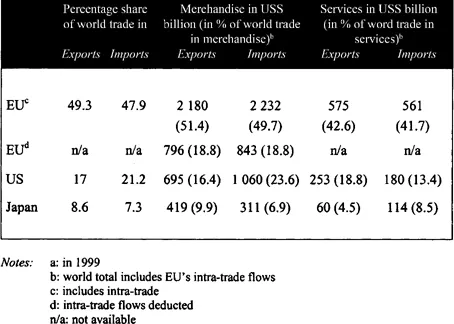
Source: WTO international trade statistics 2000, own calculations.
Figures 1.1 and 1.2 show FDI inflows and outflows in the second half of the 1990s.
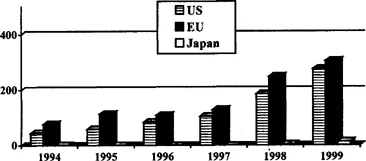
Figure 1.1 FDI inflows (in billions of US$)
Source: UN World Investment Report 2000, own calculations.
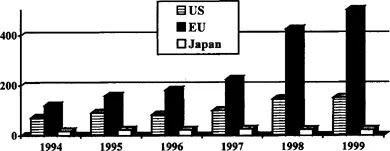
Figure 1.2 FDI outflows (in billions of US$)
Source: UN World Investment Report 2000, own calculations.
Outward flow...
Table of contents
- Cover
- Half Title
- Dedication
- Title Page
- Copyright Page
- Table of Contents
- List of Figures and Tables
- Preface and Acknowledgements
- List of Abbreviations
- 1 Introduction
- 2 The Common Commercial Policy: Development and Operation
- 3 Theoretical Approaches to the Study of European Integration
- 4 Explaining Policy Processes and Policy Outcomes: an Institutionalist Framework for Analysis
- 5 Theorizing ECJ Decisions: the Legitimacy of External Economic Relations
- 6 Amsterdam – Theory and Empirics in IGCs
- 7 Theorizing International Bargains: the Seattle Ministerial Conference
- 8 Conclusion
- Bibliography
- Index
Frequently asked questions
Yes, you can cancel anytime from the Subscription tab in your account settings on the Perlego website. Your subscription will stay active until the end of your current billing period. Learn how to cancel your subscription
No, books cannot be downloaded as external files, such as PDFs, for use outside of Perlego. However, you can download books within the Perlego app for offline reading on mobile or tablet. Learn how to download books offline
Perlego offers two plans: Essential and Complete
- Essential is ideal for learners and professionals who enjoy exploring a wide range of subjects. Access the Essential Library with 800,000+ trusted titles and best-sellers across business, personal growth, and the humanities. Includes unlimited reading time and Standard Read Aloud voice.
- Complete: Perfect for advanced learners and researchers needing full, unrestricted access. Unlock 1.5M+ books across hundreds of subjects, including academic and specialized titles. The Complete Plan also includes advanced features like Premium Read Aloud and Research Assistant.
We are an online textbook subscription service, where you can get access to an entire online library for less than the price of a single book per month. With over 1.5 million books across 990+ topics, we’ve got you covered! Learn about our mission
Look out for the read-aloud symbol on your next book to see if you can listen to it. The read-aloud tool reads text aloud for you, highlighting the text as it is being read. You can pause it, speed it up and slow it down. Learn more about Read Aloud
Yes! You can use the Perlego app on both iOS and Android devices to read anytime, anywhere — even offline. Perfect for commutes or when you’re on the go.
Please note we cannot support devices running on iOS 13 and Android 7 or earlier. Learn more about using the app
Please note we cannot support devices running on iOS 13 and Android 7 or earlier. Learn more about using the app
Yes, you can access The EU's Common Commercial Policy by Manfred Elsig in PDF and/or ePUB format, as well as other popular books in Social Sciences & Sociology. We have over 1.5 million books available in our catalogue for you to explore.