
eBook - ePub
Engineering Psychology and Cognitive Ergonomics
Volume 4: Job Design, Product Design and Human-computer Interaction
- 504 pages
- English
- ePUB (mobile friendly)
- Available on iOS & Android
eBook - ePub
Engineering Psychology and Cognitive Ergonomics
Volume 4: Job Design, Product Design and Human-computer Interaction
About this book
This book is the fourth in the series and describes some of the most recent advances and examines emerging problems in engineering psychology and cognitive ergonomics. It bridges the gap between the academic theoreticians, who are developing models of human performance, and practitioners in the industrial sector, responsible for the design, development and testing of new equipment and working practices.
Information
Part One
Job Design and Analysis
1
Modelling and simulation of human behaviour in process control: needs, perspectives and applications
Abstract
This paper focuses on the needs, requirements and guidelines for the analysis of human-machine interaction, focusing on the aspects related to the simulation of human behaviour and its applications.
In particular, the state of the art and key issues will be discussed for the following areas: design of interfaces and procedures; probabilistic and deterministic safety assessment’, simulators and classroom training; and accident investigation.
Two types of modelling categories may be considered and two types of analyses can be carried out, i.e. qualitative and quantitative modelling and prospective and retrospective analyses. Given that we need to consider cognitive as well as physical behaviour, the idea of developing integrated analyses is proposed as optimal solution that utilises data from different sources and coherent modelling approaches for performing consolidated prospective and retrospective studies.
Introduction
A crucial safety issue in the development of modem technical systems is the consideration of the human element as source of, and contributor to, accidents. The vast majority of catastrophes occurring nowadays contain a relevant contribution of human faults, or ‘human errors’, which are usually combined with plant faults or malfunctions, or ‘system failures’, leading to unwanted consequences, the ‘accident’. Rarely accidents are the outcome of a single system fault or human mistake or deliberate human decision. The worse catastrophes, such as Zeebrugge, Bhopal, and Chernobyl, were generated by several system malfunctions and human errors, individually irrelevant but deadly when combined in a special sequence of events (Broadbent et al., 1990).
Focusing on the human contribution to accidental sequences, it is nowadays accepted that human errors may be made at different levels of an organisation and that the highest the level within the organisation, at which errors are made, the more influential and widespread are their consequences (Reason, 1990, 1997). Errors occurring outside the immediate control of a plant, such as at top management, design, or maintenance level are not instantly visible. They remain dormant, in a latent state, and can propagate and expand throughout the organisation affecting a high number of decisions and then become suddenly manifest at the level of active plant operation. In addition to this social aspect, the specific environmental working conditions and technical contexts in which accidents are generated and evolve, equally influence the behaviour of operators in active control, or ‘front line actors’. These are the reasons why Human Machine Interaction (HMI) and human behaviour studies in modern technology are sometimes referred as ‘socio-technical factors’. In this context, a generally accepted definition of human error can refer to an action, or sequence of actions or mental activities, that fail to meet some implicit or explicit intended outcome. In the following we will refer to this definition.
Two principal elements have favoured the increase of human contribution to accident causal factors over the last two decades, reaching a percentage as high as 70–80%, independently of the technological domain of application (Rankin, and Krichbaum, 1998):
- The very high reliability of mechanical and electronic components; and
- The complexity of the system and the role assigned to human operator in the control loop
The much-improved reliability and refinement of hardware and electronic components has vastly reduced mechanical faults and has enabled the management of plant critical processes, even in the presence of system faults and malfunctions, thanks to redundancies and protection systems. The real open issues seem to be the so-called ‘common cause’ failures and software failures, which have an immediate impact on the plant control system. This high reliability of hardware components impacts directly on the statistical contribution to accident of human errors, which become more and more visible in numerical importance.
Moreover, the extensive use of automation for process control has required that the human operator becomes primarily a supervisor of operations, performed by computerised systems. Thus, the working environments are much more demanding in terms of cognitive and reasoning abilities than sensory-motor skills. Systems behave and respond via the automation and interfaces, which follow the rules and principles provided by their designers. These are not ahvays totally known or familiar to operators. Moreover, in accidental conditions, the dynamic characteristics of the sequence of events add to the inherent complexity of the situation and further complicate the decision making process (Billings, 1997; Hollnagel. 1993). It seems, therefore, appropriate that system safety analysis concentrates on human factors, by devising appropriate methods for studying and improving Human-Machine Interaction.
This paper will give an overview of the type of methods that include human factors consideration at different stages of system development. It will be argued that numerical estimations of human errors represent only a partial contribution to overall safety analysis, while there is a considerable amount of insight that can be obtained from ‘qualitative’, non-numerical, studies of human-machine interaction. We will start by considering the methods applied for evaluating human behaviour during accidents and for assessing systems in preventive approaches. Then, general architectures, theoretical methods, and techniques applied to analyse working environments and actual plant management will be reviewed. From this discussion, a generic framework, able to satisfy, coherently, the requirements of design, safety assessment, training, and accident analysis of a human-machine system will be identified.
Methods for analysis of HMI
Proactive and reactive methods
Broadly speaking, a framework for analysing human-machine interaction may consider two types of methods (Maurino et al., 1995): reactive and proactive methods.
Reactive methods are applied for learning the lessons of past experience and of real accidents and for developing of appropriate feedback mechanisms. Proactive methods are dedicated to the prevention, detection, protection, recovery, and containment of the events that combine in an accident. Reactive methods support accident investigations and root cause analyses. Proactive methods cover a wider spectrum of applications comprising both safety assessment, design, and training approaches, such as: Probabilistic Safety Assessments (PSA), Design Basis Accident (DBA) analyses, design of Standard and Emergency Operating Procedures (SOP and EOP), design of decision support tools and operator training. The main difference between reactive and proactive measures lies in the fact that reactive measures are engendered by the occurrence of an accident, while proactive measures aim at prevention of accidents.
In theory it would be better to develop only proactive measures. However, in practice the history of development of measures and safety methods follows a different pattern, usually an evolutionary process (figure 1).
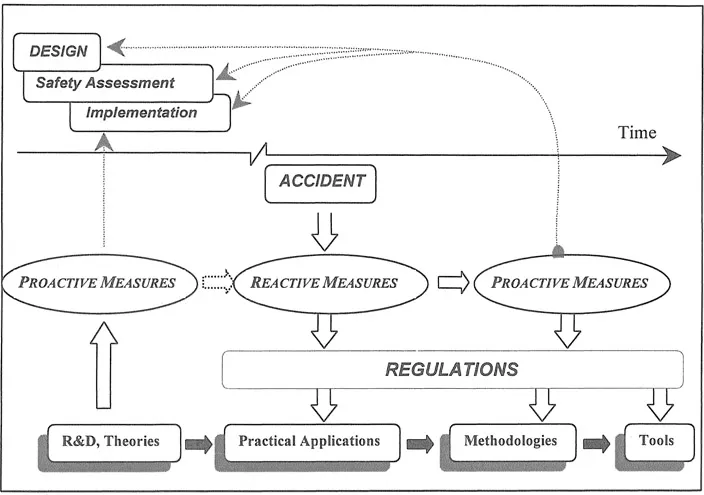
Figure 1 Proactive-reactive measures and methods for accident analysis and prevention
Indeed, many safety approaches and methods are originally generated at R&D level and have a limited impact on design, safety assessment and implementation processes, and are rarely immediately developed into practically applicable tools.
Only later, after a severe accident has occurred and, as reaction aimed at avoiding the specific causes of that accident, reactive measures are developed. These are then further expanded into sound methods and are introduced as mandatory measures by safety and regulatory authorities, with the precise aim of accident prevention and limitation.
Three major examples of such evolutionary process can be mentioned here: Safety Management Systems (SMS), typical of the chemical and process industry; Probabilistic Safety Assessment, for the nuclear energy production; and Crew Resource Management courses, for the aeronautical domain. The development and application of SMS for accident prevention followed, in Europe, the occurrence of a number of very serious accidents in the late 70s in the domain of chemical and process plants. One of such serious events, the Seveso accident, released dioxin, and gave paramount importance to the development of SMS. This method is a typical proactive measure for safety and had been already proposed at research level at the time of the accident, but it was not certainly considered essential for the safety assessment of a plant. Hence the development of SMS has been vastly fostered as a reactive measure to prevent future serious accidents of the same nature as the one of Seveso. Since then, a number of methodological approaches have been developed and are sustained by sound theoretical basis and formulations. Thus, proactive measures have been developed (Cacciabue et ai, 1994). Nowadays, the use and implementation of SMS are regulated by a ‘directive’ of the European Union, which is known as the ‘Seveso Directive (Directive 82/501/EEC on Major Accidents Hazards) which requires that all industries subjected to chemical hazards develop a SMS as part of their safety measures. The industrial domain is, in many cases, implementing SMS as a common practice and their development is now entering its final stage. SMSs are becoming proactive tools of standard use, like all other means of compliance of the industry in accordance to the safety rales and regulations.
Similar paths of development can be found in the Nuclear and Aeronautical domain. In the nuclear energy production area, the probabilistic risk assessment methodology was originally proposed as new method for safety analysis in the famous report WASH-1400 (US-NRC, 1975) on demand from the insurance companies. It then became particularly important mainly as reaction to the Three Mile Island accident. Afterwards, the probabilistic risk assessment methodology has been widely developed, and, presently, is fully integrated as part of the requirements for certification of operability of nuclear power plants by regulatory bodies in almost all countries world-wide (Mosleh and Bari, 1998).
In the domain of Aviation, training pilots to identify and manage Human Factors issues, originally fostered in US by NASA (Lauber et ai., 1979), was brought to full atte...
Table of contents
- Cover
- Half Title
- Title
- Copyright
- Contents
- Acknowledgements
- Preface
- Part One: Job Design and Analysis
- Part Two: Human-Computer Interaction
- Part Three: Applied Psychology
- Part Four: Product Design and Analysis
Trusted by 375,005 students
Access to over 1.5 million titles for a fair monthly price.
Study more efficiently using our study tools.
Frequently asked questions
Yes, you can cancel anytime from the Subscription tab in your account settings on the Perlego website. Your subscription will stay active until the end of your current billing period. Learn how to cancel your subscription
No, books cannot be downloaded as external files, such as PDFs, for use outside of Perlego. However, you can download books within the Perlego app for offline reading on mobile or tablet. Learn how to download books offline
Perlego offers two plans: Essential and Complete
- Essential is ideal for learners and professionals who enjoy exploring a wide range of subjects. Access the Essential Library with 800,000+ trusted titles and best-sellers across business, personal growth, and the humanities. Includes unlimited reading time and Standard Read Aloud voice.
- Complete: Perfect for advanced learners and researchers needing full, unrestricted access. Unlock 1.5M+ books across hundreds of subjects, including academic and specialized titles. The Complete Plan also includes advanced features like Premium Read Aloud and Research Assistant.
We are an online textbook subscription service, where you can get access to an entire online library for less than the price of a single book per month. With over 1.5 million books across 990+ topics, we’ve got you covered! Learn about our mission
Look out for the read-aloud symbol on your next book to see if you can listen to it. The read-aloud tool reads text aloud for you, highlighting the text as it is being read. You can pause it, speed it up and slow it down. Learn more about Read Aloud
Yes! You can use the Perlego app on both iOS and Android devices to read anytime, anywhere — even offline. Perfect for commutes or when you’re on the go.
Please note we cannot support devices running on iOS 13 and Android 7 or earlier. Learn more about using the app
Please note we cannot support devices running on iOS 13 and Android 7 or earlier. Learn more about using the app
Yes, you can access Engineering Psychology and Cognitive Ergonomics by Don Harris in PDF and/or ePUB format, as well as other popular books in Technology & Engineering & Industrial Engineering. We have over 1.5 million books available in our catalogue for you to explore.