- 214 pages
- English
- ePUB (mobile friendly)
- Available on iOS & Android
eBook - ePub
Beyond Jerusalem: Music in the Women's Institute, 1919–1969
About this book
Music in the Women's Institute has become stereotyped by the ritualistic singing of Jerusalem at monthly meetings. Indeed, Jerusalem has had an important role within the organization, and provides a valuable means within which to assess the organization's relationship with women's suffrage and the importance of rurality in the Women's Institute's identity. However, this book looks beyond Jerusalem by examining the full range of music making within the organization and locates its significance within a wider historical-cultural context. The Institute's promotion of conducting - a regular part of its musical activity since the 1930s - is discussed within the context of embodying overtly feminist sentiments. Lorna Gibson concludes that a redefinition of the term 'feminism' is needed and the concept of 'gendered spheres' of conducting provides a useful means of understanding the Institute's policy. The organization's promotion of folk song is also examined and reveals the Institute's contribution to the Folk Revival, as well as providing a valuable context within which to understand the National Federation's first music commission, Ralph Vaughan Williams's Folk Songs of the Four Seasons (1950). This work, and the Institute's second commission, Malcolm Williamson's The Brilliant and the Dark (1969), are examined with the context of the organization's music policy. In addition to discussing the background to the works, issues of critical reception are addressed. The book concludes with an Epilogue about the National Society Choir (later known as the Avalon Singers), which tested the organization's commitment to amateur music making. The book is the result of meticulous work undertaken in the archives of the National Federation, the BBC Written Archives Centre, the V&A archives, the Britten-Pears Library, the Ralph Vaughan Williams Library, the Women's Library and the Newspaper Library.
Information
Chapter 1
Music Policy and its Implementation in the Women's Institute
Despite being Britain’s largest women’s organization, the Women’s Institute has attracted the attention of only a few scholars.1 The popular perception of the Women’s Institute is of a church-related organization, with a membership of predominantly middle-aged women, whose activities centre on singing Jerusalem, jam making, handicrafts and organizing village fetes. To date, the most significant work written by outsiders includes Maggie Andrews’ The Acceptable Face of Feminism, Alyson Laverick’s ‘The Women’s Institute: Just Jam and Jerusalem?’, Caitriona Beaumont’s article on concepts of citizenship and feminism in mainstream women’s organizations between 1928–1939, and Lynne Thompson’s work on the Lancashire Federation.2 In each case, the authors have sought to dispel the image of the Women’s Institute being old-fashioned and conservative, and raise questions about the significance of the organization within the lives of its members. Broadly speaking, Beaumont, Andrews and Laverick reveal the organization to be a site of ‘feminist’ activity (discussed further in Chapter 2), whereas Thompson argues that the Women’s Institute has provided a means for individuals’ self-advancement (in both local politics and in education). However, Andrews has been the only scholar so far to examine the artistic side of the Women’s Institute.3 Thus, the image of music-making in the Women’s Institute comprising women standing to patriotically sing Jerusalem for the opening of their monthly meetings, often accompanied by an old and out-of-tune village hall piano, has not been addressed, until now.
Apart from these recent publications, all that has been available about the Women’s Institute are instructional publications issued by the National Federation (such as the WI Handbook, Procedure at Meetings and Keeping Ourselves Informed)4 and histories of the organization written either by members themselves (which include Ignez Jenkins’ A History of the Women’s Institute Movement of England and Wales and Anne Stamper’s Rooms Off the Corridor), or commissioned by the National Federation (such as Piers Dudgeon’s Village Voices).5 These publications only briefly discuss ‘internal’ issues of policy and procedure, and are either concerned with depicting the structure of the Committees, or showing how local Institutes have been able to take part in directing national policy through resolutions discussed and voted on at the Annual General Meeting (AGM).6
Andrews discusses the Women’s Institute’s policies and how they changed in Chapter 2 of her The Acceptable Face of Feminism; but her examination is confined to the period from 1915 to the mid-1920s. In addition, the ways in which policies were implemented are dismissed on the grounds that, like the three-tiered arrangement of the organization, they have remained unchanged since the organization’s beginnings.7 The structure may not have altered greatly since the time of its gaining independence from the Board of Agriculture in 1919, but overlooking the internal mechanisms of the organization has meant that discussions have over-simplified the decision-making process and have not accounted for changes in policy.
Background to the Organization
The Women’s Institute was founded in Britain in the autumn of 1915, although the roots of the organization can be traced to Canada. Following an address by a certain Mrs Hoodless of Hamilton on the need for special domestic science teaching for girls in Ontario’s schools in 1896 (at a meeting held at the Ontario Agricultural College), the first Women’s Institute was formed on 19 February 1897. It began as the Women’s Department of Domestic Economy in affiliation with the Farmers’ Institute of South Wentworth, and as the organization expanded, later became known as the Stoney Creek Women’s Institute.8 The organization was brought to Britain by a Canadian woman, Madge Watt, who had been a founder member of the first Women’s Institute formed in British Columbia.9 However, it was not until she was invited to speak at an annual meeting of the Agricultural Organization Society (AOS) in 1915 by its secretary, Mr Nugent Harris, that the idea of Women’s Institutes attracted attention in Britain. The first British Women’s Institute, founded in a small village called Llanfair in Anglesey, had its first monthly meeting of members on the 25 September 1915.
The original aim of the British Women’s Institute was to provide a female counterpart to the male-dominated Agricultural Organization Society, an organization founded in 1901 to promote co-operation amongst farmers, small-holders and growers, to increase agricultural production.10 If British countrywomen could be educated, it would, the founders believed, improve rural life and the conditions of Britain’s villages. Indeed, it is significant that the resolution to set up a Women’s Institute Committee under the auspices of the AOS was passed and carried at a time when women’s involvement in the organization was seen as a way of maximizing food production as part of the war effort.11
As with its Canadian predecessors, the education of rural women remained high on the agenda from the organization’s beginnings in Britain. In addition to providing members with information (by means of lectures, presentations and displays), the monthly Institute meeting also provided women with opportunities to socialize with fellow members.12 Although many village communities had the local pub and organizations such as the British Legion, ex-servicemen’s clubs, working men’s clubs, and farmers’ clubs, they tended not to cater for women (apart from the Women’s Section of the British Legion, which usually met only twice a year).13 The Women’s Institute provided an opportunity for women to socialize beyond church-based activities (such as the Mothers’ Union and serving on church councils)14 and also, what was for many, the first time to have an existence outside the rural home.
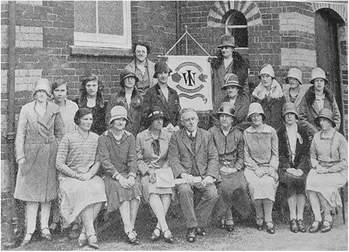
Figure 1.1: Cavendish and Pentlow (West Suffolk) choir winners
Music and the Social Half Hour
Music featured in the Social Half Hour, a section at the end of the Institute meeting allocated to the promotion of the educational value of leisure activities. For many members, the Social Half Hour provided the first opportunity for leisure-time and relaxation outside of the home.
The music activities of the Social Half Hour were in keeping with the organization’s ideological concern of promoting communality and community spirit by allowing all members to take part, irrespective of ability or resources, and tended to focus on choral singing or, where Institutes were unable to train choirs, community singing of simple and well-known songs sung in unison (discussed in Chapter 3). It is within this context that music for pipes and percussion bands was recommended in the National Federation’s monthly magazine, Home and Country (which was first published in February 1919) – as a means to accompany folk songs and folk dancing rather than to enable individuals to perform concerts, thus adhering to the Women’s Institute ideology of communal music-making.15 Other activities recommended by the National Federation for this part of the meeting were handicrafts, games, acting and listening to visiting speakers. However, it was music (and drama) that enabled Institutes to infiltrate village life, by extending communal action to include men from the local villages in Institute activities (discussed further in Chapter 2).
Although there is little archival material on the topic of music for the years before the National Federation’s Music Sub-Committee was established in 1923, references to music in Home and Country indicate that music was a feature of many early Institute meetings (discussed further in Chapter 3). A letter printed in the October edition of 1920 requesting information about the necessary instruments for Haydn’s or Romberg’s Toy Symphony, and a review of a performance by the Wadsworth String Quartette a month later, indicate that instrumental music had been a feature of some Institute meetings since their early years.16
The NFWI Music Sub-Committee
The establishment of the National Federation Music Sub-Committee formalized the organization’s music activities. The first meeting of the National Federation Music Sub-Committee was held on 9 July 1923.17 It consisted of the three Officers of the National Federation (who presided on every National Federation Sub-Committee): the Chairman, Vice-Chairman and Treasurer.18 The Music Sub-Committee consisted of both elected and co-opted members, as well as advisers from outside the organization (discussed later). There appears to have been no pre-requisite qualification to join a National Federation Sub-Committee apart from being interested in the organization and being able to seek expert advice from outside the National Federation when required. Janet Cannetty-Clarke (discussed in Chapter 6) appears to have been among only a handful of Sub-Committee members who had a music qualification: she had obtained a BMus from the Royal Academy at the age of 21.
Some members of the Music Sub-Committee served at the same time on other National Federation Sub-Committees.19 The first Music Sub-Committee, for example, included Viscountess Boyne (who was also on the Executive Committee and the Agriculture and Horticulture Sub-Committee), Lady Margaret Boscawen (who also served on the Education, Literature and Publicity Sub-Committee and the Home and Country Sub-Committee) and Mrs H.G. Stobart (who was also on the Executive, Education, Literature and Publicity Sub-Committee as well as the Home and Country Sub-Committee). Although some members had a lengthy membership (Gertrude Lampson, for example, served from 1923 to 1936), the Music Sub-Committee was elected annually and fluctuated in size with a membership (excluding the Officers) ranging from 13 in 1928 to 6 in 1932.
The Sub-Committee’s official name changed throughout the 50-year period: in 1926 the ‘Music Sub-Committee’ changed to the ‘Music, Drama and Dancing Sub-Committee’, then in 1936 split into ‘Music and Dancing’ with a separate ‘Drama’ section. In 1941 the Sub-Committees amalgamated into ‘Music and Drama’ and ‘Dancing’ was deleted from the title. In 1949 it changed again to ‘Music and Dancing’, and in 1957 to ‘Music and Drama’. In 1970, it reverted to its original name, the ‘Music Sub-Committee’. But despite these changes in its official title, examination of the Terms of Reference (which featured annually in the minute books) reveals that the Sub-Committee’s role did not alter greatly.
Broadly speaking, the Music Sub-Committee’s responsibility was twofold: to encourage music-making within the organization and to strive to maintain ‘high standards’. Although it was not stated which types of music were to be encouraged or the level of musicianship that was to be reached – words such as ‘amateur’ or ‘professional’ were not used – ...
Table of contents
- Cover
- Half Title
- Dedication
- Title
- Copyright
- Contents
- List of Figures
- Foreword
- Acknowledgements
- List of Abbreviations
- Introduction
- 1 Music Policy and its Implementation in the Women's Institute
- 2 Education, Empowerment and The Acceptable Face of Feminism
- 3 The Changing Roles of Folk Song and Part Song in the Women's Institute
- 4 Folk Songs of the Four Seasons and the First National Singing Festival
- 5 The Brilliant and The Dark and the Second Music Festival
- 6 Afterburn: The National Society Choir, 1969-1975
- Conclusion
- Bibliography
- Personalia
- Appendices
- Index
Trusted by 375,005 students
Access to over 1.5 million titles for a fair monthly price.
Study more efficiently using our study tools.
Frequently asked questions
Yes, you can cancel anytime from the Subscription tab in your account settings on the Perlego website. Your subscription will stay active until the end of your current billing period. Learn how to cancel your subscription
No, books cannot be downloaded as external files, such as PDFs, for use outside of Perlego. However, you can download books within the Perlego app for offline reading on mobile or tablet. Learn how to download books offline
Perlego offers two plans: Essential and Complete
- Essential is ideal for learners and professionals who enjoy exploring a wide range of subjects. Access the Essential Library with 800,000+ trusted titles and best-sellers across business, personal growth, and the humanities. Includes unlimited reading time and Standard Read Aloud voice.
- Complete: Perfect for advanced learners and researchers needing full, unrestricted access. Unlock 1.5M+ books across hundreds of subjects, including academic and specialized titles. The Complete Plan also includes advanced features like Premium Read Aloud and Research Assistant.
We are an online textbook subscription service, where you can get access to an entire online library for less than the price of a single book per month. With over 1.5 million books across 990+ topics, we’ve got you covered! Learn about our mission
Look out for the read-aloud symbol on your next book to see if you can listen to it. The read-aloud tool reads text aloud for you, highlighting the text as it is being read. You can pause it, speed it up and slow it down. Learn more about Read Aloud
Yes! You can use the Perlego app on both iOS and Android devices to read anytime, anywhere — even offline. Perfect for commutes or when you’re on the go.
Please note we cannot support devices running on iOS 13 and Android 7 or earlier. Learn more about using the app
Please note we cannot support devices running on iOS 13 and Android 7 or earlier. Learn more about using the app
Yes, you can access Beyond Jerusalem: Music in the Women's Institute, 1919–1969 by Lorna Gibson in PDF and/or ePUB format, as well as other popular books in Media & Performing Arts & Music. We have over 1.5 million books available in our catalogue for you to explore.