eBook - ePub
Art and Music in the Early Modern Period
Essays in Honor of Franca Trinchieri Camiz
- 464 pages
- English
- ePUB (mobile friendly)
- Available on iOS & Android
eBook - ePub
Art and Music in the Early Modern Period
Essays in Honor of Franca Trinchieri Camiz
About this book
The relationship between music and painting in the Early Modern period is the focus of this collection of essays by an international group of distinguished art historians and musicologists. Each writer takes a multidisciplinary approach as he or she explores the interface between music performance and painting, or between music and art theory. The essays reflect a variety and range of approaches and offer methodologies which might usefully be employed in future research in this field. The volume is dedicated to the memory of Franca Trinchieri Camiz, an art historian who worked extensively on topics related to art and music, and who participated in some of the conference panels from which many of these essays originate. Three of Professor Camiz's own essays are included in the final section of this volume, together with a bibliography of her writings in this field. They are preceded by two thematic groups of essays covering aspects of musical imagery in portraits, issues in iconography and theory, and the relationship between music and art in religious imagery.
Information
PART I
ART AND MUSIC IN ITALY
Chapter 1
The Music of Devotion: Image, Voice and the Imagination in a Madonna of Humility by Domenico di Bartolo*
In the fifteenth century, both in Siena as well as in Florence, the enhanced ability of painters to represent the incidents of the visible world abetted the affective power of religious images. Illusion, one might say, was devotion’s greatest pleasure. Projecting itself toward those devouring receptacles that are our eyes, an image could stir the imagination and draw the believer into itself and past the realm of sense toward contemplation of things spiritual.1 In the transit from the particular to the infinite, visual sensations captured the eye’s attention, but they were merely the most salient features of that passage. In this regard, a Madonna of Humility, painted in 1433 by the Sienese painter Domenico di Bartolo di Ghezzi (c. 1400–44), is one of the most inventive and enthralling devotional images from the early Renaissance (Figure 1.1).2 By far the most delicately crafted work in Domenico’s oeuvre, the panel is equally refined in its content. Taking up the topoi of divine light and angelic music, Domenico develops and interweaves these two themes into a visual sonata on the symbolic manifestations of illumination and prayer.
In Domenico’s Madonna of Humility a formal symmetry between the strip of green beneath the Virgin’s feet and the strip of gold above her brow, suggests a symbolic symmetry, namely, the dual status of the woman who is at once an earthly woman and a heavenly queen. Two cushions raise her imperceptibly from a grassy carpet, whose flowery lushness is an analog to her own fertility and where sweet-scented violets and daisies, both among her epithets,3 symbolically betoken the beauty of her humility. Adorned with a star and gems that are, again, among her emblems, a halo and a crown proclaim her majesty. Cut of the same stuff as the golden field above her, the crown’s bejewelled spikes are formed into roses and lilies: not only do these flowers, too, refer to the Virgin, but they recall and then transform the humble blossoms at her feet. By means of such details, which reflect the realm of sense but also lift the worshipper toward that of the incorporeal, the panel draws the eye into itself and toward a place where both material and immaterial spaces converge.
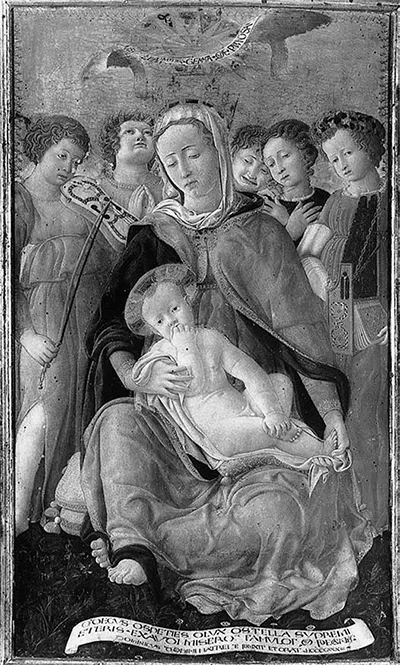
Figure 1.1 Domenico di Bartolo di Ghezzi, Madonna of Humility, 1433, Siena, Pinacoteca (Photo: Soprintendenza Beni Artistici e Storici di Siena)
But even more than flowers, crown, and halo, another object may have originally magnified the effect of sensual delight many times more than Domenico’s gilded or painted forms – no ordinary object, but one capable of bewitching the viewer’s eye and making the luminary imagery of Domenico’s image almost magically concrete. Near the center of the Virgin’s chest one may observe, even in photographs of the panel, a shadow delineating the form of a circle, marked both by traces of what appear to be rays and by a hole that is at once its center and the precise point where the Virgin’s robe is gathered (Figure 1.2). The physical evidence of the panel itself, the iconography of the painting, and Sienese pictorial tradition (not to mention sartorial common sense) suggest that an object was once attached to the panel and that it was a brooch, probably of rock crystal.
The application of a pin encasing an actual gem was not unprecedented in Sienese or even in Tuscan painting, but as demonstrated by examples in the Pinacoteca of Siena alone, the practice of embellishing the surface of a painting with glass or gems was more common in the thirteenth and fourteenth centuries.4 In some instances mirrors, usually made of flat pieces of glass, were recessed into haloes;5 in others deep cavities scooped into the wood imply the use of stones.6 Perhaps the most famous and inventive echo of this tradition is a mural rather than a panel, namely, Simone Martini’s Maestà in the Palazzo Pubblico, where the Virgin wears a rock crystal brooch that is pressed into the plaster and is surrounded by a gilded pastiglia setting.7 More relevant to the case of Domenico di Bartolo’s Madonna, however, is the example of a dugento panel from the circle of Guido da Siena (Figure 1.3).8 Rock crystal gems, still preserved in their original silver and copper settings, decorate the halo, while another serves as a bejewelled pin fastening the Virgin’s robe. The practice, perhaps rare but not unknown in fifteenth-century Sienese painting, sheds light on a little-appreciated aspect of Domenico di Bartolo’s art: his ability to fashion a hybrid of the unprecedented and the old, his ability to combine daring perspectival effects and features traditional to Sienese painting.
In the case of the Madonna of Humility, the ancient convention of incorporating a tangible, light-refracting, starry gem into the physical body of a panel could hardly have been more metaphorically appropriate, for ‘cristallo splendente’ was yet another image for the Madonna.9 Thus, Domenico transformed both things and the illusion of things into poetic figures. The presence of an unavoidably solid yet vaporously reflective object at the center of the painting would have been at once a figurative and a pictorial device: an assertion as well as inversion of the nature of truth and the viewer’s relationship to it. Such an object would have functioned as both a mirror reflecting physical things and a window illuminating spiritual ones. In the end, it would have served as a visual and symbolical opening through which the thoughtful viewer might enter the paradoxically animated yet immutable domain of the painting. While having a magnetic effect upon the eye, this luminous thing would have served as more than an ocular mechanism: by the power of its tangible presence as well as by its light-reflecting effect, this precious gem would have recast the luminary and stellar imagery of the painting in undeniably dazzling terms. Moreover, by asserting itself into our space, it would have emphatically acknowledged our physical presence and must have functioned as a rhetorical imperative, commanding us to ‘look’.
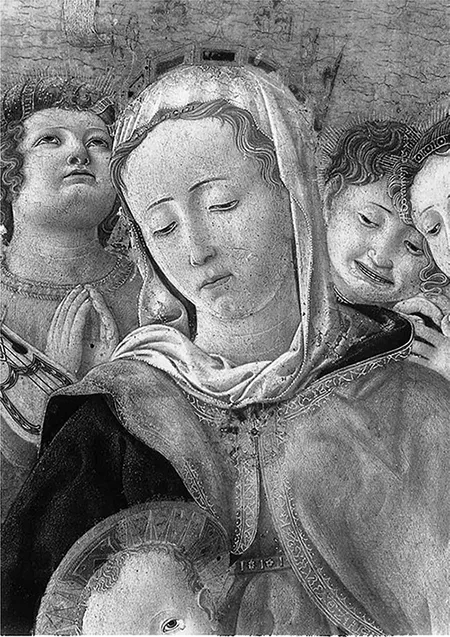
Figure 1.2 Detail of 1.1 (Photo: Soprintendenza Beni Artistici e Storici di Siena)
(Photo: Soprintendenza Beni Artistici e Storici di Siena)
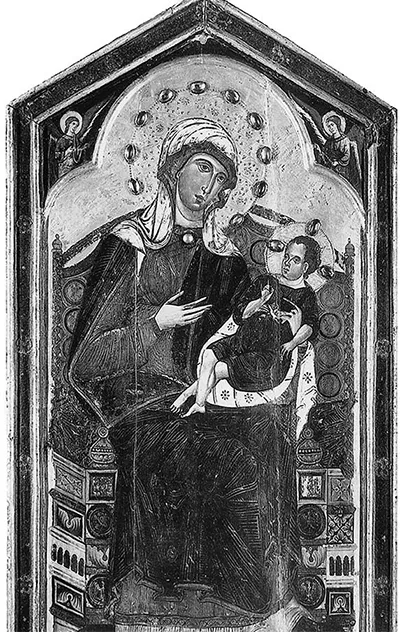
Figure 1.3 Circle of Guido da Siena, Madonna and Child Enthroned, 1200s, Siena, Pinacoteca
Like the putative brooch, the flowery carpet upon which the Virgin sits, as well as her crown and halo, two banderoles, projected in perspective, affirm the viewer’s presence, draw the eye into the picture, and reinforce the pictorial imagery of the whole. One scroll lies at the Virgin’s feet and recedes from the threshold of our sight. A second (Figure 1.4), borne on wondrous rose-colored wings, sails above the holy mother’s head toward the heavens and the fixed star inscribed within her halo. While one of these wings seems to protrude out of the panel and toward the viewer’s space, the other turns inward and momentarily hovers above an angel who joins his hands in prayer and looks heavenward. The latter’s intent eyes help propel the magical wings’ flight, and as we, the viewers, follow the trajectory of his attentive gaze, both the angel and the object of his stare situate us, too. As the shadowed ends of the scroll curl against the gold, first this way then that, the gently keening letters of an inscription address themselves to us.10 By means of perspective and, then, by means of words the two scrolls appeal to our sense of sight and thereby to our sense of sound and, ultimately, to our intellect.
Each scroll, by virtue of its appearance and its content, assumes a distinct character in accordance with its position, its message, and its tone. In the end, these inscriptions, the one tilted and fixed the other shifting and spirited, not only reinforce the notion of the Virgin’s dual status as earthly mother and heavenly queen but also define the spiritual aspirations of the viewer. The one above is a salutation, recognizing and addressing the Virgin in a reverentially oblique way by figurative means rather than by name: AVE STELLA MARIS, GEMMAQUE PRETIOSA, ‘Hail Star of the Sea, Precious Gem’.11 Both of these hallowed metaphors of light, perhaps once asserted in visibly dramatic terms by a gem affixed to the Virgin’s bosom as well as by her crown and halo, were part of the vocabulary of a wide audience. Not only do they appear in secular poetry,12 but they are recurring images in Latin and vernacular laude or hymns, which during the Middle Ages helped to embed ‘stella maris’ and ‘gemma preciosa’ into the popular consciousness.13 Moreover, in fifteenth-century Siena, as Carl Strehlke has persuasively argued, they were also echoed in the celebrated sermons of S. Bernardino.14
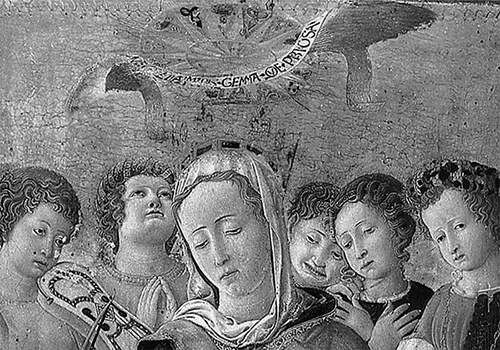
Figure 1.4 Detail of 1.1 (Photo: Soprintendenza Beni Artistici e Storici di Siena)
The imagery of light also informs the thoughts behind the words of the scroll placed at the Virgin’s feet, but here the voice is almost abject, entreating her to hear the pleas of those who kneel as beggars before her, their sovereign. Rephrasing the epithets voiced by the winged words above the Virgin’s crown, echoing their sound, and describing in abstract nomenclature the sensual features of the Virgin’s halo and adornments, the Latin inscription exclaims: O DECUS O SPETIES O LUX O STELLA SUPREMI ETERIS EXAUDI MISEROS FAMULOSQUE PRECANTES or Oh Ornament! Oh Splendor! Oh Light! Oh Star of the Highest Ethereal Realm! Listen to the prayers of your miserable servants’.15 The words of this hexameter, praised for not only for the visual beauty of their classicizing script but also for the silvery sophistication of their poetical effect, are more the language of an invocation than a salutation. Rising with every phr...
Table of contents
- Cover Page
- Title Page
- Copyright Page
- Contents
- List of Contributors
- List of Figures
- Introduction
- PART I: ART AND MUSIC IN ITALY
- 1 The Music of Devotion: Image, Voice and the Imagination in a Madonna of Humility by Domenico di Bartolo
- 2 Musical Images for Devotions: Benedetto Coda’s Altarpiece for the Rosary
- 3 Music, Patrons and Politics: A Re-assessment of Zaganelli’s Altarpiece for Rolando Pallavicino and Domitilla Gambara
- 4 Architecture for ‘Divine Hymns’: The Organ of Antonio da Sangallo the Younger for the Church of Santo Spirito in Sassia
- 5 Portrait of a Lutenist at the Museo Civico of Como: An Inquiry
- 6 Portraying Claudio Merulo, ‘That Great Fountain whose Value Deserved no other Prize than Heaven Itself’
- 7 Musical Portraits of Female Musicians at the Northern Italian Courts in the 1570s
- 8 Humanism and the Arts: Parallels between Alberti’s On Painting and Guglielmo Ebreo’s On ... Dancing
- 9 Lomazzo’s Trattato ... della pittura and Galilei’s Fronimo: Picturing Music and Sounding Images in 1584
- PART II: ART AND MUSIC IN NORTHERN EUROPE
- 10 Representations of Musicians in Medieval Christian Iconography of Ireland and Scotland as Local Cultural Expression
- 11 The Stall of Jubal: A Flemish Reflection of Italian Humanism
- 12 Variations on the Theme of the Planets’ Children, or Medieval Musical Life According to the Housebook’s Astrological Imagery
- 13 ‘All Things in this World is but the Musick of Inconstancie’: Music, Sensuality and the Sublime in Seventeenth-Century Vanitas Imagery
- 14 Musical Indulgence and Pleasurable Sound in Seventeenth-Century Dutch Art
- PART III: A TRIBUTE TO FRANCA TRINCHIERI CAMIZ
- 15 Music Performance and Healing in Renaissance Rome Revealed by Text and Images
- 16 Biblical Music and Dance Through Renaissance Eyes
- 17 Music Settings to Poems by Michelangelo and Vittoria Colonna
- 18 Franca Trinchieri Camiz’s Publications in Art and Music
- Bibliography
- Index
Trusted by 375,005 students
Access to over 1.5 million titles for a fair monthly price.
Study more efficiently using our study tools.
Frequently asked questions
Yes, you can cancel anytime from the Subscription tab in your account settings on the Perlego website. Your subscription will stay active until the end of your current billing period. Learn how to cancel your subscription
No, books cannot be downloaded as external files, such as PDFs, for use outside of Perlego. However, you can download books within the Perlego app for offline reading on mobile or tablet. Learn how to download books offline
Perlego offers two plans: Essential and Complete
- Essential is ideal for learners and professionals who enjoy exploring a wide range of subjects. Access the Essential Library with 800,000+ trusted titles and best-sellers across business, personal growth, and the humanities. Includes unlimited reading time and Standard Read Aloud voice.
- Complete: Perfect for advanced learners and researchers needing full, unrestricted access. Unlock 1.5M+ books across hundreds of subjects, including academic and specialized titles. The Complete Plan also includes advanced features like Premium Read Aloud and Research Assistant.
We are an online textbook subscription service, where you can get access to an entire online library for less than the price of a single book per month. With over 1.5 million books across 990+ topics, we’ve got you covered! Learn about our mission
Look out for the read-aloud symbol on your next book to see if you can listen to it. The read-aloud tool reads text aloud for you, highlighting the text as it is being read. You can pause it, speed it up and slow it down. Learn more about Read Aloud
Yes! You can use the Perlego app on both iOS and Android devices to read anytime, anywhere — even offline. Perfect for commutes or when you’re on the go.
Please note we cannot support devices running on iOS 13 and Android 7 or earlier. Learn more about using the app
Please note we cannot support devices running on iOS 13 and Android 7 or earlier. Learn more about using the app
Yes, you can access Art and Music in the Early Modern Period by KatherineA. McIver, KatherineA. McIver,Katherine A. McIver in PDF and/or ePUB format, as well as other popular books in Media & Performing Arts & Music. We have over 1.5 million books available in our catalogue for you to explore.