- 190 pages
- English
- ePUB (mobile friendly)
- Available on iOS & Android
eBook - ePub
About this book
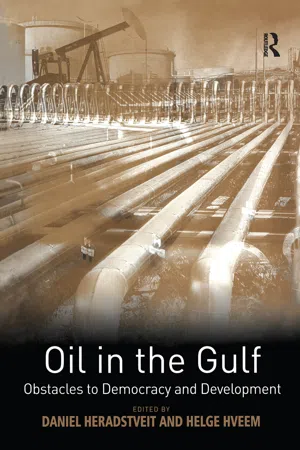
The US-led war against Iraq in 2003 represented the most dramatic shake-up of regional politics in the Gulf for more than a decade. This book contains an up-to-date analysis of central questions affecting the construction of a post-Ba'th regime in Iraq, and charts possible ways forward in other key states of the region such as Saudi Arabia and Iran. At the heart of the analysis lies the tension between the US-sponsored vision of a democratic, free market Gulf region and local resistance to this model. This resistance, appearing in the shape of alternative visions of democracy and the state, could potentially present a challenge to US policy through the spread of repressive policies or terrorism, especially if Washington chooses to sideline the social forces behind it. Conversely, if this resistance were taken seriously by the US, it could form a point of departure for more fruitful interaction between traditions of government from the West and local politics. Future developments on this important issue will be of immense significance for the management of some of the world's largest oil and gas reserves, with immediate implications for both regional political stability as well as for the world economy.
Information
Chapter 1
The Predicament of the Gulf Rentier State
Øystein Noreng
The Salience of the Middle East
The world remains vitally dependent on Middle Eastern oil. Almost three decades after the first oil price shock of 1973-74, oil remains of critical importance to consumers and producers alike. OPEC, the Organization of Petroleum Exporting Countries, is still alive and doing well in spite of repeated announcements of its demise and the sometimes alleged irrelevance of oil. Despite concerns about greenhouse gas emissions from burning fossil fuels, the world economy remains highly dependent on oil, which provides 40 per cent of the world’s primary energy. Despite the extensive search for oil elsewhere over the past 30 years, more than half of the world’s oil reserves are located in Middle Eastern OPEC member countries.
Middle Eastern politics directly affects the United States and the rest of the world, at times in most unexpected ways. The study of potential links between oil exports and the rise of Islam is empirically difficult. Oil exports and their revenues are easy to define and figures are publicly available, but Islamism is hard to define. Many diverse groups are difficult to compare. They range in quality from gradualist and pragmatic through revolutionary to Messianic. Most are non-violent, but some are extremely violent, as demonstrated by the terrorist attacks on New York and Washington, DC, on September 11, 2001. Groups also differ in size. Most are small, but some are part of wide networks. Most Islamist groups operate clandestinely because they are illegal or subject to police surveillance. Their life-spans vary because of repression, in-fighting and competition, as well as mergers and takeover cases.
One view is that the attacks on New York and Washington, DC, were carried out by fanatics motivated by violent religious sensibilities, unrelated to the economic, social and political problems of the Middle East, such as poverty or Israel’s occupation of Palestine (Simon and Benjamin, 2001). In this perspective, fighting terrorism means eliminating individuals and small groups. Oil is not an issue, neither as a cause of terrorism nor as a potential target Another view holds that a terrorist network has thrived on the political and economic bitterness felt in much of the Arab world and the Middle East (Khalaf, 2001). In this perspective, terrorists are motivated by oppression and by their opposition to corrupt, authoritarian Arab governments that are supported by the United States and other Western powers. In this case, fighting terrorism means not only eliminating individuals and small groups, but also undertaking comprehensive economic, social and political reforms.
In this perspective, oil is a key factor: it has provided huge revenues for the rulers, but neither political reform nor sufficient prosperity for the people. Since 1970, oil revenues have profoundly changed the societies of the Middle East, but there has been little political change that can cope with the ambitions of more numerous, younger and better educated generations. The outcome has been a society with rising social and economic inequalities and generational conflicts. The bitterness has also been caused by Arab defeats against Israel, by the plight of Palestinians and by the enduring sanctions against Iraq.
It is hard to assess the extent and the intensity of the resentment against the rulers in place and their Western allies and protectors because of the lack of freedom of assembly and expression in most, if not all, Arab countries. The West has become a victim of its own trap in the Middle East. By supporting corrupt and dictatorial regimes for immediate economic and strategic advantages, the West has prevented the kind of change necessary to stabilize these countries through representative government (Moisi, 2001). Western oil interests and economic stability are shaky when dependent on moribund political systems and paralyzed societies. The United States has provided military, political and at times economic support in return for access to oil. At times the United States, again often supported by allies, has actively destabilized Middle Eastern governments with a popular mandate, as happened in Iran in 1953.
Rising Western dependence on Middle Eastern oil since the 1960s has not been matched by efforts to stabilize the region politically. Although the United States is increasingly dependent on oil imports and on the Middle East supplying the world market with volumes sufficient to stabilize prices, there has, so far, been little interest or insight into Middle Eastern affairs. The wisdom of giving unquestioning support to corrupt and authoritarian regimes because they export oil is not evident. The error has been to equate secure oil supplies with regimes more dependent on Western backing than on a popular mandate. Such a policy can backfire - as it did for the United States in Iran. In this perspective, the September 2001 terrorist attacks may appear as the forerunner of more trouble insofar as they express a widespread but so far hidden discontent. In that case, oil supplies and prices could be at stake.
The Middle Eastern Rentier State
This chapter discusses the internal pressures that have been building up in the oil-exporting countries of the Middle East due to rising population pressures, an economic monoculture and political rigidity. In the 1970s and early 1980s, huge oil revenues distorted economic development and caused political centralization within the state. Regardless of oil prices, the economic basis for this mode of development is no longer present. Economic restructuring away from oil is urgent, but success will depend on political power shifting from the state to the private sector, and from the rulers to the ruled.
Historically, in the key Middle Eastern oil-exporting countries there has been at least some connection between rising oil revenues and lagging political reforms. Today’s regimes depend on oil revenues to prevent or delay reforms in the short run, and to survive in the long run. Rentier states need access to economic rent to survive. The politically conditioned need for revenues, to buy support and legitimacy, reduces oil policy discretion. The alternative is economic reform, with a more independent private sector and direct taxation, followed up by political reforms aiming at a more representative form of government.
Rising prosperity based solely on oil is a phenomenon of the past in the Middle East. With few exceptions, today’s Gulf oil exporters face a race against time, as they have to develop away from oil dependence and their populations are rising quickly. Political implications are important, as rulers financed by erstwhile plentiful oil revenues are coming under increasing pressure to share power with representatives of the private sector - not only its bosses, but also its workers.
In the Middle East, oil has caused a special, capital-intensive mode of development. With high oil revenues, capital accumulation could take place at a much higher rate in the public sector than in private business. Control of the accumulation process moved from private capitalists to public sector bureaucrats and autocratic rulers. Oil money strengthened the state and the bureaucracy in relation to private business, creating a distinctive political system based on the centralization of petroleum revenues within the state (Cause III, 1994, p. 42 f).
Briefly put, the political process is that the rulers do not tax citizens or businesses, but hand out selective privileges, financed by oil revenues, against loyalty and support from a largely parasitic private sector (ibid., p. 43). Access to large oil revenues channelled through the treasuries is a distinctive feature of the state in the oil-exporting countries of the Middle East. These oil revenues make the state a distributor of economic rent from oil and therefore of privileges and transfers, instead of being a tax collector and redistributor (Pawelka, 1991). Most economic activities outside the petroleum sector depend on government permits, contracts, support and protection. This is usually coupled with an absence of taxes on property and income, except for the religious tax, zakat. Consequently, the Middle Eastern oil exporters have had no market economy, but rather a protected concessionary and distributive economy that is directed by the government. Private production, exports and investment have received reduced importance in the context of the state-run oil economy. The private sector has lost political weight.
The contrast with the independent capitalist development of the Western world is striking. In the developed capitalist economies, organized economic interests use the state for their political purposes. In the Middle Eastern oil-exporting countries, the state uses private business for its political purposes. This is a basic feature of the rentier state.
The result is the two-tiered economy. The public sector represents the developed part. It consists of the state apparatus, the national oil company, other key state enterprises and the leading financial institutions, all owned or controlled by the state. It accounts for most of the value added. The private sector, however, is less developed. It is dependent upon selective favors and transfers. Private businesses usually operate in imports, trade or services, but seldom in large-scale manufacturing. Agriculture is generally marked by low productivity and is dependent upon public support. The merchant class, the traders and craftsmen in the bazaar, needs differentiation. Some merchants have succeeded, through public favors and concessions, in gaining considerable wealth. Others have been marginalized by imports and large-scale trading.
The absence of direct taxation has reduced the need for the state to prove its legitimacy to the population through democratic institutions. Instead, the state buys legitimacy by spending oil revenues. When the state does not impose taxes on wealth and income, the need for liberal and democratic reforms diminishes. Instead, the state can buy legitimacy and support by granting selective economic privileges (Bierschenk, 1991). These selective favors have their counterpart in equally selective measures of discrimination. Those groups that do not benefit from the selective favors find themselves as second-class citizens. In the Gulf states,1 unlike the situation in Iran and Iraq, there are a large number of foreign workers with inferior economic, political and social status. As an instrument of power, oil money is supplemented by the military.
The Military Pillar of Power
The growth and power of the military are salient features common to most countries of the Middle East, whether oil-exporting or not (Humphreys, 2001, p. 113). Military officers have repeatedly intervened to keep countries and political systems together, so that military government has often been the rule rather than the exception (Richards and Waterbury, 1990, p. 353 f). Iraq is a good case in point. The social origins of the military, especially the junior officers, are largely in the urban middle and lower middle classes. This is the case not only in Iraq. Historically, the military has been an exponent of social and political change, but over time, the military establishment has become a conservative force in the Middle East, defending its own privileges and its budgetary priorities. At the outset, military rule was socially radical, motivated by the aim of redistributing wealth and income, of carrying out profound reforms and asserting national interests against the colonial legacy. It has over decades acquired its own vested interests - meaning budgetary appropriations, training and the most modern equipment, apart from personal fringe benefits and political influence. In the oil-exporting countries the sudden influx of large oil revenues proved an irresistible temptation for the military establishment to demand more money. The military establishment represents a salient part of the new class of technocrats - wielding power, but not the ability to earn revenues. Like the technocrats of the public sector, the military establishment is largely professional, recruited by merit.
Indeed, the rise in military expenditure seems easier to explain by the level of oil revenues than by any sudden internal or external threats. Middle Eastern oil exporters have a preference for military spending not shared by oil exporters elsewhere. In 1998, Mexico spent less than one per cent of its gross domestic product, GDP, on the military, Indonesia about one per cent, Malaysia, Norway and Venezuela about two per cent and, Iran about three per cent. By contrast, in Oman and in Saudi Arabia some 13 per cent of GDP went to the military (SIPRI Military Expenditure Database). In Islamic Iran the military evidently enjoys far less influence, privileges and money than was the case under the Shah.
External threats, internal enemies, the pressure from foreign arms manufacturers as well as the military complex can explain the military priority. The political instability of the Middle East means that practically all countries of the region face actual or potential threats from neighbors. Political instability also means that almost all Middle Eastern governments face internal threats as well. Foreign arms dealers, assisted by their governments, do their best to convince oil-exporting Middle Eastern rulers that they need to buy the most sophisticated and expensive military hardware. Finally, local officers, friends and family members of the rulers also promote arms purchases, for a commission. High military expenditure helps the armed services compete for personnel, drawing competence away from more productive civilian tasks. In theory, the military burden means that the oil-exporting countries have some flexibility in budgetary policies, provided that it is politically possible to cut expenditures on the armed forces and that no serious threats appear on the horizon.
The Rentier Cycle
The lack of representative political institutions exacerbates the problem of accommodating social and generational change and of redistributing income. Autocratic governments, exercising varying degrees of repression, have traditionally gained legitimacy by offering public services financed by oil revenues, without imposing taxes on the population (Ismael, 1993, p. 81 ff Rising oil revenues at first financed rising public expenditure, but the recent decline in oil revenues has led to cuts in public services. The political effect has been a gradual weakening of political legitimacy. The lesson is that only the distribution of oil revenues can buy legitimacy. Algeria and the Shah’s Iran are telling examples of how oil revenues can serve to undermine legitimacy if distribution is insufficient. The rapid population growth since the mid-1970s has exacerbated the problem of declining oil revenues. The sudden rise in oil revenues first led to rising investments in health, which in turn meant falling mortality rates, but without a parallel decline in birth rates. Subsequently, investment in education benefited large youth cohorts, but they could not always find suitable jobs in a labor market that was depressed due to falling oil revenues. Throughout its war with Iraq, Iran promoted population growth. Only in the 1990s did the country embark on a policy to limit population growth.
In countries as culturally and historically different as Iraq, Iran and Saudi Arabia, the economic monoculture has caused remarkably parallel economic, social and political problems. However, they are at different stages of maturity within a cycle of stages and events which in substance, if not in form, has strikingly similar features. The basic common problem is the rentier economy, its exposure to oil market risk and the consequent income discontinuities (Luciani, 1994). Because of differences in oil resources in relation to population, Iran was the worst hit by low oil prices in 1997-99, but Saudi Arabia was also badly affected. The 1986 oil price decline had had less dramatic effects because Iran and Iraq were at war and their civilian economy was already damaged. Seen in historical perspective, Iran is the most advanced case, Iraq the least, among the Middle Eastern oil exporters in a cycle of oil dependence where oil first brings prosperity, then unmakes it. The following is a brief exposition of a theory of the rentier cycle.
The first stage is the establishment of the rentier state and the rise of the new class. The high oil revenues in the 1970s and early 1980s caused profound social change, uprooting traditional society in the Middle East. In Iran this process started as early as in the 1960s. During this initial period, the distributive rentier state was established, with an increasingly parasitic private sector. At this time, the merchant class became largely marginalized by the rising technocratic and military classes. The rentier state made substantial efforts in infrastructure, housing, health and education. Distribution of wealth and income was not yet an important political issue, except in Iran, where the rentier state was more established and inflationary pressures exacerbated the distribution issue. Here, it culminated in the 1979 revolution. By contrast, in Iraq and in Saudi Arabia, the consensus in the 1970s was that the entire nation benefited from the oil boom.
The second stage comes with the consolidation of technocratic power at the expense of the merchant class and poorer parts of the population. In Iran this happened back in the 1960s and the early 1970s; in Kuwait, Iraq and Saudi Arabia, ten years later. With stagnant or declining oil and gas revenues, the distribution of wealth and income suddenly became an important political issue.
In the third stage, the new class refuses to give up privileges and power, in the face of rising opposition. In Iraq the new class has an important military component, in Saudi Arabia a royal part that cherishes privileges. In Iran confrontation took place in the late 1970s, whereas in the other countries it has been less acute. The problem of accommodating social and generational change and of redistributing income becomes exacerbated by the absence of representative political institutions.
In the fourth stage, the new class loses power. So far, this has happened only in Iran, where most of the technocratic groups at the core of the Shah’s regime have fled the country. Others have reached compromises with the Islamic regime. In Iran, power has been taken over by a heterogeneous coalition of interests, including the clergy of varying opinions and vested interests, Islamic foundations, merchants and technocrats. Elsewhere in the Middle East, the position of the new class, civilian and military, seems precarious unless compromises can be made with the various forces of opposition.
Within this general cycle there are deep-seated differences between countries. The outcome is not determined, but conditioned by oil prices and political skills. Low oil prices put the rentier regimes under severe pressure, but they also represent a challenge for reformers. This has been evident in Iran, Kuwait and Saudi Arabia since 1998. High oil prices dampen political pressure to change and can strengthen conservative forces that resist economic and political reform.
When put under severe pressure - that is when resources are insufficient to satisfy the client groups and support is withering - rentier states may collapse or turn to internal repression combined with external aggression. Iraq is an evident case. Insufficient oil revenues paved the way for the collapse of the Shah’s regime in Iran through social unrest. The fiscal crisis of the rentier state, due to insufficient oil revenues, easily becomes a survival crisis for ...
Table of contents
- Cover Page
- Title Page
- Copyright Page
- Contens
- List of Figures and Tables
- List of Contributors
- Introduction
- 1 The Predicament of the Gulf Rentier State
- 2 The Future of the Saudi Arabian Economy: Possible Effects on the World Oil Market
- 3 The Reformist Movement in Iran
- 4 The Psychology of Corruption in Azerbaijan and Iran
- 5 Energy Supply as Terrorist Targets? Patterns of “Petroleum Terrorism” 1968–99
- 6 Shi’i Perspectives on a Federal Iraq: Territory, Community and Ideology in Conceptions of a New Polity
- 7 Understanding the Complexities of the Gulf: Concluding Remarks
- Index
Trusted by 375,005 students
Access to over 1.5 million titles for a fair monthly price.
Study more efficiently using our study tools.
Frequently asked questions
Yes, you can cancel anytime from the Subscription tab in your account settings on the Perlego website. Your subscription will stay active until the end of your current billing period. Learn how to cancel your subscription
No, books cannot be downloaded as external files, such as PDFs, for use outside of Perlego. However, you can download books within the Perlego app for offline reading on mobile or tablet. Learn how to download books offline
Perlego offers two plans: Essential and Complete
- Essential is ideal for learners and professionals who enjoy exploring a wide range of subjects. Access the Essential Library with 800,000+ trusted titles and best-sellers across business, personal growth, and the humanities. Includes unlimited reading time and Standard Read Aloud voice.
- Complete: Perfect for advanced learners and researchers needing full, unrestricted access. Unlock 1.5M+ books across hundreds of subjects, including academic and specialized titles. The Complete Plan also includes advanced features like Premium Read Aloud and Research Assistant.
We are an online textbook subscription service, where you can get access to an entire online library for less than the price of a single book per month. With over 1.5 million books across 990+ topics, we’ve got you covered! Learn about our mission
Look out for the read-aloud symbol on your next book to see if you can listen to it. The read-aloud tool reads text aloud for you, highlighting the text as it is being read. You can pause it, speed it up and slow it down. Learn more about Read Aloud
Yes! You can use the Perlego app on both iOS and Android devices to read anytime, anywhere — even offline. Perfect for commutes or when you’re on the go.
Please note we cannot support devices running on iOS 13 and Android 7 or earlier. Learn more about using the app
Please note we cannot support devices running on iOS 13 and Android 7 or earlier. Learn more about using the app
Yes, you can access Oil in the Gulf by Daniel Heradstveit, Helge Hveem in PDF and/or ePUB format, as well as other popular books in Politics & International Relations & International Relations. We have over 1.5 million books available in our catalogue for you to explore.