Published in 1998. The Desirable Outcomes for pre-fives and the National Curriculum for Key Stage 1 set out the requirements for learning from nursery through to the end of Key Stage 1 in both science and technology. This book will increase the confidence of the classroom assistants by offering suggestions for improving their subject knowledge in line with these requirements, and advice on how to support the teacher and the child through appropriate learning activities. The handbook will also benefit headteachers and teachers in early years settings who are training volunteers or classroom assistants (perhaps taking STA, BTEC or NNEB courses).

eBook - ePub
Supporting Science and Technology (1998)
A Handbook for those who Assist in Early Years Settings
- 106 pages
- English
- ePUB (mobile friendly)
- Available on iOS & Android
eBook - ePub
Supporting Science and Technology (1998)
A Handbook for those who Assist in Early Years Settings
About this book
Information
CHAPTER 1
Working together
This chapter focusses upon ways of working:
- assistants supporting teachers within the classroom;
- assistants supporting children in their learning;
- teachers supporting assistants in successfully carrying out their work;
- expectations and responsibilities of the teacher, the assistant and the children.
As an assistant – supporting teachers
This section is particularly addressed to assistants who may work in one classroom with the same teacher or work in different classrooms with different teachers during the week. Whoever the assistant supports, there should be regular times when the assistant and teacher can discuss their work together. This should include discussions of the teacher's expectations of the assistant when the assistant works in the classroom.
During the discussions the teacher should make clear to you, the assistant:
- what is expected of you;
- the tasks that you are expected to undertake with the children;
- the groups or individuals with whom you are to work;
- how the task is to be carried out, with specific advice when it is needed.
In order to be as efficient and helpful as possible it is important for you to check the following in order to avoid any misunderstandings with the teacher or science and design and technology coordinators in the school:
- where tools, equipment and resources for science and design and technology are kept. This will include being sure that you know how to access the equipment that you will need for preparation before the lesson begins. You will need to know where the equipment is kept, whether you will need to sign it out or can just go and collect what is needed. Also consider how to return it in good order.
- that you have read and understood the school's policies for:
- health and safety (and see Chapter 3 for further advice). This policy will make explicit how to deal with safety issues and problems that may occur while you are working.
- science. This policy will advise on approaches to helping children to learn, and on the range of knowledge and skills that will be necessary to help you help the children.
- design and technology. This will involve you in using many varied materials, tools and pieces of equipment. The policy will help you to understand the processes with which the children will become familiar and the skills which the children will, with your help, begin to develop.
- that you know how to use tools, equipment and resources safely and have considered any difficulties which children may encounter in using these. (See Chapter 3 for further advice on the safe use of tools, equipment and resources.) You may want to practise using some of the tools which are unfamiliar so that you are quite sure how to use them safely. Ask your teacher for advice, or the relevant subject coordinator, who will be able to show you the correct method for use. Remember: there is everything to be gained from asking for advice; accidents are more likely to happen when the user of tools lacks knowledge or is careless about their use.
- that you know which handwriting style the school uses and that you can write in this way. This will help the children to read any worksheets or information sheets which you prepare for them. Always check that new words are spelled correctly. Alternately, you may wish to use the class computer to word-process worksheets or information sheets. Check with your teacher which she would prefer.
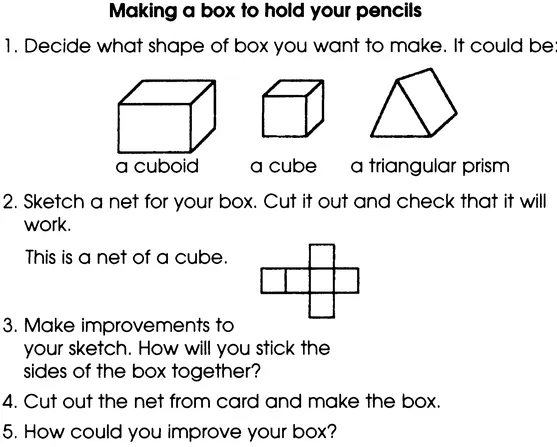
Figure 1.1 You may be asked to make worksheets, either hand-written ones or produced ones using a computer. They must be clear, easy to read, and correctly spelled.
One of the key considerations in building a good relationship with the teacher is to ensure that the lines of communication are strong. Your teacher will appreciate your sensitive approach. Do:
- share information about your particular interests and strengths. For example, you may have a hobby or skill which the teacher would find most beneficial for the children, such as an interest in making your own clothes, or being a keen cook, or perhaps you are particularly interested and knowledgeable about the local wildlife.
- discuss anything you are not sure about or find difficult. This could be a lack of knowledge and understanding about a scientific principle or a lack of confidence in using a new tool or technique in design and technology. Your teacher will appreciate your honesty and desire to learn and will offer advice and support.
- check that you know what you have to do. If you are unsure, then ask. This will help you to feel more confident when you work with the children and to ensure that you are working in the same way as the teacher.
- pass on any relevant observations about individual children. Sometimes you will observe that an individual child has grasped a new concept or idea, or you will notice that a child has become competent at using a particular tool. Your teacher will be pleased to hear of this and may add this information to her records book. At other times you may be given information about life at home by a child which you also think the teacher should know. You will learn much about individual children; take care to keep this information confidential within the school.
- work under the teacher's direction. The teacher has professional and legal responsibility for the children. You and the teacher will build a working partnership, but within this partnership the teacher has overall management control within the classroom.
Activity 1.1 Working in partnership Use Activity sheet 1 to record and think about your work in the classroom. Identify those things which you know you do well. List aspects of your work with which you feel confident. Think about what makes your work more difficult, or where you need some help. Make a list of these points as well. With your teacher's support, use these lists to guide you in discussing ways in which you can become even more helpful in the classroom.
Discussion Those things which you do well, and those areas where you feel confident, help you to support your teacher and the children in the classroom. Where you need help consider, with your teacher if possible, how this help can be given. You may:
- read up on areas where you feel you do not know enough;
- practise using tools, materials and equipment so that you become more familiar, and so more confident, with their use;
- become more familiar with how the school is organised so that you become more aware of who can help you with very specific questions.
As an assistant – supporting children
As a classroom assistant you are likely to be asked to undertake a variety of different tasks when working with children. These include:
- showing children what to do;
- encouraging children to talk about their work;
- offering constructive feedback;
- helping children with their work;
- working with children with special educational needs;
- working with children for whom English is their second language.
In this section each of the above ways of working will be considered in order to highlight good classroom practice. There are some general points to consider before you begin to work with a group or individuals in the classroom. Always check that:
- you know the purpose of the activity. In planning the activity the teacher will have had a specific learning outcome in mind for the children. It is important to keep that in your mind as you work, so that you can explain to the children the focus of the activity. Children learn best when they know the reason for learning about something.
- you have everything prepared and ready for the activity to begin. This may mean collecting materials from a store, or preparing a space to work in the classroom.
- you have considered the health and safety aspects of the activity and can remind the children of possible safety factors.
- you know the main points which you need to make in your demonstration or explanation.
- you have considered the vocabulary which you will use to introduce or encourage the children to practise in their responses.
Showing children what to do
Perhaps the teacher has asked you to demonstrate to a group of children how to use a cool glue gun safely, or how to collect minibeasts using a spoon without injuring them. Whatever the task, you will want to make the best use of the time and ensure that all the children have understood what it is they have to do. To work effectively while showing children what to do, try to ensure that you consider the following.
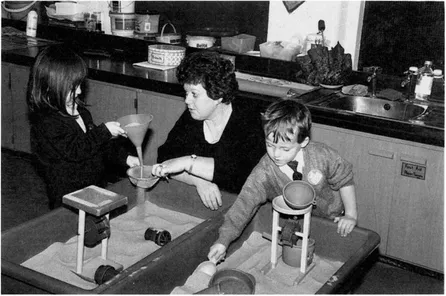
Figure 1.2 Always make sure that all the children can see what you are doing
- Ensure that all the children can see what you are doing. This may mean rearranging the furniture, or moving the children to a different place from where they will work. Alternately, you may want to break the group into two smaller ones and demonstrate separately to each.
- Avoid the children facing other groups of children. This may mean moving from where you had originally intended to work, but you do want to ensure that everyone in the group is listening and watching. Other children's activities may be very tempting for some of your group to watch!
- Make your explanations simple and clear. Ensure that you can be heard by all in your group, but remember you do not want to disturb another group by speaking too loudly. Choose carefully the vocabulary you will use, explain new vocabulary and ask children to repeat new words, and name newly introduced tools, equipment and resources.
- Check that all the children are watching and listening as you demonstrate and explain. Look at the children from time to time and try to establish eye contact with them as this will encourage them to focus upon what you are doing and saying.
- Ask questions as you demonstrate, to check that the children have understood. Such questions include:
- 'Why am I holding this like this?'
- 'What would happen if ...?'
- 'How could I ...?'
- Encourage the children to maintain their interest through asking individuals to choose materials, hold equipment and make measurements for you. This will help to maintain their interest and give you opportunities to check that they have understood the process.
- At the end of the explanation ask individuals to repeat what you said, or demonstrate by showing, so that you can check that they have understood.
Encouraging talk
Children's language development will improve as they are encouraged to discuss their work. This is most effectively done when open questions are used, such as:
- 'What if you ...?'
- 'Why do you think ...?'
- 'What else could you use?'
- 'Is there another way?'
- 'How could you ...?'
- 'What do you think will happen if ...?'
Such questions encourage the children to think about what they are doing and to make changes and improvements to their plans, models or investigations. 'What if?' questions help children to make predictions and to consider ways of making improvements to their work. In scientific investigations children will be encouraged to make and test their predictions and to begin to understand how and why things happen. Encourage the children to ask each other questions about their work so that they use and understand new vocabulary and develop effective and appropriate questioning skills.
Giving feedback
While the children are working you will want to talk with them about what they are doing. Give positive feedback and praise where it is due, but do not praise poor work as children need help and encouragement to achieve high standards of work. Instead, discuss with the child why you believe the work to be poor, and ask him or her what he or she would need to do in order to improve it. For some children, particularly those who find the work difficult or who find concentrating for a long time very demanding, it can help to praise the small, positive steps that they take during the lesson. When giving feedback, be constructive so that children can identify the strengths in their work, and know what they need to do in order to do even better. Ask 'What if?' questions to encourage children to evaluate their own work. When giving feedback try to:
- keep the discussion on the task. Some children may want to engage you in discussion about last night's television. This is not appropriate at this time.
- make time during the lesson to talk with each individual child in the group. Show them that you are interested in them and their work.
- encourage the children to ask and answer questions and to describe what they are doing. Listening to their talk will give you information about their level of u...
Table of contents
- Cover
- Title
- Copyright
- Original Title
- Original Copyright
- Contents
- Foreword
- Acknowledgements
- Introduction
- 1. Working together
- 2. Science and design and technology
- 3. Health and safety
- 4. Working with children
- 5. Life and living processes
- 6. Materials and their properties
- 7. Physical processes
- 8. Technology processes
- Activity sheets
- Bibliography
- Useful addresses
- Index
Trusted by 375,005 students
Access to over 1.5 million titles for a fair monthly price.
Study more efficiently using our study tools.
Frequently asked questions
Yes, you can cancel anytime from the Subscription tab in your account settings on the Perlego website. Your subscription will stay active until the end of your current billing period. Learn how to cancel your subscription
No, books cannot be downloaded as external files, such as PDFs, for use outside of Perlego. However, you can download books within the Perlego app for offline reading on mobile or tablet. Learn how to download books offline
Perlego offers two plans: Essential and Complete
- Essential is ideal for learners and professionals who enjoy exploring a wide range of subjects. Access the Essential Library with 800,000+ trusted titles and best-sellers across business, personal growth, and the humanities. Includes unlimited reading time and Standard Read Aloud voice.
- Complete: Perfect for advanced learners and researchers needing full, unrestricted access. Unlock 1.5M+ books across hundreds of subjects, including academic and specialized titles. The Complete Plan also includes advanced features like Premium Read Aloud and Research Assistant.
We are an online textbook subscription service, where you can get access to an entire online library for less than the price of a single book per month. With over 1.5 million books across 990+ topics, we’ve got you covered! Learn about our mission
Look out for the read-aloud symbol on your next book to see if you can listen to it. The read-aloud tool reads text aloud for you, highlighting the text as it is being read. You can pause it, speed it up and slow it down. Learn more about Read Aloud
Yes! You can use the Perlego app on both iOS and Android devices to read anytime, anywhere — even offline. Perfect for commutes or when you’re on the go.
Please note we cannot support devices running on iOS 13 and Android 7 or earlier. Learn more about using the app
Please note we cannot support devices running on iOS 13 and Android 7 or earlier. Learn more about using the app
Yes, you can access Supporting Science and Technology (1998) by Ann Montague-Smith,Lorna Winstone in PDF and/or ePUB format, as well as other popular books in Education & Education General. We have over 1.5 million books available in our catalogue for you to explore.