Fluid Frames
eBook - ePub

Fluid Frames

Experimental Animation with Sand, Clay, Paint, and Pixels

  1. 240 pages
  2. English
  3. ePUB (mobile friendly)
  4. Available on iOS & Android
eBook - ePub

Fluid Frames

Experimental Animation with Sand, Clay, Paint, and Pixels

About this book

Once the realm of a few stalwart artists, animating with sand, clay, and wet paint is now accessible for all filmmakers with an experimental frame of mind. Created directly under the camera with frame-by-frame stopmotion, this "fluid frame animation" provides a completely unique visual world for animators. While pioneering animators such as Caroline Leaf, Alexander Petrov, and Ishu Patel paved the way, the availability of frame capture programs, compositing software and digital workflow is opening up new avenues of exploration for artists of all experience levels. This book will walk you through setting up your studio, choosing and working with your materials, and combining the physical under-the-camera production with digital compositing and effects to enhance your animation.

¡ Firsthand advice from experimental animation veterans and rising stars in the field

¡ Covers the digital aspects of experimental animation, including the latest techniques in After Effects CC

¡

Tutorials and source files for under-the-camera approaches and After Effects enhancements on the book's companion website

In addition to the practical advice, you'll find historical and contemporary examples of successful films, step-by-step tutorials for working under the camera and working with the footage digitally, and interviews and tips from artists who are currently pushing the boundaries in these experimental mediums. Stacked with information and images from over 30 artists, this book is an indispensable resource for both the student and professional wishing to get their hands dirty in an increasingly digital world.

Frequently asked questions

Yes, you can cancel anytime from the Subscription tab in your account settings on the Perlego website. Your subscription will stay active until the end of your current billing period. Learn how to cancel your subscription.
At the moment all of our mobile-responsive ePub books are available to download via the app. Most of our PDFs are also available to download and we're working on making the final remaining ones downloadable now. Learn more here.
Perlego offers two plans: Essential and Complete
  • Essential is ideal for learners and professionals who enjoy exploring a wide range of subjects. Access the Essential Library with 800,000+ trusted titles and best-sellers across business, personal growth, and the humanities. Includes unlimited reading time and Standard Read Aloud voice.
  • Complete: Perfect for advanced learners and researchers needing full, unrestricted access. Unlock 1.4M+ books across hundreds of subjects, including academic and specialized titles. The Complete Plan also includes advanced features like Premium Read Aloud and Research Assistant.
Both plans are available with monthly, semester, or annual billing cycles.
We are an online textbook subscription service, where you can get access to an entire online library for less than the price of a single book per month. With over 1 million books across 1000+ topics, we’ve got you covered! Learn more here.
Look out for the read-aloud symbol on your next book to see if you can listen to it. The read-aloud tool reads text aloud for you, highlighting the text as it is being read. You can pause it, speed it up and slow it down. Learn more here.
Yes! You can use the Perlego app on both iOS or Android devices to read anytime, anywhere — even offline. Perfect for commutes or when you’re on the go.
Please note we cannot support devices running on iOS 13 and Android 7 or earlier. Learn more about using the app.
Yes, you can access Fluid Frames by Corrie Parks in PDF and/or ePUB format, as well as other popular books in Computer Science & Computer Science General. We have over one million books available in our catalogue for you to explore.

Section II

images
Thomas Parks.

Chapter 4
Animating With Sand and Other Powders

Notable Pioneers in Powder Animation
Nag and Gisèle Ansorge
Kazimierz Urbański
Caroline Leaf
Ferec CakĂł
Aleksandra Korejwo
Exploring the Technique
Exercise: Animating a Sandy Morph
The Sandy Studio
Materials
Tools
In Practice
Processing Footage
Planning a Longer Sand Project
Compositing 101
Layering in Sand
Exercise: Garbage Mattes
Blending Modes
Exercise: Paint Bucket Effect
Color Keying
Exercise: Applying a Color Key Effects Stack
Exercise: Animated Masks
Adding Color
Exercise: Hand Tinting in Photoshop
Exercise: Tints and Filters in After Effects
Combining Sand with Other Animation Techniques
Case Studies from Commercial Projects
Any child at the beach will quickly realize the vast expanses of sand are an open canvas for creative exploration. But who would think that those tiny grains could be a medium for harnessing pure light into nuanced chiaroscuro under the camera? 01
Sand animation encompasses delicate textures alongside bold, contrasting shapes and each artist that encounters the material interprets its uses in a new way. Powder animation, as it is sometimes called, is not limited to sand either. Salt is used in a similar way, as well as other granular substances.
If you have encountered sand animation before, it was probably in a film by Caroline Leaf or through a school assignment. 02 The fact that you are reading this book tells me that your interest was piqued, not spent, by this strange form of animation. Sand animation is my particular specialty, so as we begin to tap the potential of this little-known medium, I would like to personally welcome you into the world of sandy animation!

Notable Pioneers in Powder Animation

Sand animation came into its own in a time when animators were eagerly trying new materials and techniques. Swiss animator and historian Rolf Bächler observes,
Like with many other inventions in the history of film, there were several people in different places experimenting independently with similar materials at roughly around the same time. In the pre-digital world images could not be spread as easily and instantly as they are now, and a new animation technique had to travel physically as a film print if it was to be discovered elsewhere.1
Thus, the first influential films made exclusively with sand and other powdered substances came to light in several different areas of the globe.

Nag and Gisèle Ansorge

In Switzerland in the 1960s, Ernest “Nag” and Gisèle Ansorge were making live action commercial films to support their more experimental endeavors. 03
In one of these commercial films, they used sand to depict circulating blood.
As a pharmacist, Gisèle was familiar with loose material of all kinds, and tested every substance within reach, ending with quartz sand of a certain grain size … They would sift the sand for the right calibration, soak it in black china ink and then grind the dyed grains in a mortar.2
images
01 The Crossing – Marieka Walsh.
images
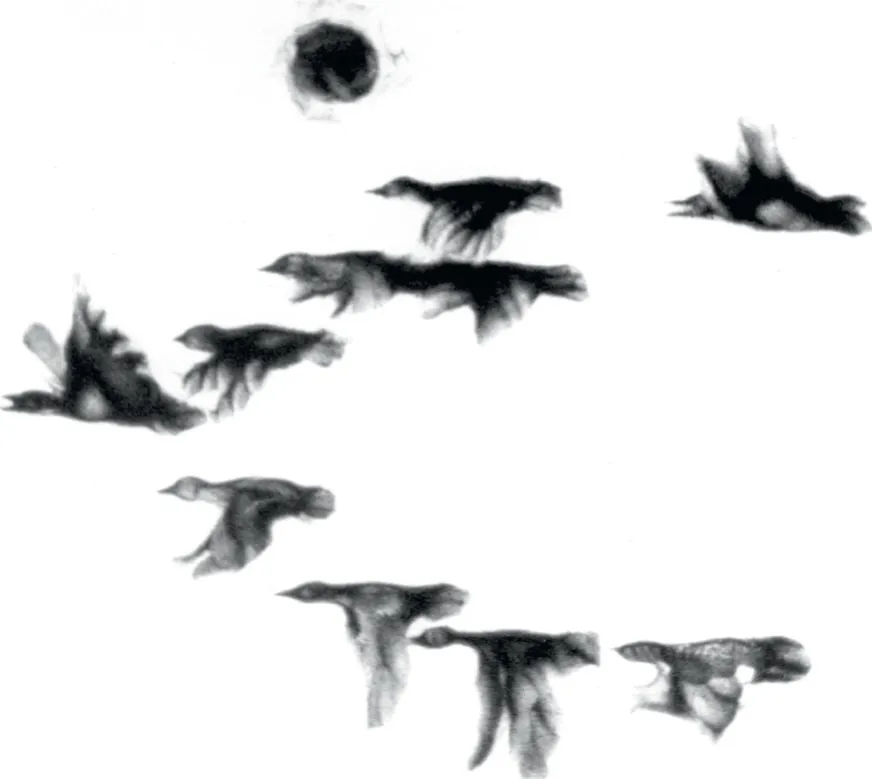
02 The Owl Who Married a Goose Š1974 National Film Board of Canada, All rights reserved.
After three years of experimenting and refining the technique, the Ansorges presented their first short, Les Corbeaux (The Ravens) in 1967 at the prestigious Annecy International Animation Festival. 04
The enthusiastic response, and their fascination with the material, led to a lifetime of work in sand resulting in ten short films and many commissions.
The Ansorges’s films are sometimes narrative and sometimes surreal journeys. Gisèle primarily manipulated the sand while Nag operated the camera and took care of the editing. One thing that marks their work is the use of imaginative transformations from scene to scene. Gisèle’s masterful command of the material combined with an unabashed approach to unconventional narrative led to films that explored the inner psyche of their relationship and philosophy. 05 The Ansorges also made a sustainable career out of sand animation by making films for children and advertisements. 06

Kazimierz Urbański

In Poland in the 1960s, Kazimierz Urbański was also experimenting with new techniques. He ...

Table of contents

  1. Cover
  2. Half Title
  3. Title Page
  4. Copyright Page
  5. Dedication
  6. Table of Contents
  7. Acknowledgements
  8. Introduction: The Experimental Frame of Mind
  9. Section I
  10. Section II
  11. Appendix A: Case Studies
  12. Appendix B: Artists’ Profiles
  13. Index