1 The self-reliant manager
To be able to demonstrate leadership, a manager must become self-reliant. By this I mean they must have thought through for themselves the major issues facing their business and their own area of responsibility; and have developed a clear understanding of the impact those issues will have. This self-reliance is the essential prerequisite of leadership.
As we approach the twenty-first century the major issues for management, certainly in Europe and North America, will focus sharply on the management of people as a vital asset. We will hear less and less about the cost associated with employment and more and more about the need to develop skilled and committed employees who can provide the business with a competitive edge. In order to do this effectively managers need to understand themselves, the internal environment of their organization and the external environment in which that organization exists.
Understanding Yourself
As managers we need a balanced view of ourselves in respect of our performance, our experience, our personal strengths and our development needs. That view needs to come from more sources than the usual one – performance review – and should be placed in the context of what we are trying to achieve in our current role as well as what we would like to see as the future.
It is also true that as managers we are going to have to take the responsibility for managing our own futures. Understanding our future in the light of all the issues raised in the book will place us in the position of thinking ahead of developments rather than reacting to them.
As organizations change, as numbers of people diminish and breadth of responsibilities widen so we are going to need to develop different skills in order to manage successfully. These will have less to do with direct line management of people and more to do with managing issues through others with whom we work or who report to other people.
Understanding The Internal Environment
As the traditional recruiting pools reduce right across Europe and North America so the challenge for us is to bring new groups into the mainstream workforce. Doing this will force us to reconsider the traditional patterns of work which have dominated the public and private sectors for the last sixty years or so.
As organizations flatten out and slim down, more and more of us will be working in roles that involve working across teams or departments rather than running them. We will need to work in temporary teams and informal groups and to find ways of gaining acceptance of decisions that do not necessarily follow the traditional line structure. We will have to learn to manage less through control and more through generating and maintaining individual commitment.
As organizations progress they will also have to learn continuously. To learn from change – which will be the only likely constant – from the past, from others. This will require considerable shifts in systems and processes, in management attitudes to risk and to training and development, which will have to become less concerned with formal off-the-job programmes and more with on-the-job coaching and learning.
The pace of change and the requirements to learn will finally give the full potential of information systems a chance to build real competitive advantage. The impact on a business of ‘re-engineering’ its processes, allowing individuals to develop greater responsibilities and generate commitment throughout an organization, could be dramatic. We will need, however, to learn to break the rules we have already and not automate what exists: we will need to develop new approaches to the management and use of information.
Real competitive edge will come from people fulfilling their highest potential in those areas where the business needs to have the highest quality. The identification of the core skills necessary to succeed will be an essential prerequisite of growth in the twenty-first century. Given this, it is important that standards are set, measured and rewarded in a positive manner.
Understanding The External Environment
Many of these internal organizational developments are in themselves the result of changes in the external environments in which we all operate. The impact that shifts in the demographics of Europe and North America will have on us will mean that we will have to diversify our workforce and think more clearly about our recruitment and development policies. Public awareness and concern over the environment have a whole range of implications. These will not only affect potential recruits but have real implications for sales and competitive positioning.
The question of ethics and the conduct of business has been forced very publicly on to our agendas. We will need to ensure that how we conduct ourselves will stand up to external as well as internal scrutiny.
Creating A Climate Of Success
Developing responses to these issues and moving towards an environment where management relies far more on commitment from individuals than on control processes will mean an eventual shift in the values of an organization. It will have a significant impact on the culture of the business.
In order to manage successfully we must demonstrate a coherent vision and strong values. We have to give strong leadership to give our businesses a competitive edge. This competitive edge will be based on values that establish people firmly at the centre of the businesses’ strategy.
By a value I mean a belief that is being put into action. A value is not a mission statement nor a plaque on the wall. Unless we are seen by those who work for us and those who purchase our goods and services to be living our corporate values we will fail. As managers we also have to realize that personal standards play a large role in this. They can underpin or undermine corporate values. You can have the largest quality department in the world but unless everyone is a quality manager no quality programme can be sustained in the longer term.
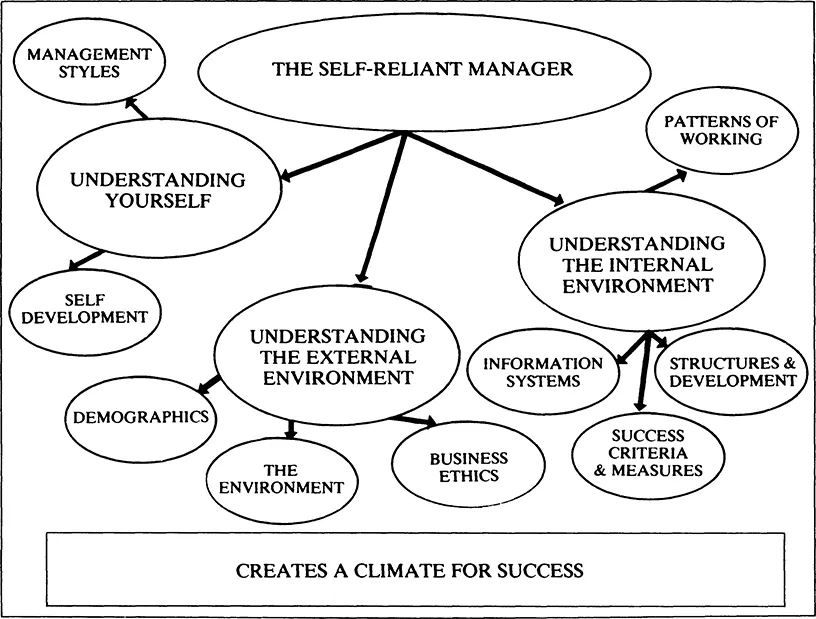
Figure 1.1 outlines the structure of the book and how it reflects these broad themes. Each of the chapters starts with a reference to this structure, showing where it fits in the overall picture. The chapters map out the key themes that are facing all of us in this area and provide simple models and prompts that allow exploration of those themes as they apply to the process of management.
Our challenge as managers is to develop a strategy tailored to our own business needs and then to turn our attention to appropriate solutions. We have to understand what is happening in our organizations and establish the gaps that need bridging to generate maximum performance. Regardless of the nature of our business or service, should we as managers fail to provide this leadership, then we will have missed a clear opportunity to establish a competitive advantage in an increasingly tight marketplace.
Before You Begin
Before you begin it is worth taking stock of where you are now and trying to establish some key objectives and success measurements that you can keep referring to throughout the book.
STOCKTAKE 1: WHERE AM I NOW?
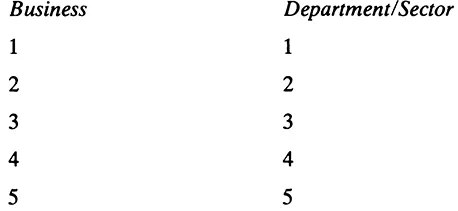
Think about your business and your own department/sector.
What are the five major people-based issues facing them at the moment?
Figure 1.1 The structure and themes of the book
Which issues are common to both?
1
2
3
4
5
Look at your common issue(s). Try to identify key themes against those discussed under each of the sections above. Establish the most important themes by looking for those which are most commonly involved in the issue(s) you have identified.
1
2
3
4
5
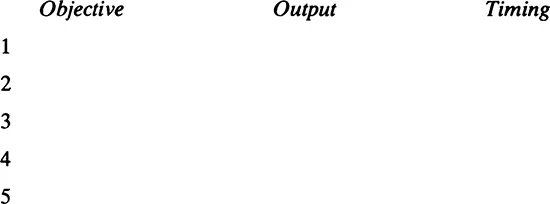
From the themes you have identified, set yourself five objectives that you would like to have achieved by the end of working through this book. Establish a measurable output and a time scale.
You have completed a stocktake of where you are now. From here you can attack this book in one of two ways: either start with the chapters where you feel you will get the most relevant material with which to address your objectives; or be structured, methodical – nay, managerial – and start with the next chapter. Either way, do cover those areas which at first sight do not seem as relevant – you may be surprised!