The East Asian War of 1592 to 1598 was the only extended war before modern times to involve Japan, Korea, and China. It devastated huge swathes of Korea and led to large population movements across borders. This book draws on surviving letters and diaries to recount the personal experiences of five individuals from different backgrounds who lived through the war and experienced its devastating effects: a Chinese doctor who became a spy; a Japanese samurai on his first foreign expedition; a Korean gentleman turned refugee; a Korean scholar-diplomat; and a Japanese Buddhist monk involved in the atrocities of the invasion. The book outlines the context of the war so that readers can understand the background against which the writers' lives were lived, allows the individual voices of the five men and their reflections on events to come through, and casts much light on prevailing attitudes and conditions, including cultural interaction, identity, cross-border information networks, class conflict, the role of religion in society, and many others aspects of each writer's world.
- 188 pages
- English
- ePUB (mobile friendly)
- Available on iOS & Android
eBook - ePub
About this book
Information
1 Warning of the tsunami to come
Xu Yihou, patriot in exile
Xu Yihou 許儀後 was a person of no historical significance. That is, until the moment in 1591 when, as Hideyoshi secretly rallied his men for invasion, Xu and his friend risked their lives to send a warning to China of the imminent danger. The name of a man whom we would have otherwise never known existed, was suddenly on the lips of leaders in China, Korea, and Japan; his account of Japan and its preparations was to find its way into history books in all three countries in the centuries which followed.1
Xu Yihou was important then and now, because he found himself in a crucial place at a crucial time: he was born in China but had been living in Japan for twenty years when he learned of Hideyoshi’s plan to conquer the Middle Kingdom. Previously considered beyond the pale of civilization by those at the political and cultural centre of Chinese society, the outbreak of war between Japan and China suddenly made Xu’s insights into Japan invaluable in China. Interesting to us now, are both how someone in his position saw China, Korea, and Japan, and what motivated him to risk everything for a country to which he could not expect to return.
Calm before the storm
In early 1592 clouds of war were gathering in the east, as Toyotomi Hideyoshi called on the Japanese lords to prepare for an invasion of Korea and China. The Ming government, however, remained blissfully unaware of the looming threat, as they had long ago lost official contact with the Japanese. The courts of Chosŏn (Korea) and the island-kingdom Ryūkyū became aware of Japanese intentions after Hideyoshi – freshly full of hubris having brought the whole of Japan to heel – requested their assistance with the invasion. The Chosŏn court was divided on whether the Japanese would actually invade and hesitated in sending a report to Beijing, while two Chinese men bringing reports from Ryūkyū were not taken seriously by Ming officials.2 The Ming court began to take heed only when in the second month of 1592 a secret report arrived from a Chinese man living in Satsuma, Japan. An unsolicited intelligence report, it gave extensive information on everything from Japanese politics to tactics in the field, and most significantly, insisted that the Japanese were preparing to invade China that spring. The author of this startling secret report was Xu Yihou.
Xu Yihou appears to have been a native of Wan’an county in Jiangxi province (Map 1.1) and from a humble background.3 In his report, Xu introduces himself by explaining that he and everyone on board his boat were captured by Japanese pirates twenty years earlier, off the coast of Guangdong province. Like many others from the coastal regions, Xu bitterly remarks, he was taken as a slave to Japan.4 Owing to his knowledge of medicine, however, he won the favour of the lord of Satsuma, Shimazu Yoshihisa 島津義久 (1533–1611) (whose family erected the stele shown in Figure 1.1). It is from this position that he not only gained access to militarily sensitive information, but – according to his own account, at least – with tearful pleading had been able to convince Hideyoshi to order action against the marauding pirates when he accompanied Yoshihisa to an audience with him.5 Xu’s preoccupation with pirate abductions suggests he was genuinely taken to Japan forcibly, rather than merely making such a claim in order to avoid being accused of breaching the ban on travel abroad, which made him automatically suspect simply for being in Japan.6
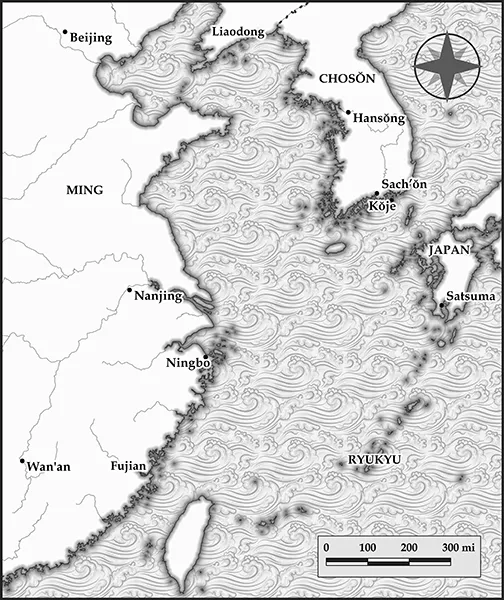
Map 1.1 Map showing the location of Wan’an county in Ming China’s Jiangxi province, Xu Yihou’s probable birthplace.
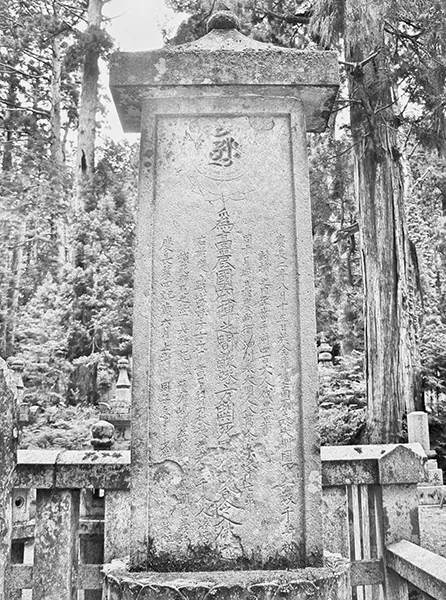
Figure 1.1 Memorial stele erected in 1599 by the House of Shimazu, which Xu Yihou served, dedicated to those ‘on both sides who died in battle in Korea’, in Mount Kōya 高野山, Wakayama.
Source: Photograph: author, 2013.
Learning of Hideyoshi’s intentions to invade China, Xu twice attempted to send warning to the Ming via trading ship captains, but remained doubtful as to whether or not his messages had arrived. Then, one day, when he visited a Buddhist temple, he by chance encountered a Chinese man that the monks there kept as a scribe. From the man’s speech Xu quickly recognized him as a fellow native of Jiangxi. This man’s name was Zhu Junwang 朱均旺. Originally a merchant, he had been sailing to northern Vietnam to offload ‘excess’ stock when he was captured by pirates and sold to the Satsuma temple.7 Xu arranged for Zhu to enter the lord of Satsuma’s household to copy medical books.8 When confirmation came of Hideyoshi’s plans to invade imminently, Xu says he was desperate to send word. He explains that he himself could not risk flight as his wife and children were with him, but that Zhu agreed to attempt escape and to carry the written report back to China.9 To complement Xu’s written account, we also have the report of the official who questioned Zhu on his arrival in China. Zhu claimed that Hideyoshi had already placed a general ban on Chinese people boarding ships, for fear of news of the planned invasion being leaked, and Shimazu Yoshihisa’s younger brother Yoshihiro 義弘 (1535–1619) refused to let the boat carrying Zhu go until Xu Yihou convinced him that it was only a trading boat and preventing its sailing could harm the all-important trade link with China.10
Despite the difficulties of delivery and initial Ming suspicions, Xu’s report successfully reached Beijing, and the government took it seriously. Perhaps this was because Xu’s was not the first warning the Ming had received, but it was probably also because Xu was articulate. His arguments were clear and his information on Japan detailed. It was the valuable insight he gave – proven true by subsequent events – that resulted in his report spreading so widely.
Before we consider the contents of Xu’s report, however, it is worth reflecting on the quite incredible role of spy that Xu seems to have adopted, entirely on his own initiative. For Xu did not stop with his secret report, but appears to have continued to take more and more risks during the remainder of the war.
Loyalty behind enemy lines
According to Satsuman records, some time after he sent his secret report Xu Yihou was betrayed, by a ‘person of the Ming’ (明人). Hearing the news, Hideyoshi was furious, apparently ordering that Xu be boiled in a recently forged cauldron. Xu’s master Shimazu Yoshihisa seems to have greatly valued Xu. He asked a favour of Tokugawa Ieyasu 徳川家康 (1543–1616), who on his behalf persuaded Hideyoshi not to execute Xu, arguing that should the news reach other countries it would reflect badly on the Japanese.11 In the end Xu had his chains removed and was released without further punishment.12 From Hideyoshi’s point of view this was an unwise move, as Chinese and Korean sources show that Xu continued in his efforts to aid the Ming defeat the Japanese.
As the information Xu provided proved largely accurate, he evidently became a name known to Chinese officials at court and on the battlefronts, as well as to Chosŏn officials.13 When the Ming Minister of War sent a team of spies to Japan they were instructed to seek out Xu and employ him as an agent with the mission of encouraging his master to betray Hideyoshi. In 1593 some of these spies reportedly reached Satsuma and made contact with Xu. Xu is said to have introduced a Ming military official disguised as a merchant to Shimazu Yoshihisa’s most trusted servant, Ijūin Tadamune 伊集院忠棟 (d. 1599)14 In his report, Xu had described Tadamune as sharing the Shimazu brothers’ respect for the Ming, and further as having wished to take his army to Taiwan or the Philippines and watch Hideyoshi’s invasion from the sidelines.15 Politically or militarily, this meeting does not appear to have had any consequences. Nevertheless, if it did indeed take place, then the meeting transformed Xu’s relationship with the Ming from one of unsolicited informant to active agent.
The governor (巡撫) of Fujian, Xu Fuyuan 許孚遠 (d. 1594), is recorded as having subsequently sent at least two more missions to Satsuma hoping to make use of Xu to form an alliance with Shimazu against Hideyoshi. Zhu Junwang is recorded as having joined the first of these, which made successful contact with Xu and returned optimistic of a potential alliance.16 Later, near the end of the war, a Chosŏn official who visited Fujian was told by an official there that the new governor of Fujian, Jin Xue 金學 (js. 1565), had sent someone to Satsuma to seek out Xu. This official boasted that Xu was encouraged with a large payment of gold to persuade Shimazu Yoshihisa to withdraw his forces, which Xu did, going in person to Sach’ŏn 泗川 in Chosŏn in 1598 – making the withdrawal of the Japanese indirectly the achievement of Jin Xue.17 At that point in the war Hideyoshi’s death had become known and the Japanese commanders were already keen to withdraw. Other sources suggest it was this fact – combined with short supplies – which sped Shimazu and the others’ withdrawal.18 Nevertheless, there may well be truth in the report that contact was again made with Xu on this occasion.
More than once, Xu is reported to have sent further messages to the Ming on his own initiative. According to the Ming spies who claimed to have met with him, Xu was sent to Chosŏn from Satsuma by Yoshihisa when in 1594 an epidemic broke out among Japanese forces on Kŏje Island 巨濟島, and that it was not his first visit to Chosŏn. Military Commissioner for the Ming campaign Song Yingchang 宋應昌 (1536–1606) mentions a further written report from Xu warning of Japanese duplicity in the on-going peace negotiations, and it seems he sent this while in Chosŏn.19 In 1594 a message from Xu reportedly reached the court in Beijing after being relayed via a chain of Chosŏn and then Chinese officials. A Korean man taken captive by the Japanese who escaped back to Chosŏn reported that he had met a man in Japan who had written him a note as follows:
I am Xu Yihou, a person of Wan’an county, Ji’an prefecture, Ji...
Table of contents
- Cover
- Half Title
- Series Page
- Title Page
- Copyright Page
- Dedication
- Table of Contents
- List of figures
- List of maps
- Preface
- Acknowledgements
- Stylistic conventions
- Prologue: witnesses to the largest conflict of the sixteenth century
- 1 Warning of the tsunami to come: Xu Yihou, patriot in exile
- 2 Glory in defeat: Yoshino Jingozaemon, warrior of Japan
- 3 Between a tiger and wolves: Oh Hၭimun, refugee in his own land
- 4 When peace broke: Hwang Shin, intrepid ambassador
- 5 Descent into hell: Keinen, reluctant invader
- 6 A world connected: Oh Hၭimun, one among many
- 7 Post war: stories retold, countries reimagined
- Epilogue: the war of 1592–1598 and national identity
- Index
Trusted by 375,005 students
Access to over 1.5 million titles for a fair monthly price.
Study more efficiently using our study tools.
Frequently asked questions
Yes, you can cancel anytime from the Subscription tab in your account settings on the Perlego website. Your subscription will stay active until the end of your current billing period. Learn how to cancel your subscription
No, books cannot be downloaded as external files, such as PDFs, for use outside of Perlego. However, you can download books within the Perlego app for offline reading on mobile or tablet. Learn how to download books offline
Perlego offers two plans: Essential and Complete
- Essential is ideal for learners and professionals who enjoy exploring a wide range of subjects. Access the Essential Library with 800,000+ trusted titles and best-sellers across business, personal growth, and the humanities. Includes unlimited reading time and Standard Read Aloud voice.
- Complete: Perfect for advanced learners and researchers needing full, unrestricted access. Unlock 1.5M+ books across hundreds of subjects, including academic and specialized titles. The Complete Plan also includes advanced features like Premium Read Aloud and Research Assistant.
We are an online textbook subscription service, where you can get access to an entire online library for less than the price of a single book per month. With over 1.5 million books across 990+ topics, we’ve got you covered! Learn about our mission
Look out for the read-aloud symbol on your next book to see if you can listen to it. The read-aloud tool reads text aloud for you, highlighting the text as it is being read. You can pause it, speed it up and slow it down. Learn more about Read Aloud
Yes! You can use the Perlego app on both iOS and Android devices to read anytime, anywhere — even offline. Perfect for commutes or when you’re on the go.
Please note we cannot support devices running on iOS 13 and Android 7 or earlier. Learn more about using the app
Please note we cannot support devices running on iOS 13 and Android 7 or earlier. Learn more about using the app
Yes, you can access China, Korea & Japan at War, 1592–1598 by J. Marshall Craig in PDF and/or ePUB format, as well as other popular books in Education & Teaching Arts & Humanities. We have over 1.5 million books available in our catalogue for you to explore.