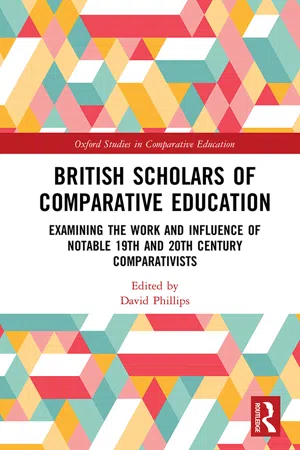
This book brings together studies of significant British scholars of comparative education from the 19th and 20th centuries. Providing a unique and detailed examination of the work of the founding British scholars of research in comparative education, British Scholars of Comparative Education considers the legacy of these key figures and emphasises the importance of understanding their achievements.
The advancement of research in comparative education has long been driven by the work of key scholars, ensuring it remains a lively area of educational research. This book highlights the pivotal role played by each scholar in driving a progression through humanistic and scientific approaches to new epistemological traditions within the field of comparative education. This in turn reveals critical historical-epistemological transitions that have had lasting impacts on the field.
With contributions from leading scholars in the field, this volume will be of great interest to researchers, academics, and scholars in comparative and international education.
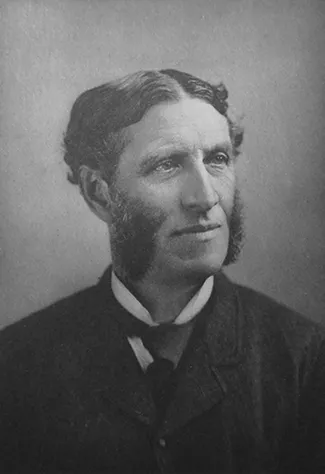
Source: Matthew Arnold’s Notebooks. With a Preface by the Hon. Mrs Wodehouse and a Photograph, London (Smith, Elder, & Co.) 1902.
Even in the unlikely event that he had wished to do so, Matthew Arnold could not have described himself as a comparativist. The Oxford English Dictionary records 1887 – the year before his death – as the time of the first known usage of the word, applied (as in the case of subsequent examples) in the context of linguistics, and so the term was not current in his day. In any case, as a distinguished editor of the original text of Culture and Anarchy has put it, Arnold ‘was no -ist of any kind’.1 Comparative education was not an established field of academic inquiry in Arnold’s time, though there had been significant individuals in the United States and Europe who had written important and influential reports on education ‘elsewhere’. Among them were Victor Cousin, whose accounts of public instruction in Prussia and of the state of education in Holland appeared in English translation in 1834 and 1838 respectively, and Horace Mann, whose important study of education in Germany and parts of Great Britain and Ireland was published in London in 1846. But important as Cousin and Mann were, together with others such as Alexander Dallas Bache, Calvin E. Stowe, and Henry Barnard in the United States, they were not self-evidently comparativists in the sense of belonging to a group of scholars developing a discrete field of educational inquiry. And this was the case too with Arnold.
Matthew Arnold (1822–1888) held for 35 years the demanding post of inspector of schools. On his retirement he admitted that his employment as an inspector had been ‘a “Hobson’s choice”, adopted under stress of matrimony, and for a time at least, almost insupportably irksome’.2 In his correspondence he often made clear how little pleasure he was able to take from his bread-and-butter occupation. Nevertheless, his reports on elementary schools in England, ‘beautifully written, crystal-clear and luminously persuasive’3 were important enough to be published by the Board of Education after his death.4
Arnold was engaged in three significant official investigations into educational provision in other countries. In 1859 he was appointed an Assistant Commissioner to the Newcastle Commission, which reported on the state of ‘popular education’ in England. A few years later, his task was to inquire into education in France, Germany, Switzerland, and Italy for the wide-ranging ‘Schools Inquiry Commission’ (Taunton Commission), reporting his findings in 1868. In November 1885, he was instructed by the Education Department to write a report, published in 1886, on elementary education in Germany, Switzerland, and France as part of the work of the Cross Commission on the working of the Elementary Education Acts. The texts of his first two reports were made more widely available through separate publication in various forms. Together with important accounts by two foreign investigators of an earlier generation – those of Victor Cousin (1792–1867) on Germany and Holland, and of Horace Mann (1796–1859) on Germany – Arnold’s studies provided a rich source of information and analysis that fed into the policy debate on education in England during his lifetime and beyond. His accounts entitle him to be counted among the 19th-century founders of comparative educational inquiry. Nicholas Hans called him the ‘pioneer of Comparative Education’ in England, though Hans had no more to say of Arnold’s work than that after visiting France and Germany he made ‘some caustic remarks on the differences in national character’.5 A.L. Rowse saw him as ‘the leading propagandist’ for secondary education in England, as a result of the publication of A French Eton, and described his influence as ‘vastly greater than his more publicized father’s’.6 Others have rightly emphasised his persistence in advocating an essential role for the state in educational provision in England, so that it could be possible to speak properly of an educational system.
The son of the famous headmaster of Rugby School, Dr Thomas Arnold (1795–1842), under whose aegis the school became one of England’s leading ‘public’ (independent) schools, Matthew Arnold was one of Victorian England’s most distinguished literary figures. He was educated at Winchester (briefly) and at Rugby, going on to Balliol College, Oxford, to read literae humaniores. After graduating, he was for a short time a teacher at Rugby School (‘the most hideous and squalid of occupations’, as he was to term such employment7) and was later elected to a fellowship of Oriel College, Oxford. In 1851, and through the good offices of Lord Lansdowne, one-time Lord President of the Council, whose personal secretary he became, and Ralph Lingen, Education Secretary (who had taught him at Oxford), Arnold was appointed an inspector of schools. By this time he was a published poet and on the cusp of an enduring literary reputation: he was elected Professor of Poetry at the University of Oxford in 1857.
Arnold was the quintessential man of letters, delving deeply into classical literature, philosophy, and theology in several languages. He read Greek and Latin with ease, could correspond in sophisticated French, and – though he struggled with the spoken language, describing his efforts as ‘shocking’ – had good knowledge of German. His reading was remarkably wide-ranging, as his carefully kept notebooks attest, recording extracts in Greek, Latin, French, German, and Italian together with long lists of books he had read or intended to read. His daughter Eleanor, the first editor of his notebooks, felt that they furnished ‘living illustrations of many of the principles again and again insisted upon in his prose writings’.8 It was in his prose writings that his ideas increasingly found their principal expression. Remembered for poetry that has certainly endured (‘Dover Beach’, ‘The Scholar-Gypsy’), Arnold found fame as an influential literary critic with Essays in Criticism and as a passionate social critic with Culture and Anarchy.
Robert McCrum has called Culture and Anarchy a work of wit, pithy definitions, and potent charm;9 Dover Wilson described it as ‘a masterpiece of vivacious prose, a great poet’s great defence of poetry, a profoundly religious book, and the finest apology for education in the English language’.10 This seminal text encapsulates Arnold’s philosophy: when it refers specifically to the situation in education in England, it draws on his experience and knowledge of provision on the continent of Europe, employed, as Arnold would do on many occasions, to argue for enlightened state control. The general point was that there existed in England a distrust of any centralised authority and a reluctance to depart from an entrenched localism:
While, on the Continent, the idea prevails that it is the business of the heads and representatives of the nation, by virtue of their superior means, power, and information, to set an example and to provide suggestions of right reason, among us the idea is that the business of the heads and representatives of the nation is to do nothing of the kind, but to applaud the natural taste for the bathos showing itself vigorously in any part of the community, and to encourage its works.11
The continental example showed how the laws of a centralised authority need not be complex and would avoid the bureaucratic mechanisms that bedevilled educational thinking in England:
[I]f we see that any German or Swiss or French law for education rests on very clear ideas about the citizen’s claim, in this matter, upon the State, and the State’s duty towards the citizen, but has its mechanical details comparatively few and simple, while an English law for the same concern is ruled by no clear idea about the citizen’s claim and the State’s duty, but has, in compensation, a mass of minute mechanical details about the number of members on a school-committee, and how many shall be a quorum, and how they shall be summoned, and how often they shall meet, – then we must conclude that our nation stands in more need of clear ideas on the main matter than of laboured details about the accessories of the matter, and that we do more service by trying to help it to the ideas, than by lending it a hand with the details.12
Arnold came to believe so passionately in the necessity of establishing the state’s responsibilities in education as a result of his three lengthy and very thorough official investigations of education abroad, principally in France and Germany.
Arnold on the continent: the Newcastle Commission
Arnold spent the best part of six months (March to August 1859) in France, Holland, Belgium, and Switzerland as one of the Newcastle Commission’s assistant commissioners. (Mark Pattison was appointed to report on Germany, and had been enjoined – much to his chagrin – to include Holland as well. Pattison argued strenuously against reporting on a country of which he had no knowledge, and so was able to limit his inquiry to Germany.13) Arriving in France on 16 March, Arnold plunged into a very busy schedule of engagements, by no means solely concentrating on his official tasks but seizing every opportunity to socialise and make contact with important people in cultural and political life. The editor of Arnold’s letters feels that the Commission was a rite of passage for him: it ‘must have made all those grubby little children in the provincial schoolrooms more depressing than ever’.14 He clearly relished the work, describing to his mother at the end of his tour the status his French hosts imposed on him: ‘This is my last appearance abroad as “Monsieur le Professeur Docteur Arnold, Directeur Général de toutes les Ecoles de la Grande Bretagne” – as my French friends will have it that I am.’15 Aside from his report’s inclusion in...
Table of contents
Cover
Half Title
Series Page
Title Page
Copyright Page
Table of Contents
List of figures
List of contributors
Image credits
Introduction
1. Matthew Arnold (1822–1888)
2. Michael Sadler (1861–1943)
3. Nicholas Hans (1888–1969)
4. Joseph Lauwerys (1902–1981)
5. Brian Holmes (1920–1993): the problem-solving approach in comparative education
6. Edmund King (1914–2002): other schools, other ideas, other methods, and ours
7. Vernon Mallinson (1910–1991)
8. Nigel Grant (1932–2003)
9. W.D. Halls (1918–2011) and Margaret Sutherland (1920–2011): two British Francophile comparativists
10. Colin Brock (1939–2016)
11. Peter Jarvis (1937–2018): comparative perspectives on adult and lifelong learning
Afterword
Index
Trusted by 375,005 students
Access to over 1.5 million titles for a fair monthly price.
Study more efficiently using our study tools.
Frequently asked questions
Yes, you can cancel anytime from the Subscription tab in your account settings on the Perlego website. Your subscription will stay active until the end of your current billing period. Learn how to cancel your subscription
No, books cannot be downloaded as external files, such as PDFs, for use outside of Perlego. However, you can download books within the Perlego app for offline reading on mobile or tablet. Learn how to download books offline
Perlego offers two plans: Essential and Complete
Essential is ideal for learners and professionals who enjoy exploring a wide range of subjects. Access the Essential Library with 800,000+ trusted titles and best-sellers across business, personal growth, and the humanities. Includes unlimited reading time and Standard Read Aloud voice.
Complete: Perfect for advanced learners and researchers needing full, unrestricted access. Unlock 1.5M+ books across hundreds of subjects, including academic and specialized titles. The Complete Plan also includes advanced features like Premium Read Aloud and Research Assistant.
Both plans are available with monthly, semester, or annual billing cycles.
We are an online textbook subscription service, where you can get access to an entire online library for less than the price of a single book per month. With over 1.5 million books across 990+ topics, we’ve got you covered! Learn about our mission
Look out for the read-aloud symbol on your next book to see if you can listen to it. The read-aloud tool reads text aloud for you, highlighting the text as it is being read. You can pause it, speed it up and slow it down. Learn more about Read Aloud
Yes! You can use the Perlego app on both iOS and Android devices to read anytime, anywhere — even offline. Perfect for commutes or when you’re on the go. Please note we cannot support devices running on iOS 13 and Android 7 or earlier. Learn more about using the app
Yes, you can access British Scholars of Comparative Education by David Phillips in PDF and/or ePUB format, as well as other popular books in Education & Education General. We have over 1.5 million books available in our catalogue for you to explore.