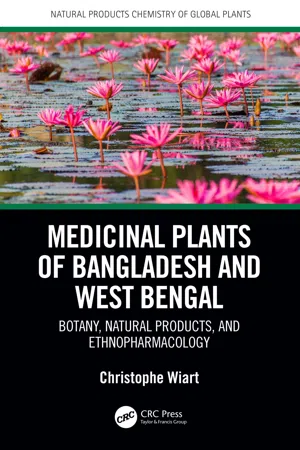
Medicinal Plants of Bangladesh and West Bengal is a complete compendium. It provides the scientific name, classification, local name(s), historical background, local medicinal uses, botanical description, chemical constituents, pharmacological activity and toxicology of more than 100 medicinal spices used in Bengal. Chemical structures of active constituents are provided as well as numerous references. This book is an indispensable tool for researchers, as well as graduates in various disciplines, including pharmacy, pharmacology, medicine, biotechnology, nutrition, cosmetology and drug development. It is also suitable for anyone who is looking for natural products as leads to be developed in therapeutics, functional nutrition or cosmetology.
Focuses on a group of herbs with economic importance – the spices. These herbs demonstrate the richness of chemical diversity and potential pharmacological applications
Features field photos with local healers, markets and mode of preparation as well as providing a complete monograph for each plant
Discusses the collection and observation of each medicinal spice and presents the ethnopharmacology recorded by the author in Bengal
Provides a wealth of scientific information on medicinal spices from an expert in the field
Fills an important niche due to the increasing global interests in natural foods and botanical drugs
Botanical description: It is an erect shrub growing to about 1.5 m tall. The stem is terete and stout. The leaves are decussate, simple, and exstipulate. The petiole is 0.5 cm long. The blade is coriaceous, oblong, 5–15 cm × 2–5 cm, glabrous, and holly-like. The inflorescence is a terminal spike, which is about 15 cm long. The calyx is 4-lobed and about 1 cm long. The corolla is bluish, tubular, 2–4 cm long, and producing a conspicuous recurved limb. The androecium includes 4 stamens adnate to the corolla tube and 1.5 cm long. The fruit is a dehiscent capsule that is 2.5 cm long.
Medicinal use: snake bite
Pharmacology: Extracts of the plant demonstrated anti-HBV activity1. The plant contains an anti-inflammatory alkaloid,2 an antibacterial benzoate, and phenylethanoid derivatives.3
1.2 Andrographis paniculata (Burm. f.) Wall. ex Nees
Synonym:Justicia paniculata Burm.f.
Local name: Kalmegh
Common name: Creat
Botanical description: It is an upright herb that grows up to 40 cm in height. The stems are finely quadrangular. The leaves are simple, decussate, and exstipulate. The petiole is minute. The blade is lanceolate, bitter about 1.5–5 cm × 0.5–2 cm, and shortly acuminate. The inflorescence is a terminal, leafy panicle. The calyx has 5 tiny lobes. The corolla is tubular, white, and up to about 1 cm long cm. The upper lip of the corolla is 3-lobed and the lower lip is entire. The lower lip presents purple spots. The androecium includes 2 stamens coming out from the corolla tube. The fruit is a fusiform upright dehiscent capsule, which is up to 1.5 cm long, and containing numerous tiny seeds.
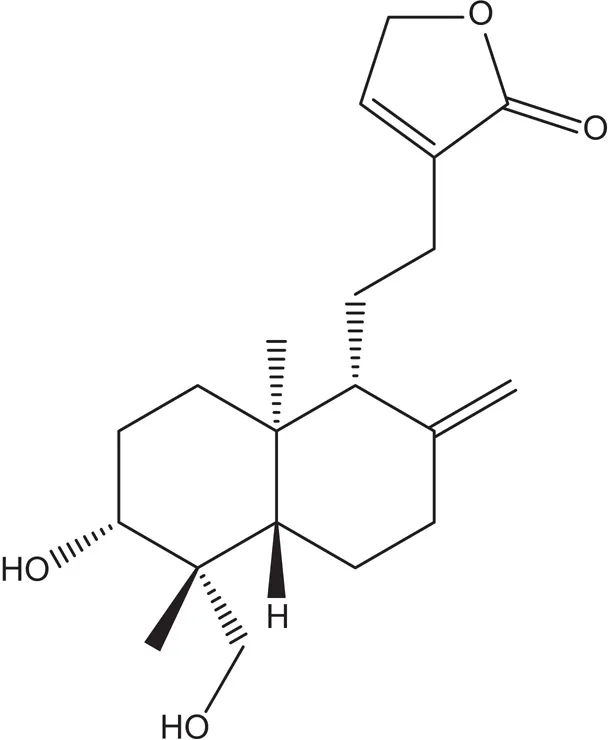
Pharmacology: The plant has been well studied pharmacologically.4 It contains andrographolide and 14-deoxyandrographolide which have anti-diabetic,5 anti-tumor,6 antibacterial,7 anti-HIV8 and anti-fungal9 properties.
Botanical description: It is a stout, erect herb that grows up to 1 m in height. The stem is quadrangular. The leaves are simple, exstipulate, decussate, and form spiny pseudo-whorls. The blade is sessile, 5–10 cm × 1.5–2.5 cm, hairy, and elongated. The flowers are arranged in axillary fascicles. The calyx is 4-lobed. The corolla is tubular, bluish, and about 2 cm long. The upper lip is 2-lobed whereas the lower lip is 3-lobed. The androecium includes 4 stamens. The ovary is oblong. The fruit is a dehiscent capsule that is oblong and contains 4–8 tiny seeds.
Medicinal use: diuretic
Pharmacology: Extracts of the plant exhibited hepatoprotective,10 anti-diabetic,11 and anti-inflammatory12 effects.
Botanical description: It is a spiny shrub that grows to about 1.5 m in height. The stem is terete. The leaves are simple, exstipulate, and decussate. The petiole is 1–2.5 cm long. The blade is membranous, narrowly elliptic, 4–10 cm × 1–5 cm, margin entire, and acute at apex. The flowers are arranged in clusters which are axillary. The calyx comprises 4 lobes. The corolla is plain yellow and 2–5 cm long. The he upper lip is 4-lobed, the lower lip is entire. The androecium protrudes from the corolla and includes 4 stamens. The gynoecium is ovoid and the stigma bifid. The fruit is a dehiscent capsule, which is in fusiform, about 1.5 cm long and contains 2 seeds.
Medicinal uses: boils, fever, diuretic, cough
Pharmacology: The extract of the plant exhibited anti-inflammatory13 activity. The plant contains iridoids with gastroprotective14 and antiviral15 activities.
1.5 Ecbolium linneanum Kurz.
Synonyms:Ecbolium viride (Forsk.) Alston; Justica ecbolium L.
Local name: Udujati
Common name: Blue fox tail
Botanical description: It is an herb that grows up to 50 cm tall. The stem is terete. The leaves are opposite, simple, and exstipulate. The petiole is 2 cm long. The blade is elliptic, base and apex acute, and 5–15 cm × 2–5 cm. The flowers are arranged in terminal and bracteate spikes up to 15 cm long. The calyx comprises 5 lobes. The corolla is tubular, up to 3.5 cm long and bluish-jade colored, and with 3 conspicuous lobes. The fruit is an elongated capsule up to 1.5 cm long and containing small tuberculate seeds.
Medicinal use: diuretic
Pharmacology: Extracts of the plant exhibited anti-inflammatory activity.16 The plant produces insecticidal lignans.17
Botanical description: It is a handsome shrub that grows to 3 m tall. The stems are quadrangular. The leaves are simple, opposite, and exstipulate. The petiole is 0.5–2.5 cm long. The blade is broadly lanceolate, wavy at the margin, dark green above, 5–20 cm × 2–10 cm, and with 9–12 pairs of secondary nerves. The flowers are arranged in terminal or axillary and bracteate spikes which are 10 cm long. The calyx presents 5 lobes whi...
Table of contents
Cover
Half Title
Series Page
Title Page
Copyright Page
Dedication Page
Table of Contents
Introduction to Book Series
Preface
About the Author
Chapter 1 Family Acanthaceae A.L. de Jussieu 1789
Chapter 2 Family Acoraceae Martynov 1820
Chapter 3 Family Agavaceae Dumortier 1829
Chapter 4 Family Alangiaceae A.P. de Candolle 1828
Chapter 5 Family Alismataceae Ventenat 1799
Chapter 6 Family Amaranthaceae A.L. de Jussieu 1789
Chapter 7 Family Anacardiaceae R. Brown 1818
Chapter 8 Family Annonaceae A.L. de Jussieu 1789
Chapter 9 Family Apiaceae Lindley 1836
Chapter 10 Family Apocynaceae A.L. de Jussieu 1789
Chapter 11 Family Araceae A.L. de Jussieu 1763
Chapter 12 Family Arecaceae Schultz-Schultzenstein 1832
Chapter 13 Family Aristolochiaceae A.L. de Jussieu 1789
Chapter 14 Family Asphodelaceae A.L. de Jussieu 1789
Chapter 15 Family Asteraceae Martynov 1820
Chapter 16 Family Balsaminaceae Berchtold and J. Presl 1820
Chapter 17 Family Bignoniaceae A.L. de Jussieu 1789
Chapter 18 Family Bombacaceae Kunth 1822
Chapter 19 Family Brassicaceae Burnett 1835
Chapter 20 Family Bromeliaceae A.L. de Jussieu 1789
Chapter 21 Family Burseraceae Kunth 1824
Chapter 22 Family Caprifoliaceae A.L. de Jussieu 1789
Chapter 23 Family Clusiaceae Lindley 1836
Chapter 24 Family Combretaceae R. Brown 1810
Chapter 25 Family Convolvulaceae A.L. de Jussieu 1789
Chapter 26 Family Crassulaceae J. Saint-Hilaire 1805
Chapter 27 Family Cucurbitaceae A.L. de Jussieu 1789
Chapter 28 Family Cyperaceae A.L. de Jussieu 1789
Chapter 29 Family Dilleniaceae R.A. Salisbury 1807
Chapter 30 Family Dioscoreaceae R. Brown 1810
Chapter 31 Family Dipterocarpaceae Blume 1825
Chapter 32 Family Dracaenaceae Salisbury 1866
Chapter 33 Family Ebenaceae Gürke 1891
Chapter 34 Family Euphorbiaceae A.L. de Jussieu 1789
Chapter 35 Family Fabaceae Lindley 1836
Chapter 36 Family Flacourtiaceae Richard ex A.P. de Candolle 1824
Chapter 37 Family Gentianaceae A.L. de Jussieu 1789
Chapter 38 Family Gesneriaceae Richard et A.L. de Jussieu ex A.P. de Candolle 1816
Chapter 39 Family Hydrophyllaceae R. Brown 1817
Chapter 40 Family Lamiaceae Martynov 1820
Chapter 41 Family Lauraceae A.L. de Jussieu 1789
Chapter 42 Family Lecythidaceae A. Richard 1825
Chapter 43 Family Leeaceae Dumortier 1829
Chapter 44 Family Liliaceae A.L. de Jussieu 1789
Chapter 45 Family Lythraceae Jaume Saint-Hilaire 1805
Chapter 46 Family Malpighiaceae A.L. de Jussieu 1789
Chapter 47 Family Malvaceae A.L. de Jussieu 1789
Chapter 48 Family Meliaceae A.L. de Jussieu 1789
Chapter 49 Family Menispermaceae A.L. de Jussieu 1789
Chapter 50 Family Molluginaceae Bartling 1825
Chapter 51 Family Moraceae Link 1831
Chapter 52 Family Moringaceae Martynov 1820
Chapter 53 Family Musaceae A.L. de Jussieu 1789
Chapter 54 Family Myrtaceae A.L. de Jussieu 1789
Chapter 55 Family Nymphaeaceae R.A. Salisbury 1805
Chapter 56 Family Oleaceae Hoffmannsegg et Link 1809
Chapter 57 Family Onagraceae A.L. de Jussieu 1789
Chapter 58 Family Orchidaceae A.L. de Jussieu 1789
Chapter 59 Family Oxalidaceae R. Brown 1818
Chapter 60 Family Pandanaceae R. Brown 1810
Chapter 61 Family Passifloraceae A.L. de Jussieu ex Roussel 1806
Chapter 62 Family Phyllanthaceae Martynov 1820
Chapter 63 Family Plumbaginaceae A.L. de Jussieu 1789
Chapter 64 Family Poaceae Barnhart 1895
Chapter 65 Family Polygonaceae A.L. de Jussieu 1789
Chapter 66 Family Ranunculaceae A.L. de Jussieu 1789
Chapter 67 Family Rhamnaceae A.L. de Jussieu 1789
Chapter 68 Family Rosaceae A.L. de Jussieu 1789
Chapter 69 Family Rubiaceae A.L. de Jussieu 1789
Chapter 70 Family Rutaceae A.L. de Jussieu 1789
Chapter 71 Family Santalaceae R. Brown 1810
Chapter 72 Family Sapindaceae A.L. de Jussieu 1789
Chapter 73 Family Sapotaceae A.L. de Jussieu 1789
Chapter 74 Family Scrophulariaceae A.L. de Jussieu 1789
Chapter 75 Family Smilacaceae Ventenat 1799
Chapter 76 Family Solanaceae A.L. de Jussieu 1789
Chapter 77 Family Sterculiaceae E.P. Ventenat ex Salisbury 1807
Chapter 78 Family Tiliaceae A.L. de Jussieu 1789
Chapter 79 Family Ulmaceae Mirbel 1815
Chapter 80 Family Urticaceae A.L. de Jussieu 1789
Chapter 81 Family Verbenaceae J. Saint-Hilaire 1805
Chapter 82 Family Vitaceae A.L. de Jussieu 1789
Chapter 83 Family Zingiberaceae Martynov 1820
References
Bibliography
Index of Binomial Denominations
Index of Common Names
Index of Local Names
Trusted by 375,005 students
Access to over 1.5 million titles for a fair monthly price.
Study more efficiently using our study tools.
Frequently asked questions
Yes, you can cancel anytime from the Subscription tab in your account settings on the Perlego website. Your subscription will stay active until the end of your current billing period. Learn how to cancel your subscription
No, books cannot be downloaded as external files, such as PDFs, for use outside of Perlego. However, you can download books within the Perlego app for offline reading on mobile or tablet. Learn how to download books offline
Perlego offers two plans: Essential and Complete
Essential is ideal for learners and professionals who enjoy exploring a wide range of subjects. Access the Essential Library with 800,000+ trusted titles and best-sellers across business, personal growth, and the humanities. Includes unlimited reading time and Standard Read Aloud voice.
Complete: Perfect for advanced learners and researchers needing full, unrestricted access. Unlock 1.5M+ books across hundreds of subjects, including academic and specialized titles. The Complete Plan also includes advanced features like Premium Read Aloud and Research Assistant.
Both plans are available with monthly, semester, or annual billing cycles.
We are an online textbook subscription service, where you can get access to an entire online library for less than the price of a single book per month. With over 1.5 million books across 990+ topics, we’ve got you covered! Learn about our mission
Look out for the read-aloud symbol on your next book to see if you can listen to it. The read-aloud tool reads text aloud for you, highlighting the text as it is being read. You can pause it, speed it up and slow it down. Learn more about Read Aloud
Yes! You can use the Perlego app on both iOS and Android devices to read anytime, anywhere — even offline. Perfect for commutes or when you’re on the go. Please note we cannot support devices running on iOS 13 and Android 7 or earlier. Learn more about using the app
Yes, you can access Medicinal Plants of Bangladesh and West Bengal by Christophe Wiart in PDF and/or ePUB format, as well as other popular books in Scienze biologiche & Farmacologia. We have over 1.5 million books available in our catalogue for you to explore.