This book examines the role of community filmmaking in society and its connection with issues of cultural diversity, innovation, policy and practice in various places. Deploying a range of examples from Europe, North America, Australia and Hong Kong, the chapters show that film emerging from outside the mainstream film industries and within community contexts can lead to innovation in terms of both content and processes and a better representation of the cultural diversity of a range of communities and places. The book aims to situate the community filmmaker as the central node in the complex network of relationships between diverse communities, funding bodies, policy and the film industries.
eBook - ePub
Community Filmmaking
Diversity, Practices and Places
- 286 pages
- English
- ePUB (mobile friendly)
- Available on iOS & Android
eBook - ePub
Community Filmmaking
Diversity, Practices and Places
About this book
Information
1 Community Filmmaking Diversity, Practices and Places
An Introduction
1 Background to the Collection: Investigating Community Filmmaking and Cultural Diversity
This collection has emerged following a UK government Arts and Humanities Research Council-funded project (2013–2014) led by the three editors of this collection. The one-year interdisciplinary study, Community Filmmaking and Cultural Diversity, researched the relationship between community filmmaking and cultural diversity in the UK. The main objective was to examine how cultural diversity and community filmmaking are understood and enacted by community filmmakers themselves and to what extent the practices and processes involved support cultural diversity in the film sector today. Within the project, we were keen to make a distinction between community filmmaking and other forms of participatory communication, such as community, ethnic and alternative or oppositional media. Therefore, the origins of this book are multi-faceted, and the book itself builds on a number of interactions, including an international conference that took place at the British Film Institute in 2014, in addition to interviews with community filmmakers and a workshop with academics and practitioners from the UK and Europe.
One of the important consequences of such exchanges was that an opportunity was created to capture various understandings of key concepts, such as ‘community filmmaking’ and ‘cultural diversity,’ terms that are opened up further in this collection. For example, participants at our workshop, which included academics, facilitators and practitioners, recognised that community filmmaking is a broad concept that can be understood and produced in different ways. On one level, there is participatory community filmmaking, where the filmmaking process is wholly managed and undertaken by the community involved. At the other end of the spectrum, there are community filmmakers who might film community issues but do not involve communities in participatory ways. In this book, a range of scholars and practitioners put forward their own interpretations of community filmmaking.
The levels at which community filmmaking operates are themselves incredibly diverse, ranging from filmmaking as everyday cultural practice for multiple communities and cultural groups so that they may engage in forms of self-representation, to films that are about local communities and have been produced for and screened to wide audiences, including on national television. There is a larger emphasis in this book on the former mode, particularly in relation to the diverse civic agendas that are so often to be found in participatory modes of community filmmaking. If ‘community filmmaking’ is a contested concept within this area of study, then so too is the notion of ‘cultural diversity’. Participants at our workshop highlighted that cultural diversity can be experienced in different ways depending on the filmmaker, community and context in question. As a consequence, a broad definition of cultural diversity is used in this book in order to better accommodate analysis of how various filmmakers and communities experience it. Within the collection, cultural diversity includes notion of gender, ethnicity, geography, social class and sexual orientation, and many of the chapters engage with the discursive processes at work in how these different dimensions of diversity are framed. The flexible nature of these key concepts permeates the selection of the chapters to be found here and represents the complexity of community filmmaking practices and politics that each of them interrogates.
1.1 Project Framework and Complexity Approach to Community Filmmaking within this Book
Within mainstream film studies, there is limited research on community filmmaking (Coyer 2007). There is more evidence of research on participatory video and amateur filmmaking (Zimmerman 1986, Odin 1999, Fox 2004), especially with the new affordance that digital technologies have supported in lowering the need for access to filmmaking tools (Fox 2004, Conway 2004, Kattelle 2004). Therefore, the community mode of filmmaking as a field of enquiry has been characterised by a lack of academic writings integrating theory and empirical fieldwork (Shand 2008). We suggest that many of the interdisciplinary areas of concern, including issues around skills, training and networks, the role that place and policies may have on community filmmaking practices and the role of cultural intermediaries, all require further academic research across disciplines, including media studies, business studies and creative industries research.
In recent years, a number of authors have highlighted the usefulness of applying complexity theory to better understand the creative industries. These industries sit at the junction of various rationales and dimensions – cultural, social, economic and civic. These are expressed in various ways in different places and are supported by policy in different ways. Comunian and Chapain have both, for example, used this complexity approach in their work (Comunian 2011, Comunian, Alexiou and Chapain 2012, Andres and Chapain 2015, Comunian and Alexiou 2015, Chapain and Hargreaves 2016). There is a growing amount of literature that applies this approach to the creative industries, given their transversal role in contemporary society (see Hartley et al. 2013 for a discussion). Using a complexity framework can also be helpful in reconciling creative acts taking place at the boundaries between amateur and professional such as community filmmaking (Chapain and Hargreaves 2016). As such, the use of complexity theory to support understandings of community filmmaking is relevant because it too sits at the junction of various dimensions, is expressed by different community filmmakers in particular communities and places and typically brings together both professional and amateur filmmaking activities. Recognising the complex set of cultural, economic and social relationships, goals and engagements in community filmmaking, our research adopts a complexity and multidisciplinary framework to use a wider perspective to consider the cascade of connections behind community filmmakers’ engagement with communities, industries, supporting institutions and audiences and may impact on the cultural product and experience delivered as well as on urban/local development (Comunian 2011). In the research at the origin of this book, we framed this by decomposing the relationship between cultural diversity and community filmmaking along five key sub-dimensions: 1) identity and representation; 2) film as a media; 3) film between arts and commercial practices; 4) innovation, skills and networks and 5) policy and place (see Figure 1.1). Many of these dimensions appear in the various contributions, but the chapters have been grouped in four different parts to reflect the main dimension that the author focuses on in his or her discussion.
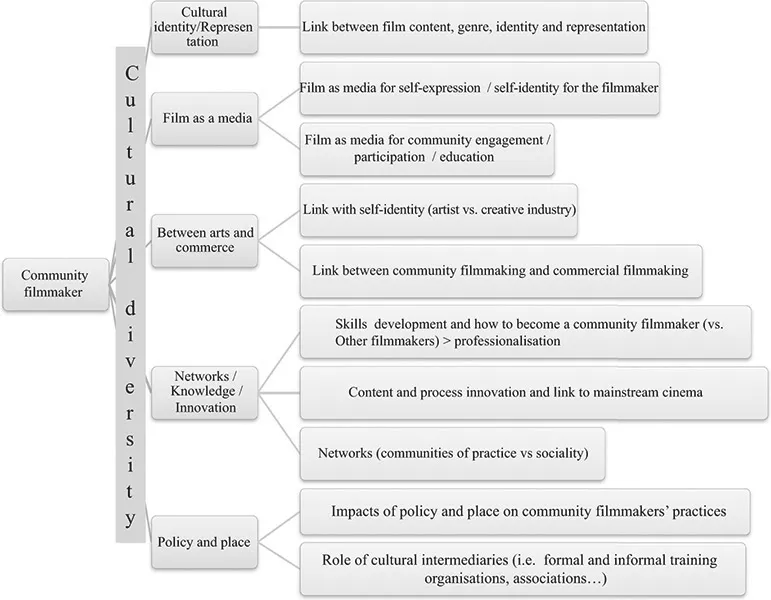
Figure 1.1 Understanding community filmmaking and cultural diversity through a complexity framework.
More specifically, our complexity framework can be understood from two perspectives: first as a theoretical framework that allows us to bring together a range of theories and understandings of community filmmaking from a multi-level analysis and second as a practical tool that allows us to bring together multidisciplinary contributions and to consider the value they add to our understanding, without prioritising any single perspective. The first theoretical advantage comes from the opportunity to consider the range of interactions and their scales taking place within the community filmmaking ecology. The micro level – the individual filmmaker and its decision-making process – sets the foundation for our understanding. However, we are aware that this micro level also needs to be reconciled with the role of networks, communities and practices ie. the meso level.
Our complexity approach to community filmmaking considers filmmakers as the key intermediary in community filmmaking processes. As such, we consider community filmmaking as a process in which the community filmmaker works in participatory ways with communities. We examine the role that lived (rather than discursively framed) cultural diversity plays in these filmmakers’ work and practice and how they experience this diversity. Similarly, communities, networks and individuals do not act in a vacuum but, at the macro level, have to deal with (both influencing and being influenced by) policy, place and macro structure that regulates the film sector and other relevant sectors (such as community policy) in society. With this insight, these various levels and their influences on each other become the scope of the research and the range of contributions assembled here to address this understanding (with a variety of foci), helping build a coherent and in-depth picture of the community filmmaking ecology. Second, from a practical perspective, the complexity framework adopted in the book expresses itself also in the way the collection is structured around various elements of community filmmaking as well as in the different theoretical understandings underpinning each individual chapter.
The existing literature on community filmmaking emerges primarily from Cultural and Media Studies, and there is much to be gained from bringing in further perspectives that deal with economic, social and spatial dynamics. One of the main objectives of the book, then, is to offer a more holistic and nuanced approach to the study of community filmmaking by looking at it from multidimensional and multidisciplinary perspectives. This is reflected in the four parts around which the book is organised and that sit at the heart of our research: cultural diversity, practices, place and the different ways community filmmaking engages communities through participatory processes. As such, the way we approach community filmmaking here is based on a complexity framework reflected in the structure of the book, its title, the range of themes addressed in its distinctive parts and the multidisciplinary background of the contributors.
1.2 Community Filmmaking and Diversity: A Research Agenda
The original research project and the chapters in this book engage with three key areas of importance in the understanding of community filmmaking and its practice in relation to issues of diversity. We believe these areas offer the potential to draw a new research agenda for the sector and its future development.
1.2.1 Diversity, Representation and Engagement in the Context of Community Filmmaking
The obvious relationship between different kinds of cinema (to the mainstream) and different kinds of (otherwise marginalised) cultural perspectives provided by community filmmaking positions it as a critical site of cultural and community significance. The community arts movement of the 1960s and 1970s was predicated on the ideological basis that community-led activity was representative of the people and merited public investment (Braden 1978). A range of community art forms, from theatre to dance to film have, since then, commonly been based around active participation and dialogue and geared towards notions of cultural democracy, community development and social transformation (Mayo 2000). Within the significant body of scholarly research around community media in general, important work has pointed to the range of tensions and power relations within different forms of participatory arts practice (Price 2015). This includes the work of those who have argued that the model of community arts and media of the 1960s and 1970s has shifted away from a collective, political basis to a depoliticised reflux in which the interest of the individual dominates (Mattaraso 2013). Community filmmaking also introduces us to some of the tensions and politics that have been identified as being at work in a range of other contexts of community arts and media.
The public and academic debates around the significance of cultural diversity to film culture are part of a broader set of debates around minorities and the media. These discussions have foregrounded questions of representation; for example how diverse communities of identity use cultural spaces for political and aesthetic projects that seek to rework or re-imagine dominant cultural representations; an alternative (or oppositional cinema) to the mainstream (cinema) (Pines and Willemen 1989, Mercer 1988, Hill 2004). Filmmaking that has emerged from the margins and is created and controlled by a community has typically involved a struggle over identity and cultural representation that has been activated on two fronts: the first in relation to material issues (both opportunities and constraints) such as funding, distribution and exhibition and the second in relation to aesthetics such as how new paradigms, languages and agendas might be formed through and within innovative modes of filmmaking that operate outside of a mainstream, institutionalised context (Malik 1996).
Running parallel are how other agendas – policy, economic, socio-political – have shaped the language and nature of engagement and participation that underpins traditional community-led filmmaking. Take, for example, the black and Asian-led collectively managed film workshops that emerged in the UK in the 1980s and that were to be deeply impacted on by these kinds of wider agendas and contexts. At the time, this screen workshop movement signalled a community commitment to the film-form, as well as an engagement with communities ‘from within’ and a distinctive creative practice (political, aesthetic and economic) outside of the mainstream film sector. Importantly, the wider independent collective film movement demonstrated “a commitment to the local community, and to pressure groups such as trade unions, feminist organizations and anti-racist bodies” (Petley 1989, 6). It is beyond the scope of this introduction to outline the changing conditions that led to the eventual demise of the workshop sector in the 1990s (see Malik 1996); however, it is a useful example of how community filmmaking, like any other cultural form, is necessarily caught up in the fluctuating cultural politics of arts subsidy and policy frames in addition to fast-moving technological changes that continue to redefine what film is and how it is produced, distributed and exhibited.
With regards to film policy, this tends to be based around the mainstream film sector rather than community filmmaking contexts and has today a strong emphasis on how film supports trading and sustainability, as well as cultural expression. Whilst the 2016 UNESCO report, “Diversity in the Film Industry”, specifically addresses the relationship between film and diversity, the focus is on the mainstream film industry on a global level. For Richard Curtis, the UK filmmaker and Advocate for UN Global Goals, as he marked the tenth anniversary of UNESCO’s 2005 Convention on the Protection and the Promotion of the Diversity of Cultural Expressions, “film has the power to give societies a sense of what needs to be done and can bring about positive changes (Curtis 2016). The connection that is frequently built between film and ideas of social change is notable, but discussions about the potential contribution of community filmmaking here remain limited. So there is a further motivation within this collection: to put the spotlight on the cultural and civic dimension of community filmmaking and the diverse forms of cultural expression that it facilitates through its processes of production and its dynamic contributions to the media environment, whilst at the same time engaging critically with issues of diversity, practices and places.
1.2.2 The Role of Networks and Diverse Practices in Community Filmmaking
The chapters highlight the importance of networks and networking for community filmmakers. This is also apparent in the general literature on creative industries and creative work (Comunian 2012, Jones 2010) as well as the commercial filmmaking sector (Cattani and Ferriani 2008). However, in the specific case of community filmmaking, the variety and range of networks involves spans beyond the sector, gatekeepers and funders to reach specific communities and social activist networks as well as charities and other social groups working on specific causes. Malik, Chapain and Comunian (2015) highlight that there are five main constituencies in the work of community filmmakers and summarise the range of platforms and organisations they need to engage and network with (see figure 1.2). These are essential to understand the practices that are explored in the book and their sustainability. These five constituencies are the main actors and agents identified in the community filmmaking eco-system:
1 Communities and community leaders. Most of the community filmmaking projects that are examined in this collection derive from a range of collaborations and negotiations between filmmakers (with a range of professionalism and expertise) and community groups and their representatives. Independently from the nature of the projects...
Table of contents
- Cover
- Half Title
- Title Page
- Copyright Page
- Table of Contents
- List of Figures and Table
- Preface
- Acknowledgments
- 1 Community Filmmaking Diversity, Practices and Places: An Introduction
- PART I Diversity, Representation and Community Filmmaking – a Short Introduction
- PART II Networks and Intermediaries in Community Filmmaking – a Short Introduction
- PART III Community Filmmaking: Practice in Places and for Places – a Short Introduction
- PART IV Engagement and Participation in Community Filmmaking – a Short Introduction
- Conclusion: Embracing the Complexity of Community Filmmaking and Diversity
- List of Contributors
- Index
Trusted by 375,005 students
Access to over 1.5 million titles for a fair monthly price.
Study more efficiently using our study tools.
Frequently asked questions
Yes, you can cancel anytime from the Subscription tab in your account settings on the Perlego website. Your subscription will stay active until the end of your current billing period. Learn how to cancel your subscription
No, books cannot be downloaded as external files, such as PDFs, for use outside of Perlego. However, you can download books within the Perlego app for offline reading on mobile or tablet. Learn how to download books offline
Perlego offers two plans: Essential and Complete
- Essential is ideal for learners and professionals who enjoy exploring a wide range of subjects. Access the Essential Library with 800,000+ trusted titles and best-sellers across business, personal growth, and the humanities. Includes unlimited reading time and Standard Read Aloud voice.
- Complete: Perfect for advanced learners and researchers needing full, unrestricted access. Unlock 1.5M+ books across hundreds of subjects, including academic and specialized titles. The Complete Plan also includes advanced features like Premium Read Aloud and Research Assistant.
We are an online textbook subscription service, where you can get access to an entire online library for less than the price of a single book per month. With over 1.5 million books across 990+ topics, we’ve got you covered! Learn about our mission
Look out for the read-aloud symbol on your next book to see if you can listen to it. The read-aloud tool reads text aloud for you, highlighting the text as it is being read. You can pause it, speed it up and slow it down. Learn more about Read Aloud
Yes! You can use the Perlego app on both iOS and Android devices to read anytime, anywhere — even offline. Perfect for commutes or when you’re on the go.
Please note we cannot support devices running on iOS 13 and Android 7 or earlier. Learn more about using the app
Please note we cannot support devices running on iOS 13 and Android 7 or earlier. Learn more about using the app
Yes, you can access Community Filmmaking by Sarita Malik, Caroline Chapain, Roberta Comunian, Sarita Malik,Caroline Chapain,Roberta Comunian in PDF and/or ePUB format, as well as other popular books in Media & Performing Arts & Film & Video. We have over 1.5 million books available in our catalogue for you to explore.