George Gemistos Plethon (c. 1360-1454) was a remarkable and influential thinker, active at the time of transition between the Byzantine Middle Ages and the Italian Renaissance. His works cover literary, historical, scientific, but most notably philosophical issues. Plethon is arguably the most important of the Byzantine Platonists and the earliest representative of Platonism in the Renaissance, the movement which generally exercised a huge influence on the development of early modern thought. Thus his treatise on the differences between Plato and Aristotle triggered the Plato-Aristotle controversy of the 15th century, and his ideas impacted on Italian Renaissance thinkers such as Ficino. This book provides a new study of Gemistos' philosophy. The first part is dedicated to the discussion of his 'public philosophy'. As an important public figure, Gemistos wrote several public speeches concerning the political situation in the Peloponnese as well as funeral orations on deceased members of the ruling Palaiologos family. They contain remarkable Platonic ideas, adjusted to the contemporary late Byzantine situation. In the second, most extensive, part of the book the Platonism of Plethon is presented in a systematic way. It is identical with the so-called philosophia perennis, that is, the rational view of the world common to various places and ages. Throughout Plethon's writings, it is remarkably coherent in its framework, possesses quite original features, and displays the influence of ancient Middle and Neo-Platonic discussions. Plethon thus turns out to be not just a commentator on an ancient tradition, but an original Platonic thinker in his own right. In the third part the notorious question of the paganism of Gemistos is reconsidered. He is usually taken for a Platonizing polytheist who gathered around himself a kind of heterodox circle. The whole issue is examined in depth again and all the major evidence discussed, with the result that Gemistos seems rat
The part of Gemistos’ philosophy that was openly presented as his own thought to a larger public consists of five texts containing several more or less general philosophical arguments and reasoning. We may divide them into two groups. The first one comprises a letter and two speeches of a political character, written most probably during 1414-1418. The other two texts are funeral orations, on the Despoina Cleope Malatesta and Empress Helen Dragas (Dragases), which were delivered much later, in 1433 and 1450 respectively, and will be discussed below.1 The earliest of the political texts is Gemistos’ letter to Manuel II, usually cited as On the Isthmus, which informs the Emperor about the situation in the Peloponnese, where Gemistos had moved probably not long before and proposes some basic reforms to improve the unfavourable situation there.2 The letter was written probably in 1414, just before the Emperor’s visit to the peninsula.3 The second text, philosophically by far the most interesting, is an advisory speech in ancient style, known as the Address to Theodore, the ruling Despot of Morea at that time. Written some time during 1416-1418,4 it urges the introduction of radical reforms in the Despotate. The reform proposals of the speech were further developed in the last of these texts, composed in 1418, the Address to Manuel, to whom On the Isthmus had been already directed. Moreover, the speech clearly presupposes that the Emperor also knows the Address to Theodore.5
According to what Gemistos says in On the Isthmus, the main reason why it is not possible to defend the Peloponnese against the incursions of ‘barbarians’, that is, the Ottoman Turks together with the Italians and other Latins, is its bad political organization
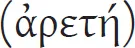
. The cases ofthe Lacedaemonians, Persians and Romans, as well as the barbarians who threaten the state now, show that their success or failure depends on the virtue
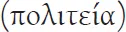
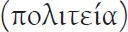
of a political organization or constitution
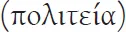
. The reform is thus urgently needed, because the present weakness ofthe Despotate can only be counterbalanced by an improvement in the quality of its political organization.6 In the Address to Theodore, Gemistos claims in a similar manner that the only way a city or nation can change from worse to better is through the reform of its state organization
. There is no other cause for its well-being or the opposite, because, even if it were the result of chance, the situation of such a city would be uncertain and could change quickly. The prosperity of a city is in fact mostly due to the virtue of its constitution and, conversely, it deteriorates if its constitution is corrupted.7
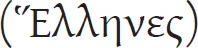
Gemistos then gives a series of examples from ancient mythology and history to support this claim. He connects the rise of the Greeks (Hellenes) with Heracles who, instead of lawlessness and outright injustice
, introduced law and zeal for virtue. Before him the Greek nation was ruled by strangers and was not significant in any way. Afterwards many successes in Greece and abroad may be remembered. Similarly the Lacedaemonians became the leaders of all the Greeks only after Lycurgus proclaimed his famous constitution, and they remained in this position as long as they were observing it. Then came the time of the Thebans whose leader, Epameinondas, had received a Pythagorean education. He, in turn, trained Philip of Macedon while the future king was kept as a hostage in Thebes. Philip, along with Aristotle, was responsible for the education of his famous son, Alexander the Great who, having conquered the Persians, was to become the leader of all the Greeks and the king of all Asia. The great power of the Romans (apparently not only of the ancient Romans, but also of the Byzantines) was due to the virtue of their constitution and it lasted till the Saracens appeared. These were originally a minor group of the Arabs and were subordinated to the Romans. When they introduced new laws and constitution to the Arabs, they managed to seize ‘the biggest and best part of the Roman empire’. They thus conquered Libya and introduced their political order
to the Persians as well as to many other nations who eagerly follow these laws and for this reason prosper. This is also true of the barbarians, that is, the Turks, ‘who have been very successful in the fight against us’ because ‘using these laws, they are greatly powerful’.8 We have a short treatise by Gemistos, or rather an excerpt from the work of the monk Theophanes, which shows that he was interested in the history of early Islam.9 Muhammad is there called ‘the leader of the Arabs and their lawgiver
’, which suggests that, for Gemistos, he was a political as well as a religious reformer, who was ultimately responsible for the military successes of his followers including the contemporary Turks.10
In the Address to Theodore Gemistos then sets the present political situation of the Byzantine state into a broader historical context, identifying the Turks, ‘the neighbouring barbarians, who have deprived our empire of many fertile parts’, with the ancient Parapamisadae. These were previously attacked and defeated by Alexander the Great and ‘his Greeks’, and now, after a long time, having become stronger, they seek revenge for his Indian campaign on ‘us ... the Greeks
’.11 The identity of ancient and present inhabitants of the Peloponnese is even more emphatically declared in the Address to Manuel: ‘We, whom you lead and rule over, are Greeks by descent
, as the language
and traditional culture
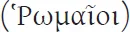
show.’12 This is a notorious and frequently quoted statement of Gemistos, who is thus often seen as a forerunner of modern nationalism.13 As is well known, the Byzantines usually called themselves Romans
and the name ‘Greek (Hellene)’ was normally reserved for the ancient Greeks, that is, pagans.14 We must not, however, overlook the context of the whole passage. Gemistos situates current events in a global historical perspective, in which they represent the long-term result of ancient Greek history. The Byzantines are thus threatened by the Ottoman attacks becaus...
Table of contents
Cover Page
Title Page
Copyright Page
Table of Contents
List of Tables
Acknowledgments
Acknowledgments
PART I: PUBLIC PHILOSOPHY
PART II: PHILOSOPHIA PERENNIS
PART III: QUESTION OF RELIGION
Appendix
Manuscript Supplement
Abbreviations
Primary Sources
Secondary Literature
Index of Passages Quoted
General Index
Trusted by 375,005 students
Access to over 1.5 million titles for a fair monthly price.
Study more efficiently using our study tools.
Frequently asked questions
Yes, you can cancel anytime from the Subscription tab in your account settings on the Perlego website. Your subscription will stay active until the end of your current billing period. Learn how to cancel your subscription
No, books cannot be downloaded as external files, such as PDFs, for use outside of Perlego. However, you can download books within the Perlego app for offline reading on mobile or tablet. Learn how to download books offline
Perlego offers two plans: Essential and Complete
Essential is ideal for learners and professionals who enjoy exploring a wide range of subjects. Access the Essential Library with 800,000+ trusted titles and best-sellers across business, personal growth, and the humanities. Includes unlimited reading time and Standard Read Aloud voice.
Complete: Perfect for advanced learners and researchers needing full, unrestricted access. Unlock 1.5M+ books across hundreds of subjects, including academic and specialized titles. The Complete Plan also includes advanced features like Premium Read Aloud and Research Assistant.
Both plans are available with monthly, semester, or annual billing cycles.
We are an online textbook subscription service, where you can get access to an entire online library for less than the price of a single book per month. With over 1.5 million books across 990+ topics, we’ve got you covered! Learn about our mission
Look out for the read-aloud symbol on your next book to see if you can listen to it. The read-aloud tool reads text aloud for you, highlighting the text as it is being read. You can pause it, speed it up and slow it down. Learn more about Read Aloud
Yes! You can use the Perlego app on both iOS and Android devices to read anytime, anywhere — even offline. Perfect for commutes or when you’re on the go. Please note we cannot support devices running on iOS 13 and Android 7 or earlier. Learn more about using the app
Yes, you can access The Philosophy of Gemistos Plethon by Vojtech Hladký in PDF and/or ePUB format, as well as other popular books in History & Inclusive Education. We have over 1.5 million books available in our catalogue for you to explore.