- 602 pages
- English
- ePUB (mobile friendly)
- Available on iOS & Android
eBook - ePub
Handbook of Incineration of Hazardous Wastes (1991)
About this book
Hazardous waste incineration technologies have been developed to meet the needs of a rapidly growing market that has been created by the proliferation of hazardous waste in modern society. These hazardous wastes are continuously produced as by-products of many industries. Vast stockpiles of hazardous or toxic wastes are currently residing in insecure landfills, thus imperiling our drinking water supplies. This handbook is written with the user in mind. An in-depth review of regulatory and technical requirements is presented with later sections regarding permitting and operation of incineration facilities. A comprehensive description of established and emerging incinerator technologies is included along with a number of alternatives. One of the key sections involves a detailed procedure for choosing an incinerator for a specific job, including engineering calculations and going through the bid process. Rationale for whether to buy or lease incineration equipment is included as well as details on trial burns, permitting strategies, and startup and operation of incinerators. A number of typical case histories of incinerators are presented for such diverse applications as cleaning up individual sites with transportable units, stationary facilities for in-house wastes, and incinerator ships. Appendices provide a convenient reference to physical properties, combustion parameters, detailed equipment performance nomographs and several sample permits including RCRA, TSCA and local permit applications. In summary, this handbook provides a single reference point for the potential user of an incinerator as well as a valuable source of design data for incinerator vendors, consultants and regulators.
Information
Chapter 1
Introduction
William S. Rickman
Hazardous waste incineration technologies have been developed to meet the needs of a market which has been created by the proliferation of hazardous waste in modern society. These hazardous wastes are continuously produced as by-products of many industries.
New regulations and economic incentives have driven the generators of wastes as well as the owners of the hazardous waste landfills toward treatment of wastes prior to their disposal in a safe and responsible manner (Figure 1). Hazardous wastes are treated with four major goals: to protect the public by detoxification and reduction in waste volumes and by the recovery of both energy and valuable chemicals.
The U.S. Environmental Protection Agency has formulated a hierarchy for coping with wastes (Figure 2). This hierarchy suggests that it is most desirable not to generate as many wastes as are currently generated. It is least desirable to dispose of the wastes generated in a landfill with no treatment at all. In between these two most and least desirable actions are the four goals of waste treatment prior to final disposal.
Advanced treatment technology is required to accomplish these four goals of detoxification, volume reduction, recovery of energy, and recovery of chemicals. There are a number of treatment technologies such as biological treatment, solidification, ion exchange, and solvent extraction which meet some of these goals. However, incineration is capable of achieving all four of these goals.
In the U.S. there is over 1 ton/year of hazardous waste generated for every man, woman, and child. This amounts to over 200 million ton/year of hazardous waste generated in the U.S. Of this amount roughly 30%, or over 60 million ton/year, is capable of being treated via incineration in order to detoxify or reduce the volume of material. Today, however, according to various estimates, only between 2 to 8% of the waste is being incinerated.
The waste incinerator market is composed of several major segments including site cleanups, continuous process plant wastes, and commercial waste facilities.
Site cleanups are batch jobs with no requirement for heat recovery since they are primarily the treatment of soil. Site cleanups are suited to a standard sizing because they are not an ongoing continuous stream of material but are more typically a 1- to 3-year cleanup of a contaminated site. There have been many such sites identified by the Environmental Protection Agency, with over 1000 on their National Priority List.
Continuous process plant-type incinerators are characterized as being permanently sited, usually with heat recovery. There is a matrix of demands on a continuous process unit including throughput and feed composition. For these reasons, the design normally requires some customizing for each application. Commercial waste incinerators are large central facilities accepting a broad spectrum of waste types. There are fewer than ten such units nationwide.
Vendors offer a wide range of incinerator products and services. Their minimum scope is as an equipment supplier, providing such items as combustors, heat recovery systems, control and instrumentation, and training and start-up services. Vendors may also offer to supply all of the above equipment plus fans, feeders, filters, structural work, civil work, and the erection of the unit on the site. This would be a total system supply. Finally, vendors may offer a turnkey service for processing a client’s waste at the site where it is generated, including system installation and operation.
In summary, this handbook provides a reference point for the potential user of an incinerator as well as a valuable source of design data for incinerator vendors, consultants, and regulators.
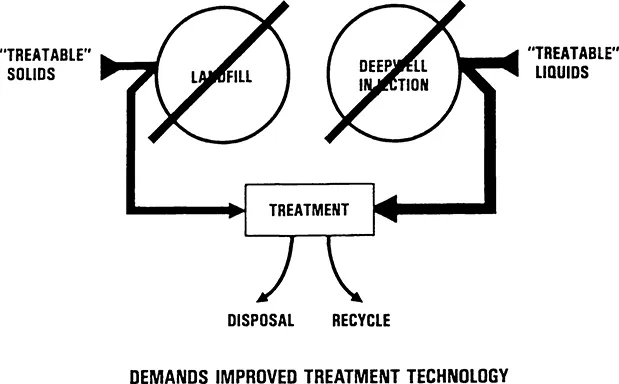
FIGURE 1. U.S. policy forcing treatment of hazardous wastes
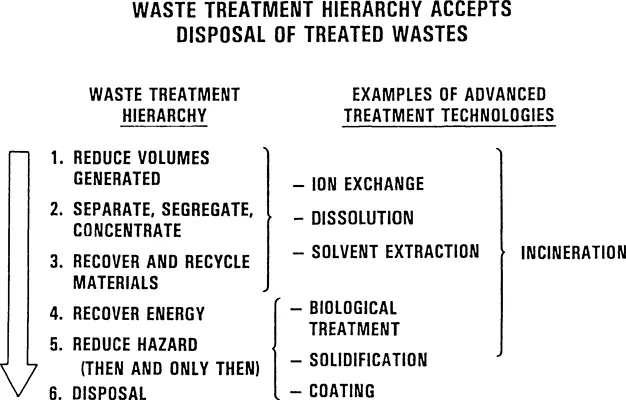
FIGURE 2. Waste treatment hierarchy accepts disposal of treated wastes
Chapter 2
Overview*
E. Timothy Oppelt
TABLE OF CONTENTS
- Introduction
- Background
- Historical Perspective
- Regulations
- Current Incineration Practice
- Incineration Practice
- Incineration Technology
- Waste Preparation and Feeding
- Combustion Chambers
- Air Pollution Control
- Residue and Ash Handling
- Other Hazardous Waste Thermal Destruction Systems
- Measuring Process Performance
- Performance Measurement
- Process Monitoring
- Emissions from Hazardous Waste Incineration
- RCRA-Regulated Performance and Emissions
- Metal Emissions
- Combustion By-Product Emissions
- Dioxin and Furan Emissions
- Ash and Air Pollution Control Residue Quality
- Predicting and Assuring Incinerator Performance
- Surrogates
- Performance Indicators
- Predicting Performance
- Environmental and Public Health Implications
- Risks from Single-Event Emissions
- Methods for Assessing Risks from Recurring Emissions
- Overall Risks from Long-Term Air Pollution Emissions from Hazardous Waste Incinerators
- Conclusions
- Remaining Issues and Research Needs
- Destruction Effectiveness on Untested and Unique Wastes
- Control of Heavy Metal Emissions
- Emissions of Combustion By-Products
- Real-Time Performance Assurance
- Role of Innovative Technology
- References
I. Introduction
Over the last 10 years, concern over improper disposal practices of the past has manifested itself in the passage of a series of federal- and state-level hazardous waste cleanup and control statutes of unprecedented scope. The impact of these various statutes will be a significant modification of waste management practices. The more traditional and lowest cost methods of direct landfilling, storage in surface impoundments, and deep-well injection will be replaced, in large measure, by waste minimization at the source of generation, waste reuse, physical/chemical/biological treatment, incineration, and chemical stabilization and solidification methods. Of all the “terminal” treatment technologies, properly designed incineration systems are capable of the highest overall degree of destruction and control for the broadest range of hazardous waste streams. Substantial design and operational experience exists, and a wide variety of commercial systems are available. Consequently, significant growth is anticipated in the use of incineration and other thermal destruction methods. The objective of this review is to examine the current state of knowledge regarding hazardous waste incineration in an effort to put these technological and environmental issues into perspective.
Hazardous waste management was the environmental issue of the 1980s and continues to be a major continuing environmental theme of the 1990s. Discovery of the numerous environmental catastrophes resulting from the improper disposal practices of the past have elevated public awareness and concern. Over the last 10 years, this concern has manifested itself in the passage of a series of federal- and state-level hazardous waste cleanup and control statutes of unprecedented scope and impact. At the federal level these laws include the Resource Conservation and Recovery Act of 1976 (RCRA) and its 4’ cradle to grave” provisions for controlling the storage, transport, treatment, and disposal of hazardous waste. In 1979, the polychlorinated biphenyl (PCB) regulations promulgated under Section 6(e) of the Toxic Substances Control Act (TSCA), prohibited the further manufacture of PCBs after July 2, 1979, established limits on PCB use in commerce, and established regulations for proper disposal. Cleanup of the uncontrolled waste sites created by poor disposal practices of the past was provided for in the Comprehensive Environmental Response, Compensation, and Liability Act of 1980 (CERCLA) which established a national fund (Superfund) to assist in remedial actions. The 1986 Superfund Amendments and Reauthorization Act (SARA) not only reauthorized the Superfund program but greatly expanded the provisions and funding of the initial act.
The most significant of all of these statutes were the 1984 amendments and reauthorization of RCRA. Termed the Hazardous and Solid Waste Act of 1984 (HSWA), these amendments established a strict time line for restricting untreated hazardous waste from land disposal. By 1990, most wastes were restricted and pretreatment standards were established based on the treatment levels achievable by Best Demonstrated Available Technology (BDAT).1
The impact of these various statutes will be a significant modification of waste management practices. The more traditional and lowest cost methods of direct landfilling, storage in surface impoundments, and deep-well injection will be replaced, in large measure, by waste minimization at the source of generation, waste reuse, physical/chemical/biological treatment, incineration, and chemical stabilization and solidification methods.
Of all the “terminal” treatment technologies, properly designed incineration systems are capable of the highest overall degree of destruction and control for the broadest range of hazardous waste streams. Substantial design and operational experience exists and a wide variety of commercial systems are available. Consequently, significant growth is anticipated in the use of incineration and other thermal destruction methods.2
While thermal destruction offers many advantages over existing hazardous waste disposal practices and may help to meet the anticipated need for increased waste management capacity, public opposition to the permitting of new thermal destruction operations has been strong in recent years.3 The environmental awareness and activism which spawned the major hazardous waste laws of the 1980s have, in many respects, switched to skepticism over the safety and effectiveness of the technological solutions which the laws were designed to implement. Citizen distrust of the waste management facility owners and operators remains. The ability of government agencies to enforce compliance is questioned. Reports of trace quantities of chlorinated dioxins, chlorinated furans, and other combustion by-products...
Table of contents
- Cover Page
- Title Page
- Copyright Page
- Dedication
- Preface
- The Editor
- Contributors
- Table of Contents
- Chapter 1 Introduction
- Chapter 2 Overview
- Chapter 3 Market Trends
- Chapter 4 Regulatory Requirements and the Permitting Process
- Chapter 5 Siting Issues and Public Acceptance
- Chapter 6 Established Technologies
- Chapter 7 Innovative Thermal Destruction Technologies
- Chapter 8 Combustion Calculations
- Chapter 9 Trial Burn
- Appendix A. Case Histories
- Index
Trusted by 375,005 students
Access to over 1.5 million titles for a fair monthly price.
Study more efficiently using our study tools.
Frequently asked questions
Yes, you can cancel anytime from the Subscription tab in your account settings on the Perlego website. Your subscription will stay active until the end of your current billing period. Learn how to cancel your subscription
No, books cannot be downloaded as external files, such as PDFs, for use outside of Perlego. However, you can download books within the Perlego app for offline reading on mobile or tablet. Learn how to download books offline
We are an online textbook subscription service, where you can get access to an entire online library for less than the price of a single book per month. With over 1.5 million books across 990+ topics, we’ve got you covered! Learn about our mission
Look out for the read-aloud symbol on your next book to see if you can listen to it. The read-aloud tool reads text aloud for you, highlighting the text as it is being read. You can pause it, speed it up and slow it down. Learn more about Read Aloud
Yes! You can use the Perlego app on both iOS and Android devices to read anytime, anywhere — even offline. Perfect for commutes or when you’re on the go.
Please note we cannot support devices running on iOS 13 and Android 7 or earlier. Learn more about using the app
Please note we cannot support devices running on iOS 13 and Android 7 or earlier. Learn more about using the app
Yes, you can access Handbook of Incineration of Hazardous Wastes (1991) by William S. Rickman in PDF and/or ePUB format, as well as other popular books in Technology & Engineering & Chemical & Biochemical Engineering. We have over 1.5 million books available in our catalogue for you to explore.