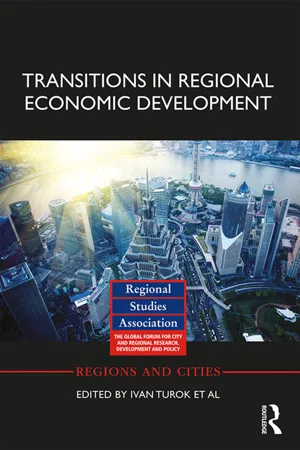
At a time of extraordinary challenges confronting the world, this book analyses some of the profound changes occurring in the development of cities and regions. It discusses the uncertainties associated with the stalling of hyper-globalization and asks whether this creates opportunities for resurgent regional economies driven by local capabilities, resource efficiencies and domestic production. Theory and evidence on socio-economic and environmental transitions underway in many regions are brought together. Implications of the shifting balance of global power towards emerging economies in the East are explored, along with the consequences of urbanization in the global South for politics and democracy. Dilemmas surrounding migration are also discussed, including whether incomers displace local workers and depress wages, or bring benefits in the form of know-how, new technology and investment. More integrative concepts of the region and theories of regional development are analysed, recognising the role of human capital, knowledge, innovation, finance, infrastructure and institutions. This was originally published as a special issue of Regional Studies.
eBook - ePub
Transitions in Regional Economic Development
- 342 pages
- English
- ePUB (mobile friendly)
- Available on iOS & Android
eBook - ePub
Transitions in Regional Economic Development
Global reversal, regional revival?
Ivan Turok, David Bailey, Jennifer Clark, Jun Du, Ugo Fratesi, Michael Fritsch, John Harrison, Tom Kemeny, Dieter Kogler, Arnoud Lagendijk, Tomasz Mickiewicz, Ernest Miguelez, Stefano Usai and Fiona Wishlade
Regional Studies celebrates its 50th anniversary with this special issue. This introductory article reflects back on developments since the journal was started and offers signposts for urban and regional research looking ahead. It outlines the changing global context for regional studies and identifies some of the ways in which the need for regional research is enhanced by the extraordinary challenges currently confronting the world. It also introduces important themes from the recent history of the journal that are likely to feature in future. This is obviously a highly selective exercise, given the considerable breadth and depth of regional research over the years.
Regional Studies was launched into a very different environment where regions and nations were more self-contained and there was little dispute that space, place and proximity really mattered. There were no personal computers and no containerized transport, let alone the internet and digital devices enabling instantaneous sharing of information around the world. In the global North this was an optimistic era of full employment, rising prosperity, and diminishing social and spatial inequalities. It was also a period of relative political stability and ignorance of global warming, although the Cold War and nuclear threats loomed large, and there was growing unrest in many countries in the global South. In the North, capital and labour markets were closely regulated, and social protection systems were extensive. Regional studies was a new academic field, with very few journals focused on the development of sub-national territories.
Circumstances have changed radically since then. ‘Globalization’ sums up many influential trends, typified by the interconnection of regions and nations through cross-border flows of trade, capital, labour, technology and information. The increasing openness of territorial boundaries and the integration of world markets have rewarded highly skilled groups, well-positioned city-regions and selected emerging economies, illustrated by the burgeoning of manufacturing in the Asian Tigers and China. However, freer trade and financial deregulation have also been accompanied by economic volatility and financial instability. Deindustrialization, privatization and welfare reductions in many advanced economies have enlarged social and spatial inequalities and left low- and middle-income groups worse off than before.
Falling transport costs, heightened human mobility and new communications technologies have prompted many economists to predict the death of distance and the demise of cities and regions. Geographers have recognized that conditions have changed by proposing a more permeable, fluid concept of the region, and focusing more on the shifting flows, movements and relationships between regions. Intensified competition for trade, talent and multinational investment has amplified regional disparities by raising the stakes for winning, and leaving less-favoured people and places further behind, bearing the costs of adjustment in lower wages and lost jobs, and fuelling a sense of injustice (Ballas, Dorling, & Hennig, 2017, in this issue). Regional research has become a broader, multidimensional endeavour, combining knowledge and insights from a range of disciplines beyond economic geography.
Since the financial crisis of 2008 and the protracted period of sluggish and unequal growth, the impetus to hyper-globalization has stalled. The frailty of most advanced economies, financial austerity and a shift in the balance of global power towards emerging economies in the East have provoked anxiety and frustration in the West (Dunford & Liu , 2016, in this issue). People have felt buffeted by forces beyond their control and questioned the benefits of intertwined world markets. Resentment towards new waves of immigration and international institutions has risen, epitomized by Britain’s vote to exit Europe, despite the broad economic consensus that this is not in the national interest. Global trade and capital flows have been pushed into reverse by rising protectionism and the dismantling of free-trade agreements. Tough patriotic sentiments are partly responsible for large financial penalties imposed on foreign multinationals such as Apple, Google, Deutsche Bank, Volkswagen and BP. At the very time when international cooperation is required to mitigate the risks of climate change, illicit financial flows, escalating refugee crises and mounting threats to security and peace, popular opinion seems to favour going it alone. Enlightened thinking also risks being crowded out by uncompromising – even chauvinistic – reactions to unfolding events.
The implications for cities and regions of the fracturing of the international order are highly uncertain. Resurgent popular nationalism would have profound consequences for all territories by inhibiting foreign direct investment (FDI), external trade and access to scarce skills, and forcing more reliance on local capabilities and domestic production. Some argue that a reversal of globalization would dampen economic progress and suppress opportunities for the world’s poorest places and populations. Alternatively, patriotic impulses that challenge ossified structures and global cartels could provoke a resurgence of regional enterprise and organic growth. Well-conceived policy reforms that disrupt business inertia could engender another Schumpeterian wave of innovation and creativity based on smaller-scale production. Dynamic regional multipliers might be spurred by efforts to localize resource flows so as to secure the supply of food and scarce materials, to cut energy consumption and to regenerate degraded ecosystems. Enhanced democratic constraints on business short-termism may also curb financial speculation and encourage longer-term investment in the real economy.
Furthermore, international disengagement might serve to bolster local and regional identities and renew a sense of place and belonging. This could elevate the obligations on civic leaders and rebuild confidence in the role of city and regional institutions. Against this, heightened perceptions of fear and insecurity could foster a ‘new tribalism’ through separatist movements, ethnic tensions, insurgent splinter groups and other inward-looking forces that escalate conflict and pull countries and regions apart. Much depends on whether democratic institutions are capable of responding to the genuine concerns of citizens and can meld different interests and values together in pursuit of shared agendas and collective solutions. Meanwhile, if the Paris climate deal leads to restrictions on fossil fuel extraction in favour of clean energy, this could make many regions reliant on oil, gas and coal reserves vulnerable to stranded assets and obsolete power generation systems. The case for regional studies is accentuated rather than diminished in all these scenarios. Systematic analyses of how different territories are adapting to the unravelling of globalization and introducing more holistic and resilient strategies to cope with the turbulence are urgently needed.
Over the last three decades, global integration has favoured selected metropolitan regions as strategic nodes in international networks of financial, trade and information flows. Dense agglomerations have functioned as knowledge hubs and magnets of entrepreneurial dynamism, thereby spurring wider productivity improvements and prosperity (Florida, Adler & Mellander, 2016, in this issue). Major city-regions with far-sighted leadership challenge nations as economic entities and demand enhanced powers and resources to lead the recovery and promote more robust growth. The new conventional wisdom suggests that compact and connected cities drive competitiveness, cohesion and sustainable development (Buck, Gordon, Harding, & Turok, 2005). Yet this is far from straightforward or inevitable. Addressing urban infrastructure deficits, integrating migrant populations through affordable housing, and mitigating spiralling carbon emissions presents a formidable policy agenda for which most city governments are ill-prepared. Traditional bureaucracies also lack the agility and capacity for cooperation and learning required to meet complex contemporary challenges. Taking a fashionable example, driverless cars could reduce congestion, improve efficiency, transform the urban environment and save many lives. Yet introducing this technology requires many subtle policy changes which depend on city and national authorities working hand in hand with car-makers and other interests to agree new safety standards, liability issues and more responsive regulatory procedures.
Meanwhile, the rural–urban transition in the global South has emerged as an exceptional opportunity to transform the structure of economies based on agriculture and mineral resources, and to raise living standards across the board. Yet, the scale and rate of urbanization in Africa and Asia are daunting challenges to avoid dysfunction and disaster if population growth in sprawling mega-cities continues to outstrip industrialization and local government’s capacity to manage the process through coordinated investments in land, infrastructure and housing (Turok, 2016). Concentrated populations can spur economic progress and political reform through the pressure for change and necessity-driven innovation (Glaeser & Steinberg, 2017, in this issue). Yet overcrowded human settlements can also foment social conflict over competition for scarce resources and vulnerability to flooding, fire, disease and other environmental hazards. There is a sizeable research agenda to understand the physical and institutional conditions required to ensure that urbanization fosters broad-based development, while avoiding the degradation and exploitation experienced historically in the North.
These socio-economic, spatial and environmental trajectories and transitions provide fertile terrain for theoretical development and empirical research. The character and determinants of lasting prosperity are bound to vary in different contexts, but not enough is known about how and why. Theories of economic development have variously and separately emphasized the importance of resource endowments, physical infrastructure, finance and productive investment, skills and human capital, advanced knowledge and innovation, and the quality of public institutions and leadership. The synergies between them are clearer and more concrete at the city and regional levels than at the national level. The respective roles of the state and market are also likely to vary in different circumstances, but in ways that are poorly understood and articulated at present. Neither exists in a vacuum or in an abstract ‘national’ space. A more balanced and interactive relationship between government, private sector and civil society may be important to come to terms with the wicked problems outlined above.
What follows is a selection of key themes that have featured prominently in Regional Studies in recent years and that are likely to be influential in future. The editors’ choice of topics is reflected in the papers selected for publication in this special issue.
THE CONCEPT AND POLITICS OF THE REGION
Despite sustained interrogation, the region remains an elusive concept with multiple meanings (Keating, 2016, in this issue). The debates over regions surround what and where they are; why and how they are there; and what they do and for whom they do it. These questions occupy academics and policy-makers like never before, in places and settings that demonstrate the growing significance of the region in many different realms (Paasi & Metzger, 2016, in this issue). Basic concerns relating to how we interrogate regions and regional development remain central. Emergent thinking challenges any notion that there is a singular logic for regions. It is vital for researchers to explore the raison d’être and diverse forms of such places and social constructs (Agnew, 2013).
This is apparent in the twin drivers of territorial change – economic and political – which remain at the heart of advancing regional studies. Over the last decade there has been significant effort to go beyond the classic territorial–relational divide, such that regions are seen as the outcome of both external relationships and internal territorial processes. The geographical extension and internationalization of regional studies are also noteworthy in bringing forward new knowledge and challenging established ideas. Accounts of Southern urbanism have done much to enliven recent debates (e.g., Lawhon, Silver, Ernstson, & Pierce, 2016; Roy, 2011); their new insights provoking researchers to reflect on how theories and concepts are shaped by geographical and political contexts (Peck, 2015).
Paasi and Metzger (2016, in this issue) take up the challenge of conceptualizing the region. All new approaches tend to criticize previous ideas for reducing or reifying the region in some way. Drawing on a Latourian reading of actor–network theory (ANT), they ask searching questions about who or what is ascribing regionality to an entity, how and why they are doing this, and what this concept actually does, or means, as a result? The implications are threefold: (1) it is a timely reminder that it is never the spatial form that acts, but rather social actors embedded in particular spatial forms who act; (2) emphasizing the role of agency and interests in regionalization processes reinforces the need for accounts grounded in everyday social practices; and (3) the regional studies community should enact and perform regional studies in such a way that its own research practices are open to scrutiny.
Keating (2016, in this issue) deepens the idea of construction in how regions are conceptualized and operationalized. Six frames are presented as drivers of political and institutional change, and keys for analysing the main dimensions of regionalism. Each frame is underpinned by different logics which, because they point in different directions, provide divergent outlooks on how regionalism should be practised. Often at work in the same places, this paper acts as a timely intervention demonstrating how conflicts are worked out in the realm of politics, which remains an important focus for regional studies.
The rapid pace of internationalization means that local and regional development is now recognized as a global concern. Pike, Rodríguez-Pose, & Tomaney (2016, in this issue) trace the evolution of thinking about territorial development over the last 50 years. They note that practices vary greatly, despite globalizing trends. More importantly, the experience of regionalism and the impacts of development are increasingly uneven too. Researchers retain an important role in improving the evidence base to inform more progressive, spatially balanced outcomes for localities and regions.
ENTREPRENEURSHIP IN A REGIONAL CONTEXT
Regional Studies has been a vital forum for debates about regional entrepreneurship, with special issues published in 1984, 1994, 2004 and 2014 (Fritsch & Storey, 2014). Efforts to understand the determinants of regional entrepreneurship have benefited from positioning the spatial context alongside the personality traits of business founders, their social relations and the degree of acceptance of self-employment within their regions (Kibler, Kautonen, & Fink, 2014; Westlund, Larsson, & Olsson, 2014). Important research has also been undertaken on entrepreneurship as a route out of poverty (Frankish, Roberts, Coad, & Storey, 2014), and the role of new business formation in stimulating regional competition, productivity and innovation (e.g., Berlemann & Jahn, 2015; Brixy, 2014).
An unresolved issue that warrants further research is to distinguish between different types of new business, and to identify innovative and knowledge-intensive start-ups that play a distinctive role in regional growth. Florida et al. (2016, in this issue) propose this line of investigation by bringing together city context, radical innovation and the formation of impactful new firms. They situate Jane Jacobs alongside Joseph Schumpeter at origins of entrepreneurshi...
Table of contents
- Cover
- Half Title
- Series
- Title
- Copyright
- Contents
- Citation Information
- Notes on Contributors
- 1. Global reversal, regional revival?
- 2. Contesting European regions
- 3. Foregrounding the region
- 4. Towards a theory of regional diversification: combining insights from Evolutionary Economic Geography and Transition Studies
- 5. Shifting horizons in local and regional development
- 6. Transforming cities: does urbanization promote democratic change?
- 7. Uneven and combined development
- 8. The city as innovation machine
- 9. Global investments and regional development trajectories: the missing links
- 10. Geographical linkages in the financial services industry: a dialogue with organizational studies
- 11. The interregional migration of human capital and its regional consequences: a review
- 12. Can transport infrastructure change regions’ economic fortunes? Some evidence from Europe and China
- 13. Future green economies and regional development: a research agenda
- 14. Analysing the regional geography of poverty, austerity and inequality in Europe: a human cartographic perspective
- Index
Trusted by 375,005 students
Access to over 1.5 million titles for a fair monthly price.
Study more efficiently using our study tools.
Frequently asked questions
Yes, you can cancel anytime from the Subscription tab in your account settings on the Perlego website. Your subscription will stay active until the end of your current billing period. Learn how to cancel your subscription
No, books cannot be downloaded as external files, such as PDFs, for use outside of Perlego. However, you can download books within the Perlego app for offline reading on mobile or tablet. Learn how to download books offline
Perlego offers two plans: Essential and Complete
- Essential is ideal for learners and professionals who enjoy exploring a wide range of subjects. Access the Essential Library with 800,000+ trusted titles and best-sellers across business, personal growth, and the humanities. Includes unlimited reading time and Standard Read Aloud voice.
- Complete: Perfect for advanced learners and researchers needing full, unrestricted access. Unlock 1.5M+ books across hundreds of subjects, including academic and specialized titles. The Complete Plan also includes advanced features like Premium Read Aloud and Research Assistant.
We are an online textbook subscription service, where you can get access to an entire online library for less than the price of a single book per month. With over 1.5 million books across 990+ topics, we’ve got you covered! Learn about our mission
Look out for the read-aloud symbol on your next book to see if you can listen to it. The read-aloud tool reads text aloud for you, highlighting the text as it is being read. You can pause it, speed it up and slow it down. Learn more about Read Aloud
Yes! You can use the Perlego app on both iOS and Android devices to read anytime, anywhere — even offline. Perfect for commutes or when you’re on the go.
Please note we cannot support devices running on iOS 13 and Android 7 or earlier. Learn more about using the app
Please note we cannot support devices running on iOS 13 and Android 7 or earlier. Learn more about using the app
Yes, you can access Transitions in Regional Economic Development by Ivan Turok, David Bailey, Jennifer Clark, Jun Du, Ugo Fratesi, Michael Fritsch, John Harrison, Tom Kemeny, Dieter Kogler, Arnoud Lagendijk, Tomasz Mickiewicz, Ernest Miguelez, Stefano Usai, Fiona Wishlade, Ivan Turok,David Bailey,Jennifer Clark,Jun Du,Ugo Fratesi,Michael Fritsch,John Harrison,Tom Kemeny,Dieter Kogler,Arnoud Lagendijk,Tomasz Mickiewicz,Ernest Miguelez,Stefano Usai,Fiona Wishlade in PDF and/or ePUB format, as well as other popular books in Business & Business General. We have over 1.5 million books available in our catalogue for you to explore.