Emerging Security Algorithms and Techniques
  1. 318 pages
  2. English
  3. ePUB (mobile friendly)
  4. Available on iOS & Android
eBook - ePub

About this book

Cyber security is the protection of information systems, hardware, software, and information as well from theft, damages, interruption or misdirection to any of these resources. In other words, cyber security focuses on protecting computers, networks, programs and data (in use, in rest, in motion) from unauthorized or unintended access, change or destruction. Therefore, strengthening the security and resilience of cyberspace has become a vital homeland security mission.

Cyber security attacks are growing exponentially. Security specialists must occupy in the lab, concocting new schemes to preserve the resources and to control any new attacks. Therefore, there are various emerging algorithms and techniques viz. DES, AES, IDEA, WAKE, CAST5, Serpent Algorithm, Chaos-Based Cryptography McEliece, Niederreiter, NTRU, Goldreich–Goldwasser–Halevi, Identity Based Encryption, and Attribute Based Encryption.

There are numerous applications of security algorithms like cyber security, web security, e-commerce, database security, smart card technology, mobile security, cloud security, digital signature, etc.

The book offers comprehensive coverage of the most essential topics, including:

  • Modular Arithmetic, Finite Fields
  • Prime Number, DLP, Integer Factorization Problem
  • Symmetric Cryptography
  • Asymmetric Cryptography
  • Post-Quantum Cryptography
  • Identity Based Encryption
  • Attribute Based Encryption
  • Key Management
  • Entity Authentication, Message Authentication
  • Digital Signatures
  • Hands-On "SageMath"

This book serves as a textbook/reference book for UG, PG, PhD students, Teachers, Researchers and Engineers in the disciplines of Information Technology, Computer Science and Engineering, and Electronics and Communication Engineering.

Frequently asked questions

Yes, you can cancel anytime from the Subscription tab in your account settings on the Perlego website. Your subscription will stay active until the end of your current billing period. Learn how to cancel your subscription.
No, books cannot be downloaded as external files, such as PDFs, for use outside of Perlego. However, you can download books within the Perlego app for offline reading on mobile or tablet. Learn more here.
Perlego offers two plans: Essential and Complete
  • Essential is ideal for learners and professionals who enjoy exploring a wide range of subjects. Access the Essential Library with 800,000+ trusted titles and best-sellers across business, personal growth, and the humanities. Includes unlimited reading time and Standard Read Aloud voice.
  • Complete: Perfect for advanced learners and researchers needing full, unrestricted access. Unlock 1.4M+ books across hundreds of subjects, including academic and specialized titles. The Complete Plan also includes advanced features like Premium Read Aloud and Research Assistant.
Both plans are available with monthly, semester, or annual billing cycles.
We are an online textbook subscription service, where you can get access to an entire online library for less than the price of a single book per month. With over 1 million books across 1000+ topics, we’ve got you covered! Learn more here.
Look out for the read-aloud symbol on your next book to see if you can listen to it. The read-aloud tool reads text aloud for you, highlighting the text as it is being read. You can pause it, speed it up and slow it down. Learn more here.
Yes! You can use the Perlego app on both iOS or Android devices to read anytime, anywhere — even offline. Perfect for commutes or when you’re on the go.
Please note we cannot support devices running on iOS 13 and Android 7 or earlier. Learn more about using the app.
Yes, you can access Emerging Security Algorithms and Techniques by Khaleel Ahmad, M. N. Doja, Nur Izura Udzir, Manu Pratap Singh, Khaleel Ahmad,M. N. Doja,Nur Izura Udzir,Manu Pratap Singh in PDF and/or ePUB format, as well as other popular books in Computer Science & Computer Science General. We have over one million books available in our catalogue for you to explore.

1

Modular Arithmetic

Afroz
Maulana Azad National Urdu University
CONTENTS
  • 1.1 Introduction to Number Theory
    • 1.1.1 Integers
    • 1.1.2 Integer Arithmetic
    • 1.1.3 Arithmetic Operations
  • 1.2 Modular Arithmetic
    • 1.2.1 Examples
  • 1.3 Additive Inverse
    • 1.3.1 Examples
  • 1.4 Multiplicative Inverse
    • 1.4.1 Examples
  • 1.5 Matrix
    • 1.5.1 Examples
  • 1.6 Linear Congruence
    • 1.6.1 Solution of Linear Congruence
  • 1.7 Prime and Relative Prime Numbers
    • 1.7.1 Prime Numbers
    • 1.7.2 Relatively Prime Numbers
    • 1.7.3 Examples
  • 1.8 Greatest Common Divisor (Euclid’s Algorithm, Bézout’s Algorithm, and Extended Euclid’s Algorithm)
    • 1.8.1 Greatest Common Divisor
      • 1.8.1.1 Examples
    • 1.8.2 Euclid’s Algorithm
      • 1.8.2.1 Example
    • 1.8.3 Bézout’s Theorem
    • 1.8.4 Extended Euclid’s Algorithm
      • 1.8.4.1 Examples
  • 1.9 Conclusion
  • References

1.1 Introduction to Number Theory

Number theory is a branch of pure mathematics which helps to analyze and study the integers. It is partly experimental and partly theoretical. The experimental part leads to questions and suggests the ways to answer the questions. The theoretical part tries to device an argument that gives a conclusive answer to the questions. It examines and accumulates numerical data, and then finds the relationships between different types of numbers (Anglin, 1995). Number theory is also called “The Queen of Mathematics.”

1.1.1 Integers

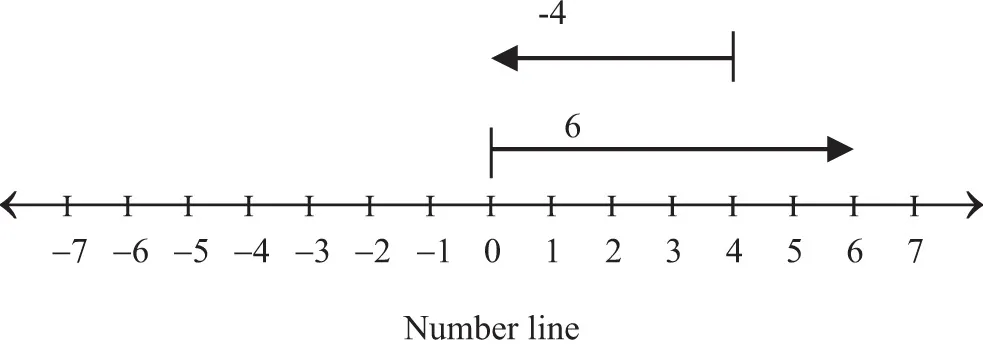
The positive, negative, and whole numbers with zero together are known as an integer, i.e., … −3, −2, −1, 0, 1, 2, 3 …, etc. An integer can be represented along a number line by an arrow (Gay, 2007). A positive number is represented by an arrow pointing to the right. A negative number is represented by an arrow pointing to the left. The total value of these numbers is represented by the length of the arrow.

1.1.2 Integer Arithmetic

The integer arithmetic is indispensable at most every area such as cryptology, computer graphics, mathematics, and several other engineering areas.

1.1.3 Arithmetic Operations

The most basic integer operations are as follows:
  1. Addition
  2. Subtraction
  3. Multiplication
  4. Division.
Thus, the mathematical operations of the above integers can be performed as follows.
  1. Addition: It states that the addition of two integers is always an integer.
    1. 2 + 5 = 7
    2. −7 + 4 = −3
  2. Subtraction: It states that the subtraction of two integers is again an integer.
    1. 6 − 4 = 2
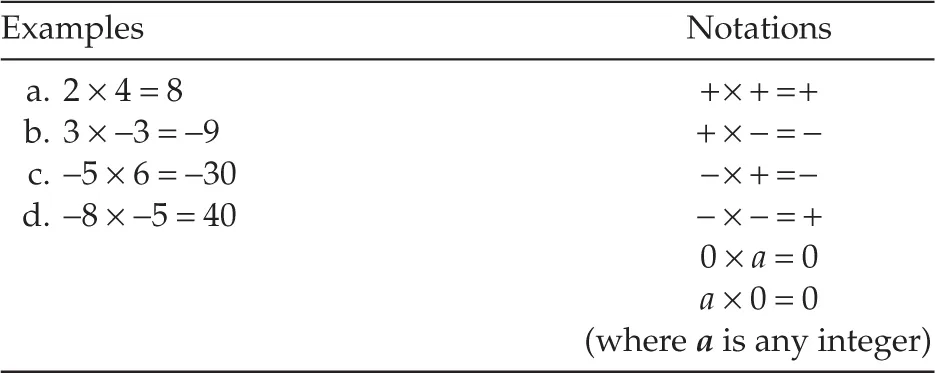
  3. Multiplication: It states that multiplying two integers always results in an integer.
  4. Division...

Table of contents

  1. Cover
  2. Half Title
  3. Title Page
  4. Copyright Page
  5. Table of Contents
  6. Perface
  7. Editors
  8. Contributors
  9. 1. Modular Arithmetic
  10. 2. Finite Fields
  11. 3. Prime Number
  12. 4. Discrete Logarithm Problem
  13. 5. Integer Factorization Problem
  14. 6. Symmetric Algorithms I
  15. 7. Symmetric Algorithms II
  16. 8. Asymmetric Cryptography
  17. 9. Post-Quantum Cryptography
  18. 10. Identity-Based Encryption
  19. 11. Attribute-Based Encryption
  20. 12. Key Management
  21. 13. Entity Authentication
  22. 14. Message Authentication
  23. 15. Digital Signatures
  24. 16. Applications
  25. 17. Hands-On “SageMath”
  26. Index