
eBook - ePub
Multi-Agent Systems for Concurrent Intelligent Design and Manufacturing
- 416 pages
- English
- ePUB (mobile friendly)
- Available on iOS & Android
eBook - ePub
Multi-Agent Systems for Concurrent Intelligent Design and Manufacturing
About this book
Agent Technology, or Agent-Based Approaches, is a new paradigm for developing software applications. It has been hailed as 'the next significant breakthrough in software development', and 'the new revolution in software' after object technology or object-oriented programming.
In this context, an agent is a computer system which is capable of act
Information
Part I: Introduction
1
General Introduction
1.1 Motivation
Agent technology is widely recognized as a promising paradigm for the next generation of design and manufacturing systems. Researchers have already applied agent technology to concurrent engineering, collaborative engineering design, manufacturing enterprise integration, supply chain management, manufacturing planning, scheduling and control, material handling, and holonic manufacturing systems. The technology is sufficiently mature that some universities have created graduate courses in this area in departments of Computer Engineering, Electrical Engineering, Mechanical Engineering, Manufacturing Engineering, and Industrial Engineering. Outside of these departments, an increasing number of engineers and researchers wish to learn more about this emerging technology. For background reference, there are relevant texts on AI or DAI such as “Artificial Intelligence: A Modern Approach” (Russell and Norvig, 1995), “Foundations of Distributed Artificial Intelligence” (O’Hare and Jennings, 1996), “Readings in Distributed Artificial Intelligence” (Bond and Gasser, 1988). For agent technology, there are also recent texts such as “Multi-Agent Systems” (Ferber, 1999, the translation of his 1995 work “Les Systèmes Multi-Agents”), “Software Agents” (Bradshaw, 1997), “Readings in Agents” (Huhns and Singh, 1997), “Agent Technology: Foundations, Applications and Markets” (Jennings and Wooldridge, 1998), “Multiagent Systems: A Modern Approach to Distributed Artificial Intelligence” (Weiss, 1999), as well as more specialized works in the series “Lecture Notes in Artificial Intelligence” and in numerous conference and workshop proceedings. However, there are no reference books on agent technology for concurrent engineering design and manufacturing describing systematically and synthetically the relevant theories and methods and giving practical information and examples for developing multi-agent systems in this domain. The objective of this book is to fill this gap.
1.2 Book Organization
The book is divided into four parts:
- - The first part describes concurrent engineering design and manufacturing and its requirements and also gives an introduction to Distributed Artificial Intelligence and to agent technology.
- - The second part discusses key issues in developing agent-based concurrent engineering design and manufacturing systems: knowledge representation, agent architectures, system organization, learning, communication, cooperation, coordination, negotiation, conflict resolution, and ontology. Most of these issues are common to agent-based systems, but some are specific to agent-based concurrent design and manufacturing systems. These issues are discussed using examples from engineering design and manufacturing.
- - The third part reviews significant and relevant agent-based systems. All selected projects are described in a unified format, to facilitate understanding and comparison of the different approaches.
- - The fourth part introduces methodology, standards, frameworks, tools, languages, and finally a general procedure for building agent-based concurrent engineering design and manufacturing systems.
A note about the title: Concurrent Engineering is now evolving into Collaborative Engineering (see for example, Mills 1999) and the technology described in this book will provide support for this new area. However, we use the widely understood term Concurrent Engineering in this book because of its familiarity to most practitioners.
1.3 How to use this Book
This is the first book systematically describing the principles, key issues, and applications of agent technology in relation to concurrent engineering design and manufacturing. It can be used as a reference book by professional engineers and researchers in this area. It can also be used as a university course text or as a supplementary text for graduate students.
It is not strictly necessary to read through this book sequentially. However, readers with little knowledge in the area should read Chapter 2 first to understand the requirements for next generation concurrent design and manufacturing systems as well as concepts and terms used throughout the book, and then read Chapter 3 for an introduction to distributed artificial intelligence and agent technology.
Chapters 4 to 12 are on key issues that are important for implementing agent-based concurrent design and manufacturing systems. However, Chapter 6 (Agent Architectures) and Chapter 7 (System Architecture) are perhaps more important than the other chapters in this sequence. Thus, it is recommended that Chapters 6 and 7 be read next, then Chapters 8, 9, 10 and so on. Chapters 4 and 5 may be returned to later although readers who have some knowledge in this area may start the second part of the book with Chapters 4 and 5.
Chapters in the third part dealing with application examples are optional. Readers may wish only to read the chapters related to their interests or projects, in this section. Many cited references and web sites are provided for those who need more detailed information. Readers, such as graduate students, who want to compare the different approaches used in various projects may need to work through all three application chapters, or through the sections in each chapter relevant to the application domain of interest.
The two chapters in the last part of the book are written primarily for practitioners in this area and provide some direction on selecting an appropriate methodology, framework, tools and programming languages when implementing a prototype. It is strongly suggested that the cited web sites be visited to get updated information, since commercial software especially can be upgraded within a short time period. The final chapter provides some guidelines for practitioners to follow during prototype design and implementation.
References
- Bond, A.H. and Gasser, L. (eds) (1988) Readings in Distributed Artificial Intelligence, Morgan Kaufmann, San Mateo, CA.
- Bradshaw, J. (eds.) (1997) Software Agents, MIT Press.
- Ferber, J. (1995) Les Systèmes Multi-Agents, InterEditions, Paris.
- Ferber, J. (1999) Multi-Agent Systems, Addison-Wesley.
- Huhns, M. and Singh, M. (eds.) (1997) Readings in Agents, Morgan Kaufmann.
- Jennings, N. and Wooldridge, M. (eds.) (1998) Agent Technology: Foundations, Applications and Markets, Springer.
- Mills, C.A. (1999) Collaborative Engineering as an Element of the Integrated Manufacturing Enterprise, CASA/SME Blue Book Series, Society of Manufacturing Engineers.
- O’Hare G.M.P. and Jennings, N. (eds.) (1996) Foundations of Distributed Artificial Intelligence, Wiley-Interscience.
- Russell, S. and Norvig, P. (1995) Artificial Intelligence: A Modern Approach, Prentice Hall.
- Weiss, G. (ed.) (1999) Multiagent Systems: A Modern Approach to Distributed Artificial Intelligence, MIT Press.
2
Concurrent Engineering Design and Manufacturing
2.1 Introduction
Engineering Design and Manufacturing is often abstracted as a series of stages as shown on Figure 2.1. Although this is intended to apply to the many different situations encountered in the domain, it is too general to account for the actual organization of the engineering process.
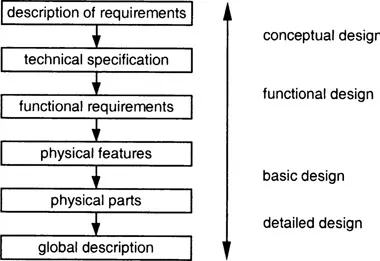
Figure 2.1 General description of design stages.
As mentioned previously, the design and manufacture of large complex artifacts requiring the cooperation of a number of specialists is of particular interest. The three following examples focus respectively on the very different domains of harbor design, automobile design, and plant design.
Harbor Design
The example is taken from Monceyron and Barthès (1992). Designing a harbor is a long process which may last up to 10 years. The basic question to be answered is how much of the harbor must be laid inland and how much will be off shore. The resulting decision is a compromise between the cost of building expensive structures like breakwaters and the cost of continually removing silt. The first step in harbor design is to define the geometry, then iterations take place which include the design of breakwaters, the computation of the residual wave motion inside the harbor, and discussions with many different specialists, like firemen, pilots, dockers, etc. Because many data are lacking when starting the design, the first phase may last up to two years. During this preliminary design phase, the designers study different possible choices (sometimes up to 40 variants), compute the financial implications, and rank them. At the end of the preliminary phase only one or two solutions are kept. They will be used as the basis for detailed computations, after some additional measurements are acquired. The core team of designers for this activity involves merely a dozen of specialists working at the same time.
Automobile Design
Designing a new model of an automobile (e.g. a hybrid vehicle (with both electrical and gasoline engines) involves a number of people, working together during a preliminary phase in order to produce an operational prototype demonstrating the feasibility of some choices. The prototype will then serve as the basis for the design of the industrial product to be manufactured in large volume.
Plant Design
Design in chemical engineering (e.g., for petrochemical plants), starts from a chemical process, which basically consists of a set of chemical reactions. A first step consists in transforming such equations into a sequence of unit operations which determine what kind of transformation will be done on the raw materials and intermediate compounds in order to obtain the final product(s). The result is usually a single blue sheet (Process Flow Sheet) together with a book containing the result of a number of computations done to validate the early design (e.g., mass balance, and heat balance, safety computations). The Process Flow Sheet is then given to the engineering bureau, where specialists do the detail design, i.e., produce a (large) number of drawings (and may build a mock-up), called Process and Instrumentation Diagrams (P&ID). The latter are used on the construction site by field engineers to actually build the plant.
The three previous examples are good candidates for the kind of engineering activities that we have in mind. More generally, design may proceed from fairly abstract requirements obtained from the marketing department or specified in a contract, through a conceptual design step, then through preliminary design....
Table of contents
- Cover
- Half Title
- Title Page
- Copyright Page
- Table of Contents
- Part I Introduction
- Part II Important Issues in System Implementation
- Part III Agent-Based Concurrent Engineering Systems
- Part IV Guideline for System Implementation
- Index
Trusted by 375,005 students
Access to over 1.5 million titles for a fair monthly price.
Study more efficiently using our study tools.
Frequently asked questions
Yes, you can cancel anytime from the Subscription tab in your account settings on the Perlego website. Your subscription will stay active until the end of your current billing period. Learn how to cancel your subscription
No, books cannot be downloaded as external files, such as PDFs, for use outside of Perlego. However, you can download books within the Perlego app for offline reading on mobile or tablet. Learn how to download books offline
Perlego offers two plans: Essential and Complete
- Essential is ideal for learners and professionals who enjoy exploring a wide range of subjects. Access the Essential Library with 800,000+ trusted titles and best-sellers across business, personal growth, and the humanities. Includes unlimited reading time and Standard Read Aloud voice.
- Complete: Perfect for advanced learners and researchers needing full, unrestricted access. Unlock 1.5M+ books across hundreds of subjects, including academic and specialized titles. The Complete Plan also includes advanced features like Premium Read Aloud and Research Assistant.
We are an online textbook subscription service, where you can get access to an entire online library for less than the price of a single book per month. With over 1.5 million books across 990+ topics, we’ve got you covered! Learn about our mission
Look out for the read-aloud symbol on your next book to see if you can listen to it. The read-aloud tool reads text aloud for you, highlighting the text as it is being read. You can pause it, speed it up and slow it down. Learn more about Read Aloud
Yes! You can use the Perlego app on both iOS and Android devices to read anytime, anywhere — even offline. Perfect for commutes or when you’re on the go.
Please note we cannot support devices running on iOS 13 and Android 7 or earlier. Learn more about using the app
Please note we cannot support devices running on iOS 13 and Android 7 or earlier. Learn more about using the app
Yes, you can access Multi-Agent Systems for Concurrent Intelligent Design and Manufacturing by Weiming Shen,Douglas H. Norrie,J-P. Barthes in PDF and/or ePUB format, as well as other popular books in Technology & Engineering & Artificial Intelligence (AI) & Semantics. We have over 1.5 million books available in our catalogue for you to explore.