This edited volume defines and compares central aspects of governance and management related to urban open spaces (UOSs) such as long-term management, combined governance and management and strategic management of UOSs. Perspectives such as ethical considerations, user participation and changes in local governmental structures frame the governance and management of UOSs. Jansson and Randrup create a comprehensive resource detailing global trends from framing and understanding to finally practising UOS governance and management. They conclude by promoting positive changes, such as proactive management and strategic maintenance plans to encourage the creation of more sustainable cities.
Illustrated in full colour throughout, this book is an essential read for students and academics of landscape architecture, planning and urban design, as well as those with a particular interest in governance and management of UOSs.
Framing urban open space governance and management
1Introduction: urban open space governance and management – the long-term perspective
Thomas B. Randrup and Märit Jansson
Introduction and structure of the book
An urban open space (UOS) is mainly an unbuilt area within a populated settlement, comprising a combination of vegetated ‘green’, water-dominated ‘blue’, derelict ‘brown’ and/or hard-surfaced ‘grey’ elements. Increasingly, UOS is being perceived and documented as a vital element of the urban matrix (e.g. Qureshi et al., 2013; Wolff et al., 2018), enabling well-being for the ever-increasing urban population (e.g. Lee et al., 2015; WHO, 2016). UOSs range from playgrounds to highly maintained parks to informal and natural landscapes located in urban and peri-urban settings, and are often publicly accessible (e.g. Randrup & Persson, 2009; de Magalhães & Carmona, 2009). They are regarded as a source of numerous benefits and values, expressed as ecosystem services, for society (MEA, 2005). Governance and management of UOSs are key processes in provision of urban landscapes within an overall governmental framework and contribute to sustainable development. We perceive governance and management to be approaches that can secure long-term provision of UOS and associated benefits.
In this book, we present UOS governance and management as these are performed, studied and taught, primarily within a Western European context but also worldwide. Experiences, findings and recommendations are described, analysed and discussed mainly in a local government context, which is often the most common governance mode for UOS management (e.g. Knuth et al., 2008; Carmona et al., 2010; Dempsey et al., 2014). However, we also relate them to other organisational and institutional contexts, such as international and national policymaking, cemetery management and management of outdoor areas around housing estates. Therefore, this book is of relevance in many contexts and parts of the world.
The book comprises 12 chapters divided into three main parts: (I) framing, (II) relations and values and (III) practice. Part I frames UOS governance and management by setting definitions of contemporary terms and landscape approaches, explaining UOS as a historical social-ecological resource and placing it in an overall organisational framework. Part II describes the multitude of relations and values related to UOS governance and management, covering users’ perspectives, ethical considerations and participation. Based on the two previous parts, the practices of UOS governance and management are presented and discussed in Part III. Part III also describes the concept of strategic management, discusses leadership and steering roles related to UOS management and provides tools and models for use in describing various aspects of UOS governance and management. The book concludes with a discussion on the future of UOS governance and management.
The origin of UOS governance and management
Historically, the importance of UOS and related development processes has increased as urban agglomerations have changed from small-scale settlements to various urban forms, including megacities. Urban areas can be defined areas, such as where man-made structures (e.g. houses, commercial buildings, roads, bridges, railways) cover a large proportion of the land surface or areas with high population density (Pickett et al., 2001). Throughout the world, the dominant pattern of migration within countries in recent decades has been from rural to urban areas. This is partly because improved technology has decreased the need for agricultural workers and partly because cities are seen as offering greater economic opportunities and better lifestyles (Rutledge et al., 2018). Today, over half the world’s population lives in urban areas, and the proportion is expected to increase to 66% by 2050 (UN, 2014).
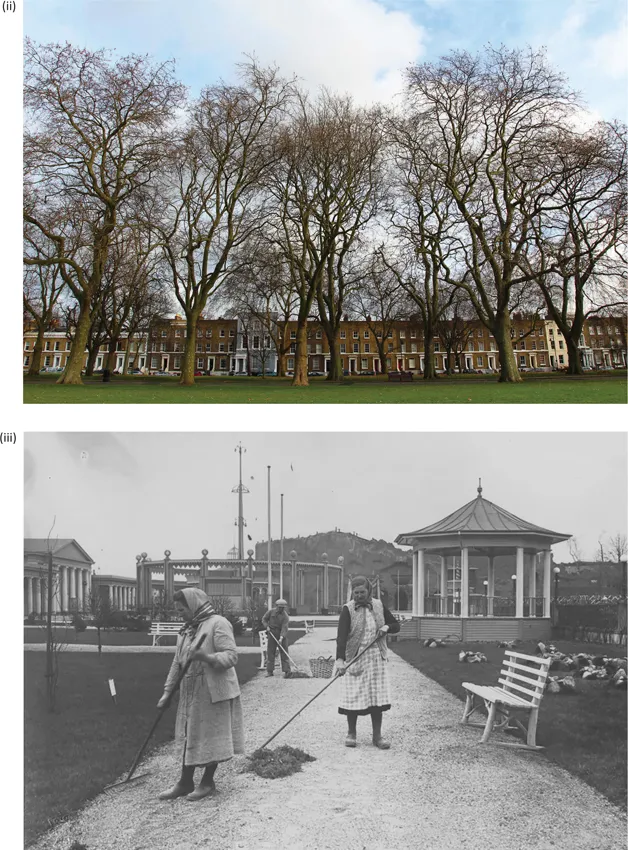
UOS management can be traced back to the Western industrialised world in the 1850s, which involved overcrowded slums and streets filled with rotting garbage, dead animals and overflowing human and animal waste. Dogs and other animals ran wild in poorer neighbourhoods, and pigs functioned as street cleaners. Cholera epidemics resulted in a death rate in London, United Kingdom, that was higher than at any time since the plague (Black Death) in 1348–1349 and caused wealthier residents in New York City, New York, United States, to flee to the countryside, while the disease ravaged the poor (Bloomberg & Frieden, 2005). This prompted designers Frederick Law Olmsted and Calvert Vaux to create Central Park in New York. They used the work on the park to demonstrate the need for reform of the social agenda and to develop means to achieve this reform by creating a public park which would improve public health for those not able to escape the city. This was one of many park developments of that period in urban centres in the Western world suffering from the harsh urban living conditions of industrialisation (see Figure 1.1). Another example, Victoria Park, was established in 1840 to meet the need for a park in the East End of London, where a rapidly growing population resulting from the development of the docks and industry had led to overcrowded housing and associated poor health and low life expectancy (Tower Hamlets, 2017). In Sweden, the ‘Swedish Workers Association’ was formed in Malmö in 1886, and prominent local Social Democrats thereafter founded Folkets Park (People’s Park) in central Malmö. Folkets Park is believed to be the first park in the world initiated and developed by a collective movement with the aim of making a significant social change. Today, the park is under the management of the local government of the City of Malmö.
Figure 1.1 (i) The green space of Central Park in its very dense urban setting of New York City.
Local governments and other steering bodies in the 1850s thus had clear incentives to use UOS as an instrument for creating areas promoting social benefits and human health. Contemporary governance and management approaches for UOS can be traced from those initiatives. For example, the British government created an urban planning policy to alleviate acute ill-health and create better urban living conditions for all. In the US, the Central Park Commission became New York City’s first planning agency and oversaw the planning of uptown Manhattan and the management of the park (Blackmar & Rosenzweig, 2017). The value of UOS in providing and promoting public health is still recognised today – for example, in a recent World Health Organization (WHO) report on urban green spaces and health (WHO, 2016). During recent decades, more evidence of the beneficial effects of UOS has become available, scientifically linking access and use of UOS to improved mental health, reduced mortality and lower rates of obesity and risk of type 2 diabetes (WHO, 2016). This indicates the enormous potential of governance and management of UOS in providing societal value, as UOS improvements can have a positive impact on health, social and environmental outcomes for all (WHO, 2017).
Ever since the Central Park Commission became one of the first formal local UOS management agencies in the mid-19th century, governance and management responsibilities relating to UOS have tended to be dealt with primarily at the local government level (Knuth et al., 2008; de Magalhães & Carmona, 2009; Randrup & Persson, 2009; Dempsey & Burton, 2012). The United Nations’ Food and Agriculture Organization (FAO) confirmed this worldwide local government approach to UOS management in its 2016 guidelines for urban and peri-urban forestry (Salbitano et al., 2016). However, other organisations are also important UOS managers today and in a historical perspective, with substantial responsibilities, including housing companies and cemetery organisations.
Despite the fact that UOS provision is seen as a means for improving public health and well-being and the overwhelming evidence for this, many local government organisations still focus on short-term gains and essential maintenance operations and make insufficient resources available for long-term governance and management that could improve public spaces (Randrup & Persson, 2009; Dempsey et al., 2014; Randrup et al., 2017). The conflict between recognition of an important societal resource and the inability to reflect this importance in management routines is the outcome of two core developments: (i) changes in UOS management organisations and (ii) new demands on UOS and their management.
Dramatic changes in recent decades
Management of UOS is ideally a matter of development of the entire UOS resource using a long-term perspective, while also operationally maintaining the space (Randrup & Persson, 2009; Dempsey et al., 2014). Thus de Magalhães & Carmona (2009) describe open space management as comprising four interlinked processes: (i) regulation of uses and conflicts between uses, (ii) maintenance routines, (iii) new investments and ongoing resourcing of public space and (iv) coordination of interventions in public space. While all of this is true and relevant from a management perspective, in Western Europe, the focus has long been on maintenance routines. This is believed to be the result of an increased intra-organisational drive to involve the market and private users (e.g. Leiren et al., 2016). For example, New Public Management (NPM) introduced the idea that government-guided, private-sector principles are preferable to the conventional rigid public hierarchical bureaucracy and economic steering (e.g. Hood, 1991). Within UOS management, NPM has resulted in a trend for outsourcing, where public government agencies commission and monitor services provided by private actors (Randrup et al., 2006; Clark et al., 2016). This has resulted in a concentration on maintenance routines, with an associated lack of strategic development, including a lack of regulation of uses, coordination of interventions and long-term investments in UOS (Chan et al., 2014; Randrup et al., 2017).
Maintenance routines are primarily technical and bud...
Table of contents
Cover
Half Title
Title
Copyright
Contents
List of figures
List of tables
List of boxes
Foreword by the editors
List of acronyms
List of contributors
Acknowledgements
Part I Framing urban open space governance and management
Part II Understanding relations and values
Part III Practising urban open space governance and management
Index
Trusted by 375,005 students
Access to over 1.5 million titles for a fair monthly price.
Study more efficiently using our study tools.
Frequently asked questions
Yes, you can cancel anytime from the Subscription tab in your account settings on the Perlego website. Your subscription will stay active until the end of your current billing period. Learn how to cancel your subscription
No, books cannot be downloaded as external files, such as PDFs, for use outside of Perlego. However, you can download books within the Perlego app for offline reading on mobile or tablet. Learn how to download books offline
Perlego offers two plans: Essential and Complete
Essential is ideal for learners and professionals who enjoy exploring a wide range of subjects. Access the Essential Library with 800,000+ trusted titles and best-sellers across business, personal growth, and the humanities. Includes unlimited reading time and Standard Read Aloud voice.
Complete: Perfect for advanced learners and researchers needing full, unrestricted access. Unlock 1.5M+ books across hundreds of subjects, including academic and specialized titles. The Complete Plan also includes advanced features like Premium Read Aloud and Research Assistant.
Both plans are available with monthly, semester, or annual billing cycles.
We are an online textbook subscription service, where you can get access to an entire online library for less than the price of a single book per month. With over 1.5 million books across 990+ topics, we’ve got you covered! Learn about our mission
Look out for the read-aloud symbol on your next book to see if you can listen to it. The read-aloud tool reads text aloud for you, highlighting the text as it is being read. You can pause it, speed it up and slow it down. Learn more about Read Aloud
Yes! You can use the Perlego app on both iOS and Android devices to read anytime, anywhere — even offline. Perfect for commutes or when you’re on the go. Please note we cannot support devices running on iOS 13 and Android 7 or earlier. Learn more about using the app
Yes, you can access Urban Open Space Governance and Management by Märit Jansson, Thomas B. Randrup, Märit Jansson,Thomas B. Randrup in PDF and/or ePUB format, as well as other popular books in Architecture & Architecture General. We have over 1.5 million books available in our catalogue for you to explore.