Counterfeit Culture
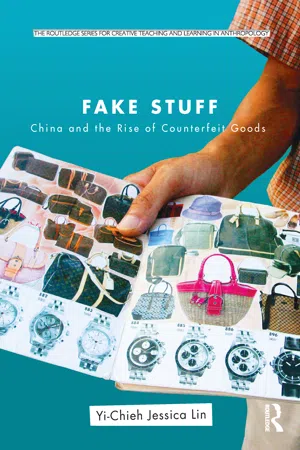
Xiangyang Market used to be a novelty for tourists from around the world. It was first opened in 2000 in downtown Shanghai as part of a plan by the Municipal Government to boost the city’s economy. Today, relocated and renamed the Xinyang Market, it is one of many counterfeit markets in China. Counterfeit markets, of course, blossomed before China’s economic liberalization, when goods were not easily accessible to China’s consumers under the formal and tightly regulated economy. But in contemporary China, counterfeit markets have expanded in scope and size. Whereas authentic brand name goods are delivered to state-owned or foreign-owned stores through formal channels, counterfeit goods flow into open-air wholesale markets located in densely populated areas that can be easily accessed by public transportation.
Though they operate above ground and quite visibly, these markets occupy a kind of “gray zone” between the formal and informal economy. In these gray zones, the “fake” outstrips the real, and questions of authenticity are routinely destabilized and even made arbitrary. These grays zones and this burgeoning “fake” culture have become fodder for artists and politicians alike. In 2007, curator Pauline Yao of Universal Studios, Beijing hosted an art exhibition with counterfeiting as its theme. The exhibition, entitled “Forged Realities,” featured ten young, avant-garde artists from around the world and tackled the distinction between fakery and reality, truth and fiction, fact and fantasy.1
In 2008, the Brooklyn Museum featured more than ninety works of Takashi Murakami, the designer who collaborated with Louis Vuitton. In the exhibit, Murakami displayed his bags for Louis Vuitton as if they were for sale on Chinatown sidewalks. The display was named “Monogramouflage” and was designed to bring attention to the rise in Louis Vuitton counterfeits.2 And in Dafen Village, Shenzhen, China, over 8,000 painters, artisan–painters and apprentices are working to produce commissioned paintings of Western masterpieces (e.g. Van Gogh).
Fake stuff is possible, of course, only in an economy in which, for many products, their most important feature is their name. When people buy Coca-Cola, they are not buying only colored, sweetened water; they are buying a Coke and all the meaning and symbolism that have been constructed around the name. In the case of Coke, as with many other products, their value comes not from creating products, but creating consumers for specific brands. Consequently the value of the sign, that is the logos and brand images, is far greater than the material product itself, be it a soft drink, sneaker, shirt, or handbag. Thus a cell phone made with pennies in Asian factories sells for dollars of symbolism created through design, branding, and advertising (see Foster 2008: 76).
In fact, the Coca-Cola corporation considers itself a marketing company, rather than a soft drink manufacturer and historically, rigorously guarded itself from companies calling themselves Coa-Kola, Coke Ola and Koke Company of America. Their efforts resulted ultimately in a U.S. Supreme Court ruling in which Justice Oliver Wendell Holmes, writing for the majority stated that “the name [Coca-Cola] characterizes a beverage to be had at almost any soda fountain. It means a single thing coming from a single source and well known in the community” (see Foster 2008: 79).
But since the price of things may include the cost of the name, counterfeiting has become a cultural touchstone as consumers seek the symbolism of the brand, without having to pay its cost. In Mandarin Chinese, counterfeit goods are known as jiahuo, kelong or fangmaopin. Jia and fangmao are both expressions for “counterfeiting”; huo and pin are both expressions for “goods.” Kelong is a transliteration of the English word “clone.” Another term for counterfeit good is shanzhai, which literally refers to “mountain fortress” and figuratively refers to bandits in mountain hideaways taking potshots at the established giants in Robin Hood fashion. There are many categories of shanzhai products, ranging from food, fashion accessories, clothes, perfumes, flat tires, aircraft parts, automobiles, medicine, watches, purses, tea pots, money, MP3 players, flat-screen computers, and cellular phones to amusement parks. Time Magazine even produced a list of top ten Chinese knockoffs: Hi Phone and Aphone A6, iPed, Goojje, Nat Nat Shoes, Shanzhai Street, China’s White Houses, China’s Next Top Model, Shanghai’s World Expo Song, China’s Fine-Art Factory, Huanhai Landscape VA3, and Lifan 320 (Bergman 2010).
In 1949, after Chiang Kai-Shek’s Kuomintang (Chinese Nationalist Party) retreated to the island of Taiwan after their defeat by the Communist Party of Mao Zedong at the conclusion of a bitter 30-year-long civil war, many former entrepreneurs of Shanghai fled to Hong Kong, where they started new businesses. Local imitations of these newcomers’ crafts appeared in the late 1940s and 1950s. Shanzhai referred to these local imitations, which involved three to five workers from the same family who composed unauthorized products to sell. Gradually, the term evolved to refer to homemade and counterfeit products. In January of 2009, Google published its annual rankings of China’s new hotwords. Shanzhai ranked the first.3
Some studies suggest that the prevalence of counterfeiting in China can be attributed to a cultural tradition that emphasizes memorizing literature word by word in traditional education. Others traced back the emphasis of good forgery as a criterion for good calligraphy to the Sixth Dynasty. Ultimately, however, much of the counterfeiting can be attributed to China’s emergence in the past thirty years as a world economic power. In 2010, China became the second largest economy in the world, after the United States. After the victory of the communists over the nationalists in 1949, China instituted a Marxist, state-run economy. But after various economic and social upheavals, in 1992, Premier Deng Xiaoping advocated for a total market economy during his itinerary to southern China and accelerated the economic growth. Overall, the Economic Reform has helped reduce the poverty rate from 53 percent of the population in the Mao Zedong era to 19 percent in 1985, and 6 percent in 2001. But there are still significant differences in income between city and rural dwellers. According to the official statistics, the average annual income for a Chinese peasant in 2009 was $754, 41 percent of which is spent on food. The average annual income for an urban resident is higher: $2,514 with 36.5 percent of the income spent on food.
The switch to a more market-oriented economy unleashed enormous entrepreneurial energy, some of it directed toward producing counterfeit goods. Still, I focus on the production of counterfeiting in China because China’s counterfeiting operations are central to global debates over intellectual property rights. China is not the only place of counterfeiting production. My friend Kedron Thomas, a Ph.D. candidate in Anthropology at Harvard University, has conducted more than one year of fieldwork on counterfeiting in Guatemala. My other friends based in U.S. academic institutions have also engaged in research on counterfeiting in Brazil, India, Cote d’Ivoire, Indonesia, Macedonia, Turkey, Vietnam, and Romania. But China’s export might be the largest among them. I hope by focusing on the cases of Chinese production counterfeiting, we focus attention on the issue of business ethics and globalization. In other words, wars of intellectual property rights need to be understood in the context of corporate social responsibility, consumerism and the global economy.4