![]()
1 Introducing Urban Branding
A Spectral Metaphor
From Turin to Liège
I am writing these opening lines during the hottest month of the year in Turin, Italy, which is my hometown. Many people probably heard of Turin (or Torino) because of the Olympic Games in 2006, but this is far from universal. In my experience, when I introduce people to the place where I come from—which is definitely part of my inner identity, as I will argue—different people will associate it with various keywords, such as FIAT, which used to be the major local company (now the headquarters are far from the city), or Juventus, which is the main soccer team. A very intellectual colleague of mine from the Netherlands, acknowledging my city of origin, replied ‘Oh, Torino … that’s the city where Nietzsche went crazy for a horse!’ But this happened to me only once: FIAT and Juventus, industry and soccer, are definitely the main keywords I hear when, far from home, I happen to discuss my hometown. The point is that people have ideas or at least fragments of ideas about places, be they in the form of stereotypes, images, imaginaries, slogans, keywords or simple mental associations. These are, in the perspective of this book, imaginaries of places. This book is, first of all, a book about city imaginaries and the politics behind their production, mobilisation, circulation and manipulation. Urban branding is a crucial object in this framework, but that is just a part of the story.
I can mention a number of anecdotes and examples concerning the power and diffusion of urban imaginaries. Here is one: some years ago, I carried out research on the urban imaginaries (actually, the neoliberal stereotypes) at the heart of the popular videogame GTA IV, which is set in a fictional version of New York (Vanolo, 2012). As known, the games of the GTA series—which influenced a number of videogames with a similar style of play—are characterised by the fact that a great part of the fun in playing comes from wandering through the virtual urban environment without a specific goal, much like being a kind of digital flaneur. Without going into the details of my research, I had in-depth interviews with game users (i.e. players, mostly students in my geography course), and many of them mentioned that what they liked so much about the videogame was the realism of the reconstruction of the city, with its detailed representations of places such as Central Park, Times Square and the decaying peripheries at the outskirts of the metropolis. But when asked if they had ever been to New York, many of them admitted that they had not. This struck me, and troubled my reflections on the issue of realism: how can you say that something is realistic without a direct and sensorial comparison with an actually existing reality, which in this case is New York City? There are at least two possible lines of argument that can be followed in search of a potential explanation.
The first is not particularly connected to the perspectives developed in this book (but will be discussed in Chapter 6 in relation to urban icons); as many philosophers have written—particularly Jean Baudrillard (1981)—we are living a cultural era populated by simulacra, which are images of things living on their own, apparently without a direct relation to their direct referent in reality. In this sense, GTA IV may be thought as a simulacrum of New York, one which has basically the same semantic meaning as the physical New York in the United States for many users all over the world, thanks to the current globalisation and the serial reproduction of cultural products.
But there is also a second (and not strictly in opposition) line of reflection to consider: New York is an incredibly thick place in terms of cultural references. I am pretty sure that each of us—despite perhaps not being lucky enough to have had the opportunity to spend time in the city—has consumed so many movies, pictures, images, books, songs and other cultural products describing New York that the imaginary of New York is so well-defined as to allow us to feel confident in evaluating to what degree specific representations, such as the one in the videogame, are ‘realistic’. In my opinion, most of the players that I interviewed, when talking about realism, meant that GTA IV was coherent with, or even adherent to, the powerful representations of the city circulating in the media and in cultural products in general: GTA IV is basically a realistic representation of representations.
The case of New York is rather specific, because the urban imaginary surrounding this American city is huge: suffice it to say that, according to UNWTO (2012), it has the highest number of visitors per year in the world.1 Put another way, this primacy means that, in the eyes of those people who have enough money to travel and have tourist experiences, New York is the most dreamed-of destination. It is therefore interesting to discuss one last, and completely different, urban example.
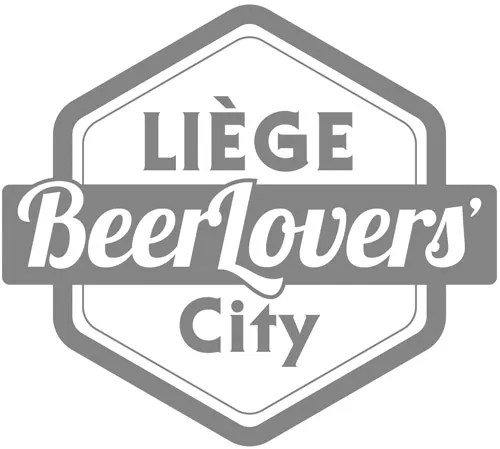
I have never been to Liège, in Belgium, nor to any other part of the Wallonia region. No movies or books set in the city come to my mind at this specific moment. At the same time, I have some ideas nurturing a very personal imaginary of Liège; I suppose it is, or anyway used to be, an old industrial city, and hence not a place for a tourist trip. I do not know exactly where this superficial idea of mine comes from. Probably it is connected to the fact that a tragic mining disaster took place in the Wallonia region about 60 years ago, causing the death of many Italian workers. But maybe the idea comes from elsewhere: maybe an old economic geography lesson at school, a lesson which I don’t explicitly remember right now, but that somehow hit my geographical unconscious. Or maybe the origin of this idea is a tale from a friend. I can’t even mention a single landmark of the city. However, I just checked, at the specific moment I am writing these lines, Liège’s official webpage for tourism,2 and got the impression that the city is pretty nice (of course, this is the narrative that is supposed to be proposed in a promotional website!), that it is a sort of key city for beer-lovers (even more: the world’s capital of beer aficionados—see Figure 1.1), and I have to say that I love beer. Maybe Liège is definitely a wonderful place. But what does this apparently banal example tell us about urban imaginaries and branding?
Figure 1.1 Liège for Beer-Lovers
All That Is Solid Merges into Space: Four Premises About Urban Representations and Urban Imaginaries
My example concerning my personal impression of Liège is less trivial than it may seem. I am fairly sure that all of us have a lot of superficial and stereotyped ideas about places we do not know at all (see the many examples proposed by Muñiz Martinez, 2012). I am talking about both ‘ordinary’ places such as Seville, St. Petersburg, Minneapolis, Hyderabad, Giza and Palermo, and ‘extraordinary’ places (at least, according to popular imaginaries and cultural resonances) such as New York, Paris, London, the Hawaiian islands and Beijing. I suggest here to focus on the first group, that is, cities that we do not know very well. I want to emphasise four elements that are pivotal for the logic of this book, which concerns the politics of urban imaginaries.
The first element I want to stress is that we have a vague, stereotyped and maybe even distorted idea about every place in the world. If we do not have a specific idea about, let’s say, the city of Dakar, we surely have some ideas about Senegal and/or Africa, and in this sense we have some elements that we can use to build a personal mental representation of Dakar. And the personal imaginary of an unknown African city will probably bear the stigma of the ‘dark continent’, an imaginary populated by slums, dirt, pollution and corruption, but also wonderful colours, exoticism, maybe even mystery (see Ferguson, 2006). I suppose that most of the readers of this book are familiar with urban studies, and of course they have deeper and more complex understandings of African cities, acknowledging that they are multifaceted assemblages of different elements, cultures and specific forms of modernity, much like the cities of any other part of the world (McFarlane, 2011). The point is that, through Orientalist thinking (Edward Said’s work about Orientalism will be briefly discussed later), people bypass their lack of geographical knowledge of specific areas of the world. And urban imaginaries are also arguably pervasive. Drawing on the literature on cognitive processes (see the next chapter), it is reasonable to link this mechanism to the basics of the processes allowing us the accumulation of spatial knowledge and the development of spatial strategies. To put it simply, with the impossibility of ‘knowing’ every place in the world—and hence performing fully ‘rational’ strategies and actions—it is common to spatialise partial fragments of information. For a child, this may be the simple dichotomous distinction between dangerous and safe places, based on the recommendations (the information) received from her/his caregivers. This mechanism is conceptually not that different for mature people; it is just more complex: we accumulate and spatialise information in order to have a rough, personal map of the world that allows us to ‘move around’ in our daily life, where I refer to ‘moving around’ also in the sense of engaging in a discussion with someone, enjoying a movie set in a specific place or planning a trip. In synthesis, there is nothing wrong or silly in stereotyped and vague imaginaries: they are common, and they are worth being investigated for a number of reasons that I will present in both this introductory chapter and in the book in general. Stereotyped imaginaries may be even more than just useful and relevant: they may be violent, as they can be closely connected to processes of oversimplification, leading, for example, to racism.
The second element I want to emphasise is that spatial knowledge, like any other form of knowledge, is cumulative (see for example the abundant literature on localised learning patterns, such as Malmberg and Maskell, 2002; Malecki, 2010). On a superficial level, it is well-known that the more I know, the more I will develop an attitude towards learning and knowing (it is easier to read a book if you have read hundreds of books in your life, while it is much more difficult for someone reading their first one). On a more sophisticated level, my stock of knowledge of one place is constantly renegotiated and thickened the more I am exposed to new experiences, be they direct or indirect. Coming back to my previous example: maybe one day I will spend a full week in Liège and I will completely change my opinion of the city. Maybe, who knows, I will spend three years there, and I will become a sort of expert urban scholar of the city (nurturing my sense of cosmopolitanism, as discussed later). Maybe tonight I will see a documentary movie about the city, and I will add another layer of information to my basic, vague and stereotyped imaginary of the place. Urban imaginaries are always becoming, in transition, aiming towards an ideal perfection that is actually impossible, because you can spend all your life in the same city and still you will not have a perfect and total knowledge of that place. This is also because cities themselves are always transforming, and I am fairly sure that the Liège of the 1990s was much different from the one you can find today.
The third element that has to be stressed here is that urban imaginaries, including those more superficial and distorted, are always ‘real’ things. From a philosophical point of view, they are real first because they simply exist, at least in the ‘real’ place of someone’s mind and in the chemistry of the cells of her/his brain (Shields, 2003). But, more relevantly, urban imaginaries are real because they often produce real consequences. For example, they lead people to choose one destination over another in their tourist trips. I am pretty sure that most people do not perform accurate benchmarks between alternative tourist destinations when planning an holiday; they just follow irrational desires and curiosities, or they exploit an unexpected opportunity (an offer, a proposal) without a deep knowledge of the entire universe of potential tourist destinations, which is, of course, as vast as the world (minus the everyday space of ordinary daily life), and therefore practically unmanageable. And the sphere of irrationality in spatial choices is not limited to the field of tourism, as I will suggest in the following example.
Some years ago I took part in a small exploratory research project on the ‘imagined geographies’ of Italian companies investing abroad, which generally meant relocating parts of their manufacturing activities to China. I expected companies to make decisions on the basis of accurate economic evaluations, site-specific reports and benchmark analyses. I was quite wrong. Most of the reports and documents I have seen, including those produced by big companies, were simple and superficial, sort of banal extracts from Wikipedia describing a limited number of places. It was during the interviews that another element emerged: most of the entrepreneurs took their locational decisions on the basis of intangible assets and, particularly, auras of success fuelled by imitational processes, something like: ‘I have seen other companies going there and I have done the same.’ No matter if there were other places, right next to the chosen one, offering similar or even apparently better conditions: the costs and risks connected to ‘learning’ and ‘knowing’ other places discouraged entrepreneurs, who—at least in the cases I have observed—preferred to simply imitate successful stories, stories that, in the perspectives of this book, can be considered as ingredients fuelling spatial imaginaries, which are often conveyed through place branding narratives.
In the academic language of cultural geography, this third element I just described is commonly termed the ‘performativity’ of representations (see for example Barnes and Duncan, 1992; Nash, 2000; Gibson-Graham, 2006). It is well-known from post-structuralism and cultural theory that representations and languages are always partial and political; put differently, they are not perfect ‘mirrors of nature’, to quote the expression of Richard Rorty (1979). Every representation, including a photograph, resonates in a more explicit or implicit way with the perspectives of the author, including her/his ideologies, feelings, attitudes and experiences. This means that urban imaginaries are not just the basis of materials produced with a patently promotional aim, such as those of urban branding, but that they also influence scientific documents, reports and charts (such as ‘the top 20 cities for living’,3 as will be discussed in Chapter 7). The performativity of representations is also pivotal in the case of negative imaginaries and place stigmas: for example, the more a place in town is described as a dangerous urban desert in the local media, the more it is probable that people will reduce or even stop living and experiencing that place, ultimately contributing to its isolation and marginalisation.
A fourth and final element that needs to be emphasised is the partial and subjective nature of urban imaginaries and urban representations. For a simplified example, consider the trite and banal imaginary of Paris as ‘the city of love’, an idea that is actually highly marketed both by travel agencies (when organising honeymoons, for example) and by many local Parisian promoters. Of course, a number of romantic landscapes (Montmartre), cultural rituals (walking along the Seine) and cultural products (movies such as Le Fabuleux Destin d’Amélie Poulain or the more recent Midnight in Paris, just to mention two among the many possible: see Mennel, 2008, for a full discussion) link the imaginary of Paris to ideas of romanticism. But maybe, for someone, Paris is the city of failed romance, and therefore her/his idea of Paris resonates very little with romanticism. Moreover, I am fairly sure that the diffused and stereotyped idea of romanticism and love is limit...