This chapter sets the tone for the balance of the book in explaining and outlining just what the global supply chain means and the various risks that float throughout its structure and how companies via an enterprise risk management approach can lead to better run companies and more successful supply chain management.
Overview of Risk Management and the Global Supply Chain
Where opportunity lies, so does risk. For the 40 years of my business career, I have extolled that virtue.
And it is a “true one.” Every leading executive and entrepreneur engaged in global trade will tell you that the world is full of opportunity and fraught with risk simultaneously.
The key is to master the opportunities by mitigating the risks. And if we had to define “mitigation of risk,” that is where risk management enters the equation. Add in international business, and then combine that with supply chain, then you finally get risk management in the global supply chain.
Risk in international trade both mirrors domestic exposures and adds another dimension that has some radical and uncertainty to the mix. For example, political risk enters the equation with exposures like confiscation and nationalization coming into play.
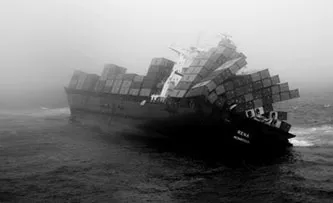
There are also serious financial exposures with little opportunity for recovery. The physical exposures of cyclones, earthquakes, tsunamis, and monsoons are but a few of the global weather events that can wreak havoc on global trade.
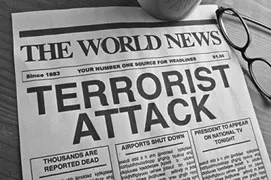
Terrorism and security issues emanating from the Middle East pose significant exposures to all business activities both here in the United States, as well as overseas. Cybersecurity issues raise even more serious concerns as evidenced in the presidential election of 2016, where “hackers” entered the Democratic party servers and made attempts at influencing election results.
A huge financial risk is making sure that the global supply chain remains open and is competitive, affording adequate margins and sustainability.
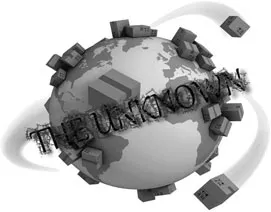
Beginning in 2017, the United States had a new president and administration led by Donald Trump. He has rhetorically announced numerous forthcoming changes to how the country will deal with global trade and the protection of domestic businesses and workers. How this will evolve and impact global trade is an unknown. That “unknown” creates a certain risk as companies plan their international strategies.
In the last hundred years, the United States has slowly dominated global business and international entrepreneurism. The hope is that the new administration will continue those initiatives and keep borders open for trade, supply chains, and favorable international relations.
Until this all gets sorted out, most companies and their executives are moving sheepishly forward to make sure their organizations’ best interests are being protected as they expand globally.
The United States in the last 25 years has greatly expanded global sourcing. The main advantage of this effort has been lower costs for most consumer items. The new president has threatened companies who continue to foreign source and build factories on foreign soil. How this will all develop as the administration moves forward on its agenda and in compromise with the American public, business interests, and politics will remain to be seen. One of the worse concerns in all of this is the potential fallout if “trade wars” ensue.
Enterprise Risk Management
Ultimately all the risks must be managed successfully.
Enterprise risk management (ERM) is often defined as a more robust risk management strategy in the process of planning, organizing, leading, and controlling the activities of an organization in order to minimize the effects of risk on an organization’s capital and earnings. Enterprise risk management expands the process to include not just risks associated with accidental losses, but also financial, strategic, operational, and other risks. In this book the focus is on the global supply chain.
Factors related to an increase in global risk concerns have fueled a heightened interest by organizations in ERM. Industry and government regulatory bodies, as well as investors, have begun to scrutinize companies’ risk-management policies and procedures. In an increasing number of industries, boards of directors are required to review and report on the adequacy of risk-management processes in the organizations they administer.
As gobal supply chains become an increasing critical component of most companies’ strategic operations, their success depends on striking a balance between enhancing profits and managing risk.
RIMS (rims.org), based in New York City, explains the following: “Enterprise Risk Management (‘ERM’) is a strategic business discipline that supports the achievement of an organization’s objectives by addressing the full spectrum of its risks and managing the combined impact of those risks as an interrelated risk portfolio.”
ERM represents a significant evolution beyond previous approaches to risk management in that it:
Encompasses all areas of organizational exposure to risk (financial, operational, reporting, compliance, governance, strategic, reputational, etc.).
It is imperative that we understand that risk is more than property and liability, and extends across every vertical of a company, and can impact both adversely and positively how that company moves forward and survives. You can have the most cost-effective and well-structured domestic property policy on your assets in California, but if a joint venture sourcing manufacturer in Indonesia is impacted by a rogue tsunami and the plant is closed for nine months and you’re not protected, the financial impact both in the short and long term could be devastating.
Prioritizes and manages those exposures as an interrelated risk portfolio rather than as individual “silos.”
The relationships between each company vertical and its operations are all interrelated and what happens in one area can and most likely will impact adjacent corporate silos. For example, if your company decides to build a plant in Mexico, against significant operational savings, existing plants operating in Ohio could receive complications in union negotiations with that labor force. This potentially creates a negative HR (human resources) issue, where a favorable impact in the supply chain was also created. Does the benefit outweigh the risk? Could the risk have been avoided or mitigated? Did anyone even try to analyze and align the issues and determine a better path, which creates compromise and better stability overall?
Evaluates the risk portfolio in the context of all significant internal and external environments, systems, circumstances, and stakeholders.
An array of factors must be included in the risk portfolio when evaluating the impact of exposure into the organization. Risk by itself is not a silo. It is an accumulation of factors that impact operations. For example, in the global supply chain, international freight movements create physical risks to the cargo in transit. But having said that, those physical risks are impacted by weather, strikes, terrorist threats, choice of carriers and service providers, and so on, all of which are separate decisions made most likely by personnel operating in other verticals, outside of risk management. But cumulatively, those decisions all impact the risks of international cargo in transit. Loss and damage has multipliers o...