
eBook - ePub
Treating People with Psychosis in Institutions
A Psychoanalytic Perspective
- 296 pages
- English
- ePUB (mobile friendly)
- Available on iOS & Android
eBook - ePub
About this book
This book focuses on the priority that psychoanalysis places on the individual, how the treatment is conceived theoretically and the ways it can be incorporated in the overall organisation of an institution. It brings together the histories of a number of psychoanalytically informed hospitals.
Information
Chapter One
Psychiatry and the influence of psychoanalysis
The history of psychiatry includes the history of psychoanalysis; its historical roots attest to the contribution psychoanalysis has made to theoretical development and practice in these areas. Coming from separate origins, psychoanalysis and psychiatry were linked by their medical backgrounds and so managed to form an alliance, each providing something the other needed. Psychoanalysis offered psychiatry a dynamic understanding of psychopathology and the possibility of a therapeutic treatment; psychiatry offered psychoanalysis the respectability and status of the medical profession and the opportunity to infiltrate a major area of mental healthcare. For psychoanalysis, the relationship with psychiatry was influential in its foray into the treatment of psychotic patients and consequently their institutional care. This was because psychoanalysis oriented the physician toward the patient in a completely different way by opening a door to understanding the patient and the meaning of what the patient said. Nevertheless, psychoanalysis struggled to gain full recognition in psychiatry and it was thanks to the work of a small group of pioneer psychiatrist psychoanalysts that a psychoanalytic praxis with psychotic patients was established in psychiatric institutions. This eminent group had significant influence on leadership in psychiatry for several generations. In the present day, psychiatry and psychoanalysis have branched out and now embrace other traditions and disciplines. Psychiatry regained its status as a branch of medicine when it retired from psychoanalytically based theories and moved towards scientific indications where care is designed for clusters of similar type patient presentations. As a consequence, the social context was side-stepped and relegated to a secondary place that tended to overlook the role that poverty, isolation, prison, social segregation, stigma, racial and gender based discrimination, violence, and the abuse and neglect of children play in the experience of psychosis.
Prior to deinstitutionalisation the most common treatment venue for a psychotic patient was a psychiatric hospital, now treatment is offered in general hospitals, clinics, community services, and outpatient programs. Change is inevitable but in the rush to close institutions there was a failure to acknowledge all the functions that an institution provided, and policy makers underestimated the challenges that the community care of vulnerable people with complex problems would create. It was not the mental hospitals of the past that were the problem but more likely the way they were governed that was the issue. Although psychiatric and the various psychoanalytic approaches present very different conceptual fields, they are not necessarily exclusive of one another. Psychoanalysis has had to adapt and diversify in its application to practice with regard to psychiatric and institutional environments.
A historical perspective of psychoanalysis in psychiatry
The man who created psychoanalysis, saw psychiatry as a descriptive and classificatory science whose orientation was directed towards the somatic rather than the psychological, and was thus unable to provide explanations for the phenomena it observed (Freud, 1923a). Freud’s intention was that psychoanalysis influence psychiatric practice with asylum patients, and it was for this reason that he was very keen for Eugene Bleuler and the psychiatrists of the Burghölzli clinic in Zurich, Switzerland to join his cause. This was because their presence would serve to legitimise his work in the face of criticism and opposition (Freud, 1914d). The Psychiatric University Hospital Burghölzli in Zurich opened in 1870 marking the beginning of the modern era in Swiss psychiatry. Eugene Bleuler, the director of the Burghölzli after August Forel, said that when it came to the treatment of schizophrenia they were forced to “grope in the dark” as they had no idea how to successfully treat the disease (Bleuler, 1950).
Bleuler’s views on the moral treatment of insanity were in line with those of Philippe Pinel’s one hundred years earlier, that the most appropriate approach was through the asylum regimen of education, reasoning, and persuasion. The aims of any recommended treatment at the Burghölzli were to contain and alleviate the patient’s acute agitation, and to teach the patient to re-establish contact with reality. To this end staff were encouraged to make repeated attempts to gain access to the patient. It was important that the patient’s routine was structured and their time utilised properly. In Bleuler’s experience though, most forms of therapy had little effect. The systematic re-education of thinking, suggestive therapy or hypnosis, and the reward system of proven correctives (the precursor to behaviour modification) did not produce genuine change; it only taught patients to adapt their behaviour to the expected norm. Bleuler insisted on the principal rule that no patient would ever be completely given up on (Bleuler, 1950, p. 482).
Emil Kraepelin was a contemporary of Freud’s, often referred to as the father of modern psychiatry. He was an institutional psychiatrist who dealt with predominantly psychotic patients. Whilst he and Freud were born in the same year and had much in common, their thinking was poles apart. In 1883 Kraepelin developed the first scientific system of classification for mental illnesses in his Compendium der Psychiatrie where he promoted a pluralistic approach to psychiatry. Researching the psycho-pathology of hundreds of patient case studies, Kraepelin proposed two broad categories of psychosis: Dementia Praecox (Schizophrenia) and Manic Depressive Psychosis (Bipolar Affective Disorder). He selected the term “dementia praecox” to describe the early mental decline that was followed by a deteriorating course (Kraepelin, 2002). Kraepelin insisted that dementia praecox was a single entity disease and although Bleuler was very much influenced by him, he identified primary symptoms that occurred in every case in the group of schizophrenias. Based on his expanded notion of dementia praecox Bleuler pushed for a name change to “schizophrenia” because the splitting of different psychical functions was one of its most prominent characteristics:
By the term “dementia praecox” or “schizophrenia” we designate a group of psychoses whose course is at times chronic, at times marked by intermittent attacks, and which can stop or retrograde at any stage […]. The disease is characterised by a specific type of alteration of thinking, feeling and relation to the external world which appears nowhere else in this particular fashion. (Bleuler, 1950, pp. 8–9)
Bleuler described the core pathology of schizophrenia as a primary associative disturbance, blunted affect as reflected in indifference and unresponsiveness; autism described as the predilection for fantasy and detachment from the outside world, and ambivalence, which is the tendency to endow the most diverse “psychisms” with both a positive and negative indicator at the same time. Bleuler visited each patient at the Burghölzli every day, even if it was only for a minute or so. This was quite an achievement considering that the population was around 200 inpatients in 1900 and over 500 by 1910 (Palmai & Blackwell, 1966). One of Bleuler’s contributions to the management of schizophrenia was his observation that prolonged confinement in an institution was deleterious to the patient and he advocated early discharge as soon as acute symptoms were resolved. He also created the beginnings of community care by organising a rehabilitation and follow up service for patients after discharge.
The principles underlying Kraepelin’s approach bases its practice on scientific knowledge that is empirical, verifiable, and reproducible, so he afforded psychoanalysis no place at the German Institute for Psychiatric Research in Munich on the grounds that it was unscientific:
We meet everywhere the characteristic fundamental features of the Freudian trend of investigation, the representation of arbitrary assumptions and conjectures as assured facts, which are used without hesitation for the building up of always new castles in the air ever towering higher, and the tendency to generalization beyond measure from single observations […]. As I am accustomed to walk on the sure foundation of direct experience, my Philistine conscience of natural science stumbles at every step on objections, considerations, and doubts, over which the likely soaring tower of imagination of Freud’s disciples carries them without difficulty. (Kraepelin, 2002, p. 250)
Prior to World War One the new doctrine of psychoanalysis spread through Europe to the United States, bringing new hope for the treatment of asylum patients with a priority on the patient’s subjective experience. The awareness that psychotic symptoms could be meaningful had an important humanising effect on asylum psychiatry even though it did not initially have a direct influence on the treatment. This early interest from asylum psychiatrists came from the support psychoanalysis could provide as a framework for understanding symptoms and their pathogenesis.
The dissemination of psychoanalysis
In the beginning, Freud (1924f) was only able to elaborate and test his therapeutic method on the severest cases, mainly those patients who had tried everything else without success, and had spent a long time in sanatoria. He believed that the psychoanalytic study of the neuroses was the only preparation for gaining an understanding of the psychoses, and yet, it is well known that Freud was cautious about recommending the use of the psychoanalytic method with psychotic patients believing them to be inaccessible and in need of an alternate therapy (Freud, 1905a). He thought that patients who were psychotic were unable to work in the transference, preventing the development of a working alliance because they withdrew their libido from people and things in the external world (Freud, 1914c). Nevertheless, Freud was very supportive of those analysts, such as Ernst Simmel and Max Eitingon, who took on the exploratory work of applying psychoanalytic theory in psychiatric clinics and institutions. He also encouraged the work of psychiatrists such as, Paul Federn, Sandor Ferenczi, Gustav Bychowski, and Wilhelm Reich, who treated patients with a higher degree of mental disturbance. Abraham, Federn, Jung, and Simmel have all written about the supervision and advice Freud gave them in their clinical endeavours with psychosis, especially those psychiatrists from the Burghölzli (Abraham, 1949a; Federn, 1953; Jung, 1960; Simmel, 1929).
The developments in Europe did not go unnoticed in America and as early as 1906 James J. Putnam, a professor of neurology at Harvard University, wrote a paper on the use of psychotherapy at the Massachusetts General Hospital with specific reference to Freud’s theories of psychoanalysis (Putnam, 1906). Putnam adapted what he called a simple form of psychoanalysis as an experiment in the treatment of neurological cases where most of the patients were diagnosed with hysteria; naturally it failed (Taylor, 1988). Putnam and some of his colleagues appropriated Freud’s language and certain conceptual formulations, but their underlying framework was uniquely American in its pragmatism and in the eclectic way theories were appropriated. In the first two decades of the twentieth century, psychoanalytic approaches were assiduously undertaken in the treatment of psychosis by Abraham Brill, Adolph Meyer, and Edward Kempf. Psychoanalysis started to dominate in the United States, especially after the Second World War when it slowly became better represented in the American university, psychiatric, and cultural circles, by the 1960s a psychoanalytic orientation was well-established in leading psychiatric institutions where virtually every university professor of psychiatry was psychoanalytically trained (Kernberg, 1997). The Ego-Psychology approach is derived from the work of Anna Freud, and was represented by Hartmann, Kris, Loewenstein, Rapaport, Erikson, and later on by Jacobson and Mahler. From the 1940s the Interpersonalist approach to psychoanalysis shaped the development of the neo-analytic view in the United States. Although it did not constitute a unified theory, Interpersonal Psychotherapy is significant for its institutional origins and the efforts that psychiatrists, such as Harry Stack Sullivan and Frieda Fromm-Reichmann, made to find a method derived from psychoanalysis that could be used for inpatient psychiatric treatment.
Many of the European psychoanalysts, intellectuals, and cultural figures who fled Germany and Austria principally to America and England before, during and after the Second World War assumed psychoanalytic leadership roles and exerted considerable influence on the direction of American psychoanalysis. But what they found was a version of psychoanalysis that was disconnected from its cultural and political roots ending up sterile and prescriptive. The European émigrés were left-wing intellectuals born around the turn of the century and, as second-generation psychoanalysts, they thought of psychoanalysis as a cause that would help make sense of a disjointed world. The American practice of psychoanalysis that these European psychoanalysts joined was rigidly medicalised and so, for the ensuing decade, the principal problem became that of lay analysis. This was because only medically qualified candidates were accepted for psychoanalytic training. A number of the European emigrant psychoanalysts were either not physicians or their European medical qualifications were not recognised in the United States. Consequently, a significant division developed between orthodox European analysts, on the one hand, and contemporary medically qualified American analysts on the other.
The first psychoanalytic training institute was established in Berlin in 1923 based on the three pillars of psychoanalytic formation: a didactic or instructional analysis, theoretical courses and the practice of controlled analyses. Although Brill strove to safeguard what he regarded to be the core ideas of Freudian psychoanalysis, he opposed Freud’s judgment about who might practice it. Freud argued that some psychological training and an open human approach were more important in a psychoanalyst’s training than a medical education (Freud, 1926e). But Brill (1934) was determined that psychiatrists alone should practice Freud’s controversial new science. This opposition to lay analysis is significant because of its enduring institutional effects. Brill’s politics of exclusion meant that other mental health disciplines in the United States could not receive psychoanalytic training. This position contributed to the success of the American Psychoanalytic Association (APA) in centralising its control over psychoanalysis, making it the exclusive property of psychiatry (Richards, 1999).
Freud founded the IPA in 1910; today it is a worldwide umbrella organisation and the world’s largest regulatory body for psychoanalysts. In the United States of the 1920s and 1930s the IPA served as a gatekeeper to keep certain types of people out of the field. Much of the history of psychoanalysis in the United States was concerned with preserving the assumption of an uncontaminated version of psychoanalysis that belonged to certain analysts in local institutes of the International Psychoanalytic Association (IPA) (Kirsner, 1998). Freud dreaded the American tendency of trying to turn psychoanalysis into “a mere house-maid of psychiatry” (Ernest Jones, 1957, p. 323). He tried to reason with them as follows:
The resolution passed by our American colleagues against lay analysts, based as it essentially is upon practical reasons, appears to me nevertheless to be unpractical; for it cannot affect any of the factors, which govern the situation. It is more or less equivalent to an attempt at repression […] would it not be more expedient to recognize the fact of their existence by offering them opportunities for training? (Freud, 1926e, p. 258)
After several decades the close association between psychoanalysis and psychiatry in North America started to change in the 1970s and the pendulum started to swing in a different direction. By the 1980s and early 1990s psychiatry was engaging more with the neurosciences and psychopharmacology, as well as social and community models.
Except for Ernest Jones’s founding of the British Psychoanalytical Society in 1919, psychiatry in the United Kingdom was largely removed from the developments in Europe and America, especially the evolution of psychoanalysis between the wars. By the early 1930s Melanie Klein established herself in London and just prior to the onset of the Second World War Anna Freud and her father escaped from Vienna to London. Anna Freud and Melanie Klein uncomfortably became members of the same society. The central dispute between them was on a child’s ability to establish a transference relationship in analytic treatment. Klein openly criticised Anna Freud’s work on child analysis. Klein (1963) used play therapy and interpretive techniques that could be equated with an adult’s free associative speech and this meant that in her view children could be analysed. She observed that children expressed their fantasies and anxieties in their play and that children’s play substituted as a framework for the ego’s attempts to defend itself from instinctual conflicts in order to work them out.
During the war these two women clashed, and heated debates occurred within the British Psychoanalytical Society that resulted in a profound schism in the psychoanalytic community. This was resolved through a series of wartime discussions that resulted in the permanent division of British psychoanalysis. As a consequence, the original British Society and the Kleinians became the British School and those behind Anna Freud became the Freudians. Those non-aligned object relations theorists who did not take sides in the debates, went on to promote their own unique contributions to psychoanalytic theory; they became known as “the Middle School” or “Independents”. Hence, the term “object relations” has been used in reference to different formulations, generally categorised as either the American School or the British School. After the death of Anna Freud, the Freudians became known as the Contemporary Freudian group (Pines, 1999b). Many American psychoanalysts, more closely aligned with Freudian Ego Psychology, rejected Kleinian and Object Relations theory, and in turn the British School generally disapproved of the Ego Psychology movement. This resulted in different technical approaches in the practice of psychoanalysis that tended to create factions. The Post-Kleinians, Herbert Rosenfeld, Hanna Segal, and Wilfred Bion, were noteworthy for their work with psychosis.
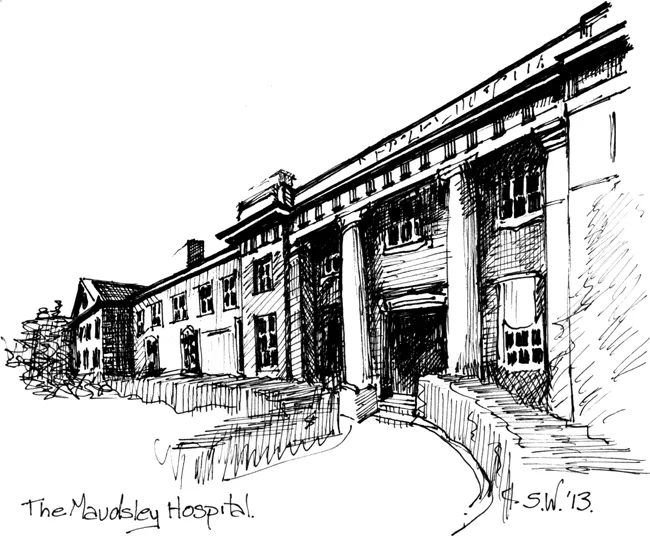
The Second World War had a deep impact on British psychiatry with the expansion of academic departments of psychiatry and some psychoanalytic appointments within them; prominent examples were the Maudsley Hospital and Tavistock Clinic in London. The work of a number of psychoanalysts involved in the Northfield experiments led to the development of group psychotherapy and the therapeutic community model that had a significant influence on psychiatric services in England that lasted for decades. On the other hand, there was hostility to even a diluted version of Freudian psychoanalysis on the part of mainstream institutional psychiatry in Britain. So it was not until the 1970s that psychoanalytic ideas were formally incorporated into the training of psychiatrists there. The modern discipline of psychiatry grew from the belief that mental illness could be treated and that the institution could have a therapeutic function. With the development of psychotropic drugs in the 1950s there was an increasing move away from institutional care towards the integration of psychiatric treatment within the general health sector.
Institutional psychiatry
In the past, mental hospitals were set up as separate institutions with funding and administration independent from those of general health care. They represented a part of the culture of mental health care that was more than the residential requirement it fulfilled: it included a complex set of functions such as the availability of medical care, the rendering of respite for a patient’s family and the provision of a social network for the patient. Equally, in designing these institutions little attention was paid to the impact the institution might have on patients who were incarcerated there or on the staff who had to work there. The accommodating structure and routines of an institution can produce a narrowing or reduction in an individual’s critical judgment and reasoning. This is revealed in a slowed reaction to change that hinders the person’s ability to adapt to new circumstances. Institutionalisation can be described as a human being’s loss of subjectivity; it represents the application of inflexible systems of control in the treatment of vulnerable people that lead to the stripping away of whole areas of identity. Franco Basaglia described institutionalisation as:
The loss of a scheme, the loss of the future, the state of being in the power of others without being able to direct oneself, and having one’s day tuned and organised on an impersonal rhythm, dictated only by organizational demands that—such as they are—cannot take into account the single individual and particular circumstances: this is institutionalisation. (Basaglia, 1964, p. 1)
Institutionalism, while closely associated with institutionalisation, is the con...
Table of contents
- Cover
- Half Title
- Title
- Copyright
- Dedication
- CONTENTS
- ACKNOWLEDGMENTS
- ABOUT THE AUTHOR
- PREFACE
- INTRODUCTION
- CHAPTER ONE Psychiatry and the influence of psychoanalysis
- CHAPTER TWO Psychoanalytic approaches to the treatment of psychosis
- CHAPTER THREE The origin of psychoanalysis in institutions
- CHAPTER FOUR Group organisation and the social system
- CHAPTER FIVE Psychoanalysis and institutional models
- CHAPTER SIX Hospital based individual treatment
- CHAPTER SEVEN Institutions oriented to Freud and Lacan
- CHAPTER EIGHT The therapeutic community
- CHAPTER NINE Institutional approaches with children and adolescents
- CONCLUSION
- APPENDIX
- REFERENCES
- INDEX
Trusted by 375,005 students
Access to over 1.5 million titles for a fair monthly price.
Study more efficiently using our study tools.
Frequently asked questions
Yes, you can cancel anytime from the Subscription tab in your account settings on the Perlego website. Your subscription will stay active until the end of your current billing period. Learn how to cancel your subscription
No, books cannot be downloaded as external files, such as PDFs, for use outside of Perlego. However, you can download books within the Perlego app for offline reading on mobile or tablet. Learn how to download books offline
Perlego offers two plans: Essential and Complete
- Essential is ideal for learners and professionals who enjoy exploring a wide range of subjects. Access the Essential Library with 800,000+ trusted titles and best-sellers across business, personal growth, and the humanities. Includes unlimited reading time and Standard Read Aloud voice.
- Complete: Perfect for advanced learners and researchers needing full, unrestricted access. Unlock 1.5M+ books across hundreds of subjects, including academic and specialized titles. The Complete Plan also includes advanced features like Premium Read Aloud and Research Assistant.
We are an online textbook subscription service, where you can get access to an entire online library for less than the price of a single book per month. With over 1.5 million books across 990+ topics, we’ve got you covered! Learn about our mission
Look out for the read-aloud symbol on your next book to see if you can listen to it. The read-aloud tool reads text aloud for you, highlighting the text as it is being read. You can pause it, speed it up and slow it down. Learn more about Read Aloud
Yes! You can use the Perlego app on both iOS and Android devices to read anytime, anywhere — even offline. Perfect for commutes or when you’re on the go.
Please note we cannot support devices running on iOS 13 and Android 7 or earlier. Learn more about using the app
Please note we cannot support devices running on iOS 13 and Android 7 or earlier. Learn more about using the app
Yes, you can access Treating People with Psychosis in Institutions by Belinda S. Mackie in PDF and/or ePUB format, as well as other popular books in Psicologia & Storia e teoria della psicologia. We have over 1.5 million books available in our catalogue for you to explore.