eBook - ePub
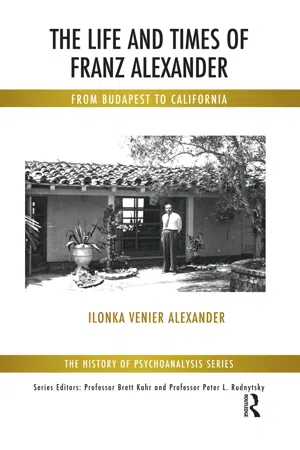
The Life and Times of Franz Alexander
From Budapest To California
- 188 pages
- English
- ePUB (mobile friendly)
- Available on iOS & Android
eBook - ePub
About this book
This book resurrects the Franz Alexanderian legacy, reminding his behemoth contributions and offers the reader with a deeply tender and touching portrait. It also considers his personal and professional life, the role of family in his decisions, and how those decisions affected other family members.
Chapter One
A journey to the past
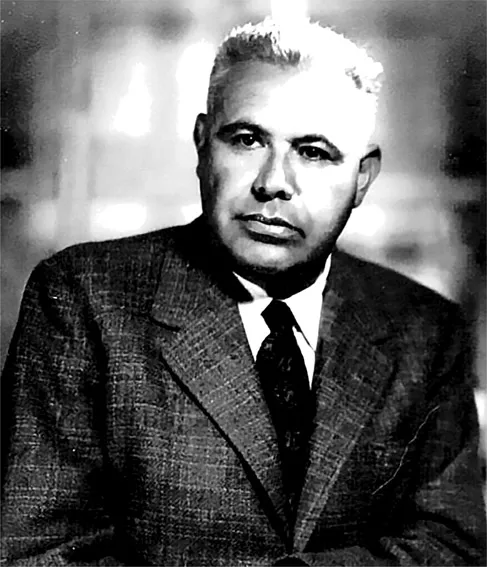
Dr. Franz Alexander
I have been searching for family my entire life, never really understanding why. My father walked away from me to appease my grandfather, Dr. Franz Alexander, and my mother and I were strangers. My only family was an influential grandfather who visited from time to time and bestowed expensive gifts on me. The gifts did not help much, though, and I felt disconnected and adrift. When I decided to find out about my family, information uncovered meant I soon must grapple with the fact I might be Jewish. That is when I sought to learn more about the family. I found a cousin in Italy and another in Cleveland, Ohio: ladies whom I had never heard of before. My cousin Eva, in Cleveland, said during our first conversation, “We have been looking for you your whole life.” When I met Eva in February of 2010, the first thing she said to me was “You are family, I love you.” It was more confusing because she knew who I was. Why not vice versa? When I began to correspond with my cousin Stella she said she knew nothing of me and that my mother’s whereabouts were a mystery to her father. This was untrue as my grandfather enrolled me in a boarding school and paid the tuition. He most certainly knew where she and I both were. Finally, my cousin Vera told me she frequently had Thanksgiving dinner with my grandparents while she was in college and there was never a mention of me. Absolutely nothing was shared or discussed.
I travelled to meet these ladies and began to put the pieces together. I met another cousin in Alaska and her brother and sister in Madison, Wisconsin. During my visit with Eva in Cleveland, she asked me if I knew I was Jewish. I said “No.” I gradually began to meet and know of more cousins, from Australia to Austria. I began to think I was not alone. And I began to think I might just be Jewish after all. Some cousins accepted our Jewish heritage, some did not.
During the same initial trip, I met with a former director of the Chicago Institute for Psychoanalysis, Dr. David Terman, who said to me, “Everybody in Chicago knew he [my grandfather] was Jewish, but nobody talked about it.” He was shocked to hear I had just, a year before, learned of my own Jewish heritage. When we discussed it, he sat straight up in his chair, as if surprised by my comments. I thought, if they all knew, why didn’t I? Why didn’t my mother? Why it was kept so tightly under wraps in my family is a secret too.
Eva and I hatched a plan to bring our disjointed family together. In July 2011, more than twenty-five cousins travelled from far and near to meet in La Jolla, my childhood home in California. We made my friend Julia, who was instrumental in my search for family, an honorary family member.
“When did you find out you were Jewish?” Everyone wanted to know this information from one another. Most felt alone and assumed they had no family. The secret kept from me was kept from them too, but the secret was kept from me the longest. Learning of my Jewish connection and the chance to meet previously unknown cousins was a turning point in my life. Finding family may, in the end, be the greatest gift my grandfather unknowingly gave me.
It is through this loving lens that this biography of Franz Alexander is written. He is the man who greatly influenced the world of psychoanalysis in its early days and who was the center of my world. He is still the most important person in my life.
I called him Big Papa. My grandmother and everyone in the family called him Feri, which is a shortening of his Hungarian name, Ferenc, and his closest colleagues and dearest friends called him Alex. I guess a man as large and important to the world needed many names. He was the Elvis of the psychoanalytic world in America. That is how my mother explained it to me as a child.
He was the first graduate of the Berlin Psychoanalytic Institute, although it is true there was no formal training program at the time; the man who turned down Freud’s offer to enter a private practice in Vienna, and the man Freud told to go to America and spread the doctrine of psychoanalysis. Freud was fearful that America would dilute his ideas and ruin him, but he wished him well anyway. He was my grandfather, my surrogate father, and the most important person in my life. He named me after his older sister and himself. Now, more than fifty years after his death, he continues to influence me and I continue to miss him. How I wish I was older than a teen when he died in 1964.
It was during my very early years that I began to know Big Papa. I considered myself a lucky little girl to be his granddaughter. When I spent time with him I felt as though I, conversely, was the most important person in his life. That is the gift he gave to me. I know now that special connection we shared was because he had such a loving and kind childhood. He was able to give to me what he himself had received. I loved to spend time with him as he regaled me with stories. He was fun. I never thought of him as anything other than youthful.
As I have learned more about him, through family records and interviews with newly found cousins who had been kept from me, I am more impressed by his stature, compassion, contributions to the field of psychoanalysis, and his intellect yet, paradoxically, for the first time, I see him as not so perfect. Like everyone, he also had faults and limitations. His story, and my discovery of family these past few years, is intertwined. It is an unearthing of stories and people and a never-ending commitment to family. That is part of his legacy.
There is renewed interest in my grandfather’s theories, and many of his ideas, considered to have been a betrayal of traditional psychoanalytic doctrine at the time, are now the norm of the American and international psychoanalytic communities. Dr. David Terman, former director of the Chicago Psychoanalytic Institute, recently said during a phone conversation to me that few in Chicago knew of my grandfather’s family and he rarely spoke about personal issues. Dr. Terman suggested that to know more about my grandfather’s background would help to better understand his work in the fields of psychoanalysis and psychosomatic medicine.
So, come with me to learn of the life of these fascinating Alexanders and, in particular, Franz Alexander. The journey begins in Budapest during the last days of the nineteenth century, travels to other bustling capitals in Europe, and settles in Chicago for a long time as my grandfather founds and leads the Chicago Institute for Psychoanalysis through its golden years. His journey ends with yet another move, this time to California, pushing further west, as he had even more new ideas and dreams to fulfil. The journey is not without challenges, surprises, disappointments, and triumphs. In many ways, it is like our own life’s entire journey, but this one is unique to him.
Few knew him, really knew him. This is his personal and public story.
Chapter Two
Life at the Palace
Budapest. For many the mere mention of the name of this beautiful city brings to mind what geography brought to it: a city cut in half by the great river Danube, the second longest in Europe. This river runs through and by some of the most lovely cities in Europe.
Budapest is steeped in history and today is modern and diverse. Many sights are the same as they appeared in the early 1900s. The Buda hills, their flowers, trees and shrubs, and open spaces grace the shores of the river just as they did in the past. The best way to arrive in Budapest was always by boat; whether you come to Budapest from Vienna or from Belgrade, the first sights are both magical and magnificent. The river bank and the ramparts lie at your feet. The view of the Chain and Elizabeth bridges, as they span the mighty Danube, and of the Parliament buildings, is breathtaking. As you take in the scene it is as if the river was invented just for the purpose of beautifying the city. Of course, it was not, but the feeling one gets, standing and experiencing the beauty, as it slowly unfolds before you, makes one wonder. It is, indeed, magical. If you are lucky to see Budapest at night, with the lights of Parliament shining on the water, you will never forget the images.
The Austro-Hungarian Compromise of 1867 recognized the two monarchies of Austria and Hungary which came to be known as the Austro-Hungarian Empire and was ruled by the Habsburgs. Subsequently, the twin cities of Buda and Pest underwent rapid growth and expansion, and finally formally merged in 1873, along with old Buda, to form Hungary’s capital city, Budapest. Pest was extensively rebuilt based on the model of Paris, created by Baron Haussmann, under the direction of the Emperor Napoleon. The city continued its growth, in concentric circles like other large European cities, along existing rail lines. The main thoroughfares of Nagykörút (Great Boulevard) and the Andrassy Boulevard lead to Heroes’ Square where tall marble colonnades feature statues of Hungarian heroes and politicians and the grand central column is topped with the Archangel Gabriel. (The site at night, with spotlights on the statues, takes the breath away.) The Hungarian millennium celebrations of 1896 began in Heroes’ Square and an adjacent great park and its fountains, gardens, and lakes. The gardens surrounding Vajdahunyad Castle, recreated after the original castle in Transylvania, are perhaps the most extravagant example of artistry in Hungary seen at the time. They are a perfect example of the monumental scale and style that influenced the period. The square and the resplendent residences that ring the square reflect a bygone era when grace and manners were considered essential or important traits in order to live and advance in a proper society.
During this time of cultural expansion and economic development, new suburbs were created to make room for and house the rapidly growing and financially successful population. The newly emerging middle class was predominantly Magyar, although German as well as Jewish communities developed because of the large influx of immigrants flocking to the city. Although Budapest surpassed Berlin as the fastest-growing European city, the rest of Hungary continued to be rural and its people understood and accepted the old feudal ways. This class structure was complicated as the oldest, established group of aristocrats was land owners, and the newer aristocrats consisted of the financial wizards who had come into existence when Budapest’s commerce grew and thrived.
The old ways of the landowner Magyar nobility were threatened as capitalism began to spread throughout Hungary, but this change was mostly witnessed in the capital city. Despite the gradual loss of land, the Magyars clung to their way of life and their customs throughout the nineteenth century. Their children were largely educated at home and then attended Catholic gymnasiums or convent schools. Most families were Catholic and some had their own priest and a private chapel. These children were cosmopolitan and studied languages, and were provided with lessons in riding and shooting, as well as the arts. It was assumed that all the lessons and study would prepare them to enter and assume their rightful place in Budapest’s established society.
Beneath this so-called aristocracy was a gentry-class comprised primarily of those who owned land. This group was largely considered to be superior to those of the financial gentry, and this belief was fostered in the Alexander family as well. Many in this class left their country houses to move into the city of Budapest yet never did relinquish their property. (The Alexanders did this too, holding on to the farm and land on the outskirts of Budapest.) Many would hang on to dilapidated houses and continue to feel their sense of importance or entitlement. They were not ready to assume the role of shopkeeper, retailer, or capitalist. They would enter the government as civil servants and continue to be critical of others, especially those who were to become financially successful, the Jews. This period, between 1870 and 1900, was a time of prosperity for the Jewish community of Budapest. The community grew and played a major role in the development of the capital and the industrial boom in the region. The Habsburgs recognized their achievements and 350 Jewish families were given noble titles.
Budapest, in the early days and years of the twentieth century, and before the devastation of World War I, was a spectacular place to live and raise a family. The energy of the city and its culture rivalled Vienna and its active café society was as important as that of Paris. It was the cultural center of Eastern Europe and the city sparkled with energy and excitement as the night lights of Budapest sparkle today. Present-day Budapest, unfortunately, is no longer the center for the arts in Eastern Europe or a very happy place for Hungarians. The arts flourish no more in the capital. In fact, many say that there is a thin surface of a cultural life and wealth for foreigners only: A veneer covers up much poverty and an everyday rush to survive. Recent newspaper articles suggest at least one third of Hungarians are living in a state of poverty and another third are poor (Budapest Beacon, August 2014). This, in the aftermath of communism, is a negative consequence as Hungary, and other eastern European countries, struggle to find their center: some after revolution and years of instability, and some not.
The difference between the two sides of the river in 1900 was more apparent than today. The city, then as now, was divided into eleven diverse districts. The Pest side of the city is flat and industrial compared to the beauty of Buda’s hills and surrounding open green spaces, glamorous spas, exclusive hotels, and majestic residential neighborhoods. The area around Castle Hill, known as District One, was the most fashionable address in Budapest at the turn of the century. The oldest residents of Budapest lived here. These wealthy and conservative families did not necessarily describe themselves as Hungarian. Many still spoke German and some of the street names reflected the area’s German heritage and influence. Some street names, previously in German, were changed to Magyar around the time of the Compromise.
On the other side of the river is Pest, younger than Buda and not nearly as beautiful. In fact, the inner portion of District Four dates back to before 1800. Pest was, however, the commercial hub of the capital and what made it run. In 1900 nearly ninety percent of the people lived in Pest. Many of the finer hotels were here, near the Parliament and along the Blue Danube.
It was, however, into this prosperous, hopeful yet complicated time, just before, during, and after the celebrations of the millennium and before World War I, that the author’s grandfather, Franz Alexander (Ferenc Gabor Alexander), and his siblings were born.
The family lived in District Seven, known as Erzsebetvaros (Elizabeth Town or the Elizabeth Ring), on the Pest side of the Danube. This area was named after the wife of Franz-Josef I in the late 1880s. The area near the Elizabeth Ring, in central Pest though not far from the river, was nicknamed by the literati Saint Sulpice of Budapest because it contained many extravagant residential palaces owned by Catholic aristocrats. It also contained a Catholic seminary. The Elizabeth Ring bordered the Museum District and many booksellers and retail shops lined the avenues. Erzsebetvaros also included the local synagogue, the largest in Hungary, located on Dohany Street. This synagogue is most likely to have been where the Alexanders would have worshiped had they not been baptised and raised as Roman Catholics. The family did not practise any of the Jewish rites. None of the Alexander children or grandchildren were raised Jewish. Although some learned of the family’s Jewish heritage in their adult years, none accepted it as his and her own faith.
New residential areas, created during those times, are now part of today’s midtown suburbs. The neighborhoods included grand houses and large apartment complexes, some with cafés and shops, and some housed municipal buildings and offices as well. This area of the city’s expansion surpassed Buda and its surrounding hills and became a center for trade and commerce. The new large Jewish community played a major role in its development and expansion. Buda, old Buda, and Pest, prior to being joined, each had its own unique Jewish history and culture. The thread of a Jewish heritage and its influence will weave its way throughout the Alexander family as the years pass and the story unfolds.
Bernard Alexander began his university training close to home, in Pest, but spent only one year there. He and Regina Broessler may have met while Bernard was pursuing his university courses in Vienna. Bernard had moved there to study with Professor Robert Zimmermann who would become his mentor. Bernard devoted himself to the natural sciences, anatomy, and physiology, all of which constitute the theoretical foundation for the field of medicine. His parents, Marcus Alexander and Julie Klein, would have preferred he study medicine, but he showed no interest in medicine. Despite applying himself to what could have been considered premed or medicine, he continued to read philosophy in his spare time. While in Vienna, he also studied German and literature and he graduated with distinction when he passed his exams. He then applied for a Hungarian governmental grant to travel and further his studies abroad. He was successful and with financial backing was able to go to Germa...
Table of contents
- Cover
- Half Title
- Title
- Copyright
- Dedication
- CONTENTS
- ACKNOWLEDGEMENTS
- ABOUT THE AUTHOR
- SERIES EDITOR’S FOREWORD
- PREFACE
- CHAPTER ONE A journey to the past
- CHAPTER TWO Life at the Palace
- CHAPTER THREE The Great War and meeting nobility
- CHAPTER FOUR The Alexander children in the twentieth century
- CHAPTER FIVE Berlin: setting the stage for Chicago (with a brief stopover in Boston)
- CHAPTER SIX Chicago and the time of his life
- CHAPTER SEVEN Moving west, one last time
- CHAPTER EIGHT My grandfather and me
- EPILOGUE The family today
- AFTERWORD Dr. Carl Bell
- REFERENCES
- INDEX
Trusted by 375,005 students
Access to over 1.5 million titles for a fair monthly price.
Study more efficiently using our study tools.
Frequently asked questions
Yes, you can cancel anytime from the Subscription tab in your account settings on the Perlego website. Your subscription will stay active until the end of your current billing period. Learn how to cancel your subscription
No, books cannot be downloaded as external files, such as PDFs, for use outside of Perlego. However, you can download books within the Perlego app for offline reading on mobile or tablet. Learn how to download books offline
Perlego offers two plans: Essential and Complete
- Essential is ideal for learners and professionals who enjoy exploring a wide range of subjects. Access the Essential Library with 800,000+ trusted titles and best-sellers across business, personal growth, and the humanities. Includes unlimited reading time and Standard Read Aloud voice.
- Complete: Perfect for advanced learners and researchers needing full, unrestricted access. Unlock 1.5M+ books across hundreds of subjects, including academic and specialized titles. The Complete Plan also includes advanced features like Premium Read Aloud and Research Assistant.
We are an online textbook subscription service, where you can get access to an entire online library for less than the price of a single book per month. With over 1.5 million books across 990+ topics, we’ve got you covered! Learn about our mission
Look out for the read-aloud symbol on your next book to see if you can listen to it. The read-aloud tool reads text aloud for you, highlighting the text as it is being read. You can pause it, speed it up and slow it down. Learn more about Read Aloud
Yes! You can use the Perlego app on both iOS and Android devices to read anytime, anywhere — even offline. Perfect for commutes or when you’re on the go.
Please note we cannot support devices running on iOS 13 and Android 7 or earlier. Learn more about using the app
Please note we cannot support devices running on iOS 13 and Android 7 or earlier. Learn more about using the app
Yes, you can access The Life and Times of Franz Alexander by Ilonka Venier Alexander in PDF and/or ePUB format, as well as other popular books in History & Historical Biographies. We have over 1.5 million books available in our catalogue for you to explore.