![]()
1 Introduction
LGBTIQ people in sport
Vikki Krane
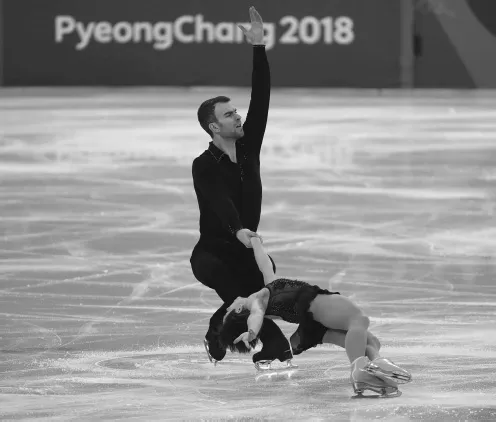
Figure 1.1 Olympic champion Eric Radford of Canada (skating with Meagan Duhamel)
Imagine this snapshot of contemporary sport: In 2016, Chris Mosier, a transgender triathlete, was featured in ESPN The Body, which presents nude athlete photographs of “bodies we want.” Partners Megan Rapino (Olympic and professional soccer player) and Sue Bird (Women’s National Basketball Association, WNBA) don the cover of the 2018 ESPN’s Body Issue. Gus Kenworthy, a gay male U.S. Olympic freestyle skier, was part of the Shoulders of Greatness advertising campaign (by Head and Shoulders shampoo) waving a rainbow flag. National Hockey League players Jake Virtanen, Erik Gudbranson, and Troy Stecher wore rainbow-colored leis and skirts while they marched in the 2017 Vancouver LGBT pride parade (Buzinski, 2017). Reggie Bullock, a National Basketball Association (NBA) player, is an outspoken advocate for transgender people (Zeigler, 2018). Elite international female athletes no longer were subjected to potential sex testing at the 2016 Rio and 2018 PyeongChang Olympics and their qualifying events. Marjorie Enya, a sport manager at the Rio Olympics, proposed marriage to Brazilian rugby player Isadora Cerullo on the field, in front of a cheering crowd (McKenzie, 2016). The National Hockey League, Major League Soccer, and the Canadian Olympic Committee are partnered with You Can Play to demonstrate their commitment to inclusion of lesbian, gay, bisexual, and transgender athletes, coaches, and administrators. There are a number of openly lesbian athletes in professional and elite sports such as the WNBA and more Olympic athletes than ever before are openly lesbian, gay, bisexual, transgender, intersex, and queer (LGBTIQ).1 We’ve come a long way – when I was a competitive athlete, sport climates were at best silent about LGBTIQ athletes and at worst openly hostile toward anyone accused or presumed to be LGBTIQ. And truly, only LG were in the sporting consciousness. Bisexual, transgender, and intersex athletes were not even on the sporting radar.
It is not that LGBTIQ athletes were not competing. We were there. But the atmosphere surrounding us was far from tolerant. I was a competitive athlete during the 1970s and ’80s. At that time, most lesbian and gay male athletes remained closeted to avoid anticipated harsh treatment by teammates, coaches, and/or administrators (Griffin, 1998; Pronger, 1990). In the 1980s, Rene Portland, Pennsylvania State University women’s basketball coach, proudly proclaimed to the media that her team rules included “no alcohol, no drugs, no lesbians” (Figel, 1986). In women’s sport, the lesbian label was used to instill the necessity of proper demeanor, attire, and sporting behaviors; all sportswomen had to maintain a feminine appearance to avoid suspicion of being lesbian (Cahn, 1998). Sportsmen could use their sporting prowess to accentuate their masculine capital, which was tied to assumptions of heterosexuality (Knijnik & Adair, 2015). At that time, social expectations about sport included that athletic men could not be gay (rendering gay sportsmen invisible) and sport would make females lesbian (casting suspicion on all sportswomen). But that was then, and this is now. Or is it different today?
The social climate of contemporary sport for LGBTIQ sportspeople
Eric Anderson and colleagues (Anderson, Magrath, & Bullingham, 2016) express that we have seen a vast decrease in homonegativism in sport, particularly men’s sport, whereas Melanie Sartore-Baldwin (2013) highlights the prejudice that prevails against LGBTIQ sportspeople. I am reluctant to take either extreme position; there is evidence that in today’s sport culture there are highly inclusive climates, highly prejudicial climates, and a myriad of climates in between. A number of interesting paradoxes exist in contemporary sport regarding LGBTIQ sportspeople. For example, on the website outsport.com, there are many stories about U.S. high school athletes who have come out to welcoming and supportive teams. Yet a 2018 Human Rights Campaign (HRC) survey that includes a national sample of about 12,000 U.S. LGBTQ youth in school sport (ages 13 to 17) reveals that 80% of the LGBTQ athletes surveyed are not out to their coaches. Further, 11% of these LGBTQ youth never feel safe in locker rooms (Johnson, Miranda, & Lee, 2018). The 2015 National School Climate Survey (Kosciw, Greytak, Giga, Villenas, & Danischewski, 2016) also reports that one third of the U.S. LGBT youth respondents (10,528 students in U.S. middle and high schools, generally ages 13–19) felt unsafe in school locker rooms.
Another paradox is that many professional athletes such as Andy Roddick (tennis), Brendon Ayanbadejo (American football), and Sydney Leroux (soccer) are active in athlete ally programs that promote LGBTIQ inclusion in sport. Sport associations such as the National Hockey League, the Canadian Women’s Hockey League, and Fédération Internationale de Football Association (FIFA) have joined ally campaigns to promote broad tolerance and reduce homonegativism. In Australia, professional athletes across football, rugby union, rugby league, Australian rules football, and netball have joined the nationwide Rainbow Laces program, a campaign against homonegativism. Yet, amid all this LGBT activism, there are very few openly LGBT professional athletes.
When LGBT athletes do come out to their teams, they are reporting positive team experiences (e.g., Anderson et al., 2016; Fink, Burton, Farrell, & Parker, 2012; Mann & Krane, in press; Stoelting, 2011). However, we do not know much about athletes who choose not to come out to their teammates. Often LGBT athletes will evaluate the team climate prior to coming out (e.g., Mann & Krane, in press). Presumably, athletes who choose not to reveal their sexual identities anticipate negative reactions from teammates and/or coaches reflecting less inclusive team atmospheres. A recent international web survey (Denson & Kitchen, 2016) paints a less than ideal picture of the climate of sport for LGBT participants. The 9,494 participants, primarily from the U.S., U.K., Canada, Ireland, and New Zealand, described team sports as intolerant toward LGBT people, with about 50% of the LGBT participants reporting having “personally experienced homophobia” (p. 13). While the trustworthiness and limitations of an internet-based survey can be debated (see Anderson et al., 2016), the emerging image of sport is that there still exist places that are intolerant and possibly hostile toward LGBT participants. And, even when teams are inclusive, fans may act otherwise. At the 2016 Rio Olympics, fans at the women’s football (soccer) games yelled anti-gay slurs aimed at Australian, Canadian, and U.S. openly lesbian players and coaches (Villarreal, 2016).
When considering the role of athletic administrators, another paradox arises. Cunningham and Melton (2011) have pointed out the benefits to athletics departments when administrators are LGBT inclusive. These include increased organizational effectiveness through enhanced decision making, improved understanding of the market, and increased goodwill in consumers. Yet, research with athletes reveals that they do not feel supported by administrators. College lesbian athletes interviewed by Fink et al. (2012) and Fynes and Fisher (2016) expressed a perceived lack of support from administrators. In her autobiography, Brittney Griner, now an Olympic and professional basketball player, talked about the difficulty of “playing for a [university] program and on a campus that denies a large part of my identity” (Griner & Hovey, 2015, p. 7). When Griner was a student-athlete at Baylor University, a private U.S. Christian university, “homosexual behavior” could lead to disciplinary actions (Code of Conduct, n.d.). When in 2014 the University of Minnesota Duluth’s ice hockey coach Shannon Miller was fired, many, including Miller, believed that it was largely because she was outspoken as a lesbian2 (Zeigler, 2015). Prior to losing her job, Miller had won five National Collegiate Athletic Association (NCAA) Division I national championships. These are just a few examples; yet, each time some LGBTIQ athletes, coaches, and administrators hear about or witness homonegativism, it reinforces silencing that aspect of their identity in sport settings.
A persistent concern in U.S. women’s university sport is negative recruiting (Griffin & Carroll, 2009), a practice in which coaches attempt to deter potential players from playing for a rival university by suggesting the coach or players on the team are lesbian (WSF, 2011). During interviews with lesbian coaches (Krane & Barber, 2005), every coach interviewed brought up the topic. Similarly, this was a common topic addressed by intercollege sport employees who were interviewed by Walker and Melton (2015). Jennifer Harris, a former Penn State University player who sued Coach Portland for discrimination based on perceived sexual orientation, described part of a conversation with Coach Portland that occurred during a recruiting visit. Harris had narrowed her choice for where to play college basketball to the University of Virginia and Penn State. Portland told her “that at Penn State we ‘date boys’ and at the University of Virginia they ‘date girls’” (Osborne, 2007, p. 486). At that time, negative recruiting apparently was a generally effective, albeit unethical, recruiting strategy. It also encouraged many coaches to remain closeted and even leave the profession – if one could not recruit effectively, that would negatively impact team success (Krane & Barber, 2005; Walker & Melton, 2015). And while the practice is continued by some coaches today, now it may backfire. For example, not long ago, I received an e-mail from the parent of a high school athlete being recruited for university softball teams. This parent told me,
At one such visit, a coach told us that he “only recruits young ladies, not women of an alternate lifestyle.” We were very surprised and upset at this comment. Although our daughter is straight, we did NOT appreciate his attitude and turned down his scholarship offer. My daughter, husband and I were nothing short of outraged and we are now wondering if there is any way we can do something to help… . High School athletes going through this process are under a tremendous amount of stress and I cannot imagine what it must be like for a LGBT teenager to have to face this discrimination. My daughter would like to speak out against this.
LGBT youth are coming out earlier than in previous generations and they are being supported by their parents and families. This has led some families to react with contempt and defiance when faced with transnegative and homonegative coaches and administrators. When Jazz, a young transgender soccer player, was not allowed to participate on a girls’ team by the Florida Youth Soccer Association, her parents spent the next two years appealing the decision (Torre & Epstein, 2012). Eventually the U.S. Soccer Federation board of directors heard the case and unanimously agree that Jazz should compete on the girls’ team. Then they instituted transinclusive rules throughout USA Soccer.
While positive stories about transgender athletes have emerged in the media, other trans athletes face immense challenges and prejudice. Perhaps most notably, Caitlyn Jenner came out to much media fanfare. Jenner was a gold medalist in the 1976 Olympic men’s decathlon. Shortly after coming out as trans, she received the 2015 Arthur Ashe Courage Award at the ESPYs.3 Her story was presented in the media as both inspiring and controversial. U.S. college trans athletes Schuyler Bailar (Harvard swimming) and Brent Darah (Bowling Green State University cross-country) were welcomed by teammates and supported by their coaches (Buzinski, 2016; Stahl, 2016). Conversely, McClearen (2015) described the vitriol aimed at transgender MMA fighter Fallon Fox: she was referred to as a “disgusting freak,” an opponent entered a competition to the Aerosmith song “Dude Looks Like a Lady,” and competitors proclaimed that Fox should be barred from competing. In her recent opinion piece in the U.S. magazine Newsweek, Katharina Lindner (2016) invoked a common misperception about trans athletes in her title, “Do Transgender Athletes Have an Unfair Advantage?”
Gender nonconformity seems to be a particularly strong trigger of hostility. The GLSEN (2013) school climate report revealed that transgender, genderqueer, and gender nonconforming LGBT youth athletes perceived their school climates as more hostile compared to their cisgender and gender conforming peers. Throughout her career, basketball player Brittany Griner received much condescending media coverage based on her perceived lack of conformity to white, heterosexual, middle-class femininity (Krane, 2015). For similar reasons, Olympians Dutee Chand and Caster Semenya (who have intersex variations) had their physicality, sex, and gender publicly scrutinized. So common were insulting and prejudicial comments about Semenya that some media began referring to it as bullying (e.g., Boykoff, 2016). Social media is particularly cruel to gender nonconforming athletes. In spite of greater LGBTIQ visibility in and out of sport, the emergence of LGBT ally programs, and new rules passed by the International Olympic Committee (IOC) providing greater inclusion for transgender and intersex athletes (IOC, 2015), social attitudes among some competitors, athletic administrators, media, and sport fans seem slow to change.
Conceptually framing LGBTIQ scholarship
It is important to frame all of the various examples discussed above within the cultural milieu surrounding LGBTIQ athletes. As gay pride celebrations grow internationally and marriage equality becomes the law in more and more countries, there also is social backlash at the LGBTIQ community. The 2016 shootings at an Orlando (U.S.) nightclub targeting Latinx LGBTs (killing 49 people) is a chilling reminder of the very real danger of transnegativism and homonegativism. Some U.S. states or counties have proposed laws making it illegal for transgender people to use public bathrooms and locker rooms consistent with their gender identity and some have tried to pass laws protecting the religious freedom of individuals who refuse to provide services to LGBT people. The murder rate of transgender people, particularly transwomen of color, is disturbingly high. Also, consider the impact of the Russian law banning gay propaganda, enacted shortly before the 2014 Winter Olympics, on LGBT athletes at the Sochi Games. FIFA has selected Russia and Qatar as the hosts for the 2018 and 2022 men’s World Cup tournament. As noted, Russia has anti-LGBT laws and in Qatar ...