- 164 pages
- English
- ePUB (mobile friendly)
- Available on iOS & Android
eBook - ePub
About this book
This book defines the centrality of love and loss in human life and in human meaning. Bowlby's Attachment theory forms the basis for understanding our selves and our relationships. The author proposes that love is the subjective experience of attachment and that dyadic relationships are the source of ultimate meaning. He supports his theses with a tour de force integration of ideas from attachment theory, psychoanalysis, neuroscience and existential philosophy. He argues that the quality of attachment between mother and infant lays the foundation for the formation of individual identity and ultimately shapes our capacity to engage in relationships with others. The author describes loss as the reciprocal of attachment and considers the enormous influence of loss on our moods, sense of identity, and our desire to live or die. The final segments of the book describe the implications of this analysis and links it to the meaning and purpose of human life. All of us seek to understand the meaning of life, and especially the meaning of our own lives.
Information
CHAPTER ONE
Attachment
| Proposition #1 | The drive to attach is fundamental and primary to human nature. |
The human infant commences life with an unwelcome propulsion from its mother’s womb. The umbilical cord is quite literally and unceremoniously cut. The infant is for the first time separate from its mother. And it is here with this radical transforming event that I will begin our exploration of human nature.
One can imagine in early human environments and certainly in animal environments that there would be inherent dangers if the infant took it upon himself to venture forth into the world and lose contact with its mother. The mother is the provider of food and protection from predators. It was the British psychiatrist John Bowlby in his groundbreaking work, “Attachment and Loss”, who put forth the concept of “Attachment”. Attachment is an inborn biological drive within the infant that causes it to remain in close proximity to its mother. The impulse to attach is one of the most fundamental dimensions of human nature and consequently a fitting place to start our inquiry.
It is now well established that the attainment of secure attachment in childhood is essential for the normal development of the human infant. It provides the basis for the development of normal relationships with parents, siblings and eventually with a spouse or partner.
Attachment behaviour can be observed in all infants. It is characterized by a constant seeking to be in close proximity to the mother figure. Proximity seeking refers to the behaviours of the infant that bring it close to the mother. When the infant is separated or distant from the mother, there is a change in the infant’s mood. It becomes distressed and this distress is signalled by vocalizations such as crying. This is “separation distress”. With repeated interactions and positive responses from the mother or mother figure, the infant develops a sense that the mother is a constant figure. The mother has become a “secure base”. Once a sense of a secure base has been established the infant then can begin to venture forth and explore his surroundings on his journey to increasing separateness and independence.
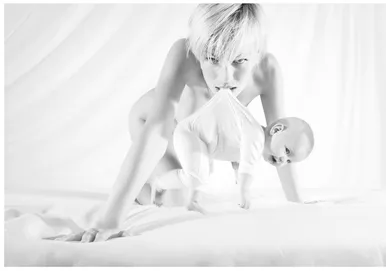
Figure 1. Attachment behaviour?
Photo: Christopher Gilbert
Photo: Christopher Gilbert
Psychoanalytic authors have referred to the close “symbiotic” tie between mother and infant in the early years of development. Margaret Mahler has described a developmental process which involves the infant moving from a state of symbiosis to one of gradual increasing independence. During these early months and years of development, the infant is beginning to distinguish himself from the mother. Initially the boundary between “me” and “not me” is unclear. The infant has little awareness of where his body ends and that of the mother’s begins. The growth of the brain results in advances in perception and cognition. The infant begins to form a sense and perhaps even a mental representation of himself as distinct from the mother figure. Nevertheless, moving away from the mother figure creates immense fear and anxiety and it is only with time that the infant begins to develop, in Winnicott’s words, the “capacity to be alone”.
Such sequences will be familiar to all who have watched young children develop. When the infant begins to crawl, in the early months of development, he may venture a certain distance from the mother frequently looking back over his shoulder to check that the mother is still there. With repetition and growth he acquires the secure feeling that the mother will remain in place. He is then able to venture further in his explorations of the environment. There is still a limit as to how far he will travel without returning back to the “home base” or the “secure base” represented by the mother figure. With further maturation and cognitive development, the infant attains the capacity to have an image of the mother internally represented within its mind. This permits the infant to move to places from where the mother is no longer in visual contact; the sense of security is now carried within or “internalized”. This achievement is referred to as the acquisition of object constancy. It is a prerequisite for the individual in order to proceed to a normal level of independent functioning. Some people never acquire this object constancy and have problems throughout their lives with separation. More about this later.
The concept of attachment grew out of psychoanalytic thinking. Bowlby was a member of the British Group of Psychoanalysts, which included famously legendary figures such as Melanie Klein, Donald Winnicott, and Ronald Fairbairn. It was this British Object Relations school, expanding on some of Freud’s earlier work, that proposed the idea of internalized representations of the outer world of relationships. And in fact, it was Fairbairn who proposed that the human animal is primarily “object seeking”, meaning that there is a primary human drive to enter into relationships. This primary drive supersedes other needs such as the need for food or for sexual gratification. Experiments with monkeys carried out by Harlow provided some of the empirical support for this view. Harlow demonstrated that young monkeys preferred terry cloth mother figures over the wire figures that provided food. The young monkeys chose tactile warmth and soothing in preference to the mere provision of food by cold and uncomforting mother surrogates.
The evidence for attachment came initially out of research in ethology, the study of animal behaviour, and it was this major contribution that Bowlby brought to the psychiatric understanding of human nature. The precursors to this theory were more abstract and conceptual, based largely on the analysis and observations of adults. There were a limited number of direct observational studies of young children made by individual analysts. Melanie Klein and Anna Freud were early pioneers in working directly with children. More systematic studies were undertaken by Margaret Mahler’s group.
The model of attachment has been well established in the psychiatric and psychological fields for some decades. More recently there have been striking breakthroughs in the understanding of attachment from a neurobiological point of view. This is in consequence of the enormous strides in neuroscience and neuroimaging.
A major contribution to this work has been made by Jaak Panksepp, a neuroscientist at Bowling Green State University in Ohio. Panksepp is one of the leading brain researchers of our day and has proposed that mammals have a specific neurocircuit that is the substrate for affiliation and attachment. He has also postulated that certain brain chemicals play a fundamental role in attachment behaviours, in particular, he has hypothesized that oxytocin, prolactin and the endogenous opioids play an important part in the instigation and regulation of attachment. Oxytocin is a hormone produced in the hypothalamus and it is involved in birth, breastfeeding and sexuality. Prolactin is produced in the pituitary gland and is instrumental in lactation.
Panksepp discovered that when an animal is separated from its mother and is experiencing separation distress, the administration of opiates (morphine-like chemicals) results in a reduction of the distress and the accompanying distress vocalizations. Most interestingly, the separation distress is potently inhibited by brain opioids that act at the mu opioid receptor. These are the same receptors that mediate addiction to morphine, heroin and other opiate drugs.
Panksepp also describes that touch activates the endogenous opioid system and this may be the basis for the positive soothing effects of touch. The hormones oxytocin and prolactin may also play a role in contact comfort. Drug abuse stimulates the same pathways that are involved in attachment behaviour. Brain chemicals that reduce separation distress promote social attachment and bonding. Specific areas of the brain appear to be involved in this process e.g. the cingulate cortex, the septal area, the orbital prefrontal cortex, and the amygdala.
There is evidence that the neurotransmitter serotonin modulates the separation response. Increased levels of serotonin reduce distress vocalizations in animals. This may explain some of the effects of medications in alleviating separation anxiety and related symptoms in psychiatric patients.
Serotonin stimulates the production and secretion of oxytocin and vasopressin in the hypothalamus. This interconnection between the serotonin and neuropeptide systems may have implications for psychiatric treatment.
Conversely, infant separation leads to changes in the pituitary-adrenal stress response that in turn depletes serotonin, norepinephrine and dopamine leading to the features of depression and despair.
Regulation of mood and brain development
Schore (2001) has proposed that the regulation of affect is a central organizing principle of human development and motivation. The first three years of life appear to be critical for the development of the right side of the brain. The maturation of the right brain, which includes frontal and limbic areas, depends on the nature and quality of the attachment relationship with the mother figure. Secure attachment leads to the healthy development of the right brain and optimal infant mental health. Conversely, traumatic attachment leads to impaired development of the right brain and a predisposition to mental illness.
This is really a very dramatic proposition: it has been here proposed that psychological events i.e. the quality of the interactions between the infant and the mother figure during the first three years of development, can actually impact the way the unfolding brain develops i.e. can lead to permanent alterations in the organization and functioning of the neurocircuits that underlie the regulation of emotion.
Schore further proposes that the quality of the attachment relationship influences the developing connections in the limbic system, which are involved in the regulation of affect. Schore points out that the mother and child synchronize the intensity of their affective interaction; there is a reciprocal response between eye gaze, facial expression and the rhythm and tempo of interaction. There is “a mutual empathic attunement”. This synchrony may be essential for the development of healthy attachment and affect regulation. High quality attachment reduces negative affect (irritability, anger, fear, despair) and also amplifies positive emotions (contentment, satisfaction, satiety). This allows the infant to grow and explore, and eventually to become separate and autonomous.
Proximity to the attachment figure regulates emotion. Where attachment is disrupted, this can lead to permanent changes in the ability to regulate emotion.
Evidence for these propositions is apparent in the study of clinical psychiatry, most dramatically in patients who have experienced extreme disruptions of attachment e.g. where early childhood relationships have been physically, mentally or sexually abusive. Similarly if there is a history of neglect or abandonment, the subsequent development of attachment is grievously damaged.
All of these things are most characteristically observed in the study of what is known as “borderline personality disorder”. Borderline personality features dramatic disturbances of affect regulation and attachment behaviour. It provides a window on processes and interactions that are universal: attachment, loss, abandonment, and rejection. In the average person these vicissitudes are more constrained and less disruptive than in those with borderline personality disorder.
Case study
Lucy was a 28-year-old woman with a diagnosis of borderline personality who lived who lived with her mother. She came for treatment because of inability to eat, feelings of depression and anxiety. She was involved in a long-term relationship with her boyfriend James. James would frequently take off for weeks or months at a time. When he was around Lucy would spend all day and all night with James. When he was gone she would become despondent, was unable to eat and became immobilised. She had also become pregnant on three occasions and had had three therapeutic abortions.
In therapy Lucy described intense feelings of emptiness and inner longing. She felt painfully sad. She recounted that she had been given up for foster care at a very early age and recalls seeing a car carrying her mother drive away. She has felt since then an aching sense of abandonment and detachment. Ironically she had latched on to a boyfriend who repeatedly exposed her to episodes of abandonment and reunion. Her “accidental” pregnancies can be seen as an attempt to remain attached, if not to him than at least to his baby or for that matter any baby
Liat was a 20-year-old woman who had been sexually and physically abused by her father for many years, leading to a borderline personality disorder. She was referred for psychiatric help after a miscarriage. She was in an acute state of grief; she expressed the desire to die and wanted to end her life by suicide.
Her boyfriend could not leave her side and provided 24-hour care. She could not overcome the grief. Her desire to have a baby “to care for” was all consuming. She commemorated the loss of the baby by weekly prayer sessions.
Art
Themes of attachment and separation are universal within human nature and culture. These themes are reflected in art, music and cinema. Casual listening to pop music will reveal that an astonishing preponderance of popular music relates to the issues of love, attachment, separation and loss.
In art, it is hard to find anything better than the work of the Norwegian painter, Edward Munch to illustrate some of these fundamental human themes. Munch is of course universally recognized for his painting of “The Scream” with its haunting motifs. However, many of his other paintings are also equally expressive of the themes of loss of identity, and the pain of separation.
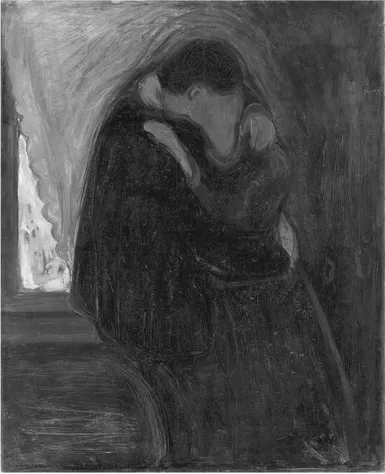
Figure 2. The Kiss: Edvard Munch.
Munch Museum, Oslo
Munch Museum, Oslo
In cinema it is not surprising to find that some of the most successful movies resonate with the audiences yearning for attachment and relief from separation. The movie “Casablanca”, often cited as the best movie ever made, is essentially a love story between Humphrey Bogart playing Rick and Ingrid Bergman playing Ilsa. There is a flashback to when the couple meet and “attach” in Paris. This is followed by an abrupt separation related to the war and then a subsequent reunion and chance encounter in Rick’s bar in Casablanca. Perhaps the movie derives its immense power from the final scene, which is a scene of separation: Rick and Ilsa are on the airport runway and the two are to be separated again, probably permanently. Surely it is this scene, more than any other, which has struck a chord with audiences over six decades of cinema history.
Table of contents
- Cover
- Half Title
- Title
- Copyright
- Contents
- PREFACE
- INTRODUCTION
- CHAPTER ONE Attachment
- CHAPTER TWO Love
- CHAPTER THREE Formation of identity
- CHAPTER FOUR Emotions and moods
- CHAPTER FIVE Psychiatric disorders and love and loss
- CHAPTER SIX Deviations of love and sexual desire
- CHAPTER SEVEN Loss
- CHAPTER EIGHT Suicide
- CHAPTER NINE Meaning of time as a prelude to meaning
- CHAPTER TEN Meaning
- CHAPTER ELEVEN The love connection
- CHAPTER TWELVE Conclusion
- GLOSSARIES
- BIBLIOGRAPHY
- INDEX
Trusted by 375,005 students
Access to over 1.5 million titles for a fair monthly price.
Study more efficiently using our study tools.
Frequently asked questions
Yes, you can cancel anytime from the Subscription tab in your account settings on the Perlego website. Your subscription will stay active until the end of your current billing period. Learn how to cancel your subscription
No, books cannot be downloaded as external files, such as PDFs, for use outside of Perlego. However, you can download books within the Perlego app for offline reading on mobile or tablet. Learn how to download books offline
Perlego offers two plans: Essential and Complete
- Essential is ideal for learners and professionals who enjoy exploring a wide range of subjects. Access the Essential Library with 800,000+ trusted titles and best-sellers across business, personal growth, and the humanities. Includes unlimited reading time and Standard Read Aloud voice.
- Complete: Perfect for advanced learners and researchers needing full, unrestricted access. Unlock 1.5M+ books across hundreds of subjects, including academic and specialized titles. The Complete Plan also includes advanced features like Premium Read Aloud and Research Assistant.
We are an online textbook subscription service, where you can get access to an entire online library for less than the price of a single book per month. With over 1.5 million books across 990+ topics, we’ve got you covered! Learn about our mission
Look out for the read-aloud symbol on your next book to see if you can listen to it. The read-aloud tool reads text aloud for you, highlighting the text as it is being read. You can pause it, speed it up and slow it down. Learn more about Read Aloud
Yes! You can use the Perlego app on both iOS and Android devices to read anytime, anywhere — even offline. Perfect for commutes or when you’re on the go.
Please note we cannot support devices running on iOS 13 and Android 7 or earlier. Learn more about using the app
Please note we cannot support devices running on iOS 13 and Android 7 or earlier. Learn more about using the app
Yes, you can access Sweet Sorrow by Alan B. Eppel in PDF and/or ePUB format, as well as other popular books in Psychology & Developmental Psychology. We have over 1.5 million books available in our catalogue for you to explore.