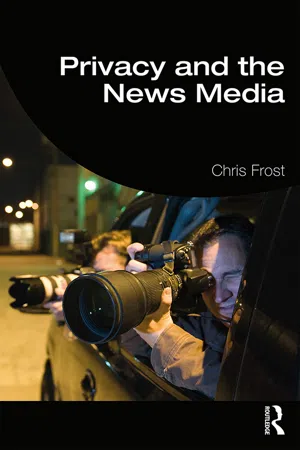
Are you a private person? Do you like to keep details of your life hidden away and do you shy from the internet and social media for fear of the data that will be stolen from you or are you what American privacy expert Alan Westin describes as a privacy pragmatist? Someone willing to take a risk in order to enjoy the pleasures of social media, online shopping or more.
Now more than ever in the history of humanity privacy is a critical issue in our lives. Our financial security depends on protecting our data, and our family and home life is something most of us prefer to keep to ourselves.
When it comes to journalism though, and the national press in particular, privacy is more complex. The national press likes to expose the privacy of celebrities and even the ordinary public at times in pursuit of a good story. But why do editors think that salacious intrusion into people’s privacy is a good idea? The general view of editors, publishers, academics and journalists seems to be that such stories drive circulation and increase readership, offering a wider audience to advertisers and therefore an opportunity to charge higher rates for the same advertising space. Circulation also increases income from cover sales. So is it all about sales? Well not according to Colin Myler, the then editor of the News of the World when it ran the Max Mosley sadomasochistic orgy story. So why did he run it? “It was a very good story”, he told the parliamentary select committee on Culture, Media and Sport, justifying it by telling the MPs that: “you only have to look at the manner in which it was followed up.” So was he aiming for a specific audience? No again, he told the committee. He disagreed with fellow editors Paul Dacre and Peter Hill who had told the committee they would not have run it in their “family papers” (Daily Mail and Daily Express) as he considered the News of the World was also a family newspaper: “Yes, I do. I don’t agree that it was an unsuitable story for a family newspaper, no, I don’t”, he told the committee. Nor was it used to boost circulation, he told the committee, dismissing the idea that the story was used for commercial gain: “rarely in these situations is there any commercial advantage, despite what many people think”. The last reply is almost certainly true – a look at the plummeting circulation figures of national newspapers over the last 50 years makes it clear that boosting circulation is not the prime reason. However, that doesn’t mean editors don’t think that intrusive stories are the best way to keep their head above water; that invading someone’s privacy will draw enough readers to at least slow circulation falls when competing against social media, the internet and TV. That said, the circulation figures of national newspapers over the last ten years shows a fairly straight, downward line and extrapolating those lines terminates at zero in about 2026 for the redtops, 2031 for the midmarket press and 2034 for the so-called quality press. Of course none will go that far. Newspapers are usually axed or go online when their circulations fall too low. The closure of national papers in the 1960s happened when circulation hit around the 1.3m mark (News Chronicle and the Daily Herald), papers died in the 1990s when circulations fell to around 200,000 (Today and the Sport). The Independent went online at 55,000 in 2016, despite attracting quality advertising and it is doubtful if the redtops and the mid-market papers could survive at that level of circulation. With the Daily Express and the Daily Star presently on just over 300,000 circulation, their days are probably numbered.
What about readers – do they want intrusive stories? Well, they say they don’t and research supports this but can we believe what we are told? Again, there is no supportive evidence that intrusive stories boost circulation, but no evidence that they damage it either and there is certainly little doubt that most people enjoy a little gossip and magazines and newspapers that are full of celebrity tittle tattle still sell. It’s also true that occasionally a privacy intrusion is required to expose the wrongdoings of some important or influential person.
I return to the editors for advice on this. Does privacy and the newspapers’ intrusion into it have an important part to play in the commercial life of the press? Yes, said Paul Dacre, then editor of the Daily Mail talking to the Society of Editors about what he sees as the dangers of privacy laws:
Concentrate instead on how inexorably, and insidiously, the British Press is having a privacy law imposed on it, which – apart from allowing the corrupt and the crooked to sleep easily in their beds – is, I would argue, undermining the ability of mass-circulation newspapers to sell newspapers in an ever more difficult market.
(www.pressgazette.co.uk/society-of-editors-paul-dacres-speech-in-full accessed Sept. 2019)
It would appear that Dacre’s main concern about privacy laws is not the occasional need to intrude on privacy to expose wrongdoing in the public interest, but that they may undermine the ability of newspapers to sell in an “ever more difficult” market. So the evidence from editors, the people who decide what goes in our papers, is that privacy invasions can be justified to publish “good stories” that “sell newspapers”. Interesting definitions since one is unqualifiable (who says they’re good and on what criteria?) and the other is unquantifiable (circulations are still falling). It’s a debate from which I will stay aloof, having no evidence to prove either that intrusions help circulations or hinder. However, I have laid out in this book research and guidance on the approach to privacy that journalists who are proud of their craft might consider.
The book starts with a look at the ethics of human rights, since the law in the UK and Europe is strongly tied to the Human Rights Act and the European Convention on Human Rights. Chapter 2 shows that understanding the ethical positioning of human rights can help both with performing ethically and with better reporting. From there it moves to looking at privacy itself, in Chapter 3, what is privacy, why do we think it important and in Chapter 4 how privacy has developed in the UK over the past 150 years. From Chapter 5 the book starts to examine the privacy issues that affect journalists, starting in Chapter 5 with gossip and celebrities before moving on in Chapter 6 to look at the range of issues that need to be considered ethically when potentially intruding on personal privacy. Chapter 7 introduces the concept of public interest and its interaction with privacy and this is followed by Chapter 8 dealing with reputation and then Chapter 9 looking at the law surrounding personal data in the UK. Chapter 10 examines the complex area of data protection and its many issues for journalists. New technological developments raise significant issues in the area of journalists, news gathering and privacy that are dealt with in Chapter 11 while Chapter 12 introduces the concept of regulation and the various regulators in the UK and the Republic of Ireland. Much of the ethical area of privacy is dealt with by common law, that is, court rulings based on statute or previous court decisions. These play a major role in how the media handle privacy and so there are detailed descriptions in Chapter 13 of the key court cases dealing with privacy. Chapters 14 and 15 take a look outside the UK to give an idea of how privacy is dealt with in Europe and the US and investigate the difference a constitution makes and then examine the contrary cultures of the two continents. The appendices give access to the various codes for easy reference.
I hope you find the book useful both as a student and as a working journalist.
![]()
2
HUMAN RIGHTS AND JOURNALISM ETHICS
Human rights are a system of ethics, of moral thinking, that allows those who use it to determine what is fair and reasonable treatment for each individual on an equal and unprejudicial basis. Human rights are closely linked to but distinct from civil rights.
It is one of several systems of ethics that are widely used throughout the world but has gradually become popular over the past couple of centuries as religion has slowly been usurped, in the West at least, as the sole arbiter of morality. As much of humanity has slowly moved from religions, whose sacred texts are all too often used to treat others badly, forms of human rights have slowly been taken up either piecemeal or as a convention fully formed. Human rights are often converted to civil rights by governments or constitutions. The basic form remains the same but civil rights bring with them government protection. One has human rights wherever one lives, whether upheld by government or not, but civil rights are only available in a country that offers constitutional or statutory protection.
There are other systems of ethics that will be considered later in this chapter, but it is worth understanding that for the notion of privacy as an ethical issue, human rights is the system that best deals with both the importance and contradictions of privacy.
Morality and ethics
Morality is about having a set of standards by which one lives one’s life. They determine such matters as how one treats other people, honesty, fair dealing and applying a set of understood standards to one’s professional life. Ethics is about how one thinks about those moral standards – the philosophy that underpins the professional standards that you use.
Some of journalism’s standards are fairly obvious. If I were writing fiction, it would be understood that what I wrote was invented; that while places and events might be based in reality, the characters I wrote about, their escapades and interactions were not. By writing non-fiction or journalism the intention should be to provide accurate, truthful information about people, places and events that would assist people to model their world and understand the pressures that mould it so that they work out the best way of living to suit them.
Fiction allows for fantastical adventures, strange places and fanciful events all developed from the mind of the author (unless it is plagiarised from another writer, in which case this is also unethical and possibly unlawful). Journalism might also present similarly fanciful events but this time the expectation is that they are truthful. If they are not, then they are not journalism and if they are represented to be journalism, the publisher or broadcaster has broken trust with its customers. Whilst entertaining readers or viewers is always something a journalist needs to consider as a tool to attract an audience, the reason people read journalism is to get a truthful, if abbreviated report of what is going on in the world and their small portion of it. They have a right to be informed, and this applies a duty to journalists to do that and do it truthfully.
Journalism is not a style of writing (although much journalism is identifiably stylistic, some of it even worth reading in its own right as literature). Journalism can use comedy, poetry, prose, it can tell stories of love, war and death, just like fiction, but it must be true and tell its story accurately.
But journalistic standards are not just about accuracy and truth, even if that is the most important aspect. There are several other ethical issues where taking the moral high road is not always easy or not even easily apparent when seeking the best interests of the public. This is where ethics comes in: a way of thinking about the moral standards we apply to our work to ensure that our journalism lives up to the trust our readers and viewers must place in journalists for their journalism to be useful. Broadcasting should educate, inform and entertain according to Lord Reith, the founder of the BBC, and it is a good description of excellent journalism. Journalism should entertain its readers and viewers. Few people want to read or see a dull report, no matter how important. So as well as informing people and educating them with accurate information, journalists need to make their stories entertaining, whether that is through choice of story such as gossip or stranger than truth tales, or by good writing, design and image. If the government issues an important report, for instance, few people will take the trouble to access it and read it, no matter how important, even though the internet has made this easier than ever before. We prefer to read a well-written synopsis that picks out the main points for us.
Human rights
Human rights developed from European political thinking in the 18th century and the early 19th century. They coincided with the move away from absolute rule, favoured by such thinkers as Thomas Hobbes (1588–1670), who, whilst postulating the idea of rights and a social compact, believed that the only way to ensure firm control and peace with people adhering to the rule of law was to have an absolute ruler. Living in admittedly difficult times, Hobbes believed that life “in the state of nature is solitary, poore, nasty, brutish and short” (Hobbes, 1968: 186). Society – an agreement to stick to the rules or social compact – was the only way around this but, according to Hobbes, required an absolute power to ensure the “terror of some punishment” for infringing the rules. Having a single ruler – preferably a king whose interests would be tied directly to the land of his kingdom – meant that there could be no debate, so no internal conflicts, no changing of mind and no compromising of secrecy.
Of course this would mean there would be no democracy and no need of a western-style news-based media. Challenging government and trying to hold the leadership to account is pointless if you believe in a single ruler, right or wrong – a danger many Trump supporters face. Exposing what is wrong with that world only leads to unhappiness and potential conflict, the very thing those supporting this system were trying to avoid. This is not to suggest that tyrants are only muzzling the media and free speech out of the kindness of their heart or a belief in a benevolent system. A look at any dictator around the world or those supposedly democratic leaders who find challenge inconvenient makes it clear that they find a Hobbesian system very useful. Any democratic leader who starts to talk about firm rule, praises patriotism and the “special nature” of the people he or she leads, or calls on the people to work together on a common project should be eyed wit...